

 Preview
 Send
Send Share
Share
 Details

 Download
 Similars
 X-Ray
X-Ray Diaporama
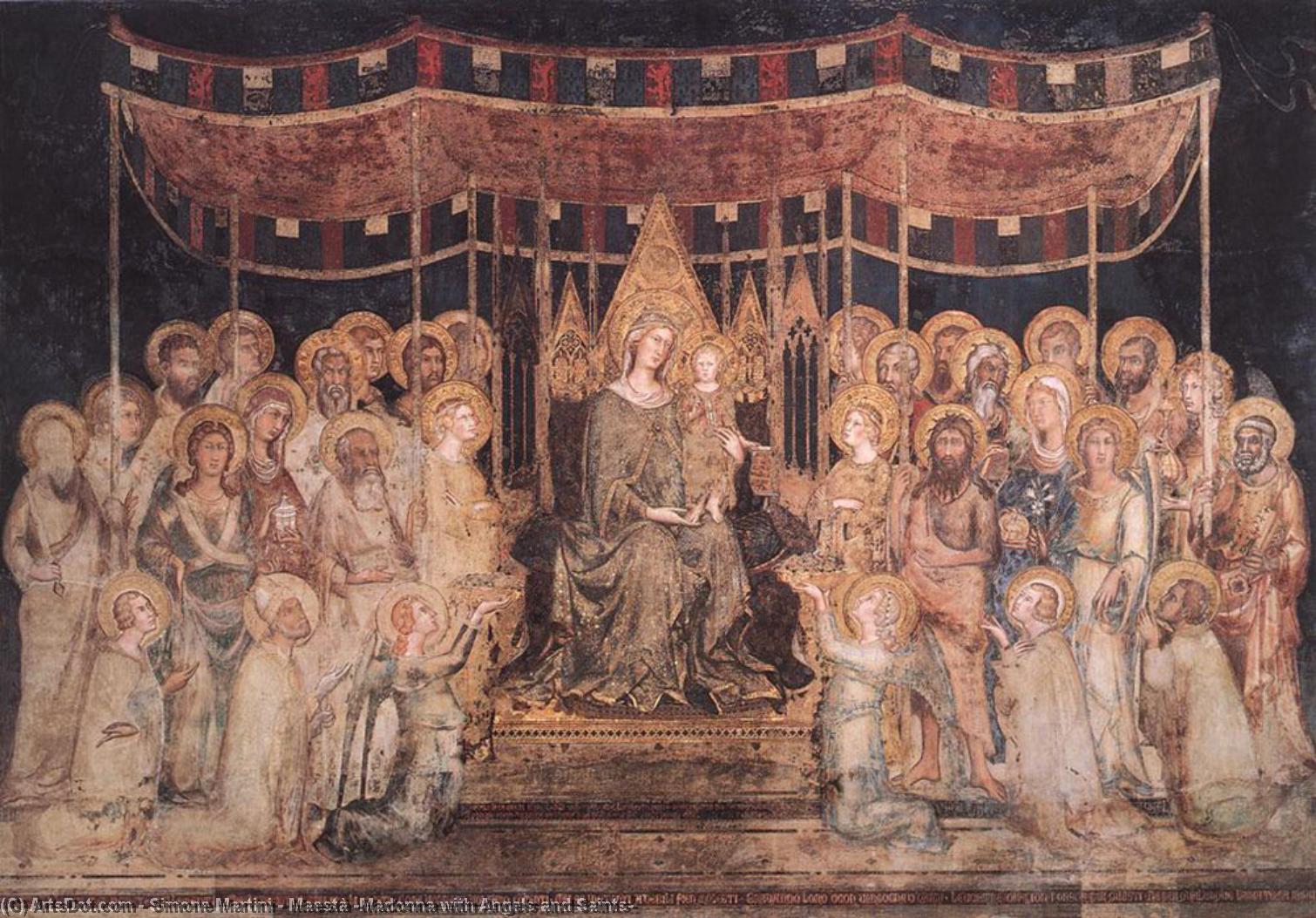
Maestà (Madonna with Angels and Saints)
 Acrylic On Canvas
- WallArt
- Proto-Renaissance
 1315
1315 763.0 x 970.0 cm
 Palazzo Pubblico
 Read More
Purchase a high-resolution, enhanced digital image, far superior to the online preview.
Each file is meticulously prepared by our in-house specialists using advanced tools and expert manual retouching. We ensure every image has exceptional clarity, precise color accuracy, and fine detail.
The final file is delivered via email within 72 hours, optimized for immediate use in professional, editorial, and print environments. This is the same quality trusted by top-tier design studios, publishers, and galleries.
Digital Image
Download a high-resolution file for personal display, printing, and creative projects. ( Buy Print Buy Hand Made Painting)
Included in Every Digital Image Order
Expert Digital Delivery, Guaranteed
When you choose ArtsDot.com, you're not just getting an image - you're receiving a professionally enhanced digital artwork, crafted with precision and backed by a satisfaction guarantee. Here's everything that comes with your order, automatically:

Fast Email Delivery
Your high-resolution digital image file will be emailed to you within 72 hours of ordering - ready for immediate use.

AI-Enhanced Digital File
Your artwork is professionally optimized using advanced AI tools and manual editing, ensuring maximum detail, clarity, and color accuracy.

Free Lifetime Re-Delivery
Accidentally deleted or lost your file? No worries - we'll resend it to you anytime, free of charge.

No Import Fees - Ever
Enjoy your artwork instantly with zero customs, duties, or delivery fees - digital downloads are always tax-free.

Color Accuracy Guarantee
We ensure your digital image reflects the original colors as closely as possible using professional tools and color management.

60-Day Satisfaction Guarantee
If you're not satisfied with your digital image, we'll revise it or refund 100% within 60 days - no questions asked.

100% Money-Back Guarantee
Not satisfied? Get a full refund within 60 days of receiving your digital file - no questions asked.

Bulk Order Discounts
Buy 3 images, save 10% - Buy 5, save 15% - Buy 10+, save 20%. Great for creative projects, galleries, and agencies.
Collectible Description
A Celestial Vision in Sienese Gold
In the heart of Siena, within the hallowed halls of the Palazzo Pubblico, resides a masterpiece that transcends the boundaries of mere paint and plaster. Simone Martini’s Maestà is not simply a fresco; it is a breathtaking window into the divine, a monumental achievement of the 14th century that continues to stir the souls of all who behold it. As one gazes upon this vast composition, they are immediately swept into a celestial court where the earthly and the eternal converge. The Virgin Mary sits enthroned with an unparalleled grace, her presence commanding both reverence and peace. Surrounded by a swirling host of angels and a solemn assembly of saints, the scene unfolds like a sacred symphony, orchestrated with a delicate balance of Byzantine grandeur and the burgeoning humanism of the early Renaissance.
The composition is a masterclass in visual hierarchy and rhythmic movement. Martini avoids the static, rigid rows of earlier medieval traditions, opting instead for a dynamic arrangement that breathes life into the stone. Angels appear to float at varying heights, their wings creating a sense of weightless motion, while below the throne, a vibrant gathering of saints and apostles populates a stage-like space. This arrangement draws the eye upward, guiding the viewer from the terrestrial figures kneeling in devotion toward the luminous center of the Virgin and Child. The use of a deep, midnight blue background serves as an infinite void, making the gilded elements and the rich crimson drapery of the canopy appear to radiate their own internal light, much like stars emerging from the dusk.
The Alchemy of Line and Light
To appreciate the Maestà is to marvel at Martini’s technical virtuosity, particularly his ability to manipulate texture and depth through the sophisticated use of grisaille and delicate glazing. By employing a monochrome underpainting, Martini established a profound sense of three-dimensional form, giving the figures a sculptural presence that was revolutionary for its time. Over this foundation, he applied translucent layers of pigment that catch the light, creating an iridescent shimmer that mimics the luster of precious silks and the soft glow of divine skin. This technique allows the heavy red canopy to appear both substantial and ethereal, draped with a realism that invites the viewer to reach out and touch the fabric.
Beyond its technical brilliance, the artwork is steeped in profound symbolism intended to inspire civic pride and religious devotion. Every element within the fresco serves a purpose: the medallions of prophets and evangelists act as a spiritual frame, while the very presence of the saints reminds the citizens of Siena of their shared identity and divine protection. For the modern collector or interior designer, a reproduction of this masterpiece offers more than just aesthetic beauty; it brings an atmosphere of timeless elegance and intellectual depth into a space. The Maestà is a testament to the power of art to act as a bridge between worlds, making it an incomparable centerpiece for any collection that seeks to celebrate the enduring legacy of human creativity and spiritual aspiration.
Related Artworks

Artist Biography
A Sienese Master of Elegance and Grace
Simone Martini, born around 1284 in the heart of Siena, Italy, stands as a pivotal figure in the transition from medieval to Renaissance art. He wasn’t merely a painter; he was an architect of elegance, a master of line and color who infused his works with a courtly refinement that distinguished him from contemporaries like Giotto. While historical accounts vary regarding his early training—some suggest apprenticeship under Duccio di Buoninsegna, the leading Sienese artist of the time, while others point to Florence and the influence of Giotto—Martini undeniably forged a unique artistic path. His brother-in-law, Lippo Memmi, was also an artist with whom he frequently collaborated, further enriching the vibrant artistic landscape of Siena. The city itself played a crucial role in shaping Martini’s aesthetic; Siena, a thriving center of commerce and culture, fostered an environment where art flourished, blending religious devotion with worldly sophistication.
The Flourishing of International Gothic
Martini's style is immediately recognizable for its departure from the more monumental forms favored in Florence. He embraced a delicate sensibility, characterized by flowing lines, soft decorative details, and an overall sense of grace. This aesthetic wasn’t born in isolation; it was profoundly influenced by external forces. The Via Francigena, a major pilgrimage route traversing Europe, brought with it artistic currents from France—particularly the refined elegance of French manuscript illumination and ivory carving. These influences are readily apparent in Martini's work, manifesting as intricate patterns, elongated figures, and a heightened attention to surface ornamentation. He didn’t simply copy these styles; he synthesized them with existing Sienese traditions, creating something entirely new. His paintings weren’t merely representations of religious scenes but rather elegant narratives imbued with emotional depth and visual poetry. The Saint Louis of Toulouse Crowning His Brother Robert of Anjou, painted in 1317 during a sojourn in Naples, exemplifies this masterful blend of narrative skill and refined composition. The work showcases Martini’s ability to depict complex scenes with clarity and grace, while simultaneously imbuing them with a sense of courtly splendor.
From Siena to Avignon: A Courtly Appointment
Martini's reputation extended beyond the borders of Italy, leading to a significant turning point in his career. In 1336, he accepted a commission from Pope Benedict XII to create frescoes for the Papal Palace in Avignon, France—a move that placed him at the heart of European power and patronage. This appointment wasn’t merely about artistic skill; it was a testament to Martini's ability to cater to the tastes of a sophisticated courtly audience. While in Avignon, he entered into a remarkable intellectual circle, befriending Francesco Petrarca—better known as Petrarch, the renowned humanist poet. The connection with Petrarch is particularly poignant, as Vasari and other sources suggest that Martini painted a portrait of Laura de Noves, Petrarch’s lifelong muse. Though the portrait itself is lost to time, its very existence speaks volumes about Martini's status as a celebrated artist capable of capturing not only physical likeness but also the essence of beauty and inspiration. The Annunciation with St. Margaret and St. Ansanus, created during his time in Florence before moving to Avignon, is a testament to this period, showcasing delicate beauty and refined aesthetic.
Legacy and Enduring Influence
Simone Martini’s impact on the development of European art cannot be overstated. He played a crucial role in disseminating the International Gothic style—a movement characterized by its elegance, refinement, and emphasis on decorative detail—across the continent. His influence extended to generations of artists who followed, shaping the course of late medieval and early Renaissance painting. Martini’s work wasn't simply about technical skill; it was about creating a visual language that resonated with the sensibilities of his time—a language of beauty, grace, and spiritual devotion. Even today, his paintings continue to captivate viewers with their exquisite detail, harmonious compositions, and enduring sense of elegance. His frescoes in San Francesco d’Assisi demonstrate his mastery of large-scale decorative painting, while works like the Saint Catherine of Alexandria Polyptych showcase his unparalleled command of color and form. Simone Martini died in Avignon in 1344, leaving behind a legacy that continues to inspire awe and admiration centuries later—a testament to the enduring power of art to transcend time and touch the human spirit.

Simone Martini
1284 - 1344 , Italy
Quick Facts
- Artistic Movement Or Style: International Gothic
- Artists Or Movements Influenced By This Artist: ['International Gothic style']
- Artists Who Influenced This Artist:
- Duccio di Buoninsegna
- Giotto di Bondone
- Date Of Birth: c. 1284
- Date Of Death: 1344
- Full Name: Simone Martini
- Nationality: Italian
- Notable Artworks:
- St. Louis Crowning Robert
- Saint Catherine Polyptych
- Annunciation (Uffizi)
- Consecration of Chapel
- Place Of Birth: Siena, Italy

