

 Preview
 Send
Send Share
Share
 Details

 Download
 Similars
 X-Ray
X-Ray Diaporama
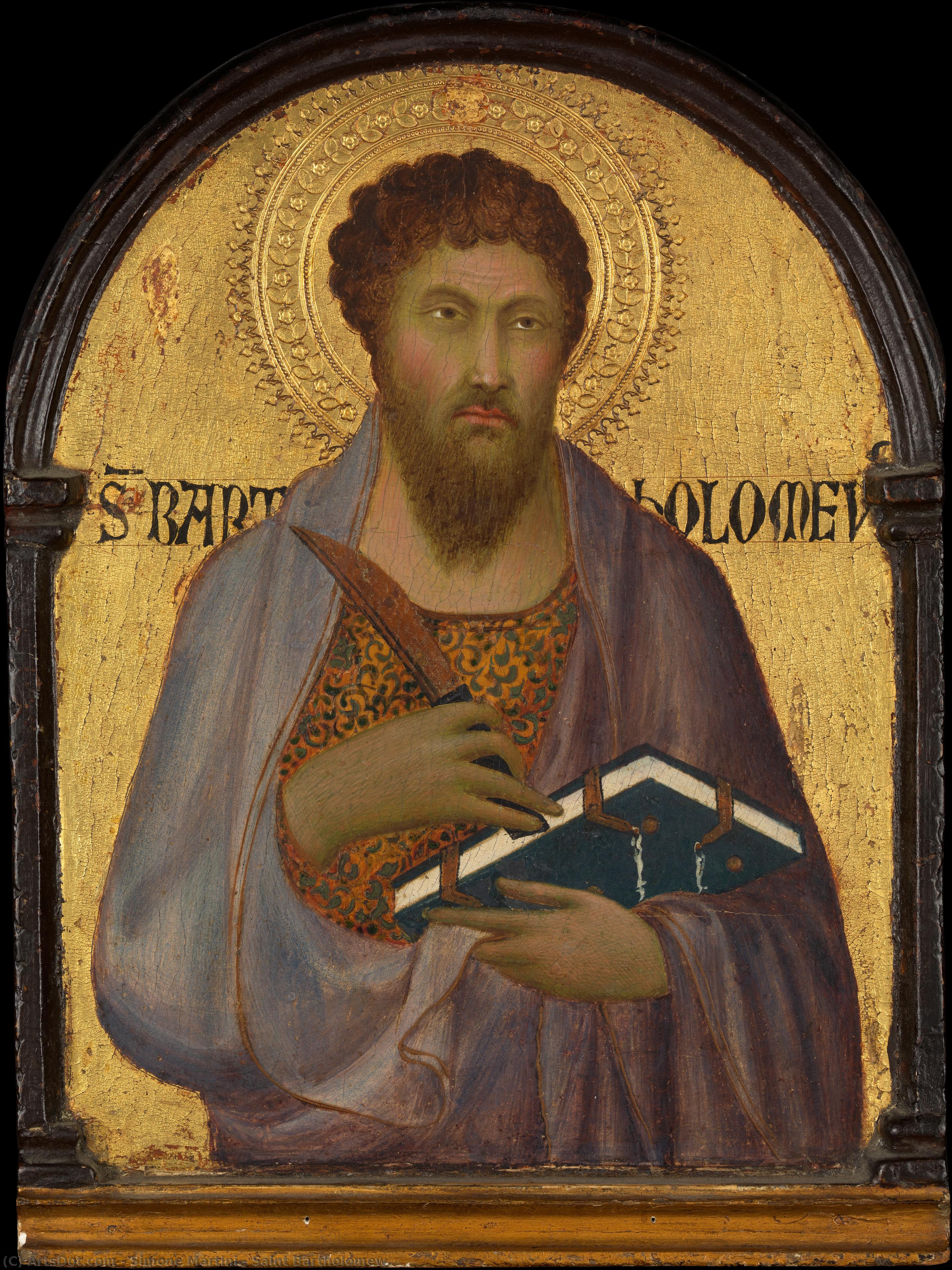
Saint Bartholomew
 Oil On Panel
- International Gothic
 1317
1317- Late Medieval
 30.0 x 22.0 cm
 Read More
Purchase a high-resolution, enhanced digital image, far superior to the online preview.
Each file is meticulously prepared by our in-house specialists using advanced tools and expert manual retouching. We ensure every image has exceptional clarity, precise color accuracy, and fine detail.
The final file is delivered via email within 72 hours, optimized for immediate use in professional, editorial, and print environments. This is the same quality trusted by top-tier design studios, publishers, and galleries.
Digital Image
Download a high-resolution file for personal display, printing, and creative projects. ( Buy Print Buy Hand Made Painting)
Included in Every Digital Image Order
Expert Digital Delivery, Guaranteed
When you choose ArtsDot.com, you're not just getting an image - you're receiving a professionally enhanced digital artwork, crafted with precision and backed by a satisfaction guarantee. Here's everything that comes with your order, automatically:

Fast Email Delivery
Your high-resolution digital image file will be emailed to you within 72 hours of ordering - ready for immediate use.

AI-Enhanced Digital File
Your artwork is professionally optimized using advanced AI tools and manual editing, ensuring maximum detail, clarity, and color accuracy.

Free Lifetime Re-Delivery
Accidentally deleted or lost your file? No worries - we'll resend it to you anytime, free of charge.

No Import Fees - Ever
Enjoy your artwork instantly with zero customs, duties, or delivery fees - digital downloads are always tax-free.

Color Accuracy Guarantee
We ensure your digital image reflects the original colors as closely as possible using professional tools and color management.

60-Day Satisfaction Guarantee
If you're not satisfied with your digital image, we'll revise it or refund 100% within 60 days - no questions asked.

100% Money-Back Guarantee
Not satisfied? Get a full refund within 60 days of receiving your digital file - no questions asked.

Bulk Order Discounts
Buy 3 images, save 10% - Buy 5, save 15% - Buy 10+, save 20%. Great for creative projects, galleries, and agencies.
Collectible Description
A Saintly Portrait: Unveiling Simone Martini’s *Saint Bartholomew*
This captivating panel depicts *Saint Bartholomew*, a work originating from the workshop of the celebrated Sienese artist Simone Martini in 1317. One of seven known panels originally forming part of an altarpiece – likely either a predella or a register above the main scenes – it offers a fascinating glimpse into late medieval religious art and devotional practices. The panel’s history traces back to the collection of Johann Anton Ramboux, a German painter and collector in the 19th century, highlighting its enduring appeal across centuries.Style & Technique: A Bridge Between Traditions
The painting exemplifies the transition from the Byzantine-influenced style prevalent in earlier Italian art towards the emerging Gothic aesthetic. While based on cartoons (preparatory drawings) created by Simone Martini himself, the execution was entrusted to his skilled assistants. This collaborative approach was common in workshops of the period. The work displays a refined elegance characteristic of Sienese painting, with delicate modeling and graceful lines. Oil paint on wood panel allows for rich color and subtle gradations, though past cleanings have unfortunately altered some of the original hues – notably resulting in an anomalous brown tone across parts of the composition. The style leans towards a nascent realism, evident in the attempt to render facial features with greater naturalism than earlier depictions.Subject & Symbolism: An Apostle’s Identity
Saint Bartholomew is traditionally identified as Nathanael, one of the twelve apostles. He is often depicted holding the knife by which he was martyred – a symbol absent here but frequently associated with his iconography. Instead, this panel focuses on portraying him as a learned figure, an emphasis underscored by the open book in his left hand. This symbolizes knowledge, scripture, and Bartholomew’s role as a disseminator of faith. His dignified pose and contemplative expression convey wisdom and spiritual authority. The dark background serves to isolate and emphasize the saint, drawing the viewer's attention to his serene countenance.Historical Context: Sienese Art & the International Gothic
Simone Martini was a pivotal figure in the development of the *International Gothic* style – an artistic movement that flourished across Europe in the 14th century. This style is characterized by its elegance, refined detail, and emphasis on decorative elements. Martini’s work bridged the gap between the Byzantine traditions of his predecessors, like Duccio di Buoninsegna (thought to be Martini's teacher), and the more naturalistic tendencies that would define Renaissance art. The panel’s original placement within an altarpiece underscores its function as a devotional object intended to inspire piety and reverence in worshippers.Emotional Impact & Interior Design Considerations
Despite its relatively small size (30 x 22 cm), *Saint Bartholomew* possesses a powerful emotional resonance. The saint’s serene gaze invites contemplation, offering a moment of quiet reflection. The painting's subdued color palette and dignified composition make it suitable for a variety of interior settings. It would complement both traditional and contemporary spaces, adding a touch of historical elegance and spiritual depth.- Consider pairing this reproduction with muted wall colors to enhance its subtle beauty.
- Its size makes it ideal for smaller niches or as part of a curated gallery wall.
- The religious subject matter lends itself well to contemplative spaces like libraries or studies.
Related Artworks



Artist Biography
A Sienese Master of Elegance and Grace
Simone Martini, born around 1284 in the heart of Siena, Italy, stands as a pivotal figure in the transition from medieval to Renaissance art. He wasn’t merely a painter; he was an architect of elegance, a master of line and color who infused his works with a courtly refinement that distinguished him from contemporaries like Giotto. While historical accounts vary regarding his early training—some suggest apprenticeship under Duccio di Buoninsegna, the leading Sienese artist of the time, while others point to Florence and the influence of Giotto—Martini undeniably forged a unique artistic path. His brother-in-law, Lippo Memmi, was also an artist with whom he frequently collaborated, further enriching the vibrant artistic landscape of Siena. The city itself played a crucial role in shaping Martini’s aesthetic; Siena, a thriving center of commerce and culture, fostered an environment where art flourished, blending religious devotion with worldly sophistication.
The Flourishing of International Gothic
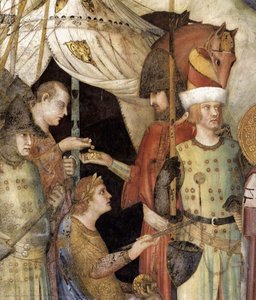
Martini's style is immediately recognizable for its departure from the more monumental forms favored in Florence. He embraced a delicate sensibility, characterized by flowing lines, soft decorative details, and an overall sense of grace. This aesthetic wasn’t born in isolation; it was profoundly influenced by external forces. The Via Francigena, a major pilgrimage route traversing Europe, brought with it artistic currents from France—particularly the refined elegance of French manuscript illumination and ivory carving. These influences are readily apparent in Martini's work, manifesting as intricate patterns, elongated figures, and a heightened attention to surface ornamentation. He didn’t simply copy these styles; he synthesized them with existing Sienese traditions, creating something entirely new. His paintings weren’t merely representations of religious scenes but rather elegant narratives imbued with emotional depth and visual poetry. The Saint Louis of Toulouse Crowning His Brother Robert of Anjou, painted in 1317 during a sojourn in Naples, exemplifies this masterful blend of narrative skill and refined composition. The work showcases Martini’s ability to depict complex scenes with clarity and grace, while simultaneously imbuing them with a sense of courtly splendor.
From Siena to Avignon: A Courtly Appointment
Martini's reputation extended beyond the borders of Italy, leading to a significant turning point in his career. In 1336, he accepted a commission from Pope Benedict XII to create frescoes for the Papal Palace in Avignon, France—a move that placed him at the heart of European power and patronage. This appointment wasn’t merely about artistic skill; it was a testament to Martini's ability to cater to the tastes of a sophisticated courtly audience. While in Avignon, he entered into a remarkable intellectual circle, befriending Francesco Petrarca—better known as Petrarch, the renowned humanist poet. The connection with Petrarch is particularly poignant, as Vasari and other sources suggest that Martini painted a portrait of Laura de Noves, Petrarch’s lifelong muse. Though the portrait itself is lost to time, its very existence speaks volumes about Martini's status as a celebrated artist capable of capturing not only physical likeness but also the essence of beauty and inspiration. The Annunciation with St. Margaret and St. Ansanus, created during his time in Florence before moving to Avignon, is a testament to this period, showcasing delicate beauty and refined aesthetic.
Legacy and Enduring Influence
Simone Martini’s impact on the development of European art cannot be overstated. He played a crucial role in disseminating the International Gothic style—a movement characterized by its elegance, refinement, and emphasis on decorative detail—across the continent. His influence extended to generations of artists who followed, shaping the course of late medieval and early Renaissance painting. Martini’s work wasn't simply about technical skill; it was about creating a visual language that resonated with the sensibilities of his time—a language of beauty, grace, and spiritual devotion. Even today, his paintings continue to captivate viewers with their exquisite detail, harmonious compositions, and enduring sense of elegance. His frescoes in San Francesco d’Assisi demonstrate his mastery of large-scale decorative painting, while works like the Saint Catherine of Alexandria Polyptych showcase his unparalleled command of color and form. Simone Martini died in Avignon in 1344, leaving behind a legacy that continues to inspire awe and admiration centuries later—a testament to the enduring power of art to transcend time and touch the human spirit.

Simone Martini
1284 - 1344 , Italy
Quick Facts
- Artistic Movement Or Style: International Gothic
- Artists Or Movements Influenced By This Artist: ['International Gothic style']
- Artists Who Influenced This Artist:
- Duccio di Buoninsegna
- Giotto di Bondone
- Date Of Birth: c. 1284
- Date Of Death: 1344
- Full Name: Simone Martini
- Nationality: Italian
- Notable Artworks:
- St. Louis Crowning Robert
- Saint Catherine Polyptych
- Annunciation (Uffizi)
- Consecration of Chapel
- Place Of Birth: Siena, Italy

