 Preview
 Send
Send Share
Share
 Details

 Download
 Similars
 X-Ray
X-Ray Diaporama
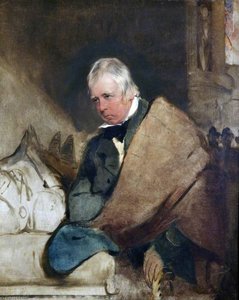
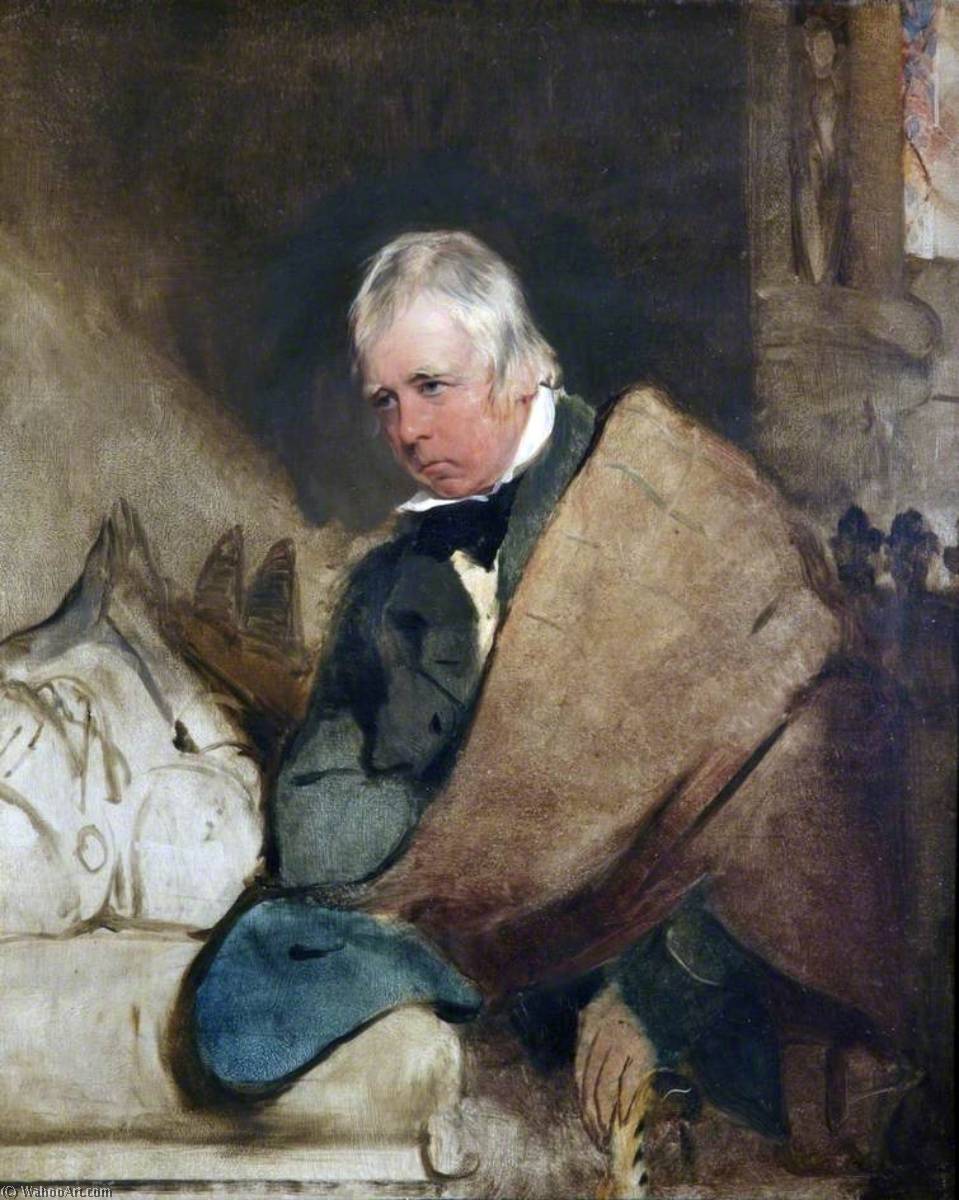
Sir Walter Scott (1771–1832)
 Oil On Canvas
- WallArt
- Romanticism
 1824
1824 61.0 x 51.0 cm
 Walker Art Gallery
 Read More
Hand Made Oil Reproduction
Hand-painted oil on canvas in your size and frame, made to order by our artists. ( Buy Print Buy Image)




P118B $10

P118H $10

P118W $10

P438Z $10

P508JH $12

P508YH $12

P805H $10

P805Z $10

P919BZ $10

P919G $10

P919XJ $10

P959ZH $10

P968JZ $12

W106C $8

W218G $10

W218JH $8

W218Y $10

W307PJ $10

W316G $10

W316PJ $8

W316Y $10

W398PJ $8

W4111J $10

W500HY $15

W500JH $15

W692G $12

W849H $8

W940BG $15

W953PJ $8




Pick from our preset sizes that match the artwork's original proportions.

You may enter your own dimensions to fit a specific frame or space. If your selected size does not match the original image's proportions, we will either crop the artwork or extend the painting with additional hand-painted elements. A digital mockup will be sent for your approval before production begins.
Please note that the on-screen preview does not reflect the actual cropping or extension. Only the mockup will accurately show the final composition.
While custom sizes are available, we recommend selecting a dimension from the predefined list to preserve the original proportions.
After order, ArtsDot.com team will email client for instructions and provide a mockup preview
Worldwide Delivery () in 3/4 weeks instead of standard 5 weeks. (23 August). No compromise on quality.

Free Worldwide Express Shipping

High-Quality Linen Canvas

Full Shipping Insurance

Customs Tax Refund Guarantee

True Color Matching Guarantee

60-Day Return Policy (Defects Only)

100% Money-Back Guarantee

Bulk Discount Offer
 Glass option is only available in size under 110 CM

Sir Walter Scott (1771–1832)
Reproduction Medium
Reproduction Size
-


Total Price
$ 263
Artwork Description
A Solitary Giant: Edwin Landseer’s Portrait of Sir Walter Scott
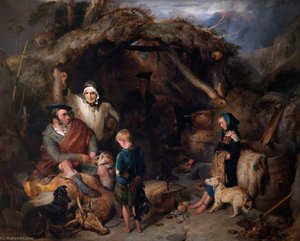
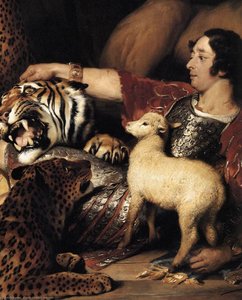
The year is 1824. The literary world is ablaze with the tales of Sir Walter Scott, whose evocative narratives of Scottish history and folklore have captured the imagination of a nation – and indeed, Europe. It's within this vibrant cultural landscape that Edwin Landseer, one of Britain’s most celebrated artists, embarked on a commission to immortalize the man himself: a portrait of Sir Walter Scott seated amidst the brooding majesty of a mountainous interior. This is more than simply a likeness; it’s a carefully constructed tableau designed to convey both the subject's intellectual stature and the profound emotional resonance of his work.
Landseer, already renowned for his breathtaking depictions of animals – particularly horses – possessed an extraordinary ability to imbue his subjects with life. He wasn’t merely rendering a portrait; he was attempting to capture the very essence of Scott's character, his contemplative nature, and the weight of his literary legacy. The composition itself is masterfully orchestrated. Scott, rendered in a dignified pose, sits within what appears to be a vast cavern or mountainous grotto, bathed in dramatic chiaroscuro – an intense contrast between light and shadow that immediately draws the eye to the central figure. The rough-hewn rock formations of the background, rendered with palpable texture through Landseer’s skillful brushwork, create a sense of enclosure and isolation, mirroring perhaps the solitary nature of the writer's life and his immersion in the worlds he created.
The Romantic Palette and Dramatic Lighting
Technically, the portrait is executed in oil on canvas, a medium that allowed Landseer to achieve the rich textures and nuanced tonal variations crucial to his vision. The color palette is deliberately muted – dominated by browns, grays, and blues – reflecting the somber atmosphere of the setting and subtly hinting at the melancholy often associated with Scott’s later years. However, within this restrained scheme, Landseer employs a dramatic use of light, directing it powerfully onto Scott's face, illuminating his features with an almost ethereal glow. This strategic lighting not only highlights the subject’s intelligence and gravitas but also serves to emphasize the solitude he embodies.
The artist’s attention to detail is remarkable. The folds of Scott’s clothing are rendered with meticulous precision, conveying a sense of both comfort and formality. The texture of the fabric – a heavy wool or tweed – contrasts beautifully with the rough stone of the cavern walls, further emphasizing the juxtaposition between man and nature. Landseer's use of line is equally effective, employing angular lines to define the cave walls and more organic curves to represent Scott’s form, creating a dynamic interplay between structure and fluidity.
Symbolism and the Weight of Legacy
Beyond its technical brilliance, the portrait is laden with symbolism. The mountainous setting itself can be interpreted as representing the vastness of Scott's imagination – the boundless landscapes he brought to life through his writing. The solitary figure within this imposing environment speaks to the intellectual isolation often experienced by artists and writers, those who spend their lives immersed in thought and creation. Scott’s posture—seated, contemplative, holding a quill pen—underscores his role as a chronicler of history and legend, a man dedicated to preserving and sharing stories.
The portrait was completed during a period of immense literary excitement surrounding Scott's work. His novels were hugely popular, shaping the Romantic movement and influencing generations of writers. Landseer’s depiction captures not just Scott’s physical appearance but also the spirit of an era—a time of national pride, artistic innovation, and a renewed interest in Scottish heritage. It is a powerful testament to the enduring legacy of Sir Walter Scott and a remarkable achievement in Victorian portraiture.
A Timeless Masterpiece for Reproduction
Today, Edwin Landseer’s Portrait of Sir Walter Scott remains a captivating work of art, admired for its dramatic composition, masterful technique, and profound emotional resonance. Reproductions offer an accessible way to experience the beauty and power of this iconic image, bringing its evocative atmosphere into any interior space. Whether displayed in a grand hall or a cozy study, this portrait serves as a reminder of the enduring influence of literature and the timeless appeal of artistic vision.
Related Artworks
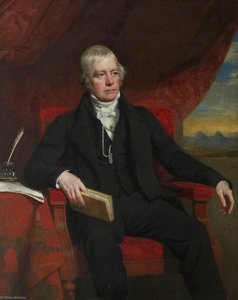
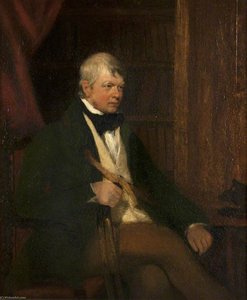
Artist Biography
A Life Etched in Animal Form: The World of Sir Edwin Landseer
Sir Edwin Henry Landseer, born in London on March 7, 1802, was more than merely a painter of animals; he became a visual chronicler of the Victorian soul as reflected through them. His father, John Landseer, an accomplished engraver, instilled in young Edwin an early appreciation for art and technique, but it was the boy’s innate talent – a prodigious gift for capturing the essence of living creatures – that truly set him on his path. From a tender age, he demonstrated remarkable skill, exhibiting at the Royal Academy at just thirteen, a feat unheard of for most aspiring artists. This early success wasn't simply luck; it was the culmination of dedicated study, initially under his father and later with history painter Benjamin Robert Haydon, who uniquely encouraged anatomical dissection to fully understand animal musculature – a practice that would profoundly influence Landseer’s realism. He absorbed knowledge like a sponge, mastering not only form but also the subtle nuances of expression that breathed life into his canvases. This dedication to understanding the very structure of his subjects set him apart, allowing for an unparalleled level of authenticity in his depictions.From Highland Stags to Royal Commissions: A Flourishing Career
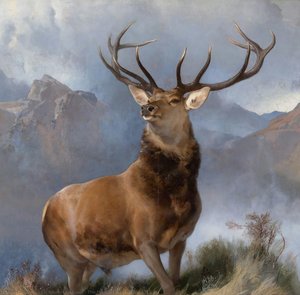
Landseer’s artistic career blossomed with an exceptional focus on animals – horses, dogs, and stags becoming his signature subjects. However, to categorize him solely as an “animal painter” would be a disservice. His work transcended mere representation; it imbued these creatures with human-like qualities, often laden with symbolic meaning that resonated deeply with Victorian sensibilities. A pivotal moment came with his travels to Scotland in 1824, where he encountered the majestic landscapes and wildlife that would forever shape his artistic vision. This experience birthed iconic works like Monarch of the Glen, completed in 1851, a breathtaking depiction of a stag embodying nobility, power, and the untamed beauty of the Highlands. His ability to capture not just physical likeness but also character and emotion quickly garnered him widespread acclaim. This talent led to commissions from Queen Victoria herself, solidifying his position as a leading artist of the era. He painted portraits of the royal family alongside their beloved pets, further cementing his status within aristocratic circles. Perhaps his most enduring legacy are the lions that guard Nelson’s Column in Trafalgar Square – powerful testaments to his sculptural skill and national recognition; they were unveiled in 1867 after years of dedicated work. These monumental sculptures weren't simply decorative; they represented British strength and imperial power, further elevating Landseer to a position of national importance.A Master of Technique and Emotional Resonance
Landseer’s technical mastery was undeniable. He wasn’t simply replicating what he saw, but interpreting it through a lens of profound understanding. His paintings are characterized by meticulous detail, dramatic lighting, and a masterful use of color to evoke mood and atmosphere. He skillfully blended realism with romanticism, creating scenes that were both visually stunning and emotionally engaging. Off to the Rescue, painted in 1827, exemplifies this skill; the Newfoundland dog depicted isn’t just a canine rescuer but a symbol of loyalty, courage, and selfless devotion – qualities highly valued by Victorian society. Even his more satirical works, such as Laying Down the Law (1840), featuring a group of dogs engaged in human-like legal proceedings, reveal a keen observational wit and a subtle commentary on societal norms. He wasn’t afraid to inject humor into his art, demonstrating a versatility that extended beyond grand landscapes and noble animal portraits. This ability to convey complex narratives through animal subjects was a hallmark of his style, appealing to a broad audience while simultaneously offering layers of intellectual engagement.Shadows and Legacy: A Complex Artistic Journey
Despite his immense success, Landseer's life was not without its struggles. In his later years, he battled recurring bouts of depression and ill health, exacerbated by alcohol and drug use. A nervous breakdown in 1840 marked a turning point, casting a shadow over his final decades. Despite these personal demons, he continued to produce remarkable work, but a sense of melancholy often permeated his paintings. His declining mental state eventually led to him being declared insane in 1872, a tragic end for such a brilliant mind. Yet, his legacy remains firmly etched in the annals of British art history. The “Landseer” variety of Newfoundland dog – characterized by its distinctive black and white markings – stands as a living tribute to his influence. His paintings continue to captivate audiences with their beauty, emotional depth, and masterful technique. He wasn’t just an artist who painted animals; he was an interpreter of the natural world, a storyteller who used brushstrokes to reveal the hidden emotions and symbolic meanings within it, leaving behind a body of work that continues to inspire and resonate today.Further Exploration
- Museums: Tate Britain, London; Victoria and Albert Museum, London; Kenwood House, London; The Wallace Collection, London.
- Online Resources: ArtsDot.com; Wikipedia (Sir Edwin Landseer).
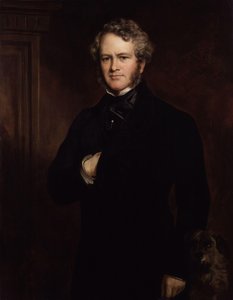
Sir Edwin Henry Landseer
1802 - 1873 , United Kingdom
Quick Facts
- Artistic Movement Or Style: Victorian realism
- Artists Or Movements Influenced By This Artist:
- Newfoundland breed
- Victorian art
- Artists Who Influenced This Artist:
- John Landseer
- B.R. Haydon
- Date Of Birth: March 7, 1802
- Date Of Death: October 1, 1873
- Full Name: Sir Edwin Henry Landseer
- Nationality: British
- Notable Artworks:
- Monarch of the Glen
- Saved
- Laying Down the Law
- Place Of Birth: London, UK
Related Articles
Sir Joshua Reynolds' Masterpieces: 25 Portraits of Power & Refinement | ArtsDot
Explore 25 captivating portraits by Sir Joshua Reynolds, a master of British art. Discover stories behind his iconic paintings, elegant style & historical influence. Find museum-quality reproductions and elevate your home decor on ArtsDot.com.

Sir Alfred Munnings' Masterpieces: 25 Paintings That Define Equine Art | ArtsDot
Explore 25 iconic Sir Alfred Munnings paintings! Discover the beauty of British Impressionism, equine art & rural England. Find museum-quality reproductions and elevate your home decor with ArtsDot. Explore the full collection online.
Sir Edwin Landseer: Sentiment, Society & the Victorian Animalier Tradition
Explore the life & art of Sir Edwin Landseer, Victorian Britain's foremost animal painter. Discover his iconic works, societal impact, and collecting guide at ArtsDot.
19th Century Masterpieces: 10 Paintings That Defined an Era | ArtsDot
Journey through 19th century art with ArtsDot! Explore 10 iconic paintings – from Monet & Renoir to Courbet – and discover the stories behind Romanticism, Realism & Impressionism. Find museum-quality reproductions for your home decor. Explore the full collection online!
Samuel Walters: Capturing Victorian Maritime Life with Precision & Artistry
Explore the exquisite maritime paintings of Samuel Walters (1811-1882). Discover his mastery of detail, historical scenes & influence on Victorian art. Learn about collecting his works and find high-quality reproductions at ArtsDot.