

 Preview
 Send
Send Share
Share
 Details

 Download
 Similars
 X-Ray
X-Ray Diaporama
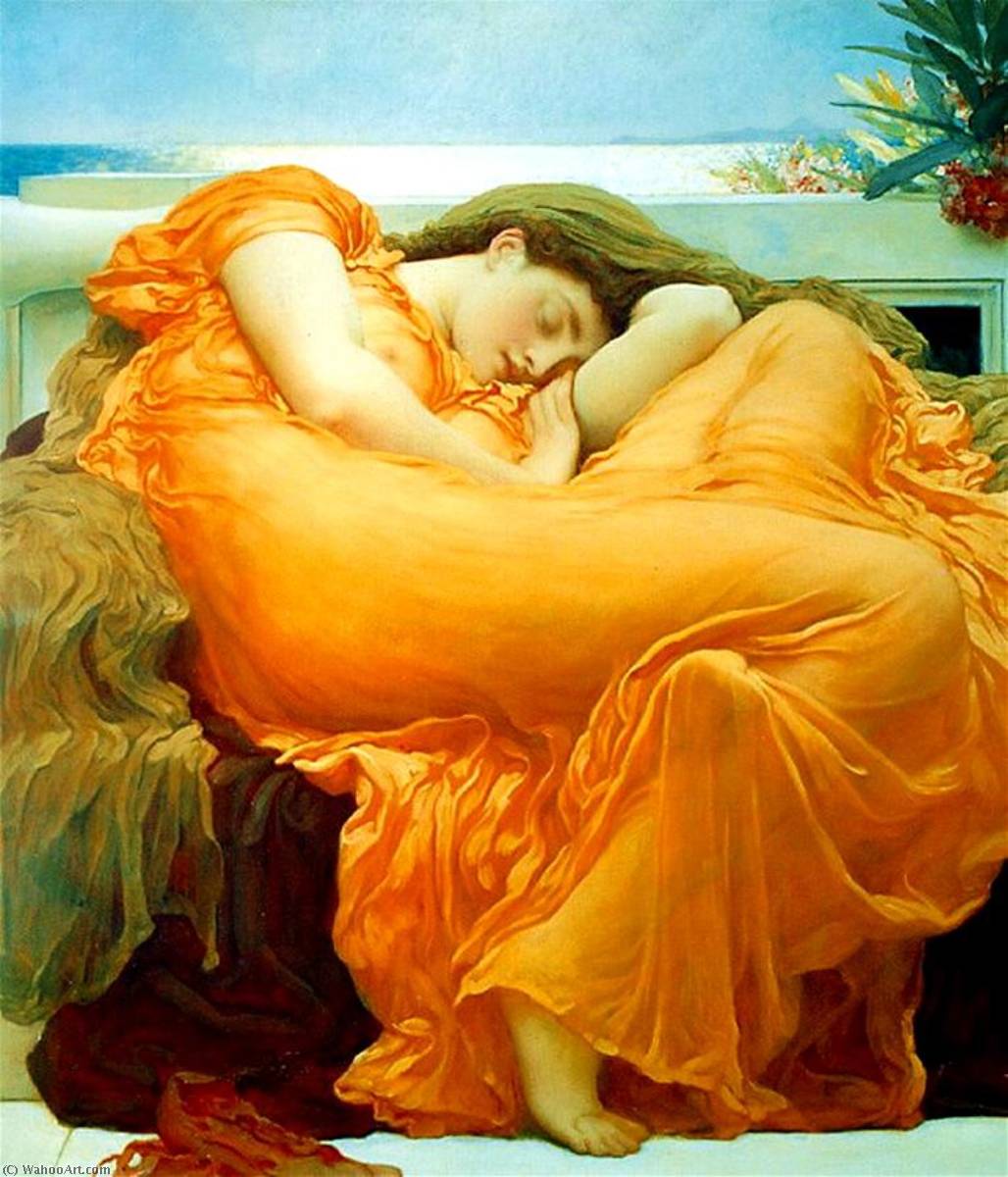
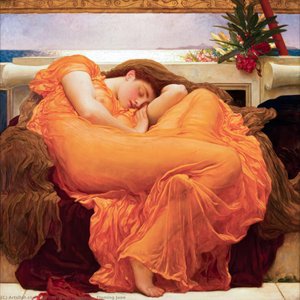
English Flaming June
 Oil On Canvas
- WallArt
- Academicism
 1895
1895- 19th Century
 121.0 x 121.0 cm
 Read More
Purchase a high-resolution, enhanced digital image, far superior to the online preview.
Each file is meticulously prepared by our in-house specialists using advanced tools and expert manual retouching. We ensure every image has exceptional clarity, precise color accuracy, and fine detail.
The final file is delivered via email within 72 hours, optimized for immediate use in professional, editorial, and print environments. This is the same quality trusted by top-tier design studios, publishers, and galleries.
Digital Image
Download a high-resolution file for personal display, printing, and creative projects. ( Buy Print Buy Hand Made Painting)
Included in Every Digital Image Order
Expert Digital Delivery, Guaranteed
When you choose ArtsDot.com, you're not just getting an image - you're receiving a professionally enhanced digital artwork, crafted with precision and backed by a satisfaction guarantee. Here's everything that comes with your order, automatically:

Fast Email Delivery
Your high-resolution digital image file will be emailed to you within 72 hours of ordering - ready for immediate use.

AI-Enhanced Digital File
Your artwork is professionally optimized using advanced AI tools and manual editing, ensuring maximum detail, clarity, and color accuracy.

Free Lifetime Re-Delivery
Accidentally deleted or lost your file? No worries - we'll resend it to you anytime, free of charge.

No Import Fees - Ever
Enjoy your artwork instantly with zero customs, duties, or delivery fees - digital downloads are always tax-free.

Color Accuracy Guarantee
We ensure your digital image reflects the original colors as closely as possible using professional tools and color management.

60-Day Satisfaction Guarantee
If you're not satisfied with your digital image, we'll revise it or refund 100% within 60 days - no questions asked.

100% Money-Back Guarantee
Not satisfied? Get a full refund within 60 days of receiving your digital file - no questions asked.

Bulk Order Discounts
Buy 3 images, save 10% - Buy 5, save 15% - Buy 10+, save 20%. Great for creative projects, galleries, and agencies.
Collectible Description
A Vision of Serenity: The Radiance of English Flaming June
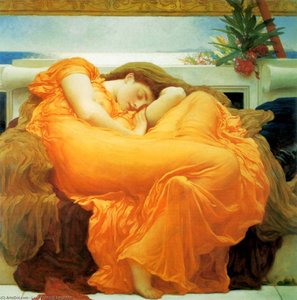
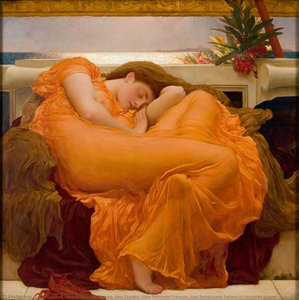
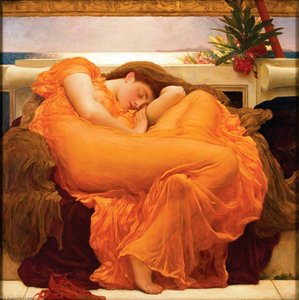
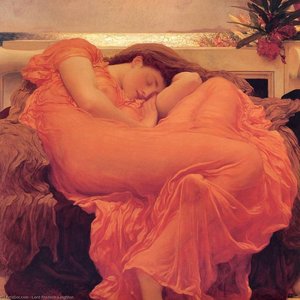
In the pantheon of Victorian masterpieces, few images possess the hypnotic allure and luminous warmth of Sir Frederic Lord Leighton’s English Flaming June. Created in 1895, this breathtaking work serves as a profound meditation on repose, capturing a moment of profound stillness that feels both timeless and deeply intimate. The painting depicts a woman lost in a dreamlike slumber, her form draped in a cascade of vibrant, saffron-colored fabric that seems to glow from within. As she rests upon a plush couch, the composition invites the viewer into a private sanctuary where the outside world fades into insignificance, replaced by the soft, rhythmic breathing of a soul at peace.
The brilliance of Leighton’s technique lies in his masterful command of light and color. The artist employs an Academic precision that elevates the scene from a mere portrait to a celestial event. Notice how the natural light, streaming through an unseen window, dances across the folds of her crimson and orange garments, creating a chiaroscuro effect that lends a sculptural weight to the fabric. This interplay of light and shadow does more than define form; it breathes life into the textile, making the silk appear almost liquid, as if the warmth of a summer afternoon has been permanently captured within the pigment. For the discerning collector or interior designer, this painting offers a centerpiece of unparalleled sensory richness, capable of anchoring a room with its golden, sun-drenched atmosphere.
Classical Elegance and Symbolic Depth
Beyond its surface beauty, English Flaming June is steeped in the classical traditions that Leighton so dearly loved. As a leading figure of the Academic movement, Leighton drew immense inspiration from antiquity, and this piece reflects a deep reverence for the idealized human form. The subject’s posture—relaxed, vulnerable, yet dignified—evokes the grace of classical sculpture. The inclusion of subtle botanical elements, such as the delicate potted plants and the elegant vase resting near her side, suggests a curated, civilized environment, a lush indoor garden that mirrors the vitality of the summer season itself.
The symbolism within the work speaks to the ephemeral nature of beauty and the fleeting warmth of June. The "flaming" quality of the colors serves as a metaphor for the peak of life and passion, even in a moment of total inactivity. There is a profound emotional resonance in this stillness; it captures the bittersweet realization that such moments of perfect tranquility are transient. For those seeking to adorn their homes with art that inspires contemplation, this reproduction offers more than just decoration; it provides a window into a world of refined elegance and emotional depth, making it an exquisite choice for any sophisticated interior designed to evoke peace and luxury.
Related Artworks
Artist Biography
A Life Bathed in Light: The World of Sir Frederic Leighton
Born into privilege in Scarborough, England, in 1830, Frederic Leighton’s path to artistic renown was paved by a unique confluence of wealth, education, and an insatiable curiosity for the classical world. His grandfather's distinguished service as physician to the Russian Tsars provided a financial foundation that allowed young Frederic to pursue his passion without constraint—a rare advantage in the often-precarious life of a 19th-century artist. This freedom enabled him to embark on extensive travels across Europe, immersing himself in the artistic currents of Italy, Germany, and France. It was during these formative years, studying under masters like Eduard von Steinle and Giovanni Costa, that Leighton began to cultivate his distinctive style—a blend of academic precision, Pre-Raphaelite sensuality, and a deep reverence for classical antiquity. A particularly poignant moment in his early life occurred at the age of seventeen when he encountered the philosopher Arthur Schopenhauer in Frankfurt, creating the only known full-length portrait of the famously reclusive thinker. This encounter hints at Leighton’s intellectual depth and his fascination with exploring the complexities of the human condition—themes that would permeate his art for decades to come.The Painterly Embrace of Myth and History
Leighton's artistic career flourished in an era captivated by historical narratives, biblical tales, and classical mythology. He didn’t merely illustrate these subjects; he *inhabited* them, meticulously researching costumes, settings, and the nuances of ancient life to create works that felt both authentic and dramatically compelling. His paintings weren’t simply depictions—they were immersive experiences, transporting viewers to worlds of gods, heroes, and forgotten empires. Clytie, perhaps one of his most celebrated works, exemplifies this approach. The painting portrays the nymph Clytie transformed into a sunflower, yearning for the sun god Apollo. It's not just a beautiful image; it’s an exploration of unrequited love, longing, and the transformative power of nature—rendered with breathtaking detail and a luminous quality that seems to emanate from within. Similarly, The Daphnephoria, depicting a procession honoring the god Apollo, showcases Leighton's mastery of composition, color, and his ability to capture movement and energy on canvas. He wasn’t afraid to embrace opulent textures, rich fabrics, and dramatic lighting—elements that contributed to the sheer visual splendor of his work.Beyond the Canvas: Sculpture and Architectural Vision
While primarily known as a painter, Leighton's artistic ambitions extended beyond the two-dimensional realm. He was a gifted sculptor, and his Athlete Wrestling with a Python, created between 1888 and 1891, marked a pivotal moment in British sculpture—often credited with initiating a renaissance in contemporary sculptural practice known as the “New Sculpture.” This work, carved from pristine white marble, embodies both physical power and dramatic tension. But Leighton’s creative vision didn't stop there. He was also an avid collector of art and artifacts, particularly those from the Near East. These treasures weren’t merely displayed; they were integrated into the very fabric of his home, Leighton House in Holland Park, London. Designed by George Aitchison, Leighton House is a masterpiece in its own right—a stunning example of Aestheticism that served as both a residence and a studio. The iconic Arab Hall, with its intricate tilework and soaring arches, stands as a testament to Leighton’s eclectic tastes and his desire to create a total work of art—an environment that would inspire and nurture his creativity.Legacy and the Echoes of an Era
Leighton's influence on British art was profound. He served as President of the Royal Academy from 1878 until his death in 1896, a position he held with distinction, championing artistic excellence and fostering a vibrant creative community. He was knighted in 1878, made a baronet in 1886, and remarkably, granted a peerage just one day before his passing—a testament to the immense respect he commanded within the art world and beyond. While his work fell out of favor for some time after his death, eclipsed by the rise of modernism, there has been a significant resurgence of interest in Leighton’s art in recent decades. Today, his paintings and sculptures are celebrated for their technical brilliance, their evocative power, and their ability to transport viewers to worlds of beauty and wonder.- His works continue to inspire artists and captivate audiences around the globe.
- Leighton House Museum stands as a lasting tribute to his artistic vision and remains a vital cultural landmark.
- He represents a fascinating intersection of Victorian ideals, classical influences, and Pre-Raphaelite sensibilities—a unique voice in the history of British art.
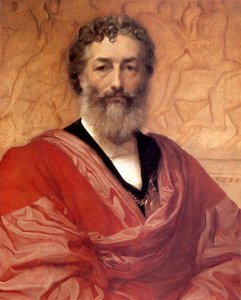
Sir Frederic Lord Leighton
1830 - 1896 , United Kingdom
Quick Facts
- Artistic Movement Or Style: Academic, Pre-Raphaelite
- Artists Or Movements Influenced By This Artist: ['New Sculpture movement']
- Artists Who Influenced This Artist:
- Eduard von Steinle
- Giovanni Costa
- Date Of Birth: December 3, 1830
- Date Of Death: January 25, 1896
- Full Name: Sir Frederic Lord Leighton
- Nationality: British
- Notable Artworks:
- Clytie
- Flaming June
- Athlete wrestling python
- Place Of Birth: Scarborough, UK

