 Preview
 Send
Send Share
Share
 Details

 Download
 Similars
 X-Ray
X-Ray Diaporama
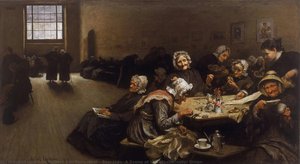
Eventide: A Scene at the Westminster Union
 Oil On Canvas
- WallArt
- Social Realism
 1878
1878 1985.0 x 1105.0 cm
 Walker Art Gallery
 Read More
Giclée / Art Print
Museum-quality giclée or canvas print with fast production and flexible finish options. ( Buy Hand Made Painting Buy Image)




P118B $10

P118H $10

P118W $10

P438Z $10

P508JH $12

P508YH $12

P805H $10

P805Z $10

P919BZ $10

P919G $10

P919XJ $10

P959ZH $10

P968JZ $12

W106C $8

W218G $10

W218JH $8

W218Y $10

W307PJ $10

W316G $10

W316PJ $8

W316Y $10

W398PJ $8

W4111J $10

W500HY $15

W500JH $15

W692G $12

W849H $8

W940BG $15

W953PJ $8




Pick from our preset sizes that match the artwork's original proportions.

You may enter your own dimensions to fit a specific frame or space. If your selected size does not match the original image's proportions, we will either crop the artwork or extend the image with a mirrored or solid-fill edge. A digital mockup will be sent for your approval before production begins.
Please note that the on-screen preview does not reflect the actual cropping or extension. Only the mockup will accurately show the final composition.
While custom sizes are available, we recommend selecting a dimension from the predefined list to preserve the original proportions.
Worldwide Delivery () in 2 weeks instead of standard 4/5 weeks. (23 August)

Free Worldwide Express Shipping

High-Quality Linen Canvas

Full Shipping Insurance

Customs Tax Refund Guarantee

True Color Matching Guarantee

60-Day Return Policy (Defects Only)

100% Money-Back Guarantee

Bulk Discount Offer
 Glass option is only available in size under 110 CM

Eventide: A Scene at the Westminster Union
Giclée / Art Print
Reproduction Size
-


Total Price
$ 63
Collectible Description
Eventide: A Scene at the Westminster Union – A Window into Victorian Social Realism
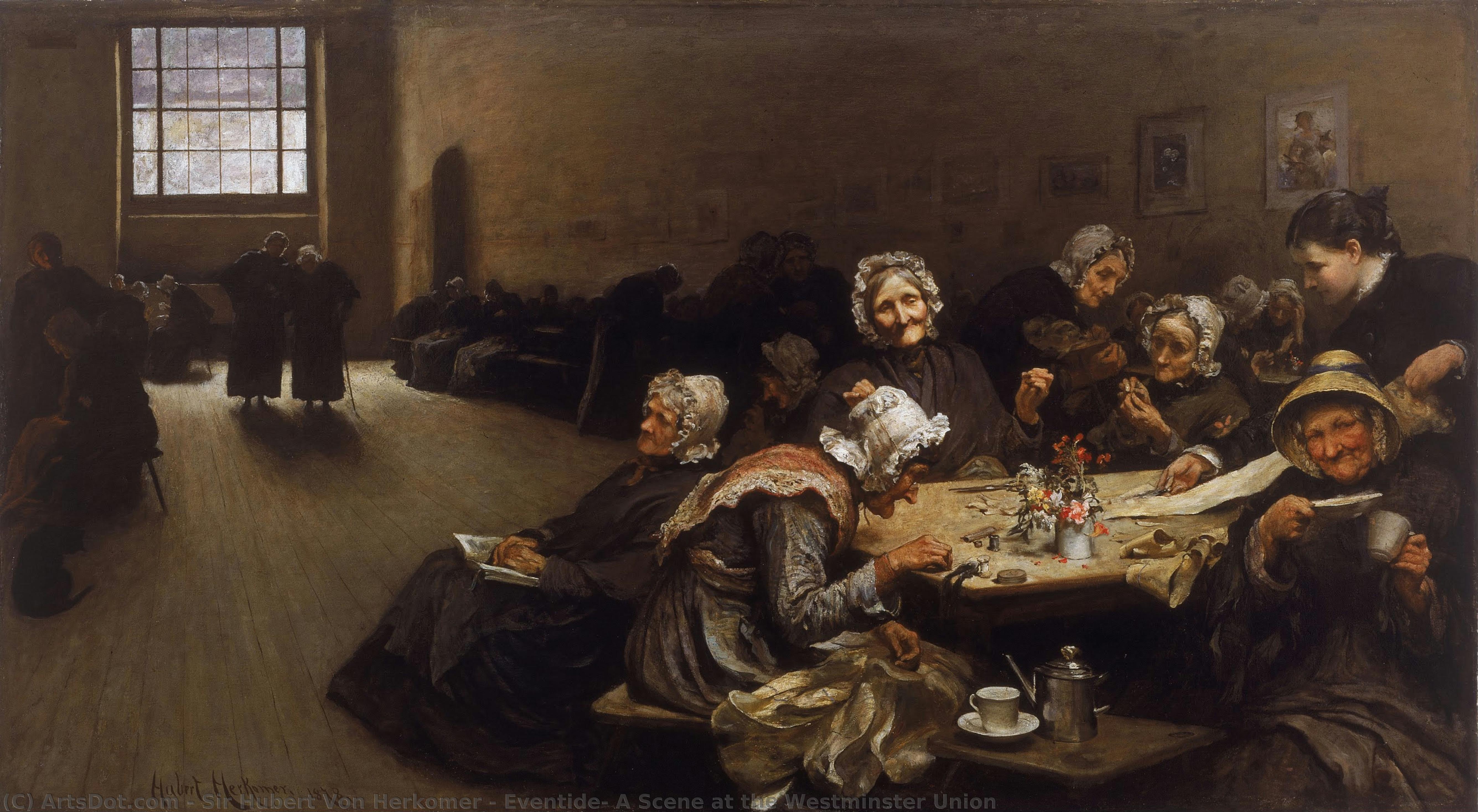
Sir Hubert von Herkomer’s “Eventide: A Scene at the Westminster Union,” completed in 1878, offers a profoundly moving and unexpectedly poignant glimpse into the realities of institutional care during the late Victorian era. This large-scale oil on canvas, measuring an impressive 1985 x 1105 cm, depicts a gathering within the St James’s Workhouse in London – a space often shrouded in grimness and despair – yet Herkomer masterfully imbues the scene with a remarkable sense of warmth and quiet dignity. The painting's significance lies not just in its subject matter but also in Herkomer’s position as one of the leading Social Realists, meticulously documenting urban poverty and the plight of the vulnerable within London’s workhouses.
- Historical Context: Created during a period of significant social reform and growing awareness of poverty, “Eventide” reflects the anxieties surrounding the burgeoning industrial workforce and the increasing number of individuals reliant on charitable institutions.
- The Workhouse Narrative: By 1878, workhouses were primarily populated by the elderly and infirm, representing a stark contrast to the initial purpose of providing temporary refuge for the unemployed. Herkomer’s choice to portray this demographic reveals a compassionate engagement with a marginalized segment of society.
- Influence of The Graphic: Interestingly, the painting was initially based on an engraving by Herkomer himself for *The Graphic* magazine – a publication widely circulated among Social Realist artists. This engraving, however, presented a considerably bleaker depiction of workhouse life; Herkomer’s canvas transforms this darkness into something far more nuanced and humane.
Technique and Artistic Style
Herkomer's technical skill is immediately apparent in the meticulous rendering of his subjects. The dramatic lighting, a key element of the composition, creates a powerful sense of depth and draws the viewer’s eye to the central figures. Violent recession into depth, as noted in the description, amplifies this effect, lending an almost theatrical quality to the scene. The artist employs loose brushwork, particularly in depicting the textures of clothing and furnishings, contributing to the painting's overall realism. While rooted in observation, Herkomer’s style transcends mere documentation; he skillfully manipulates light and shadow to evoke a specific emotional response – one of quiet contemplation and perhaps even melancholy.
- Oil on Canvas: The use of oil paint allowed for rich color saturation and subtle gradations in tone, essential for capturing the nuances of light and form.
- Compositional Depth: Herkomer’s masterful use of perspective creates a convincing sense of space, drawing the viewer into the scene and emphasizing the intimacy of the gathering.
- Realistic Detail: The artist's attention to detail – from the worn fabrics to the individual expressions on the faces of the subjects – contributes significantly to the painting’s authenticity.
Symbolism and Emotional Impact
“Eventide” is more than just a depiction of a workhouse scene; it’s a meditation on aging, vulnerability, and the human need for connection. The thirteen individuals gathered around the table – seated and standing – represent a microcosm of society, united by circumstance and perhaps by a shared sense of quiet dignity. The presence of cups suggests a moment of respite, a brief opportunity for companionship amidst their confinement. Despite the inherent sadness associated with the subject matter, Herkomer’s handling of light and composition avoids outright despair, fostering instead a feeling of poignant beauty and empathy. The painting serves as a powerful reminder of the importance of compassion and social responsibility.
Dimensions and Availability
This exceptional artwork measures 1985 x 1105 cm and is available for reproduction in a variety of sizes to suit your individual needs and décor. A hand-painted reproduction captures the essence of Herkomer’s original vision, offering an authentic representation of this significant work of Social Realism.
Related Artworks



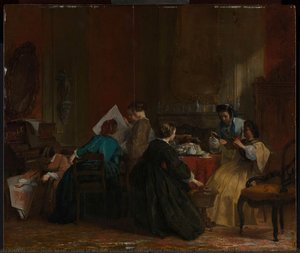
Artist Biography
Sir Hubert von Herkomer: Life & Legacy
Early Life and Education
- Sir Hubert von Herkomer (born Hubert Herkomer on May 26, 1849 – died March 31, 1914) was a German-born British painter, film director, and composer.
- His family originated from Bavaria but faced financial struggles; his mother supplemented their income by giving music lessons.
- Herkomer’s formal education was limited due to illness, and he did not return to school after falling sick at a young age.
- He began artistic training in Southampton before attending the South Kensington Schools in 1866 for more serious study.
Artistic Career & Development
- Herkomer first exhibited at the Royal Academy in 1869, marking the beginning of his professional career.
- By 1875, he had established himself as a significant artist with his oil painting, The Last Muster, based on an earlier woodblock.
- His early works often depicted scenes of rural life and the hardships faced by the working class, reflecting a commitment to social realism.
- He later became known for his portraiture, particularly of prominent men of the era.
Notable Works & Achievements
- Hard Times (1885): Perhaps his most famous work, depicting a struggling family and embodying social commentary. It is currently held at Manchester Art Gallery.
- The Last Muster (1875): A pivotal painting that solidified his reputation within the Royal Academy.
- Eventide: A Scene in the Westminster Union (1878): Another significant early work showcasing his realist style and social concerns.
- Elected an Associate of the Royal Academy in 1879 and a full Academician in 1890.
- Appointed Slade Professor of Fine Art at the University of Oxford in 1885, holding the position until 1894.
Influences & Artistic Style
- Herkomer’s work was influenced by the Realist movement and a desire to depict life accurately, particularly the lives of ordinary people.
- He drew inspiration from artists like Jean-François Millet and Gustave Courbet, who also focused on social realism.
- His style evolved over time, incorporating elements of Impressionism while maintaining his commitment to detailed observation and emotional depth.
Legacy & Historical Significance
- In 1899, Herkomer was ennobled as Ritter von Herkomer by King Otto of Bavaria.
- He received the Pour le Mérite for Arts from Kaiser Wilhelm II in the same year.
- Knighted by King Edward VII in 1907, further recognizing his contributions to the art world.
- Herkomer’s work provides valuable insight into Victorian society and the social issues of his time.
- He was a pioneer in using photography as an aid to painting and also experimented with early filmmaking.
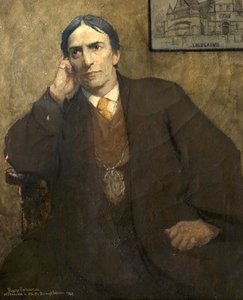
sir hubert von herkomer
1849 - 1914 , Germany
Quick Facts
- Birth Date: May 26, 1849
- Birth Place: Waal, Germany
- Death Date: March 31, 1914
- Movement: Realism, Social Realism
- Name: Sir Hubert von Herkomer
- Nationality: British (born German)
- Notable Works:
- The Last Muster
- Hard Times
- Eventide: A Scene in the Westminster Union
Related Articles

Oil on Canvas: A Historical & Technical Exploration of a Timeless Artistic Medium
Explore the rich history & enduring techniques of oil painting on canvas. Discover the science behind its longevity, conservation practices, and contemporary relevance. Expert insights for art enthusiasts.

The Enduring Legacy of Oil on Canvas: Technique, History & Aesthetic Impact
Explore the rich history & techniques of oil painting – from Renaissance masters to Impressionism. Discover pigments, layering methods, and why this timeless medium endures. Expert insights for artists & art enthusiasts.

The Enduring Legacy of Oil on Canvas: Technique, History & Contemporary Practice
Explore the rich history & enduring techniques of oil painting on canvas. Discover the science behind its longevity, conservation practices, and contemporary relevance. Expert insights for art enthusiasts.

Oil on Canvas Masters: 10 Paintings That Redefined Art History |
Journey through art history with our guide to 10 legendary oil on canvas masterpieces! Explore iconic works by Van Gogh, Monet & Rembrandt. Find museum-quality reproductions and elevate your home decor at . Discover all masterpieces online.
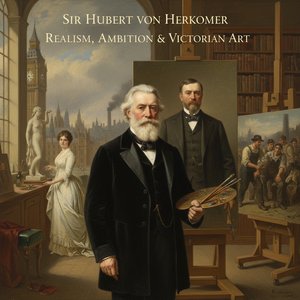
Sir Hubert von Herkomer: A Life Painted with Realism, Ambition & Victorian Art
Explore the life & art of Sir Hubert von Herkomer, a pivotal Victorian realist painter. Discover his powerful portraits, social commentary & pioneering film work. Learn about his legacy and find high-quality reproductions at ArtsDot.