 Preview
 Send
Send Share
Share
 Details

 Download
 Similars
 X-Ray
X-Ray Diaporama
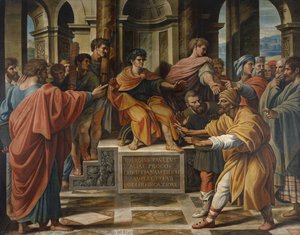
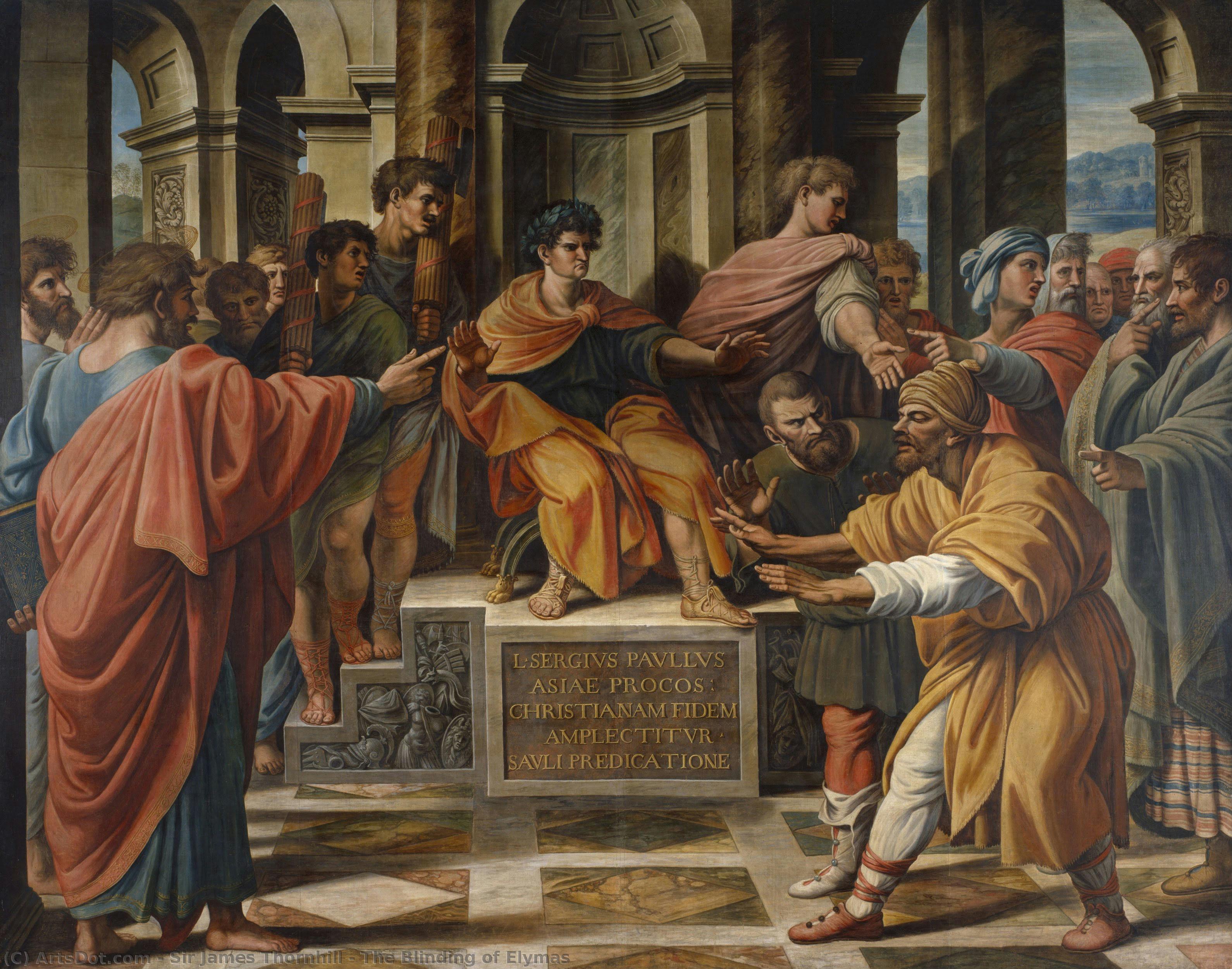
The Blinding of Elymas


 Read More
Hand Made Oil Reproduction
Hand-painted oil on canvas in your size and frame, made to order by our artists. ( Buy Print Buy Image)




P118B $10

P118H $10

P118W $10

P438Z $10

P508JH $12

P508YH $12

P805H $10

P805Z $10

P919BZ $10

P919G $10

P919XJ $10

P959ZH $10

P968JZ $12

W106C $8

W218G $10

W218JH $8

W218Y $10

W307PJ $10

W316G $10

W316PJ $8

W316Y $10

W398PJ $8

W4111J $10

W500HY $15

W500JH $15

W692G $12

W849H $8

W940BG $15

W953PJ $8




Pick from our preset sizes that match the artwork's original proportions.

You may enter your own dimensions to fit a specific frame or space. If your selected size does not match the original image's proportions, we will either crop the artwork or extend the painting with additional hand-painted elements. A digital mockup will be sent for your approval before production begins.
Please note that the on-screen preview does not reflect the actual cropping or extension. Only the mockup will accurately show the final composition.
While custom sizes are available, we recommend selecting a dimension from the predefined list to preserve the original proportions.
After order, ArtsDot.com team will email client for instructions and provide a mockup preview
Worldwide Delivery () in 3/4 weeks instead of standard 5 weeks. (17 August). No compromise on quality.

Free Worldwide Express Shipping

High-Quality Linen Canvas

Full Shipping Insurance

Customs Tax Refund Guarantee

True Color Matching Guarantee

60-Day Return Policy (Defects Only)

100% Money-Back Guarantee

Bulk Discount Offer
 Glass option is only available in size under 110 CM

The Blinding of Elymas
Reproduction Medium
Reproduction Size
-


Total Price
$ 263
Artwork Description
The Blinding of Elymas: A Testament to Faith and Artistic Mastery
Sir James Thornhill’s “The Blinding of Elymas” is not merely a depiction of a biblical scene; it's a meticulously crafted embodiment of 18th-century artistic ambition, religious conviction, and the burgeoning fascination with classical ideals. Completed in 1729, this monumental oil on canvas – nearly four and a half meters wide – stands as one of the most significant works produced during Thornhill’s prolific career, a period defined by his dedication to large-scale decorative schemes and his role in disseminating Raphael's artistic legacy.
The painting immediately commands attention with its dramatic composition. It is a direct copy of Raphael’s preparatory cartoons, commissioned by Pope Leo X at the end of 1514, intended for tapestries within the Sistine Chapel. Thornhill’s meticulous replication speaks volumes about the artistic reverence of the time and the importance placed on preserving and studying the works of the Renaissance masters. The scene itself – Paul confronting Elymas, a Roman official and sorcerer – is charged with tension and spiritual significance. Paul's outstretched arms, radiating authority and divine power, contrast sharply with Elymas’s desperate struggle against blindness, a potent symbol of resistance to truth and faith.
Technique and Style: A Synthesis of Raphael and Thornhill
- Thornhill’s skill is evident in his masterful handling of color and light. The use of grisaille – monochromatic painting in shades of grey – particularly noticeable in the depiction of Paul, echoes the techniques employed by Thornhill himself on the dome of St. Paul's Cathedral, showcasing his command of this challenging medium.
- The figures are rendered with a remarkable degree of realism and idealized beauty, reflecting the prevailing artistic trends of the Baroque period. Thornhill’s attention to detail – from the folds of the drapery to the expressions on the characters' faces – contributes to the painting’s overall sense of drama and immediacy.
- The composition adheres closely to Raphael’s original design, yet Thornhill subtly infuses his own artistic sensibility into the work. The figures are more dynamic, their gestures imbued with a heightened sense of movement, reflecting the stylistic preferences of the 18th century.
Historical Context and Symbolism
“The Blinding of Elymas” was created during a period of significant artistic and political change in England. Thornhill’s work frequently reflected the tastes of his Whig patrons, aligning with their liberal views and engaging with topical events through allegorical narratives. The painting's subject matter – a confrontation between faith and paganism – resonated deeply within the religious landscape of the time. The act of blinding itself carries multiple layers of symbolism: it represents the triumph of truth over deception, the silencing of false prophets, and ultimately, the conversion of Elymas to Christianity.
Furthermore, the painting’s creation as a copy of Raphael's cartoons highlights the importance of artistic education and dissemination of knowledge. Thornhill’s project was not simply about replicating a masterpiece; it was about preserving and promoting the legacy of the Renaissance for future generations of artists. The fact that these copies were stored at Hampton Court, accessible primarily to students and scholars, underscores the role of art as a tool for learning and cultural preservation.
Collecting this Masterpiece: A Reproduction Opportunity
ArtsDot offers meticulously crafted hand-painted reproductions of “The Blinding of Elymas,” allowing you to bring this extraordinary artwork into your home or office. Our skilled artisans employ the same techniques and attention to detail as Sir James Thornhill, ensuring that your reproduction captures the painting’s dramatic power and artistic brilliance. This is more than just a print; it's an investment in art history, a testament to enduring faith, and a stunning addition to any discerning collection.
Related Artworks

Artist Biography
early life and apprenticeship
sir james thornhill, a renowned english painter, was born in melcombe regis, dorset, in 1675. he was the son of walter thornhill of wareham and mary, eldest daughter of colonel william sydenham, governor of weymouth. in 1689, thornhill was apprenticed to thomas highmore, a specialist in non-figurative decorative painting.artistic career
thornhill's artistic career spanned over four decades, during which he worked on numerous large-scale schemes of murals, including the "painted hall" at the royal hospital, greenwich. he also decorated palace interiors with large-scale compositions, featuring figures in idealized and rhetorical postures.- sir james thornhill's work on the dome of st paul's cathedral (1716-19) showcases his mastery of grisaille, depicting episodes from the life of st. paul.
- his murals in great houses often related to topical events, as seen through the eyes of his mainly whig patrons, such as the continuous wall and ceiling painting of the sabine room at chatsworth.
- thornhill's last major commission was to paint the chapel at wimpole hall, which he started in 1713 and completed by 1724.
notable artworks and collections
some of thornhill's notable artworks can be found in various museums and collections, including:- the painted hall, royal hospital, greenwich (the penrose collection at the ArtsDot.com)
- st paul's cathedral, london (sir james thornhill | ArtsDot.com)
- chatsworth house, derbyshire, uk (painting by 'francis montague holl' | ArtsDot.com)
legacy and influence
thornhill's legacy as a master of italian baroque tradition continues to inspire artists and art enthusiasts alike. his work can be seen in various museums and collections, including the ArtsDot.com, which offers handmade oil paintings reproductions and print on canvas from famous artists around the world. more about sir james thornhill... view more artworks by sir james thornhill at ArtsDot.com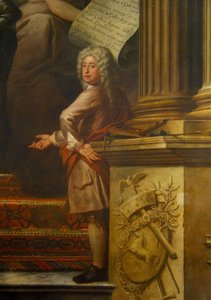
sir james thornhill
1675 - 1734 , United Kingdom
Quick Facts
- Artistic Movement Or Style: Baroque painting
- Artists Who Influenced This Artist: ['Thomas Highmore']
- Date Of Birth: 25 July 1675
- Date Of Death: 4 May 1734
- Full Name: Sir James Thornhill
- Nationality: English
- Notable Artworks:
- The Blinding of Elymas
- Isaac Newton
- Place Of Birth: Melcombe Regis, United Kingdom
Related Articles
Raphael's Masterpieces: 25 Iconic Paintings & Renaissance Art for Your Home
Explore 25 breathtaking Raphael paintings! Journey through the Italian Renaissance with masterpieces like 'School of Athens' & iconic Madonnas. Find museum-quality art reproductions and elevate your home decor on ArtsDot.com.
Paul Klee's Masterpieces: Explore 25 Iconic Paintings & Prints | ArtsDot
Journey through Paul Klee's 25 most iconic paintings & prints. Explore his abstract style, Bauhaus influence, and vibrant color palettes. Find museum-quality art reproductions & decor ideas at ArtsDot.com. Discover all masterpieces online.

Cézanne's Masterpieces: 25 Iconic Artworks to Transform Your Space
Journey through 25 iconic artworks by Paul Cézanne – a master of Impressionism and Post-Impressionism. Explore his landscapes, still lifes, and the stories behind these timeless masterpieces. Discover museum-quality reproductions & curated decor at ArtsDot.com.
Paul Klee: A Poetics of Form and Color – Exploring the Inner Landscape of a Modern Master
Explore the captivating world of Paul Klee! Discover his innovative art, Bauhaus influence, & unique symbolic language. Expert analysis & high-quality reproductions at ArtsDot.

Illuminating Faith: Biblical Narrative & Artistic Expression Through the Ages
Explore the rich history of biblical art from Giotto to the Renaissance masters with ArtsDot. Discover symbolism, techniques & enduring legacies. Museum-quality reproductions & expert insights.