

 Preview
 Send
Send Share
Share
 Details

 Download
 Similars
 X-Ray
X-Ray Diaporama
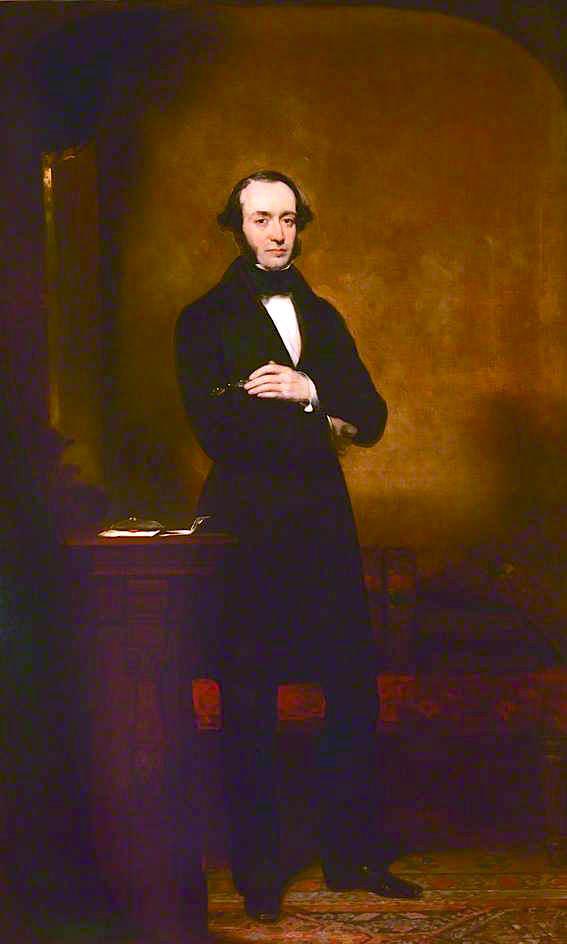
John Inglis
 Oil On Canvas
- WallArt
- Academic Realism
 1854
1854- 19th Century
 University of Edinburgh Fine Art Collection
 Read More
Purchase a high-resolution, enhanced digital image, far superior to the online preview.
Each file is meticulously prepared by our in-house specialists using advanced tools and expert manual retouching. We ensure every image has exceptional clarity, precise color accuracy, and fine detail.
The final file is delivered via email within 72 hours, optimized for immediate use in professional, editorial, and print environments. This is the same quality trusted by top-tier design studios, publishers, and galleries.
Digital Image
Download a high-resolution file for personal display, printing, and creative projects. ( Buy Print Buy Hand Made Painting)
Included in Every Digital Image Order
Expert Digital Delivery, Guaranteed
When you choose ArtsDot.com, you're not just getting an image - you're receiving a professionally enhanced digital artwork, crafted with precision and backed by a satisfaction guarantee. Here's everything that comes with your order, automatically:

Fast Email Delivery
Your high-resolution digital image file will be emailed to you within 72 hours of ordering - ready for immediate use.

AI-Enhanced Digital File
Your artwork is professionally optimized using advanced AI tools and manual editing, ensuring maximum detail, clarity, and color accuracy.

Free Lifetime Re-Delivery
Accidentally deleted or lost your file? No worries - we'll resend it to you anytime, free of charge.

No Import Fees - Ever
Enjoy your artwork instantly with zero customs, duties, or delivery fees - digital downloads are always tax-free.

Color Accuracy Guarantee
We ensure your digital image reflects the original colors as closely as possible using professional tools and color management.

60-Day Satisfaction Guarantee
If you're not satisfied with your digital image, we'll revise it or refund 100% within 60 days - no questions asked.

100% Money-Back Guarantee
Not satisfied? Get a full refund within 60 days of receiving your digital file - no questions asked.

Bulk Order Discounts
Buy 3 images, save 10% - Buy 5, save 15% - Buy 10+, save 20%. Great for creative projects, galleries, and agencies.
Collectible Description
A Study in Dignity: The Timeless Presence of John Inglis
In the quiet, commanding presence of Sir John Watson Gordon’s 1854 portrait, John Inglis, one encounters more than just a likeness; one meets the very essence of mid-1ical British authority. This masterpiece of academic realism serves as a profound window into the mid-19th century, capturing a moment where social standing and personal character converge on canvas. The composition is masterfully centered, presenting Mr. Inglis in a three-quarter pose that suggests both accessibility and an impenetrable sense of decorum. As the viewer’s eye meets the subject, there is an immediate sense of being in the presence of a gentleman of substance, a man whose identity is inextricably linked to the professional and social stability of his era.
The technical brilliance of Gordon lies in his sophisticated use of light and shadow, a hallmark of his transition from Neoclassical precision toward a more atmospheric, tonal approach. A dramatic light source, positioned at the upper left, sweeps across the subject, carving his features out of the surrounding gloom. This chiaroscuro effect does more than provide depth; it breathes life into the textures of the era. One can almost feel the heavy, velvety weight of his dark coat and the subtle sheen of his footwear against the floor. The background, a textured tapestry of deep browns, blacks, and muted shadows, recedes into an enigmatic void, ensuring that every brushstroke dedicated to the subject's face and hands carries maximum emotional resonance.
For the discerning collector or interior designer, this portrait offers a profound sense of "quiet luxury." The color palette—dominated by somber, sophisticated tones of charcoal, ebony, and earth—provides a versatile anchor for grand, classical interiors or more contemporary, moody spaces. There is a rhythmic beauty in the way Gordon uses defined lines to trace the folds of fabric and the structural geometry of the surrounding furniture, contrasting these with the organic, soft modeling of human skin. It is a piece that does not shout for attention but rather commands it through its understated elegance.
Beyond the aesthetic allure, the painting carries a heavy symbolic weight. In an age of burgeoning industrial change, such portraits were vital assertions of permanence and legacy. To possess a reproduction of this work is to invite a sense of historical continuity and intellectual depth into a room. It evokes the atmosphere of a private library or a stately manor, offering an emotional anchor of stability and grace. Whether viewed as a triumph of oil technique or a soulful character study, John Inglis remains an enduring testament to the power of portraiture to immortalize the human spirit.
Related Artworks

Artist Biography
Sir John Watson Gordon: A Scottish Master of Light and Portraiture
Sir John Watson Gordon (1788 – 1864) stands as a pivotal figure in the transition from Neoclassical portraiture to the atmospheric Tonalism that would define much of 19th-century British art. Born into a family steeped in artistic tradition—his father, Captain James Watson, was a skilled draughtsman and his uncle, George Watson, a respected portraitist – Gordon’s path toward becoming a celebrated artist wasn't predetermined but rather cultivated through a deliberate choice to embrace the burgeoning world of painting. Initially trained for a military career, he ultimately recognized and pursued his true calling: capturing the essence of human character and the subtle beauty of the Scottish landscape through his art.
Gordon’s early artistic development was profoundly shaped by his apprenticeship under John Graham at the Trustees' Academy in Edinburgh. This formative period instilled within him a foundational understanding of technique, but crucially, it also exposed him to the burgeoning public interest in art exhibitions – a relatively new phenomenon at the time. His first significant exhibition in 1808, featuring a scene from Sir Walter Scott’s epic poem ‘The Lay of the Last Minstrel,’ marked his arrival on the Edinburgh art scene and demonstrated an early aptitude for capturing narrative and emotion through visual means. Following this success, he continued to experiment with historical and religious subjects, honing his skills and developing a distinctive style characterized by a remarkable delicacy and freedom in brushwork.
The Evolution of Style: From Neoclassicism to Tonalism
A defining characteristic of Gordon’s artistic journey was the gradual shift from the formal constraints of Neoclassical portraiture to the more expressive and atmospheric qualities of Tonalism. Initially, his portraits adhered to established conventions – crisp lines, carefully rendered details, and a focus on capturing likeness with meticulous accuracy. However, as he matured as an artist, he began to prioritize mood and atmosphere over strict adherence to realism. This transformation is particularly evident in his later works, where the flesh tones soften, the backgrounds become increasingly muted, and the overall effect is one of quiet contemplation and emotional resonance.
This stylistic evolution wasn’t simply a matter of technique; it reflected a deeper engagement with the changing artistic landscape. Influenced by artists like John Constable and J.M.W. Turner, Gordon sought to capture not just the outward appearance of his subjects but also their inner lives – their character, temperament, and relationship to the world around them. His portraits of Sir Walter Scott, for instance, are imbued with a sense of the poet’s intellectual depth and romantic spirit, while his depictions of figures like Professor John Wilson and Dr. Chalmers convey a similar level of psychological insight.
Iconic Sitters and Lasting Legacy
Gordon's studio became a magnet for Scotland’s leading figures – a testament to his reputation as a skilled portraitist and a gracious host. Among the most notable sitters were Sir Walter Scott, whose early portraits laid the foundation for Gordon’s distinctive style; JG Lockhart, Professor Wilson, Sir Archibald Alison, Dr. Chalmers, De Quincey, and Sir David Brewster. His ability to capture the essence of these individuals – their intellect, their character, and their place in Scottish society – cemented his position as one of the most sought-after portrait painters of his time.
The portraits painted during the period from 1835 to 1864 represent a culmination of Gordon’s artistic development. These works are characterized by a remarkable subtlety of color, a masterful handling of light and shadow, and an unparalleled sensitivity to the psychological nuances of his subjects. His later style, marked by its simplicity and austerity, is particularly noteworthy – the flesh tones become almost pearlescent, the backgrounds fade into grey, and the focus shifts entirely to the face, revealing the subject’s inner world with remarkable clarity. The portraits of Sir John G. Shaw-Lefevre and Roderick Gray, Provost of Peterhead, are prime examples of this late style, earning him a first-class medal at the 1855 Paris Salon.
A Scottish Voice in the Royal Academy
Gordon’s artistic achievements were recognized by the Royal Academy, which elected him as an associate in 1841 and then as a full academician in 1851. His appointment to the position of H.M. Limner for Scotland in 1850 further elevated his status within the art world, solidifying his role as the nation’s official portrait painter. His legacy extends beyond individual portraits; he played a significant role in fostering artistic development in Scotland and contributing to the establishment of the Royal Scottish Academy. Sir John Watson Gordon died in Edinburgh in 1864, leaving behind a remarkable body of work that continues to captivate viewers with its beauty, sensitivity, and profound understanding of the human spirit.
sir john watson gordon
1788 - 1864
Quick Facts
- Artistic Movement Or Style: Tonal Impressionism
- Artists Or Movements Influenced By This Artist:
- Cox
- British art
- Artists Who Influenced This Artist:
- Raeburn
- Watson (uncle)
- Date Of Birth: 1788
- Date Of Death: 1864
- Full Name: Sir John Watson Gordon
- Nationality: Scottish
- Notable Artworks:
- Scott Portraits
- Chalmers Portrait
- Dalhousie Portrait
- Place Of Birth: Edinburgh, Scotland

