 Preview
 Send
Send Share
Share
 Details

 Download
 Similars
 X-Ray
X-Ray Diaporama
The choice
 Read More
Hand Made Oil Reproduction
Hand-painted oil on canvas in your size and frame, made to order by our artists. ( Buy Print Buy Image)




































Pick from our preset sizes that match the artwork's original proportions.

You may enter your own dimensions to fit a specific frame or space. If your selected size does not match the original image's proportions, we will either crop the artwork or extend the painting with additional hand-painted elements. A digital mockup will be sent for your approval before production begins.
Please note that the on-screen preview does not reflect the actual cropping or extension. Only the mockup will accurately show the final composition.
While custom sizes are available, we recommend selecting a dimension from the predefined list to preserve the original proportions.
After order, ArtsDot.com team will email client for instructions and provide a mockup preview
Worldwide Delivery () in 3/4 weeks instead of standard 5 weeks. (17 August). No compromise on quality.

Free Worldwide Express Shipping

High-Quality Linen Canvas

Full Shipping Insurance

Customs Tax Refund Guarantee

True Color Matching Guarantee

60-Day Return Policy (Defects Only)

100% Money-Back Guarantee

Bulk Discount Offer
 Glass option is only available in size under 110 CM

The choice
Reproduction Medium
Reproduction Size
-


Total Price
$ 263
Related Artworks
Artist Biography
A Scottish Visionary: The Life and Art of Sir Joseph Noel Paton
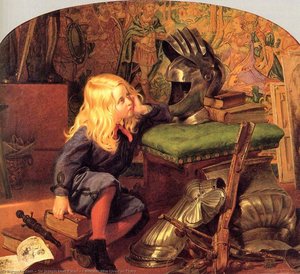
Born in the textile town of Dunfermline, Scotland, on December 13, 1821, Sir Joseph Noel Paton emerged as a unique voice within the Victorian art world. His upbringing amidst the intricate designs of damask weaving—his parents were skilled designers and weavers themselves—instilled in him an early appreciation for detail and pattern that would profoundly influence his artistic style. Though initially involved in the family business, directing design at a muslin factory, Paton’s true calling lay elsewhere. A thirst for artistic knowledge led him to Dunfermline Art Academy, laying the foundation for a career deeply rooted in Scottish folklore, Celtic legends, and religious narratives. A brief period of study at the Royal Academy in London in 1843 exposed him to the prevailing artistic currents, and an invitation from John Everett Millais to join the Pre-Raphaelite Brotherhood—an offer Paton ultimately declined—demonstrates his connection to this influential movement, even as he forged his own distinct path.Weaving Myth and Morality: The Development of a Unique Style
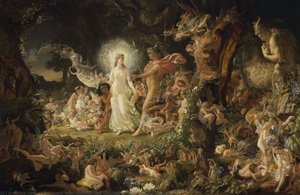
Paton’s artistic journey was characterized by an extraordinary synthesis of diverse influences. He wasn't merely illustrating tales; he was breathing life into them with meticulous detail and emotional depth. His early works, such as “The Quarrel of Oberon and Titania” (1847), now a cornerstone of the National Gallery of Scotland’s collection, immediately established his reputation for capturing fantastical scenes with remarkable realism. This painting, inspired by Shakespeare's *A Midsummer Night's Dream*, showcases not only technical skill but also Paton’s ability to imbue mythological subjects with psychological complexity. He didn’t simply depict fairies; he portrayed their passions, conflicts, and vulnerabilities. Beyond the realm of folklore, Paton explored religious themes with equal fervor, as evidenced in works like “Luther Discovering Justification by Faith,” revealing a deep engagement with theological concepts. His paintings are not just visually stunning but also intellectually stimulating, inviting viewers to contemplate profound questions about faith, morality, and the human condition. He was equally adept at sculpture and poetry, further demonstrating his multifaceted artistic talents.A Royal Appointment and Enduring Legacy
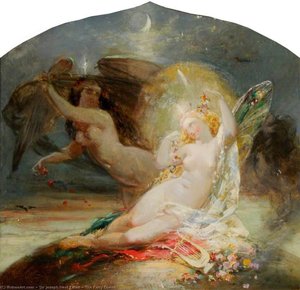
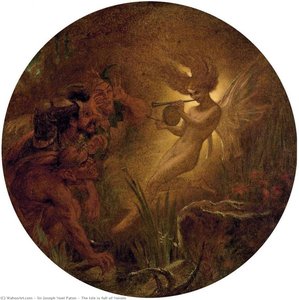
Recognition of Paton’s exceptional talent came in 1865 with his appointment as Queen's Limner for Scotland—a prestigious position that solidified his status as the foremost artist in the country. Two years later, he was knighted, a testament to his significant contributions to the arts and Scottish culture. This period saw him continue to produce works that blended historical accuracy with imaginative storytelling. Paintings like “Puck and Fairies” exemplify his mastery of capturing the ethereal beauty and mischievous spirit of the fairy world. His ability to create believable yet otherworldly scenes set him apart from many of his contemporaries. Paton’s influence extended beyond painting; he was a respected antiquarian, collecting arms and armor, and his poetic endeavors further enriched his artistic vision. He published two volumes of poetry that reflect the same romantic sensibility found in his paintings.Themes and Symbolism: A Window into Victorian Scotland
Paton’s work is deeply imbued with symbolism, reflecting both personal beliefs and the broader cultural anxieties of the Victorian era. His fascination with Celtic legends speaks to a growing interest in national identity and folklore during this period. The fairy paintings, while seemingly whimsical, often carry underlying moral messages about temptation, innocence, and the dangers of unchecked desire. Religious works, such as those depicting scenes from the life of Martin Luther, explore themes of faith, redemption, and the struggle against oppression.- His meticulous attention to detail—evident in the intricate costumes, landscapes, and facial expressions—adds layers of meaning to his compositions.
- The use of dramatic lighting and rich color palettes enhances the emotional impact of his paintings.
- Paton’s works often feature allegorical figures representing abstract concepts like love, death, and justice.
A Lasting Impression: Paton’s Place in Art History
Sir Joseph Noel Paton passed away on December 26, 1901, leaving behind a rich artistic legacy that continues to captivate audiences today. His works can be found in prominent museums and collections, including the Scottish National Gallery and the National Records of Scotland, ensuring his art remains accessible for generations to come. While he declined formal membership within the Pre-Raphaelite Brotherhood, his work shares their commitment to detail, symbolism, and narrative storytelling. However, Paton’s unique blend of Celtic mythology, religious themes, and Victorian sensibilities sets him apart as a truly original artist. He stands as a testament to the power of art to transport us to other worlds, explore profound truths, and celebrate the rich cultural heritage of Scotland. His paintings are not merely historical artifacts; they are living embodiments of imagination, faith, and artistic vision.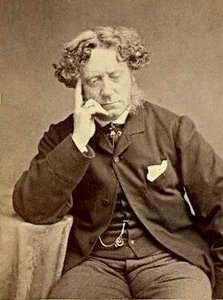
Sir Joseph Noel Paton
1821 - 1901 , United Kingdom
Quick Facts
- Artistic Movement Or Style: Pre-Raphaelite influences
- Artists Who Influenced This Artist: ['John Everett Millais']
- Date Of Birth: December 13, 1821
- Date Of Death: 1901
- Full Name: Sir Joseph Noel Paton
- Nationality: Scottish
- Notable Artworks:
- The Quarrel of Oberon and Titania
- Puck and Fairies
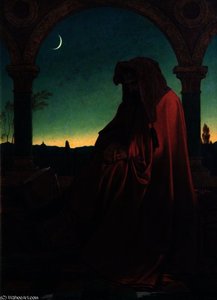
- Hesperus
- Luther discovering justification
- Place Of Birth: Dunfermline, UK