

 Preview
 Send
Send Share
Share
 Details

 Download
 Similars
 X-Ray
X-Ray Diaporama
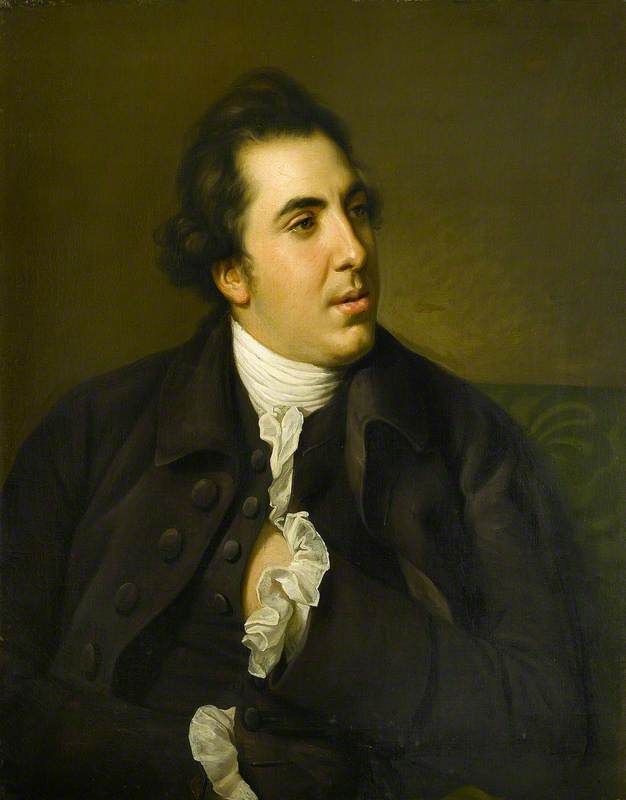
Sir John Russell (1741–1783), 9th Bt
 Oil On Canvas
- WallArt
- Neoclassicism
 76.0 x 64.0 cm
 Chequers Court
 Read More
Purchase a high-resolution, enhanced digital image, far superior to the online preview.
Each file is meticulously prepared by our in-house specialists using advanced tools and expert manual retouching. We ensure every image has exceptional clarity, precise color accuracy, and fine detail.
The final file is delivered via email within 72 hours, optimized for immediate use in professional, editorial, and print environments. This is the same quality trusted by top-tier design studios, publishers, and galleries.
Digital Image
Download a high-resolution file for personal display, printing, and creative projects. ( Buy Print Buy Hand Made Painting)
Included in Every Digital Image Order
Expert Digital Delivery, Guaranteed
When you choose ArtsDot.com, you're not just getting an image - you're receiving a professionally enhanced digital artwork, crafted with precision and backed by a satisfaction guarantee. Here's everything that comes with your order, automatically:

Fast Email Delivery
Your high-resolution digital image file will be emailed to you within 72 hours of ordering - ready for immediate use.

AI-Enhanced Digital File
Your artwork is professionally optimized using advanced AI tools and manual editing, ensuring maximum detail, clarity, and color accuracy.

Free Lifetime Re-Delivery
Accidentally deleted or lost your file? No worries - we'll resend it to you anytime, free of charge.

No Import Fees - Ever
Enjoy your artwork instantly with zero customs, duties, or delivery fees - digital downloads are always tax-free.

Color Accuracy Guarantee
We ensure your digital image reflects the original colors as closely as possible using professional tools and color management.

60-Day Satisfaction Guarantee
If you're not satisfied with your digital image, we'll revise it or refund 100% within 60 days - no questions asked.

100% Money-Back Guarantee
Not satisfied? Get a full refund within 60 days of receiving your digital file - no questions asked.

Bulk Order Discounts
Buy 3 images, save 10% - Buy 5, save 15% - Buy 10+, save 20%. Great for creative projects, galleries, and agencies.
Collectible Description
A Portrait of Statesman and Dignity: Nathaniel Dance Holland’s Sir John Russell
Sir John Russell (1741–1783), 9th Bt, presented to us by the masterful hand of Sir Nathaniel Dance Holland, is more than a mere portrait; it's a carefully constructed tableau of Georgian identity, intellectual gravitas, and understated power. Painted in the heart of London around 1775-1780, this neoclassical masterpiece offers a rare glimpse into the world of a prominent Whig politician and influential figure during a pivotal era in British history. Holland’s skill lies not just in his technical proficiency – evident in the meticulous rendering of fabric, skin, and hair – but also in his ability to imbue the subject with an aura of dignified seriousness that transcends the conventions of formal portraiture.The Neoclassical Composition: Order and Restraint
Holland’s approach is firmly rooted in the neoclassical style, a movement that sought inspiration from the art and architecture of ancient Greece and Rome. This manifests most strikingly in the painting's balanced composition – a central figure framed within a carefully delineated space. The subject, Sir John Russell, occupies the majority of the canvas, his gaze direct and unwavering, commanding the viewer’s attention. Geometric shapes dominate: the rectangular form of his jacket, the oval of his face, and the rounded elements of his collar all contribute to an impression of order and control. The dark background, devoid of extraneous detail, serves to heighten the impact of Russell's features and clothing, emphasizing their importance within the overall design. The limited perspective, a frontal view, fosters an intimate connection with the subject, inviting us into his presence as if he were standing before us directly.Technique and Materials: Layers of Subtle Brilliance
Holland’s technique is characterized by its painstaking attention to detail and masterful use of oil paint. He employed a layering method known as *glazing*, applying thin, translucent layers of color upon one another to build up depth, luminosity, and subtle tonal variations. This approach allowed him to achieve the remarkable smoothness of Russell's skin – a feat achieved through countless hours of meticulous brushwork. Note particularly the delicate rendering of his forehead and cheekbones, sculpted with an almost sculptural precision. The rich textures of his clothing are rendered with astonishing realism, capturing the sheen of velvet and the folds of fabric with subtle gradations of light and shadow. The use of warm earth tones – browns, ochres, and reds – creates a sense of warmth and solidity, while carefully placed highlights draw attention to key features, such as Russell’s piercing eyes.Symbolism and Context: A Portrait of Influence
Beyond its technical brilliance, the portrait is laden with symbolic meaning. Sir John Russell was a prominent figure in British politics during the late 18th century, serving as Home Secretary under William Pitt the Younger and later as Prime Minister. The painting reflects his status and influence – he’s depicted not as a warrior or adventurer, but as a man of intellect and authority. His attire—a dark coat and waistcoat—suggests seriousness and responsibility, while his posture conveys confidence and self-assuredness. The inclusion of the family crest on his jacket subtly reinforces his lineage and social standing. Considering the period, the portrait speaks to the burgeoning ideals of Enlightenment thought and the rise of a powerful, informed elite shaping the course of British governance.Emotional Resonance: Contemplation and Dignified Strength
Ultimately, Sir John Russell is not merely a representation of a man; it’s an evocation of character. The painting’s somber lighting – dominated by deep shadows and subtle highlights – contributes to a sense of seriousness and perhaps even melancholy. Russell's direct gaze invites contemplation, suggesting a mind engaged in weighty matters. Despite the formality of the pose, there is a palpable sense of dignity and inner strength radiating from the subject. This portrait serves as a powerful reminder of the complexities of Georgian society—a world of political intrigue, intellectual debate, and enduring social hierarchies—and the lasting legacy of men like Sir John Russell who shaped its trajectory. A reproduction captures this essence beautifully, offering a window into a bygone era and the character of a man whose influence continues to resonate today.Related Artworks
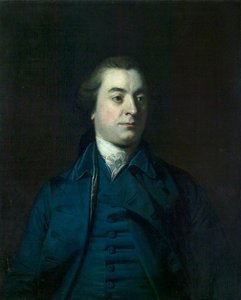
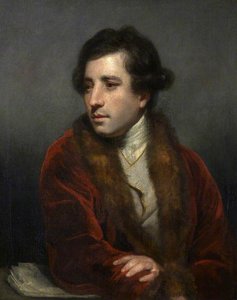
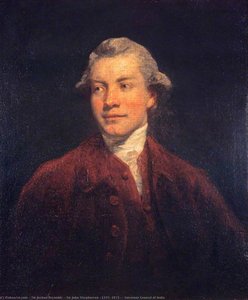
Artist Biography
A Life Bridging Canvas and Command: Sir Nathaniel Dance Holland
Sir Nathaniel Dance Holland, born in London on May 8th, 1735, was a figure whose life embodied the multifaceted spirit of eighteenth-century Britain. He navigated a path that seamlessly blended artistic pursuit with dedicated public service, ultimately becoming a respected painter, a Member of Parliament, and a baronet. His story is one of inherited talent, strategic ambition, and a remarkable ability to adapt to changing times. Dance’s early life was significantly shaped by familial circumstances; the abandonment of his father, James Dance, for a career in theatre and playwriting led to his upbringing under the watchful eye of his paternal grandfather, George Dance the Elder – a prominent architect responsible for much of the City of London's civic design. This grounding in architectural principles would subtly inform Dance’s artistic sensibility, imbuing his compositions with a sense of order and structural integrity. He received his initial artistic training under Francis Hayman, a leading figure in the rococo style, before embarking on an extended period of study in Italy, where he encountered the works of masters like Pompeo Batoni and formed a connection with Angelica Kauffmann – a relationship that hinted at both personal and professional inspiration.From Brush to Parliament: A Dual Calling
Upon his return to England, Dance quickly established himself as a sought-after portraitist. His talent for capturing the likenesses of prominent figures earned him commissions from royalty, nobility, and celebrated individuals alike. He painted King George III and Queen Charlotte, immortalizing them on canvas with regal dignity. Perhaps one of his most enduring works is the portrait of Captain James Cook, a depiction that captures not only the explorer’s physical presence but also a sense of resolute determination and intellectual curiosity. Dance's artistic prowess was formally recognized in 1768 when he became a founding member of the Royal Academy, solidifying his position within the established art world. However, despite achieving success as an artist, Dance harbored ambitions beyond the realm of painting. In 1790, at the height of his artistic career, he made a surprising transition into politics, successfully contesting the parliamentary seat for East Grinstead in Sussex. This decision marked a turning point in his life, signaling a shift from the aesthetic to the pragmatic – a move that would ultimately define the latter half of his years.Naval Echoes and Artistic Influences
While Dance’s artistic style initially leaned towards the prevailing rococo trends, his work also reveals subtle influences from other sources. The precision and clarity of his compositions suggest an awareness of Dutch Golden Age painting, particularly in his attention to detail and mastery of light. This influence is perhaps not surprising given Britain's strong trade links with the Netherlands during this period and the widespread appreciation for Dutch artistic achievements. Furthermore, Dance’s family history had a significant connection to maritime endeavors; his nephew, Sir Nathaniel Dance (1748-1827), achieved renown as a commander in the East India Company’s naval service, famously distinguishing himself at the Battle of Pulo Aura in 1804. This familial association with the sea likely permeated Dance's artistic consciousness, subtly informing his depictions of naval officers and maritime scenes. His portraits often convey a sense of quiet authority and understated heroism – qualities that resonate with the spirit of British seafaring tradition.Legacy and Remembrance
Dance continued to serve as a Member of Parliament for several constituencies—Great Bedwyn in Wiltshire, and again for East Grinstead—until his death on October 15th, 1811. He was elevated to the baronetcy in 1800, a recognition of his contributions to both art and public life. Though he gradually relinquished his artistic practice after entering Parliament, Dance’s legacy as a painter endures through the surviving examples of his work. His portraits offer valuable insights into the social and political landscape of eighteenth-century Britain, capturing the personalities and aspirations of a generation. Today, his paintings can be found in prominent collections around the world, including the National Maritime Museum in London and the National Gallery of Victoria in Melbourne. The Pybus Family, painted in 1769, remains a particularly celebrated example of his artistic skill, showcasing his ability to create compelling group portraits that reveal both individual character and familial dynamics. Sir Nathaniel Dance Holland’s life serves as a testament to the possibilities of a multifaceted existence—a journey that seamlessly integrated artistic expression with dedicated public service, leaving an indelible mark on British history and culture.Further Exploration
- Art UK: Explore more about Nathaniel Dance-Holland’s life and works: https://artuk.org/discover/artists/dance-holland-nathaniel-17351811
- Wikipedia: A detailed biographical overview: https://en.wikipedia.org/wiki/Nathaniel_Dance-Holland
- Royal Academy of Arts: Discover Dance’s connection to the Royal Academy: https://www.royalacademy.org.uk/art-artists/name/nathaniel-dance-ra
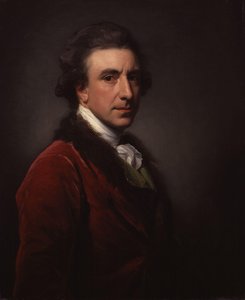
Sir Nathaniel Dance Holland
1735 - 1811 , United Kingdom
Quick Facts
- Artistic Movement Or Style: Portraiture
- Artists Who Influenced This Artist:
- Francis Hayman
- Pompeo Batoni
- Date Of Birth: May 8, 1735
- Date Of Death: Oct 15, 1811
- Full Name: Sir Nathaniel Dance Holland
- Nationality: British
- Notable Artworks:
- Captain James Cook
- Miss Hargreaves
- Thomas Nuthall with a Dog
- Place Of Birth: London, UK

