

 Preview
 Send
Send Share
Share
 Details

 Download
 Similars
 X-Ray
X-Ray Diaporama
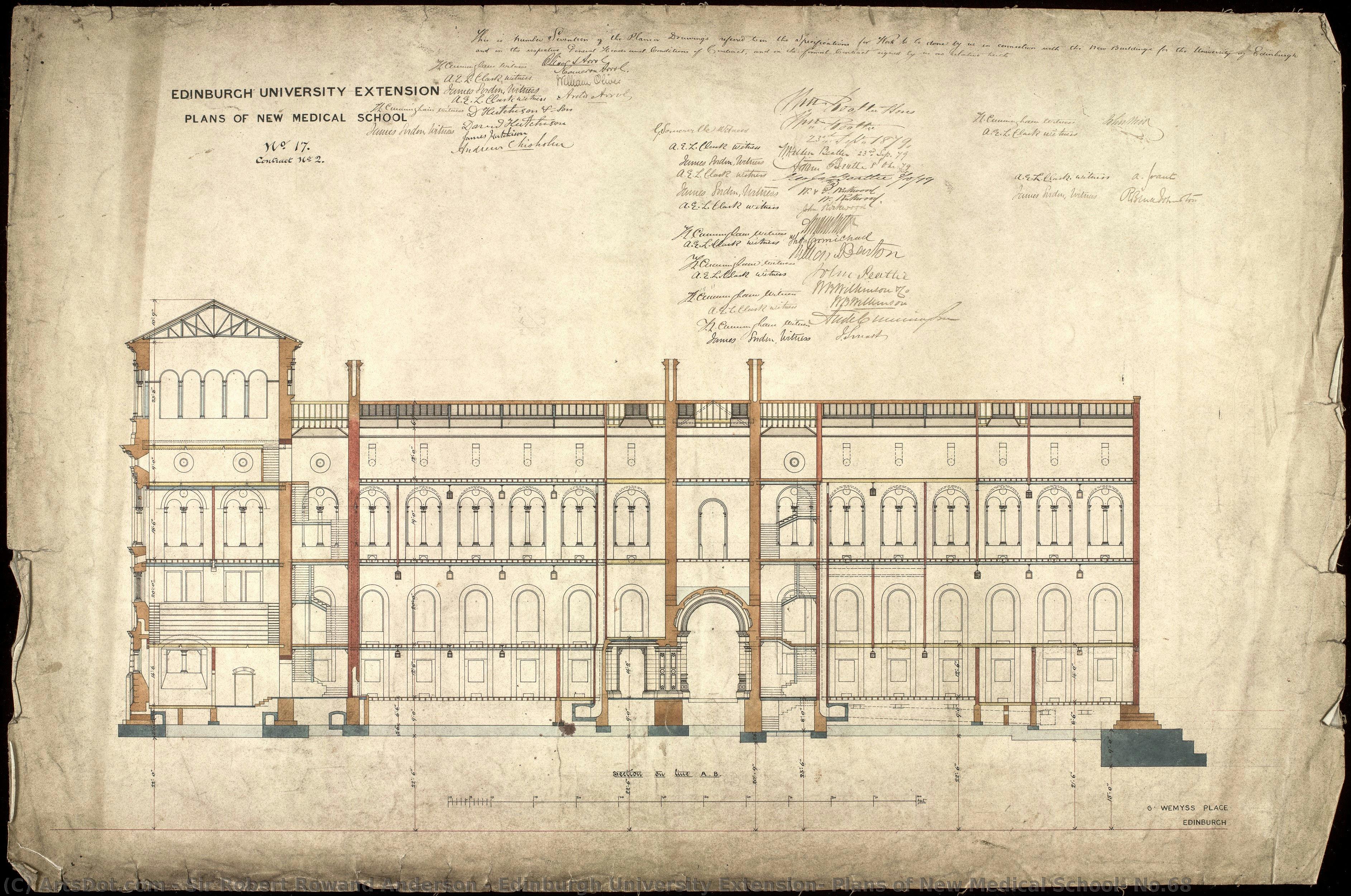
Edinburgh University Extension, Plans of New Medical School, No.68

 Read More
Purchase a high-resolution, enhanced digital image, far superior to the online preview.
Each file is meticulously prepared by our in-house specialists using advanced tools and expert manual retouching. We ensure every image has exceptional clarity, precise color accuracy, and fine detail.
The final file is delivered via email within 72 hours, optimized for immediate use in professional, editorial, and print environments. This is the same quality trusted by top-tier design studios, publishers, and galleries.
Digital Image
Download a high-resolution file for personal display, printing, and creative projects. ( Buy Print Buy Hand Made Painting)
Included in Every Digital Image Order
Expert Digital Delivery, Guaranteed
When you choose ArtsDot.com, you're not just getting an image - you're receiving a professionally enhanced digital artwork, crafted with precision and backed by a satisfaction guarantee. Here's everything that comes with your order, automatically:

Fast Email Delivery
Your high-resolution digital image file will be emailed to you within 72 hours of ordering - ready for immediate use.

AI-Enhanced Digital File
Your artwork is professionally optimized using advanced AI tools and manual editing, ensuring maximum detail, clarity, and color accuracy.

Free Lifetime Re-Delivery
Accidentally deleted or lost your file? No worries - we'll resend it to you anytime, free of charge.

No Import Fees - Ever
Enjoy your artwork instantly with zero customs, duties, or delivery fees - digital downloads are always tax-free.

Color Accuracy Guarantee
We ensure your digital image reflects the original colors as closely as possible using professional tools and color management.

60-Day Satisfaction Guarantee
If you're not satisfied with your digital image, we'll revise it or refund 100% within 60 days - no questions asked.

100% Money-Back Guarantee
Not satisfied? Get a full refund within 60 days of receiving your digital file - no questions asked.

Bulk Order Discounts
Buy 3 images, save 10% - Buy 5, save 15% - Buy 10+, save 20%. Great for creative projects, galleries, and agencies.
Related Artworks









Artist Biography
A Scottish Visionary: The Life and Legacy of Sir Robert Rowand Anderson
Born in Edinburgh on April 5, 1834, Sir Robert Rowand Anderson emerged as a defining figure in late Victorian and early Edwardian architecture, leaving an indelible mark upon the landscape of Scotland and beyond. His journey began not with artistic ambition, but with a path laid out by his solicitor father – a legal apprenticeship intended to secure a conventional future. Yet, even amidst the study of law, a profound aptitude for drawing flourished within young Robert, hinting at a destiny that lay elsewhere. This early inclination led him to the Trustees’ Drawing Academy in Edinburgh and subsequent tutelage under Scott Lauder, nurturing a nascent talent that would soon blossom into architectural brilliance. A pivotal moment arrived with his appointment as an assistant to the renowned George Gilbert Scott in London from 1857 to 1859. This period proved formative, instilling within Anderson a deep respect for Gothic Revival principles and meticulous attention to detail – qualities that would become hallmarks of his own distinctive style. Further enriching his artistic vocabulary were extensive travels throughout France and Italy, where he immersed himself in the grandeur of Renaissance and medieval architecture, absorbing influences that would subtly permeate his later designs.From Churches to Cultural Icons: A Prolific Career
In 1860, Anderson established his independent practice in Edinburgh, marking the commencement of a remarkably prolific career. His initial commissions focused on smaller ecclesiastical projects, often executed in the ‘First Pointed’ or Early English style – a direct reflection of Scott's influence. These early works demonstrated a mastery of Gothic forms and a sensitivity to historical precedent. However, Anderson was not content merely to replicate; he possessed an innate ability to adapt and innovate, gradually developing a uniquely Scottish architectural voice. This evolution culminated in some of his most celebrated achievements. The Scottish National Portrait Gallery stands as a testament to his skill in seamlessly blending historical styles with modern functionality, creating a space that both honored the past and served the present. His contributions to the University of Edinburgh are equally significant, encompassing the majestic Dome of Old College, the functional elegance of the Medical Faculty, and the grand scale of McEwan Hall – each structure a testament to his mastery of large-scale projects. Beyond Edinburgh, Anderson’s influence extended to Glasgow with notable works such as Govan Old Parish Church & Pearce Institute, showcasing his versatility across diverse urban contexts, and the Central Hotel at Glasgow Central Station, an impressive example of architectural integration within a bustling transportation hub. Even religious commissions like the Catholic Apostolic Church benefited from his sensitive approach, while grand estates like Mount Stuart House on the Isle of Bute allowed him to demonstrate his skill in creating opulent and harmonious environments.A Synthesis of Influences: Defining an Architectural Style
Anderson’s architectural style was not born in isolation; it was a carefully considered synthesis of diverse influences. The foundational principles instilled by George Gilbert Scott – a reverence for Gothic Revival, meticulous detailing, and structural integrity – remained central to his approach throughout his career. However, his travels through Italy exposed him to the classical proportions and refined ornamentation of Renaissance architecture, adding another layer of sophistication to his designs. Crucially, Anderson also demonstrated a deep appreciation for Scotland’s own architectural heritage, skillfully incorporating elements of Scottish Baronial and Gothic traditions into his work. This fusion resulted in a uniquely Scottish style – one that was both historically informed and distinctly modern. The ‘First Pointed’ style, characterized by pointed arches and restrained aesthetics, remained a defining feature of his early output, but as his career progressed, Anderson embraced eclecticism, adapting to different stylistic demands while maintaining a cohesive design language. He wasn't simply copying styles; he was interpreting them through the lens of his own artistic vision and the specific context of each project.A Lasting Legacy: Shaping Scotland’s Architectural Identity
Sir Robert Rowand Anderson’s impact on Scottish architecture is undeniable. Recognized as the preeminent architect in Scotland during the late 19th and early 20th centuries, his buildings fundamentally shaped the architectural character of Edinburgh and beyond, leaving a lasting legacy on the nation's visual landscape. But his contributions extended far beyond bricks and mortar. In 1895, he spearheaded the National Art Survey, a pioneering initiative dedicated to the preservation and documentation of Scotland’s built heritage – an act that demonstrated his commitment to safeguarding the nation’s cultural identity. He also played a pivotal role in establishing the Institute of Scottish Architects, fostering professional development within the field and elevating the status of the architectural profession. The pinnacle of his recognition arrived in 1916 with the Royal Gold Medal from the Royal Institute of British Architects – a prestigious award acknowledging his exceptional contributions to architecture on an international scale. His influence resonated through subsequent generations of Scottish architects, shaping the evolution of architectural practice in Scotland for decades to come. Further honors included honorary degrees from the University of Edinburgh and knighthood in 1902, recognizing his profound services to architecture. He remained actively engaged in professional life until his death at Allermuir House, Colinton, Edinburgh on June 1, 1921, leaving behind a body of work that continues to inspire awe and admiration for its quality, innovation, and enduring beauty. His buildings are not merely structures; they are monuments to a visionary architect who helped define the architectural identity of Scotland.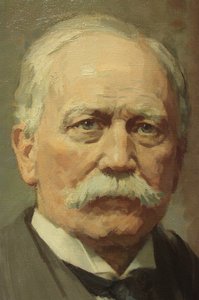
Sir Robert Rowand Anderson
1834 - 1921 , United Kingdom
Quick Facts
- Artistic Movement Or Style: Victorian architecture
- Artists Or Movements Influenced By This Artist: ['Scottish architects']
- Artists Who Influenced This Artist: ['George Gilbert Scott']
- Date Of Birth: April 5, 1834
- Date Of Death: June 1, 1921
- Full Name: Sir Robert Rowand Anderson
- Nationality: Scottish
- Notable Artworks:
- National Portrait Gallery
- McEwan Hall
- Mount Stuart House
- Place Of Birth: Edinburgh, UK

