 Preview
 Send
Send Share
Share
 Details

 Download
 Similars
 X-Ray
X-Ray Diaporama
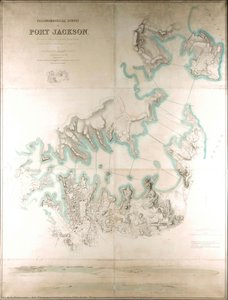
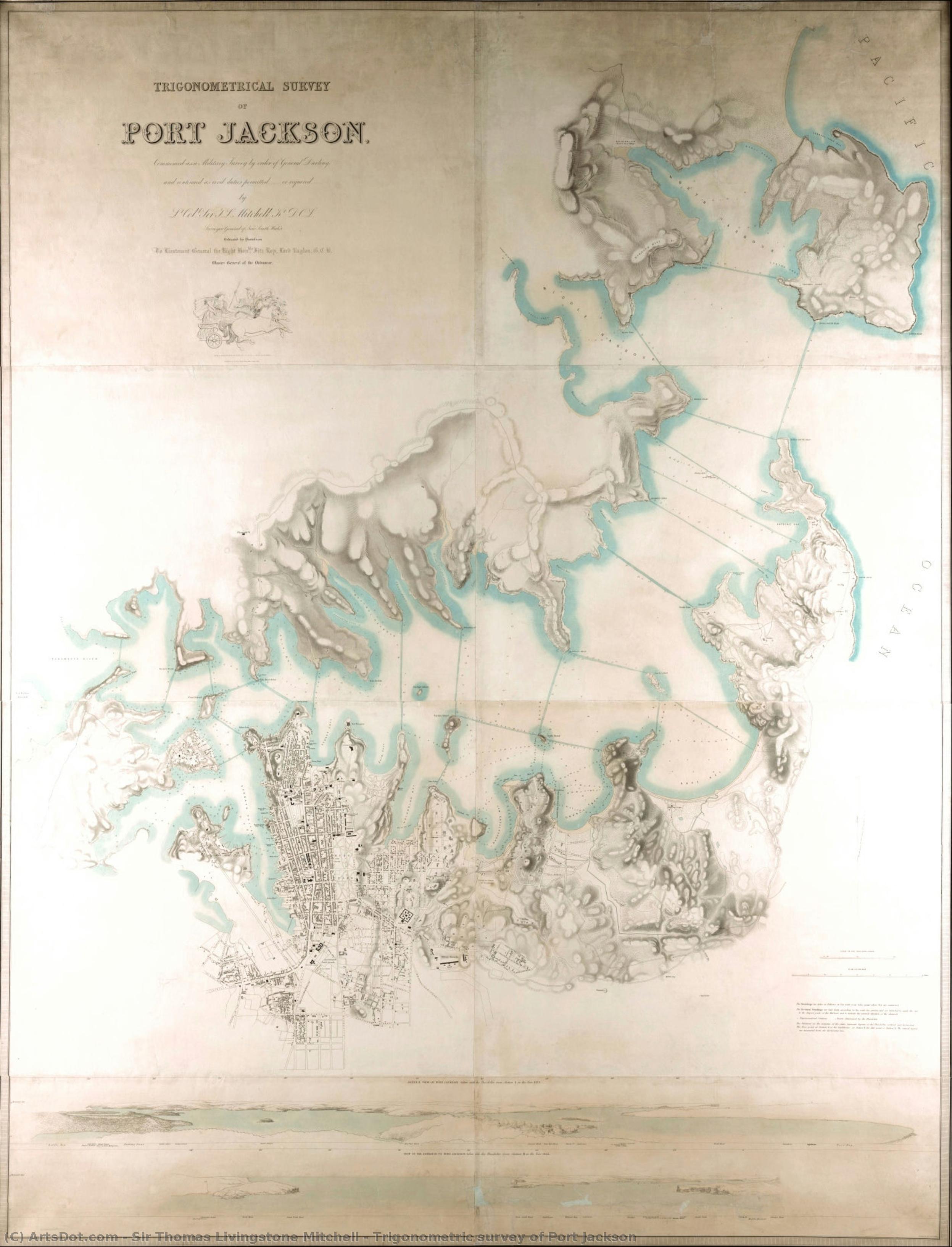
Trigonometric survey of Port Jackson

 Read More
Giclée / Art Print
Museum-quality giclée or canvas print with fast production and flexible finish options. ( Buy Hand Made Painting Buy Image)




































Pick from our preset sizes that match the artwork's original proportions.

You may enter your own dimensions to fit a specific frame or space. If your selected size does not match the original image's proportions, we will either crop the artwork or extend the image with a mirrored or solid-fill edge. A digital mockup will be sent for your approval before production begins.
Please note that the on-screen preview does not reflect the actual cropping or extension. Only the mockup will accurately show the final composition.
While custom sizes are available, we recommend selecting a dimension from the predefined list to preserve the original proportions.
Worldwide Delivery () in 2 weeks instead of standard 4/5 weeks. (27 August)

Free Worldwide Express Shipping

High-Quality Linen Canvas

Full Shipping Insurance

Customs Tax Refund Guarantee

True Color Matching Guarantee

60-Day Return Policy (Defects Only)

100% Money-Back Guarantee

Bulk Discount Offer
 Glass option is only available in size under 110 CM

Trigonometric survey of Port Jackson
Giclée / Art Print
Reproduction Size
-


Total Price
$ 63
Related Artworks









Artist Biography
Sir Thomas Livingstone Mitchell: Explorer, Surveyor, and Pioneer of the Australian Interior
Born in Grangemouth, Scotland, in 1792, Sir Thomas Livingstone Mitchell’s life was one defined by a relentless pursuit of knowledge, a keen eye for detail, and an unwavering commitment to charting the vast and largely unknown landscapes of southeastern Australia. More than simply a surveyor or explorer, Mitchell embodied the spirit of discovery that characterized the early colonial era – a blend of scientific rigor, adventurous zeal, and a profound impact on shaping the nation’s identity. His career spanned nearly three decades, marked by significant expeditions, meticulous mapping, and a lasting legacy as the ‘Father of Australian Cartography.’
Mitchell's early life instilled in him a love for learning and a practical aptitude honed through his family’s involvement in industry. He received an education that encompassed languages, mathematics, and scientific observation – skills that would prove invaluable during his military service with the British Army during the Peninsular War. It was here, amidst the chaos of battle, that he developed his remarkable talent for creating accurate topographical maps, a skill that foreshadowed his future endeavors in Australia. His experience in Spain and Portugal, meticulously documenting battlefield layouts, provided him with a crucial foundation for his later surveying work.
Early Years and Service in New South Wales
Arriving in Sydney in 1827 as Assistant Surveyor General, Mitchell immediately recognized the critical need for a systematic approach to mapping the Australian interior. The existing surveys were fragmented, inconsistent, and lacked a cohesive framework – a situation that hampered land settlement and hindered effective governance. He quickly became Surveyor-General in 1828, inheriting a department riddled with inefficiencies and staffed by individuals lacking the necessary expertise. Mitchell’s leadership was characterized by an uncompromising dedication to accuracy and a willingness to implement innovative techniques, including the use of trigonometric surveying – a revolutionary method at the time that involved employing tripods and precise measurements to establish a network of interconnected points.
His initial efforts focused on improving existing roads, notably the Great North Road and the Great South Road. These ambitious projects not only facilitated trade and communication but also demonstrated Mitchell’s ability to manage large-scale engineering undertakings. However, his most significant contribution lay in his exploration expeditions into the interior of Australia – ventures that would forever alter our understanding of the continent's geography and its indigenous populations.
Expeditions into the Australian Interior
Mitchell undertook four major expeditions between 1835 and 1840, each designed to penetrate deeper into the unknown heartland of Australia. These journeys were not merely acts of exploration; they were meticulously planned scientific investigations aimed at gathering detailed information about the landscape, flora, fauna, and Aboriginal cultures. The first expedition (1835-1836) focused on the Darling River region, establishing its importance as a vital waterway and documenting its unique ecosystem. The second expedition (1837-1839) explored the Murray River, further solidifying Australia’s position as a significant agricultural nation.
Perhaps his most celebrated achievement was the third expedition (1840), which led him through the rugged Blue Mountains and into what he famously named ‘Australia Felix’ – a region of remarkable beauty and abundance that promised fertile land and abundant resources. This expedition, though fraught with challenges, resulted in detailed maps, botanical collections, and invaluable ethnographic observations about the Gundagai people. The fourth expedition (1845-1846) focused on the Lachlan River, providing further insights into the interior’s geography and its potential for settlement.
Legacy and Recognition
Sir Thomas Livingstone Mitchell's contributions to Australian cartography are immeasurable. His meticulously crafted maps provided a crucial foundation for land settlement, agricultural development, and national infrastructure. He was knighted in 1839 in recognition of his exceptional service to the Crown and his pivotal role in shaping Australia’s future. Beyond his practical achievements, Mitchell's expeditions fostered a deeper appreciation for the continent’s natural beauty and its diverse indigenous cultures – though it is important to acknowledge that his accounts were often shaped by colonial biases.
His legacy extends beyond the maps he produced; he was a skilled artist, a keen observer of nature, and a dedicated scholar. The ‘Mitchell Papers,’ housed at the State Library of New South Wales, offer an unparalleled glimpse into his life’s work – a treasure trove of journals, sketches, maps, and correspondence that continue to fascinate historians and researchers today. Sir Thomas Livingstone Mitchell remains a towering figure in Australian history—a testament to the power of exploration, observation, and a profound commitment to understanding the world around us.
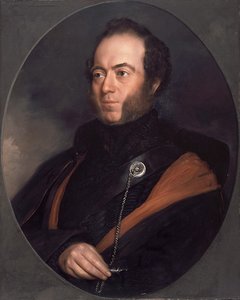
sir thomas livingstone mitchell
1792 - 1855 , United Kingdom
Quick Facts
- Artistic Movement Or Style: Surveyor, Explorer
- Artists Or Movements Influenced By This Artist: ['British Surveying']
- Artists Who Influenced This Artist: ['John Oxley']
- Date Of Birth: 15 June 1792
- Date Of Death: 5 October 1855
- Full Name: Sir Thomas Livingstone Mitchell
- Nationality: British
- Notable Artworks:
- Trigonometric Port Jackson
- Darling River Expedition
- Place Of Birth: Grangemouth, Scotland