

 Preview
 Send
Send Share
Share
 Details

 Download
 Similars
 X-Ray
X-Ray Diaporama
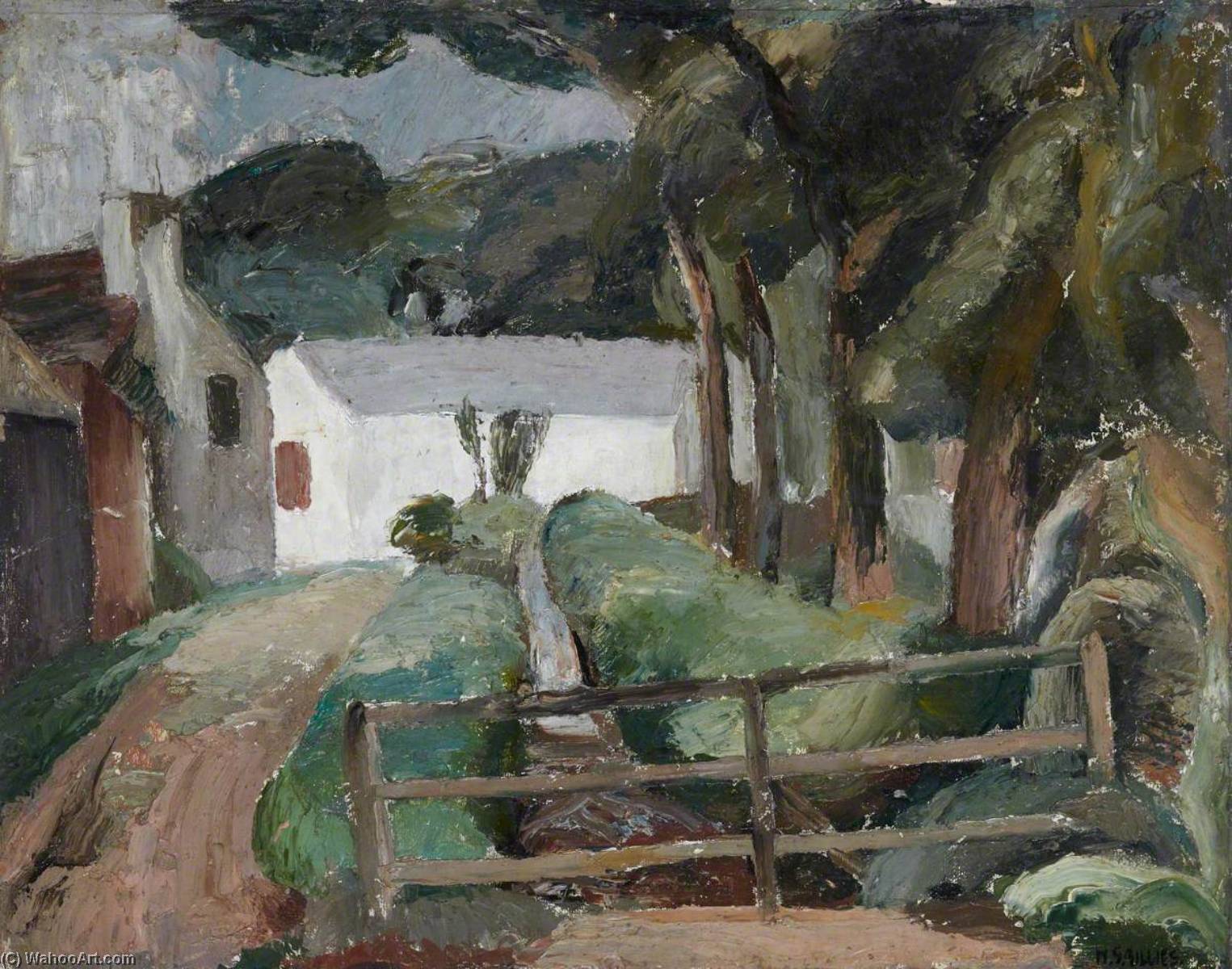
Gelston Mill (recto)


 Read More
Purchase a high-resolution, enhanced digital image, far superior to the online preview.
Each file is meticulously prepared by our in-house specialists using advanced tools and expert manual retouching. We ensure every image has exceptional clarity, precise color accuracy, and fine detail.
The final file is delivered via email within 72 hours, optimized for immediate use in professional, editorial, and print environments. This is the same quality trusted by top-tier design studios, publishers, and galleries.
Digital Image
Download a high-resolution file for personal display, printing, and creative projects. ( Buy Print Buy Hand Made Painting)
Included in Every Digital Image Order
Expert Digital Delivery, Guaranteed
When you choose ArtsDot.com, you're not just getting an image - you're receiving a professionally enhanced digital artwork, crafted with precision and backed by a satisfaction guarantee. Here's everything that comes with your order, automatically:

Fast Email Delivery
Your high-resolution digital image file will be emailed to you within 72 hours of ordering - ready for immediate use.

AI-Enhanced Digital File
Your artwork is professionally optimized using advanced AI tools and manual editing, ensuring maximum detail, clarity, and color accuracy.

Free Lifetime Re-Delivery
Accidentally deleted or lost your file? No worries - we'll resend it to you anytime, free of charge.

No Import Fees - Ever
Enjoy your artwork instantly with zero customs, duties, or delivery fees - digital downloads are always tax-free.

Color Accuracy Guarantee
We ensure your digital image reflects the original colors as closely as possible using professional tools and color management.

60-Day Satisfaction Guarantee
If you're not satisfied with your digital image, we'll revise it or refund 100% within 60 days - no questions asked.

100% Money-Back Guarantee
Not satisfied? Get a full refund within 60 days of receiving your digital file - no questions asked.

Bulk Order Discounts
Buy 3 images, save 10% - Buy 5, save 15% - Buy 10+, save 20%. Great for creative projects, galleries, and agencies.
Collectible Description
A Highland Reverie: Exploring the Landscape of William George Gillies
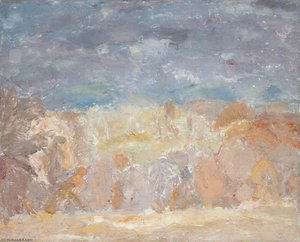
William George Gillies’ “Gelston Mill (recto)” isn't merely a depiction of a Scottish landscape; it’s a carefully constructed evocation of place, imbued with a profound sense of memory and the quiet dignity of rural life. Painted in 1934, this work stands as a pivotal moment in Gillies’ artistic journey, marking a shift away from the initial influence of Cubism towards a deeply rooted exploration of his native Scotland. The scene unfolds within the rolling hills of the Borders region, specifically near Gelston Mill in Berwickshire, a location that held particular significance for the artist and informed many of his later works.
Gillies’ approach is characterized by a remarkable sensitivity to light and atmosphere. He masterfully captures the diffused quality of Highland sunlight filtering through the mist-laden hills, creating an ethereal glow that softens the edges of the landscape. The composition is deliberately understated, eschewing dramatic vistas in favor of a more intimate portrayal – a quiet moment observed from a vantage point that invites contemplation. The muted palette—dominated by shades of grey, brown, and ochre—further enhances this sense of tranquility, grounding the scene in the earthy tones of the Scottish countryside.
Echoes of Klee and Cézanne: Gillies’ Artistic Evolution
Initially influenced by the geometric explorations of Cubism, particularly through his studies with André Lhote in Paris, Gillies' artistic vision underwent a transformative shift following an encounter with Paul Klee in 1934. Klee’s playful use of color and childlike imagination profoundly impacted Gillies, leading him to embrace a more expressive and emotionally resonant approach to painting. This influence is subtly evident in the work’s vibrant yet restrained palette and its suggestion of dreamlike quality.
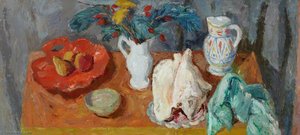
Furthermore, Gillies' early works, such as “Two Pots, Saucer and Fruit,” demonstrate a clear debt to Cézanne, particularly in his careful arrangement of objects within a shallow space. However, "Gelston Mill" represents a departure from this purely analytical approach, moving towards a more subjective interpretation of the landscape—one that prioritizes mood and atmosphere over precise representation. The subtle distortions of perspective and the emphasis on color relationships contribute to the painting’s overall sense of mystery and timelessness.
Symbolism in the Rural Scene: A Portrait of Scottish Identity
Beyond its purely aesthetic qualities, “Gelston Mill (recto)” carries a rich symbolic weight. The mill itself, a prominent feature of the landscape, represents not just a functional structure but also the enduring spirit of rural life and the connection between people and their environment. The solitary figure standing by the fence—a detail often overlooked—suggests a sense of observation and perhaps even a wistful longing for a simpler time. The horse grazing peacefully in the foreground reinforces this theme, embodying the harmony between humanity and nature.
Gillies’ work is deeply rooted in Scottish identity, reflecting a romanticized vision of the Highlands—one that celebrates its rugged beauty, its ancient traditions, and its enduring connection to the land. “Gelston Mill (recto)” serves as a poignant reminder of this heritage, capturing not just a specific place but also the essence of a way of life that is increasingly rare in the modern world.
A Legacy of Landscape: Gillies’ Enduring Influence
Sir William George Gillies remains one of Scotland's most celebrated landscape painters. His ability to capture the subtle nuances of light and atmosphere, coupled with his profound understanding of the Scottish countryside, has secured his place as a key figure in 20th-century art. “Gelston Mill (recto)” exemplifies this artistic vision, offering viewers a glimpse into a world of quiet beauty and timeless reflection. Reproductions of this evocative work continue to resonate with collectors and interior designers seeking to infuse their spaces with the spirit of the Highlands.
Related Artworks
Artist Biography
Sir William George Gillies: A Life in Scottish Art
Early Life and Education
- Born: Haddington, East Lothian, United Kingdom, 1898.
- Gillies initially enrolled at the Edinburgh College of Art but his studies were interrupted by service in World War I with the Royal Engineers.
- Following the war, he returned to complete his education at the Edinburgh College of Art, graduating and subsequently becoming a dedicated teacher there for over 40 years.
Artistic Development and Influences
- Gillies’ artistic journey began with an exploration of Cubism after studying under André Lhote in Paris (1923) and traveling to Italy (1924).
- Early works, like “Two Pots, Saucer and Fruit” (1933), demonstrate this influence, showing a Cézanne-inspired arrangement with Braque and Picasso’s understated color palettes.
- A pivotal moment came in 1934 when he encountered the work of Paul Klee, inspiring him to adopt a more imaginative use of colour and childlike qualities in his compositions.
- He gradually moved away from strict Cubism, developing a distinctive style rooted in Scottish landscape and still life traditions.
The 1922 Group and Collaborative Spirit
- In 1922, Gillies co-founded the “1922 Group” alongside fellow artists including William Crozier, William Geissler, and William MacTaggart.
- This exhibition society provided a platform for emerging Scottish artists to showcase their work at the New Gallery in Edinburgh for a decade.
- The group fostered a sense of community and innovation within the Scottish art scene.
Themes and Subject Matter
- Landscapes: Gillies is renowned for his depictions of the Lothian, Fife, and Border regions of Scotland. He captured the essence of these landscapes with a sensitive eye.
- Still Lifes: Still life compositions were another significant focus, often featuring ceramics created by his younger sister, Emma Smith Gillies, whose premature death in 1936 deeply affected him.
- Portraiture: While he experimented with portraiture early in his career, landscapes and still lifes became his primary subjects.
Major Achievements and Recognition
- Gillies served as Principal of the Edinburgh College of Art from 1959 until his retirement in 1966.
- His prolific output and dedication to teaching had a profound influence on generations of Scottish painters.
- He was elected a Royal Academician (RA), signifying significant recognition within the art world.
Historical Significance and Legacy
- Sir William George Gillies is considered one of Scotland’s most important 20th-century painters.
- His work bridges the gap between early modernism and a distinctly Scottish artistic identity.
- Legacy: His influence extends beyond his paintings, shaping the direction of Scottish art through his teaching and mentorship.
- He died in 1973, leaving behind a rich body of work that continues to be celebrated for its beauty, sensitivity, and enduring relevance.
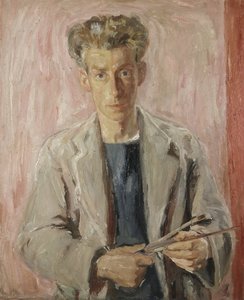
sir william george gillies
1898 - 1973 , United Kingdom
Quick Facts
- Birth Date: 1898
- Birth Place: Haddington, United Kingdom
- Death Date: 1973
- Influenced By:
- André Lhote
- Cézanne
- Braque
- Picasso
- Paul Klee
- Movement:
- Cubism
- Scottish Colourists
- Name: Sir William George Gillies
- Nationality: Scottish
- Notable Works:
- Young Boy with a Teapot
- Mediterranean Landscape with Overcast Sky
- Still Life – Yellow Jug and Striped Cloth
- The Origin of the Milky Way (after Jacopo Tintoretto)

