 Preview
 Send
Send Share
Share
 Details

 Download
 Similars
 X-Ray
X-Ray Diaporama
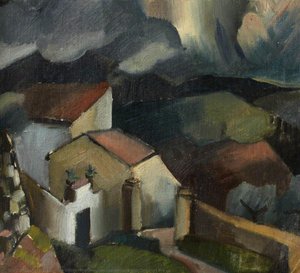
Hawksnest Farm
 Oil
Oil- WallArt
- Post-Impressionism
 1940
1940- Modern
 51.0 x 61.0 cm
 Read More
Hand Made Oil Reproduction
Hand-painted oil on canvas in your size and frame, made to order by our artists. ( Buy Print Buy Image)




P118B $10

P118H $10

P118W $10

P438Z $10

P508JH $12

P508YH $12

P805H $10

P805Z $10

P919BZ $10

P919G $10

P919XJ $10

P959ZH $10

P968JZ $12

W106C $8

W218G $10

W218JH $8

W218Y $10

W307PJ $10

W316G $10

W316PJ $8

W316Y $10

W398PJ $8

W4111J $10

W500HY $15

W500JH $15

W692G $12

W849H $8

W940BG $15

W953PJ $8




Pick from our preset sizes that match the artwork's original proportions.

You may enter your own dimensions to fit a specific frame or space. If your selected size does not match the original image's proportions, we will either crop the artwork or extend the painting with additional hand-painted elements. A digital mockup will be sent for your approval before production begins.
Please note that the on-screen preview does not reflect the actual cropping or extension. Only the mockup will accurately show the final composition.
While custom sizes are available, we recommend selecting a dimension from the predefined list to preserve the original proportions.
After order, ArtsDot.com team will email client for instructions and provide a mockup preview
Worldwide Delivery () in 3/4 weeks instead of standard 5 weeks. (21 August). No compromise on quality.

Free Worldwide Express Shipping

High-Quality Linen Canvas

Full Shipping Insurance

Customs Tax Refund Guarantee

True Color Matching Guarantee

60-Day Return Policy (Defects Only)

100% Money-Back Guarantee

Bulk Discount Offer
 Glass option is only available in size under 110 CM

Hawksnest Farm
Reproduction Medium
Reproduction Size
-


Total Price
$ 263
Artwork Description
A Pastoral Symphony in Color
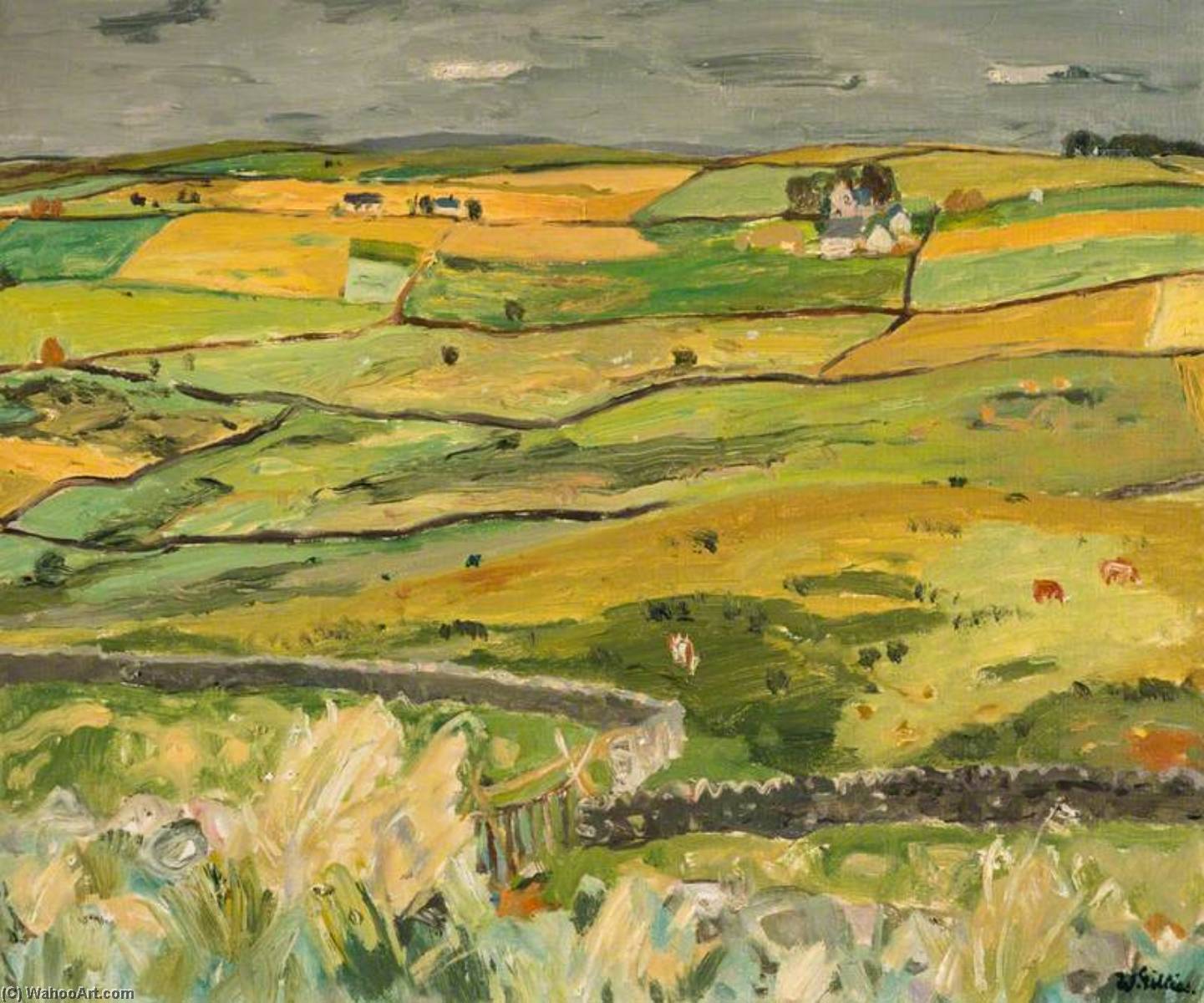
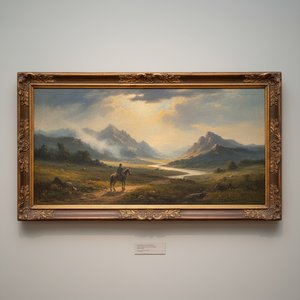
In the quietude of 1940, Sir William George Gillies captured a moment of profound serenity in his masterpiece, Hawksnest Farm. This evocative landscape invites the viewer into a lush, breathing world where the rhythmic pulse of nature takes center stage. The canvas unfolds as a sprawling tapestry of verdant greens and sun-drenched yellows, depicting a field of wheat that seems to sway under a heavy, contemplative sky. Within this pastoral sanctuary, a small congregation of cows and a solitary horse graze peacefully, their forms integrated into the landscape with a gentle, organic grace. A distant figure, perhaps a shepherd or a farmer, stands as a silent witness to the harmony of the scene, grounding the vastness of the meadow in a sense of human connection and stewardship.
The technique employed by Gillies reflects his sophisticated evolution from the structured geometries of Cubism toward a more lyrical, emotive expressionism. Influenced by the whimsical color palettes of Paul Klee, Gillies utilizes texture and light to breathe life into the Scottish countryside. The brushwork is deliberate yet fluid, creating a tactile quality that allows the viewer to almost feel the weight of the clouds and the softness of the grazing livestock. The interplay between the bright, golden hues of the wheat and the deeper, more somber tones of the overcast sky creates a dynamic tension, lending the painting a sense of depth and atmospheric realism that is both captivating and immersive.
Timeless Elegance for the Modern Interior
For the discerning collector or interior designer, Hawksnest Farm offers much more than mere decoration; it provides an emotional anchor for a room. The painting’s palette—a sophisticated blend of earth tones, golds, and muted greens—possesses a unique ability to harmonize with diverse decor styles, from the rustic charm of a country manor to the clean, minimalist lines of contemporary urban living. It serves as a window into a tranquil era, bringing an element of restorative peace and natural beauty into any architectural space.
Investing in a high-quality reproduction of this work allows one to possess a fragment of art history. The piece resonates with themes of stability, abundance, and the enduring cycle of life, making it a profound choice for those seeking to infuse their homes with a sense of heritage and quiet luxury. As an centerpiece, it commands attention not through loud or jarring colors, but through its masterful composition and the soulful, nostalgic atmosphere it radiates, ensuring that it remains a cherished focal point for generations to come.
Related Artworks
![Wheat Field With Rising Sun [1889] — Vincent Willem Van Gogh, Post-impressionism](/media/artworks/images-thumb/77/71/7771a95906cf1b4b7935dd57ec0448e9.jpg)
Artist Biography
Sir William George Gillies: A Life in Scottish Art
Early Life and Education
- Born: Haddington, East Lothian, United Kingdom, 1898.
- Gillies initially enrolled at the Edinburgh College of Art but his studies were interrupted by service in World War I with the Royal Engineers.
- Following the war, he returned to complete his education at the Edinburgh College of Art, graduating and subsequently becoming a dedicated teacher there for over 40 years.
Artistic Development and Influences
- Gillies’ artistic journey began with an exploration of Cubism after studying under André Lhote in Paris (1923) and traveling to Italy (1924).
- Early works, like “Two Pots, Saucer and Fruit” (1933), demonstrate this influence, showing a Cézanne-inspired arrangement with Braque and Picasso’s understated color palettes.
- A pivotal moment came in 1934 when he encountered the work of Paul Klee, inspiring him to adopt a more imaginative use of colour and childlike qualities in his compositions.
- He gradually moved away from strict Cubism, developing a distinctive style rooted in Scottish landscape and still life traditions.
The 1922 Group and Collaborative Spirit
- In 1922, Gillies co-founded the “1922 Group” alongside fellow artists including William Crozier, William Geissler, and William MacTaggart.
- This exhibition society provided a platform for emerging Scottish artists to showcase their work at the New Gallery in Edinburgh for a decade.
- The group fostered a sense of community and innovation within the Scottish art scene.
Themes and Subject Matter
- Landscapes: Gillies is renowned for his depictions of the Lothian, Fife, and Border regions of Scotland. He captured the essence of these landscapes with a sensitive eye.
- Still Lifes: Still life compositions were another significant focus, often featuring ceramics created by his younger sister, Emma Smith Gillies, whose premature death in 1936 deeply affected him.
- Portraiture: While he experimented with portraiture early in his career, landscapes and still lifes became his primary subjects.
Major Achievements and Recognition
- Gillies served as Principal of the Edinburgh College of Art from 1959 until his retirement in 1966.
- His prolific output and dedication to teaching had a profound influence on generations of Scottish painters.
- He was elected a Royal Academician (RA), signifying significant recognition within the art world.
Historical Significance and Legacy
- Sir William George Gillies is considered one of Scotland’s most important 20th-century painters.
- His work bridges the gap between early modernism and a distinctly Scottish artistic identity.
- Legacy: His influence extends beyond his paintings, shaping the direction of Scottish art through his teaching and mentorship.
- He died in 1973, leaving behind a rich body of work that continues to be celebrated for its beauty, sensitivity, and enduring relevance.
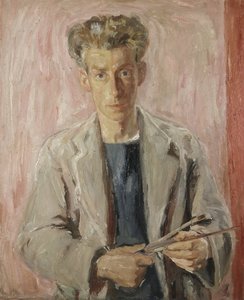
sir william george gillies
1898 - 1973 , United Kingdom
Quick Facts
- Birth Date: 1898
- Birth Place: Haddington, United Kingdom
- Death Date: 1973
- Influenced By:
- André Lhote
- Cézanne
- Braque
- Picasso
- Paul Klee
- Movement:
- Cubism
- Scottish Colourists
- Name: Sir William George Gillies
- Nationality: Scottish
- Notable Works:
- Young Boy with a Teapot
- Mediterranean Landscape with Overcast Sky
- Still Life – Yellow Jug and Striped Cloth
- The Origin of the Milky Way (after Jacopo Tintoretto)
Related Articles

John Constable's Masterpieces: Explore 25 Iconic Landscapes for Your Home
Journey through John Constable's 25 most celebrated landscapes. Explore Romanticism, Dedham Vale & his masterful use of light in iconic paintings like 'Hay Wain'. Find museum-quality art reproductions and elevate your home decor on ArtsDot.com.
Anthony Vandyke Copley Fielding: Rediscovering a Master of Romantic Landscape
Discover the captivating landscapes of Anthony Vandyke Copley Fielding, a master of Romantic watercolour painting. Explore his life, technique, and legacy with ArtsDot – your source for museum-quality art reproductions & expert appraisal.
Serene Masterpieces: 10 Artworks for Peaceful Decor |
Find peace with 10 serene masterpieces! Explore calming landscapes by Monet & Van Gogh, tranquil Japanese art like Hokusai’s Great Wave, and more. Discover the stories behind these iconic paintings & bring museum-quality art to your home with . Explore the full collection online.

Dutch Masters: 10 Golden Age Paintings That Still Inspire |
Journey into the Dutch Golden Age! Explore 10 iconic paintings by Rembrandt, Vermeer & Hals. Discover the stories behind these Baroque masterpieces and find museum-quality art reproductions to elevate your home decor on .

25 Klimt Masterpieces: A Journey Through Iconic Art & Decor
Delve into the world of Gustav Klimt with our top 25 masterpieces! Explore his iconic paintings – 'The Kiss,' 'Portrait of Adele,' and more. Discover museum-quality reproductions & curated decor ideas. Explore the full collection online at ArtsDot.com.