 Preview
 Send
Send Share
Share
 Details

 Download
 Similars
 X-Ray
X-Ray Diaporama
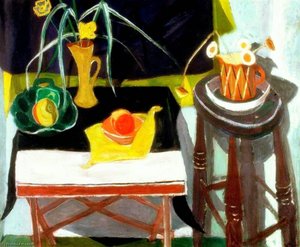
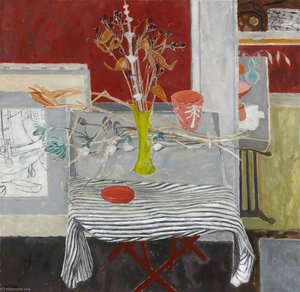
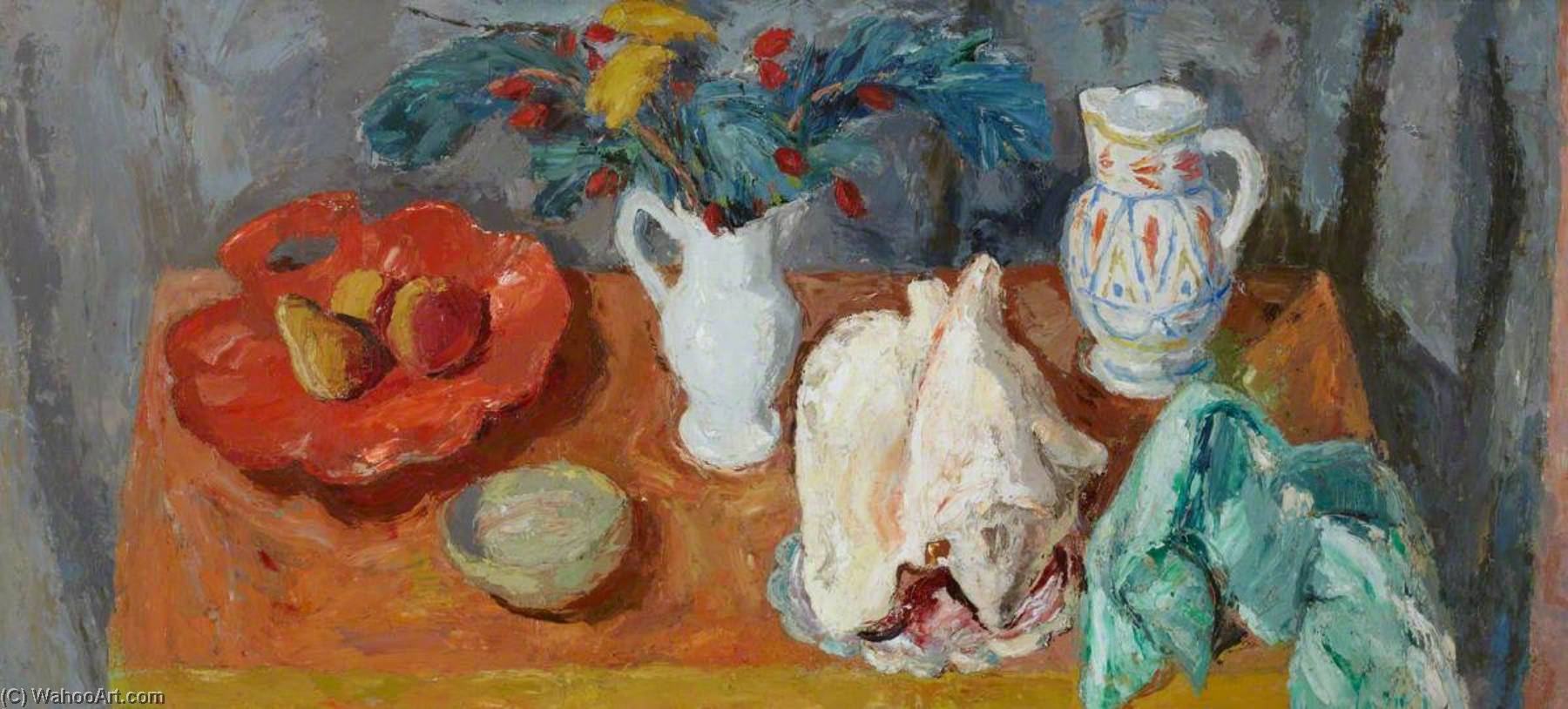
Still Life with Green Cloth
 Acrylic On Canvas
- WallArt
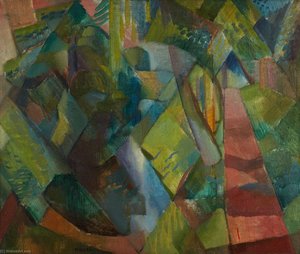
- Cubist Still Life
 59.0 x 127.0 cm
 Royal Scottish Academy of Art - Architecture
 Read More
Giclée / Art Print
Museum-quality giclée or canvas print with fast production and flexible finish options. ( Buy Hand Made Painting Buy Image)




P118B $10

P118H $10

P118W $10

P438Z $10

P508JH $12

P508YH $12

P805H $10

P805Z $10

P919BZ $10

P919G $10

P919XJ $10

P959ZH $10

P968JZ $12

W106C $8

W218G $10

W218JH $8

W218Y $10

W307PJ $10

W316G $10

W316PJ $8

W316Y $10

W398PJ $8

W4111J $10

W500HY $15

W500JH $15

W692G $12

W849H $8

W940BG $15

W953PJ $8




Pick from our preset sizes that match the artwork's original proportions.

You may enter your own dimensions to fit a specific frame or space. If your selected size does not match the original image's proportions, we will either crop the artwork or extend the image with a mirrored or solid-fill edge. A digital mockup will be sent for your approval before production begins.
Please note that the on-screen preview does not reflect the actual cropping or extension. Only the mockup will accurately show the final composition.
While custom sizes are available, we recommend selecting a dimension from the predefined list to preserve the original proportions.
Worldwide Delivery () in 2 weeks instead of standard 4/5 weeks. (23 August)

Free Worldwide Express Shipping

High-Quality Linen Canvas

Full Shipping Insurance

Customs Tax Refund Guarantee

True Color Matching Guarantee

60-Day Return Policy (Defects Only)

100% Money-Back Guarantee

Bulk Discount Offer
 Glass option is only available in size under 110 CM

Still Life with Green Cloth
Giclée / Art Print
Reproduction Size
-


Total Price
$ 63
Collectible Description
A Quiet Symphony of Colour and Form: Exploring Sir William George Gillies’ Still Life with Green Cloth
Sir William George Gillies (1898-1973), a Scottish Colourist celebrated for his masterful depictions of the Highlands and landscapes infused with lyrical emotion, produced numerous captivating artworks that continue to resonate with audiences today. Among these treasures is “Still Life with Green Cloth,” a deceptively simple composition brimming with nuanced observation and artistic innovation—a testament to Gillies’ evolving stylistic journey from Cubism's geometric rigor to a more expressive embrace of colour and texture.The Genesis of Geometric Influence: Echoes of Cézanne and Picasso
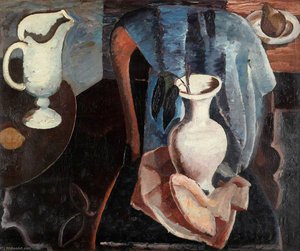
Gillies’ formative years were marked by an immersion in the avant-garde movements of his time, notably Cubism spearheaded by Pablo Picasso and Georges Braque. His early explorations mirrored this influence, as evidenced in pieces like “Two Pots, Saucer and Fruit” (1933), where fragmented planes—a direct descendant of Cézanne’s pioneering approach—interlock to create an illusionistic space that simultaneously captures the solidity of form and hints at multiple perspectives. The restrained palette adopted by Gillies – reminiscent of Picasso's understated hues – underscores this initial commitment to Cubist principles, prioritizing intellectual rigor over flamboyant visual spectacle.A Shift Towards Imaginative Colour: Inspired by Paul Klee’s Vision
However, Gillies’ artistic sensibilities underwent a transformative shift in 1934 following an encounter with the artwork of Swiss painter Paul Klee. Klee's playful use of colour and his embrace of childlike spontaneity profoundly impacted Gillies’ creative process. This newfound inspiration propelled him toward compositions characterized by vibrant hues and gestural brushstrokes—a deliberate departure from Cubist austerity. The resulting paintings pulsate with an inner luminescence, conveying a sense of wonder and capturing the ephemeral beauty of nature with remarkable sensitivity.Still Life With Green Cloth: Technique and Emotional Resonance
“Still Life with Green Cloth” exemplifies Gillies’ refined technique and captures a poignant emotional landscape. Painted in oil on canvas, the artwork showcases a masterful application of impasto—thickly layered paint—creating palpable textural surfaces that invite tactile engagement. The dominant colour is a verdant green cloth draped across the table, serving as both visual anchor and symbolic representation of tranquility and renewal. Scattered around are apples – symbols of abundance and earthly delights – alongside cups and a bowl, arranged with careful consideration for compositional balance. The painting’s subdued palette—primarily greens, browns, and ochres—contributes to its melancholic mood, reflecting the artist's contemplative gaze upon the everyday world. Yet, within this apparent stillness lies an undeniable vibrancy; Gillies skillfully captures the subtle interplay of light and shadow, conveying a profound appreciation for the beauty inherent in simple subjects. It’s a piece that speaks volumes about observation, emotion, and the enduring power of artistic expression—a timeless reminder of Gillies' ability to transform ordinary objects into vehicles for evocative storytelling.A Legacy of Scottish Colourism: Gillies' Enduring Influence
Sir William George Gillies remains an influential figure in Scottish art history, recognized as one of the foremost practitioners of Colourism – a movement that championed expressive colour alongside meticulous observation of nature. His legacy extends beyond his celebrated landscapes; “Still Life with Green Cloth,” like many other works, stands as a testament to his unwavering dedication to artistic innovation and his profound connection to the spirit of his time—a captivating artwork destined to inspire generations of artists and collectors alike.Related Artworks
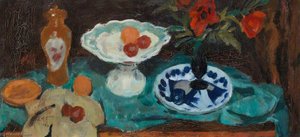
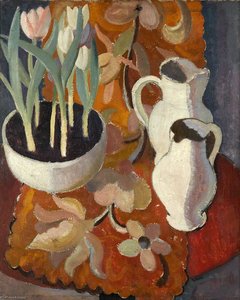
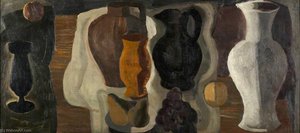
Artist Biography
Sir William George Gillies: A Life in Scottish Art
Early Life and Education
- Born: Haddington, East Lothian, United Kingdom, 1898.
- Gillies initially enrolled at the Edinburgh College of Art but his studies were interrupted by service in World War I with the Royal Engineers.
- Following the war, he returned to complete his education at the Edinburgh College of Art, graduating and subsequently becoming a dedicated teacher there for over 40 years.
Artistic Development and Influences
- Gillies’ artistic journey began with an exploration of Cubism after studying under André Lhote in Paris (1923) and traveling to Italy (1924).
- Early works, like “Two Pots, Saucer and Fruit” (1933), demonstrate this influence, showing a Cézanne-inspired arrangement with Braque and Picasso’s understated color palettes.
- A pivotal moment came in 1934 when he encountered the work of Paul Klee, inspiring him to adopt a more imaginative use of colour and childlike qualities in his compositions.
- He gradually moved away from strict Cubism, developing a distinctive style rooted in Scottish landscape and still life traditions.
The 1922 Group and Collaborative Spirit
- In 1922, Gillies co-founded the “1922 Group” alongside fellow artists including William Crozier, William Geissler, and William MacTaggart.
- This exhibition society provided a platform for emerging Scottish artists to showcase their work at the New Gallery in Edinburgh for a decade.
- The group fostered a sense of community and innovation within the Scottish art scene.
Themes and Subject Matter
- Landscapes: Gillies is renowned for his depictions of the Lothian, Fife, and Border regions of Scotland. He captured the essence of these landscapes with a sensitive eye.
- Still Lifes: Still life compositions were another significant focus, often featuring ceramics created by his younger sister, Emma Smith Gillies, whose premature death in 1936 deeply affected him.
- Portraiture: While he experimented with portraiture early in his career, landscapes and still lifes became his primary subjects.
Major Achievements and Recognition
- Gillies served as Principal of the Edinburgh College of Art from 1959 until his retirement in 1966.
- His prolific output and dedication to teaching had a profound influence on generations of Scottish painters.
- He was elected a Royal Academician (RA), signifying significant recognition within the art world.
Historical Significance and Legacy
- Sir William George Gillies is considered one of Scotland’s most important 20th-century painters.
- His work bridges the gap between early modernism and a distinctly Scottish artistic identity.
- Legacy: His influence extends beyond his paintings, shaping the direction of Scottish art through his teaching and mentorship.
- He died in 1973, leaving behind a rich body of work that continues to be celebrated for its beauty, sensitivity, and enduring relevance.
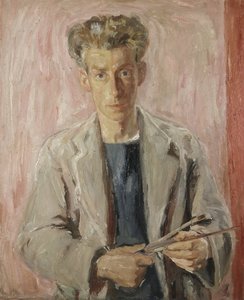
sir william george gillies
1898 - 1973 , United Kingdom
Quick Facts
- Birth Date: 1898
- Birth Place: Haddington, United Kingdom
- Death Date: 1973
- Influenced By:
- André Lhote
- Cézanne
- Braque
- Picasso
- Paul Klee
- Movement:
- Cubism
- Scottish Colourists
- Name: Sir William George Gillies
- Nationality: Scottish
- Notable Works:
- Young Boy with a Teapot
- Mediterranean Landscape with Overcast Sky
- Still Life – Yellow Jug and Striped Cloth
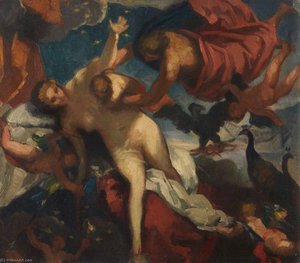
- The Origin of the Milky Way (after Jacopo Tintoretto)
Related Articles
Sir William George Gillies: A Scottish Colourist's Journey Through Landscape & Abstraction
Explore the captivating world of Sir William George Gillies, a leading Scottish Colourist. Discover his journey from Cubism to iconic landscapes & still lifes. Expert insights for collectors and art enthusiasts.
George Paul Chalmers: Rediscovering the Angus Rembrandt & Scottish Colourist Roots
Explore the captivating world of George Paul Chalmers (1833-1878), a pivotal Scottish painter. Discover his landscapes, portraits & connection to the Aesthetic Movement and Colourists. Learn about this 'Angus Rembrandt's' legacy with ArtsDot.
The Flourishing Canvas: A Historical Journey Through Botanical Illustration
Explore the captivating history of botanical illustration! Discover renowned artists like Robert Havell & Mary Walcott, learn about techniques, and find museum-quality art at ArtsDot.com.
Victorian Botanical Painting: Science, Art & Aesthetic Sensibility
Explore the exquisite world of Victorian botanical art! Discover the science & artistry behind stunning floral illustrations by Gould, Muckley & more. Learn about collecting, value & investment at ArtsDot.
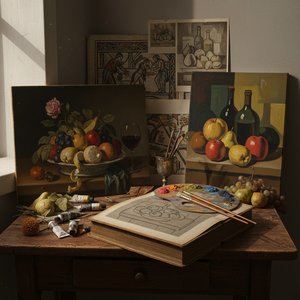
Silent Narratives: Exploring the Enduring Appeal of Still Life Painting Across Centuries
Explore the rich history of still life painting with ArtsDot. Discover Dutch Masters, decode vanitas symbolism & learn about collecting timeless art. Expert insights and museum-quality reproductions.