

 Preview
 Send
Send Share
Share
 Details

 Download
 Similars
 X-Ray
X-Ray Diaporama
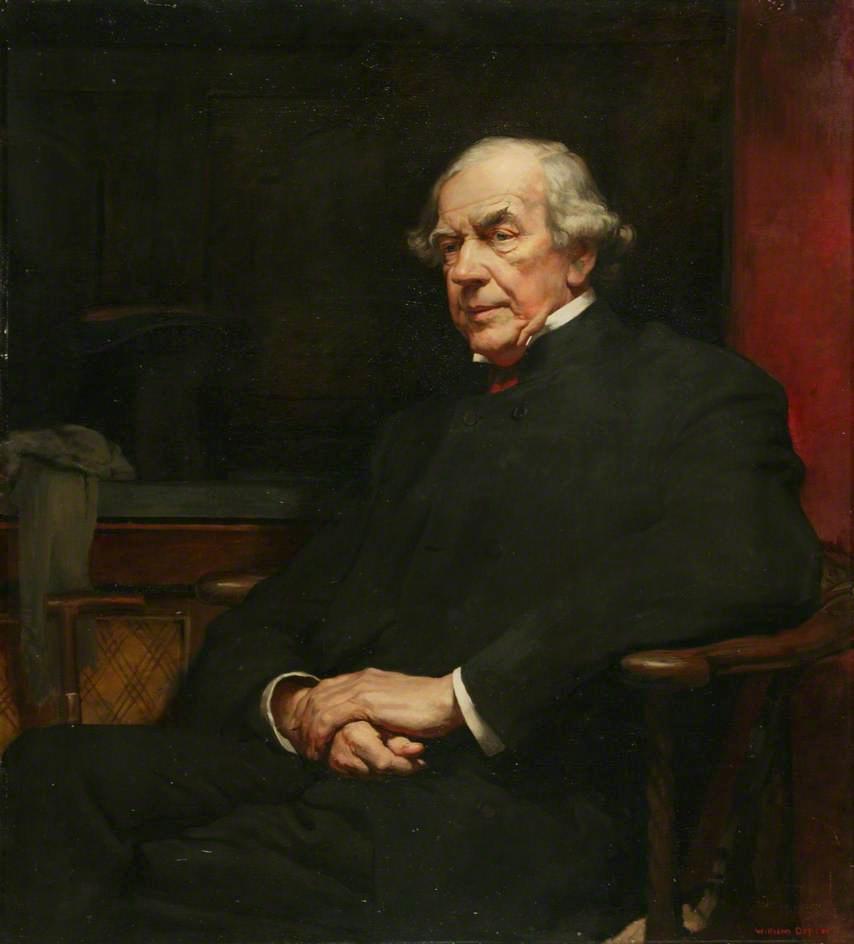
James Staats Forbes, Art Connoisseur and Railway Manager


 Read More
Purchase a high-resolution, enhanced digital image, far superior to the online preview.
Each file is meticulously prepared by our in-house specialists using advanced tools and expert manual retouching. We ensure every image has exceptional clarity, precise color accuracy, and fine detail.
The final file is delivered via email within 72 hours, optimized for immediate use in professional, editorial, and print environments. This is the same quality trusted by top-tier design studios, publishers, and galleries.
Digital Image
Download a high-resolution file for personal display, printing, and creative projects. ( Buy Print Buy Hand Made Painting)
Included in Every Digital Image Order
Expert Digital Delivery, Guaranteed
When you choose ArtsDot.com, you're not just getting an image - you're receiving a professionally enhanced digital artwork, crafted with precision and backed by a satisfaction guarantee. Here's everything that comes with your order, automatically:

Fast Email Delivery
Your high-resolution digital image file will be emailed to you within 72 hours of ordering - ready for immediate use.

AI-Enhanced Digital File
Your artwork is professionally optimized using advanced AI tools and manual editing, ensuring maximum detail, clarity, and color accuracy.

Free Lifetime Re-Delivery
Accidentally deleted or lost your file? No worries - we'll resend it to you anytime, free of charge.

No Import Fees - Ever
Enjoy your artwork instantly with zero customs, duties, or delivery fees - digital downloads are always tax-free.

Color Accuracy Guarantee
We ensure your digital image reflects the original colors as closely as possible using professional tools and color management.

60-Day Satisfaction Guarantee
If you're not satisfied with your digital image, we'll revise it or refund 100% within 60 days - no questions asked.

100% Money-Back Guarantee
Not satisfied? Get a full refund within 60 days of receiving your digital file - no questions asked.

Bulk Order Discounts
Buy 3 images, save 10% - Buy 5, save 15% - Buy 10+, save 20%. Great for creative projects, galleries, and agencies.
James Staats Forbes, Art Connoisseur and Railway Manager
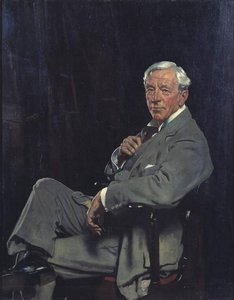
James Staats Forbes (1823–1904) stands as a testament to Victorian ambition and artistic patronage—a figure whose portrait by Sir William Newenham Montague Orpen captures not merely his likeness but also the spirit of an era defined by industrial progress and refined sensibilities. Executed in 1900, this oil painting resides within the Manchester Art Gallery’s collection, offering a glimpse into the world of influential businessmen who simultaneously championed art and shaped society's trajectory.Composition and Technique: A Study in Formal Restraint
The canvas presents Forbes seated squarely in a chair—a deliberate positioning that speaks to authority and composure. Orpen skillfully employs chiaroscuro lighting, casting dramatic shadows across Forbes’ face and torso, highlighting the contours of his features with meticulous detail. The dark background serves as an anchor for the subject, directing the viewer's gaze towards him and emphasizing the importance of his presence within the frame. Strong vertical lines dominate the composition—evident in Forbes’ suit and chair—creating a sense of formality that reflects the Victorian aesthetic. Orpen’s technique is characterized by careful observation and rendering of textures; the artist painstakingly depicts the sheen of Forbes' tie and the subtle folds of his clothing fabric, demonstrating mastery over oil paint and conveying an impression of understated elegance.Color Palette and Symbolism: Hints of Crimson Amidst Neutral Tones
The painting’s color palette leans heavily on muted tones—primarily blacks, grays, browns, and a restrained use of crimson drapery. This deliberate choice contributes to the overall mood of seriousness and dignity. The crimson hue, subtly incorporated into the background fabric, may symbolize nobility or passion – elements that align with Forbes' role as an art connoisseur and his considerable influence within the railway industry. These hues are carefully balanced against lighter shades used to illuminate Forbes’ face, creating a harmonious interplay of light and shadow that enhances visual impact.Historical Context: Victorian Patronage and Artistic Expression
Forbes’ commission underscores the significant role played by wealthy industrialists in fostering artistic creativity during the Victorian period. Artists like Orpen were often employed by prominent figures to commemorate their achievements and solidify their reputations—a practice reflecting a broader cultural preoccupation with status and legacy. The painting reflects the prevailing stylistic conventions of academic art, prioritizing realism and meticulous detail while adhering to established compositional principles. It exemplifies the Victorian ideal of masculine dignity and intellectual prowess – qualities celebrated in portraiture as a means of documenting both physical appearance and character.Emotional Impact: A Portrait of Quiet Confidence
Beyond its formal elements, the painting conveys an undeniable sense of quiet confidence—a reflection of Forbes’ personality and his unwavering belief in his own abilities. His stern gaze and upright posture communicate seriousness and intelligence, inviting contemplation on the subject's inner life. Orpen’s masterful rendering captures not only Forbes’ physical likeness but also a psychological portrait that resonates with viewers today—a reminder of the enduring power of art to convey emotion and illuminate human experience.Related Artworks
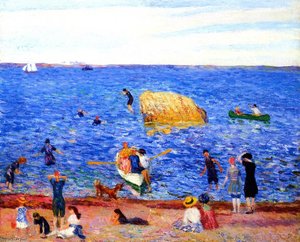
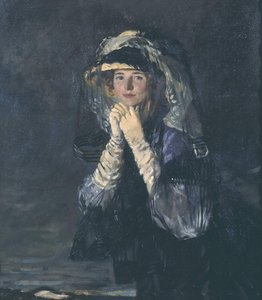
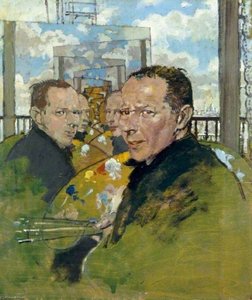
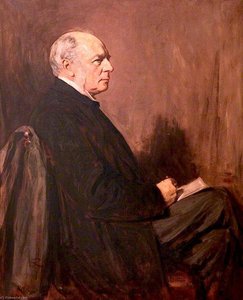
Artist Biography
Early Life
William Newenham Montague Orpen (1878–1931) was born in Stillorgan, County Dublin, Ireland, the fourth and youngest son of Arthur Herbert Orpen (1830–1926), a solicitor, and his wife, Anne Caulfield (1834–1912), the eldest daughter of the Right Rev. Charles Caulfield (1804–1862), the Bishop of Nassau. Both his parents were amateur painters, fostering an early appreciation for artistic pursuits within the family. His eldest brother, Richard Caulfield Orpen, became a notable architect, shaping the familial legacy in distinct creative fields. The historian Goddard Henry Orpen was his second cousin, cementing connections within a prominent Irish intellectual circle. Growing up at ‘Oriel’, a sprawling estate with extensive grounds including stables and a tennis court, William enjoyed a privileged upbringing characterized by artistic encouragement and access to resources that would prove invaluable for his future endeavors. His formative years instilled in him a profound understanding of visual culture and established a lifelong fascination with capturing the essence of human experience through art.Education and Artistic Training
Orpen’s artistic journey commenced at a remarkably young age when he enrolled at the Dublin Metropolitan School of Art at thirteen. Demonstrating exceptional talent from the outset, he swiftly dominated every competition held there, securing accolades that foreshadowed a brilliant career trajectory. This early success propelled him to the Slade School of Fine Art in London, where he honed his skills under masters like Henry Tonks and Philip Wilson Steer, absorbing techniques while simultaneously cultivating a distinctive style characterized by bold draughtsmanship and an almost photographic realism. The Slade’s emphasis on meticulous observation and tonal modulation profoundly influenced Orpen's artistic sensibilities. He embraced *plein air* painting—capturing the fleeting effects of light and atmosphere outdoors—developing a masterful command of color and texture. His instructors recognized his innate aptitude for portraying human form with unparalleled accuracy, shaping him into one of Britain’s foremost portraitists.The Edwardian Portraitist
Orpen quickly established himself as a sought-after portraitist during the Edwardian era—a period marked by opulent social life and artistic innovation. His portraits possessed an unsettling honesty, revealing psychological complexities beneath polished surfaces—setting him apart from more conventional artists of his time. He skillfully employed mirrors in his compositions to create images within images, adding false frames and collages around his subjects—techniques that reflected a broader interest in illusion and perception. Notable among his commissions were depictions of prominent figures—politicians, socialites, and members of the artistic community—each portrait imbued with an evocative atmosphere and capturing the sitter’s inner character.World War I Service and Artistic Output
The outbreak of World War I irrevocably altered Orpen's path and cemented his place in art history. Appointed as an official war artist by the British government, he found himself thrust into the heart of the conflict—documenting the brutal realities of trench warfare with a starkness rarely seen at the time. Unlike many artists who focused on heroic narratives, Orpen depicted the grim toll of war—the exhausted soldiers, the desolate landscapes, and the haunting presence of death—producing an astonishing 138 drawings and paintings that he generously donated to the British government. His access to the front lines—facilitated by connections within the army’s upper echelons—allowed him a unique perspective, exposing him to profound trauma that would deeply affect his later life and work. Among his most celebrated works are *The Trench*, *A Soldier’s Christmas Dinner* and *The Fallen Warrior*, which powerfully convey the psychological impact of war on the human spirit.Technique and Influences
Orpen's artistic development was shaped by a diverse range of influences. The Dutch Masters—particularly those specializing in interior scenes—informed his meticulous attention to detail and mastery of light and shadow. Jan van Eyck’s *Arnolfini Portrait* served as a recurring motif, appearing subtly referenced in works like *The Mirror*, demonstrating Orpen’s fascination with symbolism and the interplay between reality and representation. He admired Édouard Manet—adopting his directness of execution and rejection of academic conventions—embracing a stylistic approach that prioritized expressive power over formal adherence.Legacy and Rediscovery
Despite his wartime service and accolades—including knighthood in 1918—Orpen’s later years were marked by a decline in both health and reputation. His relentless dedication to documenting the war had taken its toll, leaving him physically and emotionally exhausted. Furthermore, his personal life was plagued by scandal—stemming from an affair with a married woman that became public knowledge—leading to considerable social censure. Critics dismissed his work as superficial and lacking in depth—a judgment that persisted for decades after his death in 1931. However, in recent years, there has been a growing reassessment of Orpen’s contribution to art history—scholars recognizing the power and complexity of his wartime paintings—and acknowledging his innovative techniques and willingness to challenge conventions as precursors to modernism.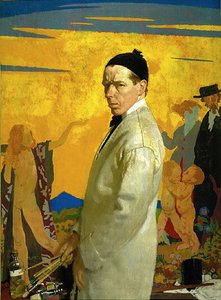
Sir William Newenham Montague Orpen
1878 - 1931 , Ireland
Quick Facts
- Artistic Movement Or Style: Edwardian Portraiture; Impressionism
- Artists Or Movements Influenced By This Artist: ['Celtic Revival']
- Artists Who Influenced This Artist:
- Jan van Eyck
- Édouard Manet
- Date Of Birth: November 27, 1878
- Full Name: William Newenham Montague Orpen
- Nationality: Irish
- Notable Artworks:
- The Mirror
- David Beatty, 1st Earl Beatty
- Study for The Holy Well
- Place Of Birth: Stillorgan, County Dublin, Ireland

