 Preview
 Send
Send Share
Share
 Details

 Download
 Similars
 X-Ray
X-Ray Diaporama
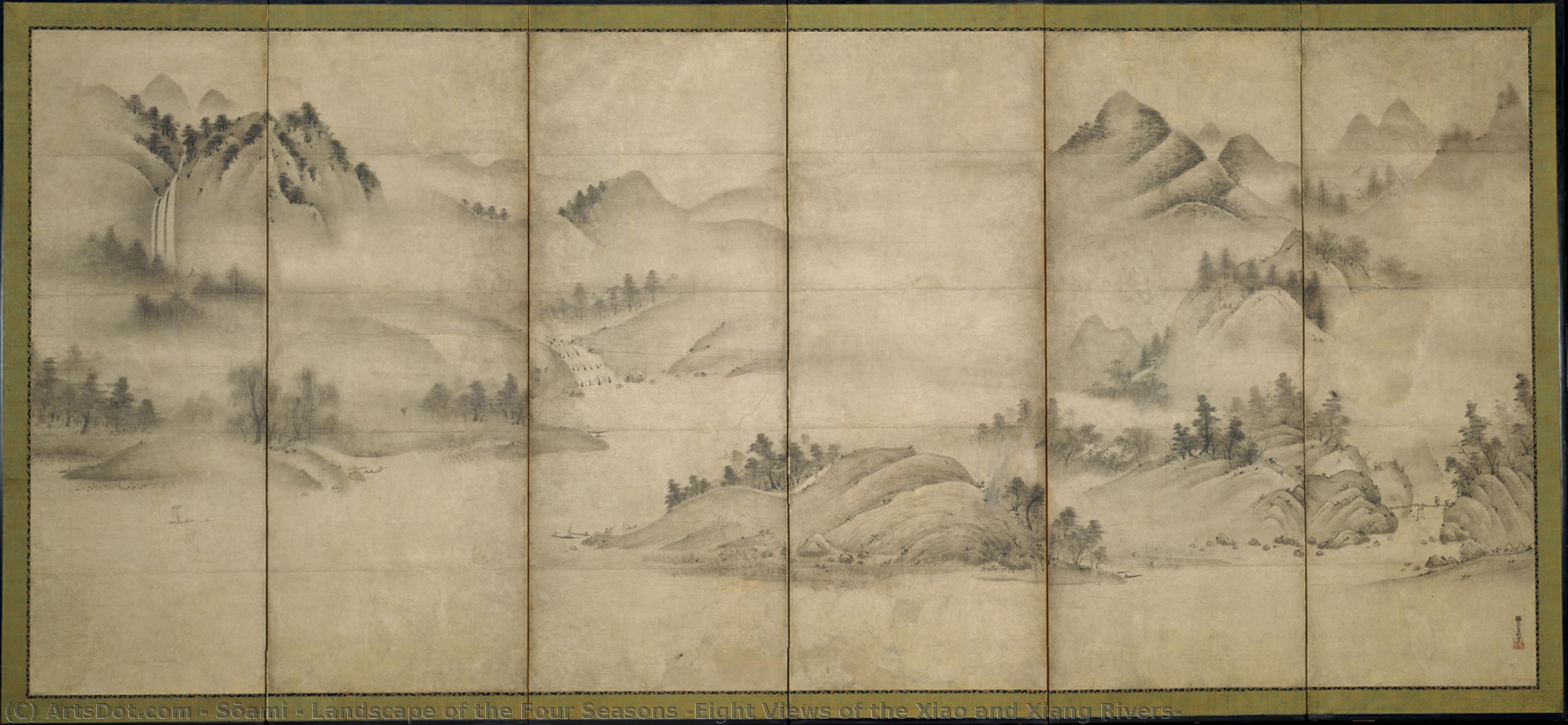
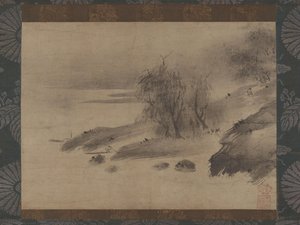
Landscape of the Four Seasons (Eight Views of the Xiao and Xiang Rivers)
 501
501 173.0cm x 371.0cm
 Read More
Hand Made Oil Reproduction
Hand-painted oil on canvas in your size and frame, made to order by our artists. ( Buy Print Buy Image)




































Pick from our preset sizes that match the artwork's original proportions.

You may enter your own dimensions to fit a specific frame or space. If your selected size does not match the original image's proportions, we will either crop the artwork or extend the painting with additional hand-painted elements. A digital mockup will be sent for your approval before production begins.
Please note that the on-screen preview does not reflect the actual cropping or extension. Only the mockup will accurately show the final composition.
While custom sizes are available, we recommend selecting a dimension from the predefined list to preserve the original proportions.
After order, ArtsDot.com team will email client for instructions and provide a mockup preview
Worldwide Delivery () in 3/4 weeks instead of standard 5 weeks. (5 September). No compromise on quality.

Free Worldwide Express Shipping

High-Quality Linen Canvas

Full Shipping Insurance

Customs Tax Refund Guarantee

True Color Matching Guarantee

60-Day Return Policy (Defects Only)

100% Money-Back Guarantee

Bulk Discount Offer
 Glass option is only available in size under 110 CM

Landscape of the Four Seasons (Eight Views of the Xiao and Xiang Rivers)
Reproduction Medium
Reproduction Size
-


Total Price
$ 263
Related Artworks









Artist Biography
Sōami (1525): Bridging East and West in Japanese Landscape Painting
The world of 16th-century Japan was undergoing a profound transformation, marked by the waning influence of the Kamakura shogunate and the rise of the Ashikaga. Amidst this shifting landscape emerged Sōami (相阿弥), a painter whose work stands as a pivotal bridge between traditional Japanese aesthetics and the burgeoning artistic currents flowing from China. Born in Tokyo around 1525, Sōami’s life was inextricably linked to the world of art and patronage, inheriting a legacy of connoisseurship and ultimately forging his own distinctive style – one that would profoundly impact the development of Nanga painting, or Southern School art, in Japan.
Sōami's lineage played a crucial role in shaping his artistic trajectory. He was the grandson and son of the esteemed painters and art collectors Nōami and Geiami, figures deeply involved in the courtly circles and renowned for their discerning taste. This upbringing instilled within him not only technical skill but also an appreciation for beauty and a deep understanding of the value of art as both decoration and cultural statement. His service to the Ashikaga shogunate further solidified his position within the artistic elite, providing access to influential patrons and opportunities to contribute to significant projects. Legend has it that he was even involved in the design of the iconic rock garden at Ginkaku-ji (the Silver Pavilion), a testament to his influence on the aesthetic sensibilities of the era.
The Influence of the Southern School
What truly distinguishes Sōami’s work is its adoption of the Chinese ‘Southern School’ style. Unlike many of his contemporaries who adhered strictly to established Japanese conventions, Sōami embraced the techniques and philosophies derived from China's flourishing artistic traditions. This wasn’t a simple imitation; rather, it was a deliberate synthesis – a careful adaptation of Chinese methods to create something uniquely Japanese. His paintings frequently depicted vast landscapes, often featuring rivers like the Xiao and Xiang—the very subjects of his most celebrated work, “Landscape of the Four Seasons (Eight Views of the Xiao and Xiang Rivers).”
The techniques employed were markedly different from traditional Japanese landscape painting. Sōami utilized broad brushstrokes, a looser application of ink, and a focus on atmospheric perspective – hallmarks of Chinese Southern School painting. He meticulously studied Chinese scrolls, absorbing their compositional strategies, color palettes, and the expressive power of line. This commitment to realism and detailed observation was revolutionary for Japanese art at the time.
“Landscape of the Four Seasons” - A Masterpiece
Sōami’s “Landscape of the Four Seasons” is arguably his most enduring legacy. This monumental work, often spanning over twenty panels, offers a breathtaking panorama of the Xiao and Xiang rivers during each of the four seasons. The sheer scale of the painting—a testament to Sōami's ambition and technical prowess—is matched by its exquisite detail and evocative atmosphere. Each panel captures not just a visual representation but also a profound sense of time and change, reflecting the cyclical nature of life and the beauty of the natural world.
The work’s significance extends beyond its aesthetic qualities. It represents one of the earliest examples of Nanga painting in Japan—a style that would become increasingly prominent during the Edo period. Sōami's approach paved the way for subsequent generations of Japanese landscape artists to explore Chinese influences while retaining their own distinct artistic identity.
Legacy and Historical Significance
Sōami’s impact on Japanese art is undeniable. He wasn’t merely a follower of Chinese styles; he was an innovator who successfully integrated them into the Japanese aesthetic framework, creating a new visual language. His work demonstrated a willingness to experiment and challenge established norms, contributing significantly to the evolution of Nanga painting. Beyond his technical achievements, Sōami's paintings offer valuable insights into the cultural exchange between Japan and China during this pivotal period.
While relatively few of his original works survive, reproductions and copies continue to be appreciated for their beauty and historical importance. The “Landscape of the Four Seasons” remains a cornerstone of Japanese art history, a testament to Sōami’s genius and a window into a fascinating era of artistic innovation. His work serves as a reminder that artistic boundaries are often fluid, and that true creativity lies in the synthesis of diverse influences.
sōami
1525 , Japan
Quick Facts
- Artistic Movement Or Style: Nanga/Southern School
- Date Of Birth: Tokyo, Japan (1525)
- Date Of Death: 1525
- Full Name: sōami
- Nationality: Japanese
- Notable Artworks:
- Landscape of Four Seasons
- Xiao Xiang River Views
- Place Of Birth: Tokyo, Japan