

 Preview
 Send
Send Share
Share
 Details

 Download
 Similars
 X-Ray
X-Ray Diaporama
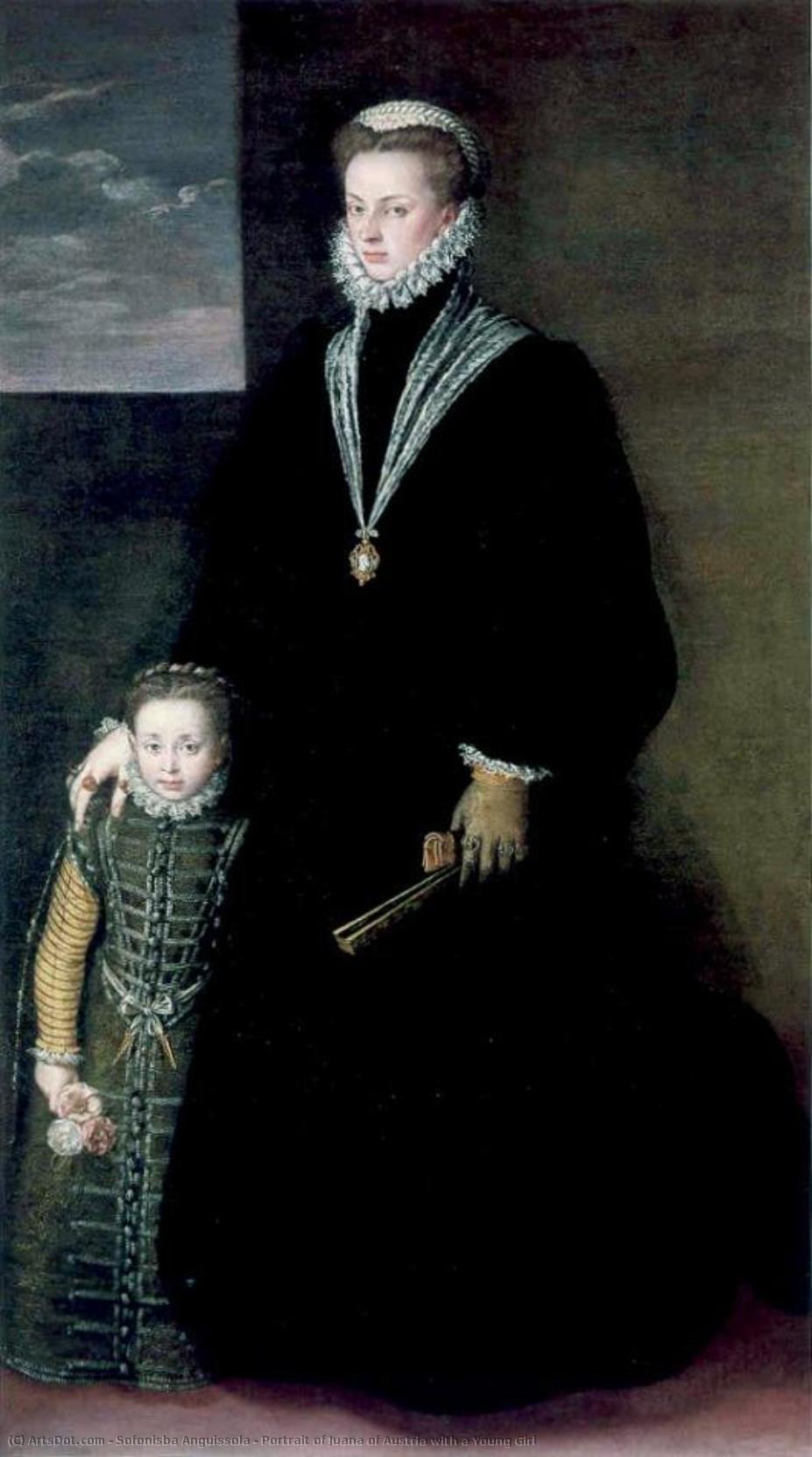
Portrait of Juana of Austria with a Young Girl


 Read More
Purchase a high-resolution, enhanced digital image, far superior to the online preview.
Each file is meticulously prepared by our in-house specialists using advanced tools and expert manual retouching. We ensure every image has exceptional clarity, precise color accuracy, and fine detail.
The final file is delivered via email within 72 hours, optimized for immediate use in professional, editorial, and print environments. This is the same quality trusted by top-tier design studios, publishers, and galleries.
Digital Image
Download a high-resolution file for personal display, printing, and creative projects. ( Buy Print Buy Hand Made Painting)
Included in Every Digital Image Order
Expert Digital Delivery, Guaranteed
When you choose ArtsDot.com, you're not just getting an image - you're receiving a professionally enhanced digital artwork, crafted with precision and backed by a satisfaction guarantee. Here's everything that comes with your order, automatically:

Fast Email Delivery
Your high-resolution digital image file will be emailed to you within 72 hours of ordering - ready for immediate use.

AI-Enhanced Digital File
Your artwork is professionally optimized using advanced AI tools and manual editing, ensuring maximum detail, clarity, and color accuracy.

Free Lifetime Re-Delivery
Accidentally deleted or lost your file? No worries - we'll resend it to you anytime, free of charge.

No Import Fees - Ever
Enjoy your artwork instantly with zero customs, duties, or delivery fees - digital downloads are always tax-free.

Color Accuracy Guarantee
We ensure your digital image reflects the original colors as closely as possible using professional tools and color management.

60-Day Satisfaction Guarantee
If you're not satisfied with your digital image, we'll revise it or refund 100% within 60 days - no questions asked.

100% Money-Back Guarantee
Not satisfied? Get a full refund within 60 days of receiving your digital file - no questions asked.

Bulk Order Discounts
Buy 3 images, save 10% - Buy 5, save 15% - Buy 10+, save 20%. Great for creative projects, galleries, and agencies.
A Royal Encounter Captured in Light and Shadow
In the quiet, dignified halls of the Isabella Stewart Gardner Museum, there exists a window into the heart of the sixteenth-century Spanish court. Sofonisba Anguissola’s Portrait of Juana of Austria with a Young Girl is far more than a mere record of royal lineage; it is an intimate encounter between two generations, frozen in the amber of the High Renaissance. As viewers approach this masterpiece, they are immediately struck by the profound sense of presence emanating from the figures. The portrait captures Juana of Austria, a woman of immense political and social significance, alongside a young companion—perhaps a daughter or niece—whose tender proximity to the Queen Regent creates a palpable atmosphere of familial warmth and continuity.
The composition is masterfully orchestrated to draw the eye into a private moment of connection. While the figures are set against a dark, indeterminate background that strips away the distractions of the physical world, their presence feels monumental. Anguissola utilizes a vertical format that emphasizes the regal stature of Juana, yet softens this authority through the subtle, asymmetrical placement of the child. This arrangement invites the observer not just to witness a display of status, but to feel the quiet, emotional bond shared between the two subjects, making the painting an enduring study in human connection.
The Mastery of Renaissance Technique and Texture
To behold this work is to appreciate the technical virtuosity of one of the Renaissance’s most pioneering female voices. Anguissola employs the sophisticated technique of oil glazing, applying thin, translucent layers of pigment to build a depth of color that seems to glow from within. This method allows for a breathtakingly smooth finish, where the transitions between light and shadow—the sfumato influence of Leonardo da da Vinci—are so seamless they appear almost ethereal. The artist’s ability to manipulate light is particularly evident in the way it catches the subtle folds of Juana’s black silk gown, transforming a somber palette into a rich tapestry of textures.
Every brushstroke serves a purpose in defining the tactile reality of the scene. One can almost feel the weight of the heavy fabrics and the delicate softness of the skin. The color palette, though dominated by the dignified blacks and deep browns characteristic of the Spanish court, is punctuated by moments of brilliant clarity. A small white flower held by the child acts as a luminous focal point, a singular spark of light that breaks the formal gravity of the composition. For the collector or interior designer, this interplay of dark, sophisticated tones and delicate highlights offers a versatile elegance, capable of anchoring a room with both drama and grace.
A Legacy of Dignity and Artistic Innovation
Beyond its aesthetic splendor, the portrait serves as a vital historical document of an era defined by humanist ideals. Created during the reign of Philip II, the painting reflects the meticulous attention to detail and the celebration of individual character that characterized the period. Anguissola, having navigated the complexities of being a female artist in a male-dominated landscape, imbues her subjects with a psychological depth that transcends the formal requirements of courtly portraiture. There is a quiet strength in Juana’s gaze and a gentle innocence in the child’s posture that speaks to the enduring power of legacy.
For those seeking to bring a piece of art history into a contemporary space, this reproduction offers more than decoration; it offers an atmosphere of refinement and intellectual depth. The painting’s ability to evoke emotion—ranging from the solemnity of royal duty to the tenderness of childhood—makes it a profound addition to any curated collection. It stands as a testament to Sofonisba Anguissola’s genius, reminding us that true art does not merely depict life, but captures the very essence of the human spirit across the centuries.
Related Artworks



Artist Biography
A Renaissance Illuminated: The Life and Art of Sofonisba Anguissola
Sofonisba Anguissola emerged from the vibrant artistic landscape of 16th-century Italy as a true pioneer, challenging societal norms and establishing herself as one of the most celebrated female painters of the Renaissance. Born around 1532 in Cremona to Amilcare Anguissola and Bianca Ponzoni, she benefited from an unusually progressive upbringing for a woman of her time. Her father, recognizing the exceptional artistic talent within his daughters – Sofonisba, Elena, Lucia, and Europa – defied convention by providing them with a humanist education encompassing Latin, music, and crucially, drawing. This commitment to their intellectual and creative development was revolutionary, laying the foundation for Sofonisba’s remarkable career. The Anguissola family, though noble, wasn't wealthy; Amilcare believed in nurturing his daughters’ gifts as a means of social advancement and personal fulfillment, a radical notion that would reshape opportunities for women artists for generations to come. In 1546, Sofonisba and Elena began formal training under Bernardino Campi, a respected local painter, followed by studies with Bernardino Gatti (Il Sajarolo) around 1550 – apprenticeships that were groundbreaking in themselves, opening doors previously closed to women seeking artistic mastery.Intimacy and Innovation: The Development of an Artistic Voice
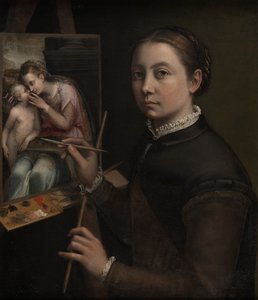
Anguissola’s early work is characterized by a remarkable intimacy and psychological depth, particularly evident in her portraits of her family. These weren't merely exercises in likeness; they were insightful explorations of personality and familial relationships. Paintings like “Portrait of the Artist’s Sisters Playing Chess” (circa 1555) are masterful demonstrations of this ability, capturing a candid moment of interaction with nuanced expressions and gestures. The composition feels remarkably natural, eschewing the stiff formality often found in portraits of the era. Her style initially drew from Lombard Mannerism, but evolved during her time in Spain into a more refined approach suited to the demands of court portraiture. She possessed an exceptional talent for depicting realistic features with subtle coloring and conveying emotion through delicate brushwork. Self-portraits became a recurring theme throughout her career, serving not only as demonstrations of skill but also as powerful assertions of her identity as a female artist in a male-dominated world. “Self-Portrait at the Easel” (1556) is particularly iconic, presenting Sofonisba confidently engaged in her craft, challenging viewers to acknowledge her artistic authority.A Courtly Commission: Life and Work in Spain
In 1559, a pivotal moment arrived when Anguissola was invited to Spain by Queen Elizabeth of Valois, wife of King Philip II. This invitation wasn’t simply an offer of employment; it was a recognition of her exceptional talent and a testament to the queen's own artistic inclinations. Sofonisba served as a lady-in-waiting and tutor in painting, becoming an official court painter – a position almost unheard of for a woman at that time. She created portraits of the royal family and Spanish nobility, adapting her style to meet the formal requirements of court portraiture while retaining her sensitivity to character. Her presence at court was significant; she wasn’t merely tolerated as a female artist but actively valued for her skills and companionship. Following Queen Elizabeth's untimely death in 1568, Philip II facilitated Sofonisba’s marriage to Fabrizio Moncada, a Sicilian nobleman, allowing her to continue painting while maintaining a noble status. This arrangement demonstrated the king’s respect for her artistry and his desire to ensure her continued well-being. She later remarried after Moncada's death, continuing to paint throughout her life.Legacy of a Pioneer: Influence and Historical Significance
Sofonisba Anguissola’s achievements extended far beyond the confines of the Spanish court. Her work challenged conventional artistic norms and paved the way for future generations of female artists. She demonstrated that women could not only excel in the arts but also achieve international recognition and patronage. Her influence can be seen in the works of subsequent female painters who followed her example, breaking down barriers and challenging societal expectations. Key influences on Anguissola included the Lombard school of painting, particularly the work of Bernardino Campi and Bernardino Gatti, but she ultimately forged her own unique style characterized by realism, intimacy, and psychological insight. Her self-portraits remain powerful symbols of female artistic agency, inspiring artists and scholars to this day.Enduring Recognition
Today, Sofonisba Anguissola is rightfully recognized as one of the most important figures of the Renaissance. Her paintings are held in prestigious collections around the world, including the Museo del Prado in Madrid, the Uffizi Gallery in Florence, and the Isabella Stewart Gardner Museum in Boston. Her story continues to resonate with audiences, reminding us of the power of art to transcend societal boundaries and the enduring legacy of a woman who dared to defy expectations and pursue her passion. Her ability to capture not just likenesses but also the inner lives of her subjects ensures that her work remains captivating and relevant centuries after its creation.- Her paintings can be seen in Boston (Isabella Stewart Gardner Museum), Milwaukee (Milwaukee Art Museum), Bergamo, Brescia, Budapest, Madrid (Museo del Prado), Naples, and Siena.
- Giorgio Vasari praised her ability to draw, color, paint from nature, copy excellently, and create beautiful paintings.
Sofonisba Anguissola
1532 - 1625 , Italy
Quick Facts
- Artistic Movement Or Style: Renaissance, Mannerism
- Artists Or Movements Influenced By This Artist: ['Female Renaissance artists']
- Artists Who Influenced This Artist:
- Bernardino Campi
- Bernardino Gatti
- Date Of Birth: c. 1532
- Date Of Death: 1625
- Full Name: Sofonisba Anguissola
- Nationality: Italian
- Notable Artworks:
- Self-Portrait at the Easel
- Family Portrait Anguissola
- Portrait of Minerva Anguissola
- Place Of Birth: Cremona, Italy

