 Preview
 Send
Send Share
Share
 Details

 Download
 Similars
 X-Ray
X-Ray Diaporama
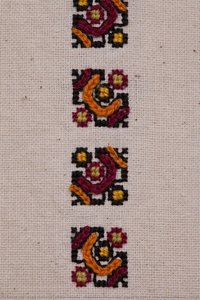
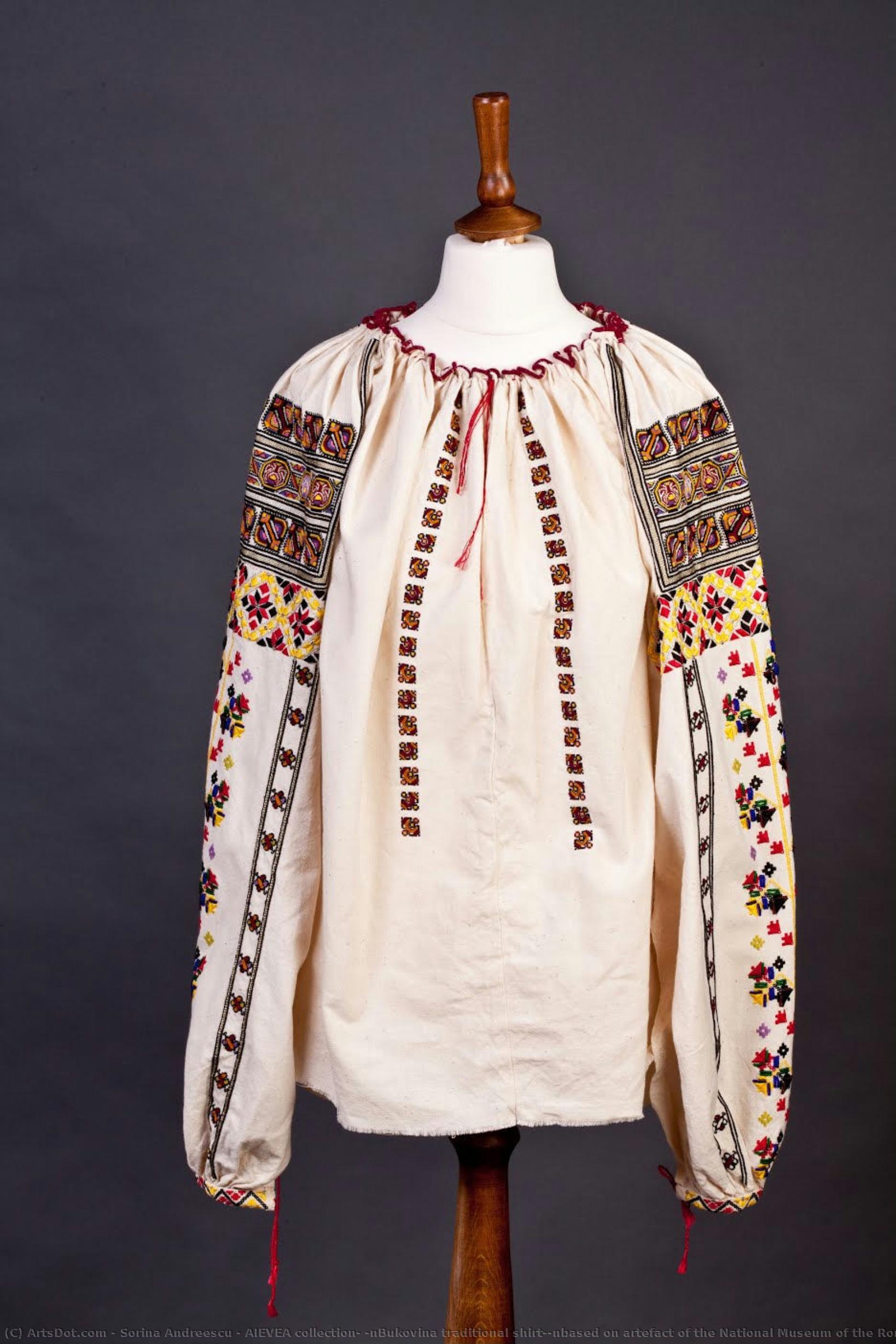
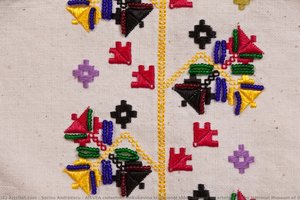
AIEVEA collection; \nBukovina traditional shirt;\nbased on artefact of the National Museum of the Romanian Peasant


 Read More
Hand Made Oil Reproduction
Hand-painted oil on canvas in your size and frame, made to order by our artists. ( Buy Print Buy Image)




































Pick from our preset sizes that match the artwork's original proportions.

You may enter your own dimensions to fit a specific frame or space. If your selected size does not match the original image's proportions, we will either crop the artwork or extend the painting with additional hand-painted elements. A digital mockup will be sent for your approval before production begins.
Please note that the on-screen preview does not reflect the actual cropping or extension. Only the mockup will accurately show the final composition.
While custom sizes are available, we recommend selecting a dimension from the predefined list to preserve the original proportions.
After order, ArtsDot.com team will email client for instructions and provide a mockup preview
Worldwide Delivery () in 3/4 weeks instead of standard 5 weeks. (28 August). No compromise on quality.

Free Worldwide Express Shipping

High-Quality Linen Canvas

Full Shipping Insurance

Customs Tax Refund Guarantee

True Color Matching Guarantee

60-Day Return Policy (Defects Only)

100% Money-Back Guarantee

Bulk Discount Offer
 Glass option is only available in size under 110 CM

AIEVEA collection; \nBukovina traditional shirt;\nbased on artefact of the National Museum of the Romanian Peasant
Reproduction Medium
Reproduction Size
-


Total Price
$ 263
Related Artworks








Artist Biography
Leonard Hilton McGurr: The Genesis of Futura 2000 – A Street Art Icon
The story of Futura 2000 isn’t one of formal artistic training or gallery openings; it's a narrative etched in the vibrant, rebellious energy of New York City’s late 1960s and early 70s street art scene. Born Leonard Hilton McGurr in 1955, he emerged from the crucible of that era as Futura 2000 – a name reflecting his ambition to be a “future” artist, a bold declaration against the established norms. His origins are deeply rooted in the Bronx, a borough teeming with creativity and social unrest, providing fertile ground for an artistic voice demanding to be heard.
Early influences were diverse and immediate: the raw energy of graffiti art emerging from subway cars, the burgeoning hip-hop culture, and the political activism that permeated the city. He began his career as a member of the “Soul Artists of Zoo York,” collaborating with figures like ALI (Al Diaz) and Jean-Michel Basquiat – a collective pushing boundaries and challenging perceptions of art and urban space. This period was crucial in shaping his visual language, characterized by sharp geometric forms, bold colors, and an almost machine-like precision that would become his signature.
The Rise of Geometric Futurism
Futura’s style evolved rapidly during the early to mid-1980s. He moved beyond simple tagging, developing a highly stylized approach centered around geometric abstraction. His work became increasingly recognizable – a series of interlocking circles, squares, and triangles that seemed to pulse with energy. This aesthetic wasn't merely decorative; it was a deliberate attempt to capture the dynamism of urban life, the relentless flow of movement, and the underlying structure of the city itself.
Crucially, Futura’s work began appearing on stage backdrops for iconic bands like The Clash in 1981. This marked a significant shift – moving from the anonymity of the subway to the bright lights of concert venues. It demonstrated his ability to translate his visual language into a dynamic and engaging experience for a wider audience, solidifying his position as a key figure in the burgeoning New York art scene.
Collaborations and Expanding Horizons
The 1980s witnessed a period of intense collaboration for Futura. He worked with Keith Haring, Jean-Michel Basquiat, Richard Hambleton, and Kenny Scharf at Patti Astor’s Fun Gallery – a pivotal space that showcased emerging street artists and challenged the traditional art market. These collaborations weren't simply about sharing space; they were about exchanging ideas and pushing each other creatively.
Beyond his work with The Clash, Futura expanded into graphic design, creating striking record sleeves for bands like Blondie and designing logos for various brands. This demonstrated a versatility that extended beyond the purely visual – he was adapting his style to different mediums and industries while maintaining his core aesthetic principles. His designs were instantly recognizable, characterized by their bold typography and geometric forms.
Legacy and Continued Relevance
While Futura’s early career was largely defined by street art, his influence has extended far beyond the subculture. His geometric style has been adopted by designers, architects, and artists worldwide, demonstrating the enduring appeal of his visual language. He remains a significant figure in the history of street art, a pioneer who helped to elevate it from a form of vandalism to a recognized art movement.
Today, Futura continues to create work, both large-scale murals and smaller paintings and prints. His legacy is not just about the images he created but also about his role in shaping the cultural landscape of New York City – a testament to the power of street art to challenge conventions, express dissent, and inspire creativity.
sorina andreescu
2000 - , Romania
Quick Facts
- Artistic Movement Or Style: Graffiti art, graphic design
- Artists Or Movements Influenced By This Artist:
- Keith Haring
- Jean-Michel Basquiat
- Artists Who Influenced This Artist:
- ALI
- The Clash
- Date Of Birth: November 17, 1955
- Full Name: Leonard Hilton McGurr”, AKA Futura 2000
- Nationality: American
- Notable Artworks:
- Various graffiti murals
- Record sleeve designs
- Place Of Birth: New York City