- Home

- Oil Painting Reproduction
- Stanisław Józef Wiśniowski, Stanisław Wiśniowski (1897–1940), Stanisław Wiśniowski (1897–1914)
 Preview
 Send
Send Share
Share
 Details

 Download
 Similars
 X-Ray
X-Ray Diaporama
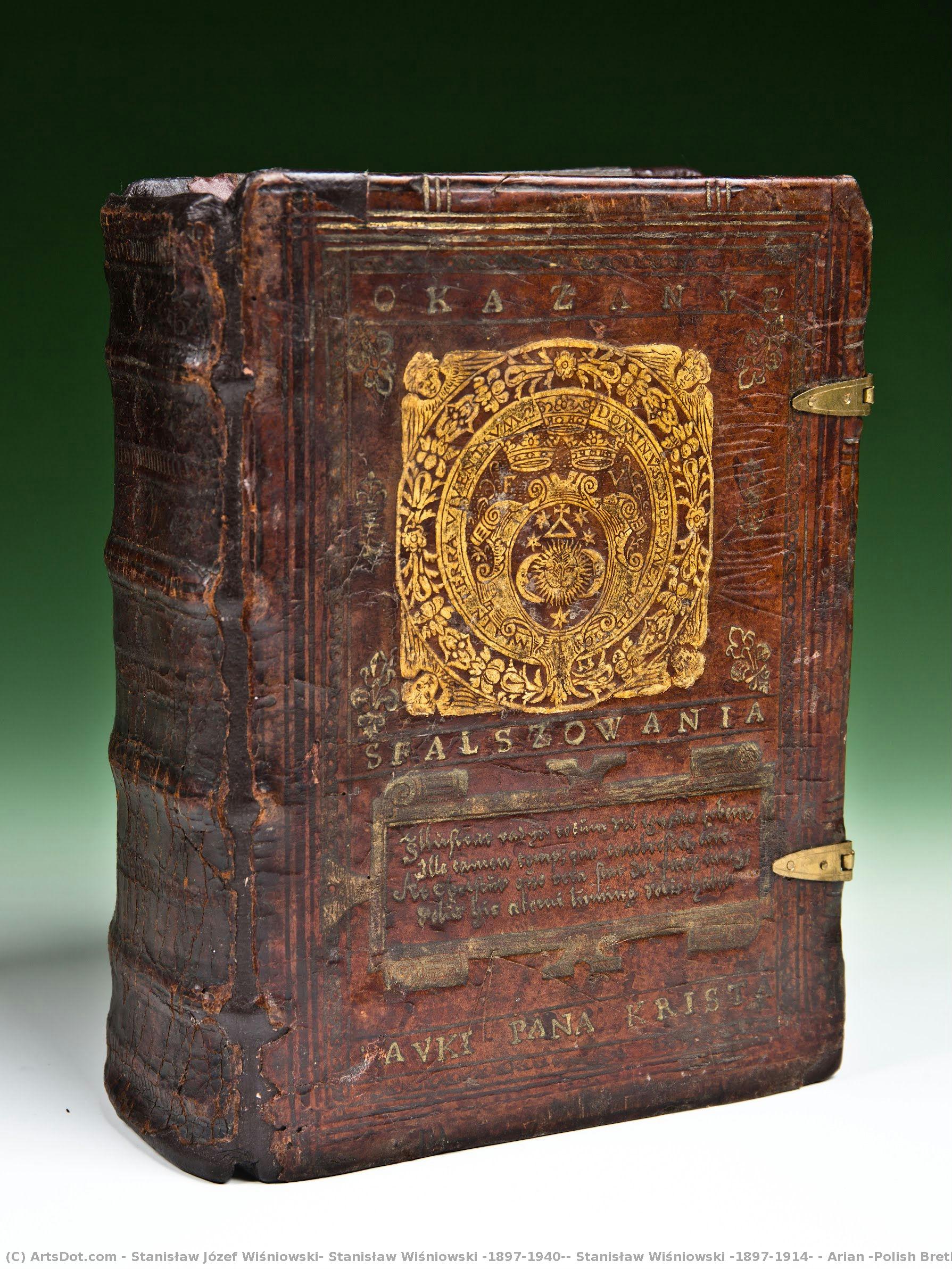
Arian (Polish Brethren) Explanation of Jesus Christ


 Read More
Hand Made Oil Reproduction
Hand-painted oil on canvas in your size and frame, made to order by our artists. ( Buy Print Buy Image)




































Pick from our preset sizes that match the artwork's original proportions.

You may enter your own dimensions to fit a specific frame or space. If your selected size does not match the original image's proportions, we will either crop the artwork or extend the painting with additional hand-painted elements. A digital mockup will be sent for your approval before production begins.
Please note that the on-screen preview does not reflect the actual cropping or extension. Only the mockup will accurately show the final composition.
While custom sizes are available, we recommend selecting a dimension from the predefined list to preserve the original proportions.
After order, ArtsDot.com team will email client for instructions and provide a mockup preview
Worldwide Delivery () in 3/4 weeks instead of standard 5 weeks. (3 September). No compromise on quality.

Free Worldwide Express Shipping

High-Quality Linen Canvas

Full Shipping Insurance

Customs Tax Refund Guarantee

True Color Matching Guarantee

60-Day Return Policy (Defects Only)

100% Money-Back Guarantee

Bulk Discount Offer
 Glass option is only available in size under 110 CM

Arian (Polish Brethren) Explanation of Jesus Christ
Reproduction Medium
Reproduction Size
-


Total Price
$ 263
Related Artworks









Artist Biography
The Enigmatic World of Stanisław Wiśniowski
Stanisław Wiśniowski, a name resonating with quiet intensity in the annals of Polish art, presents a fascinating study in artistic evolution and resilience. Born in 1897, his life unfolded against a backdrop of immense political and social upheaval – from the waning days of the Austro-Hungarian Empire through both World Wars and into the nascent years of Communist Poland. While biographical details remain somewhat fragmented, obscured by the turbulence of the times, what *does* emerge is a portrait of an artist deeply connected to his homeland, profoundly influenced by its folklore and landscapes, yet striving for a distinctly modern visual language. His early life was steeped in the traditions of rural Poland; this formative period would become a recurring motif throughout his oeuvre, not as simple pastoral depictions but as symbolic explorations of national identity and collective memory. The Wiśniowski family possessed modest means, fostering an environment where resourcefulness and observation were valued – qualities that undoubtedly shaped Stanisław’s artistic approach. He received formal training at the Kraków Academy of Fine Arts, a prestigious institution known for its emphasis on realism and historical painting, but quickly gravitated towards more experimental forms, absorbing influences from Symbolism and early Expressionism.From Folklore to Modernity: Artistic Development
Wiśniowski's initial works demonstrate a clear fascination with Polish folk art – particularly the vibrant colors and stylized figures of traditional woodcuts and painted furniture. However, he wasn’t interested in mere replication; instead, he sought to distill the *essence* of this aesthetic, stripping it down to its core elements and reassembling them within a contemporary framework. This period saw him experimenting with flattened perspectives, bold outlines, and a deliberately naive quality that belied a sophisticated understanding of composition and color theory.- Early Influences: Polish folk art, Symbolism, Expressionism.
- Key Characteristics (early period): Flattened perspectives, bold outlines, naive style, vibrant colors.
- Recurring Themes: Rural life, peasant figures, national identity, folklore motifs.
Major Achievements and Artistic Style
While Wiśniowski never achieved widespread international recognition during his lifetime, he became a respected figure within Polish artistic circles. His most significant achievement lies in the creation of a uniquely personal style that managed to reconcile seemingly disparate influences. He developed a distinctive visual vocabulary characterized by:- Stylistic Features: Fragmented forms, dynamic compositions, symbolic use of color, psychological intensity.
- Dominant Palette: Earth tones juxtaposed with vibrant blues and reds; often employing a limited but impactful range of colors.
- Key Subjects: Landscapes imbued with emotional resonance, portraits reflecting the inner lives of his subjects, allegorical scenes exploring themes of loss and resilience.