

 Preview
 Send
Send Share
Share
 Details

 Download
 Similars
 X-Ray
X-Ray Diaporama
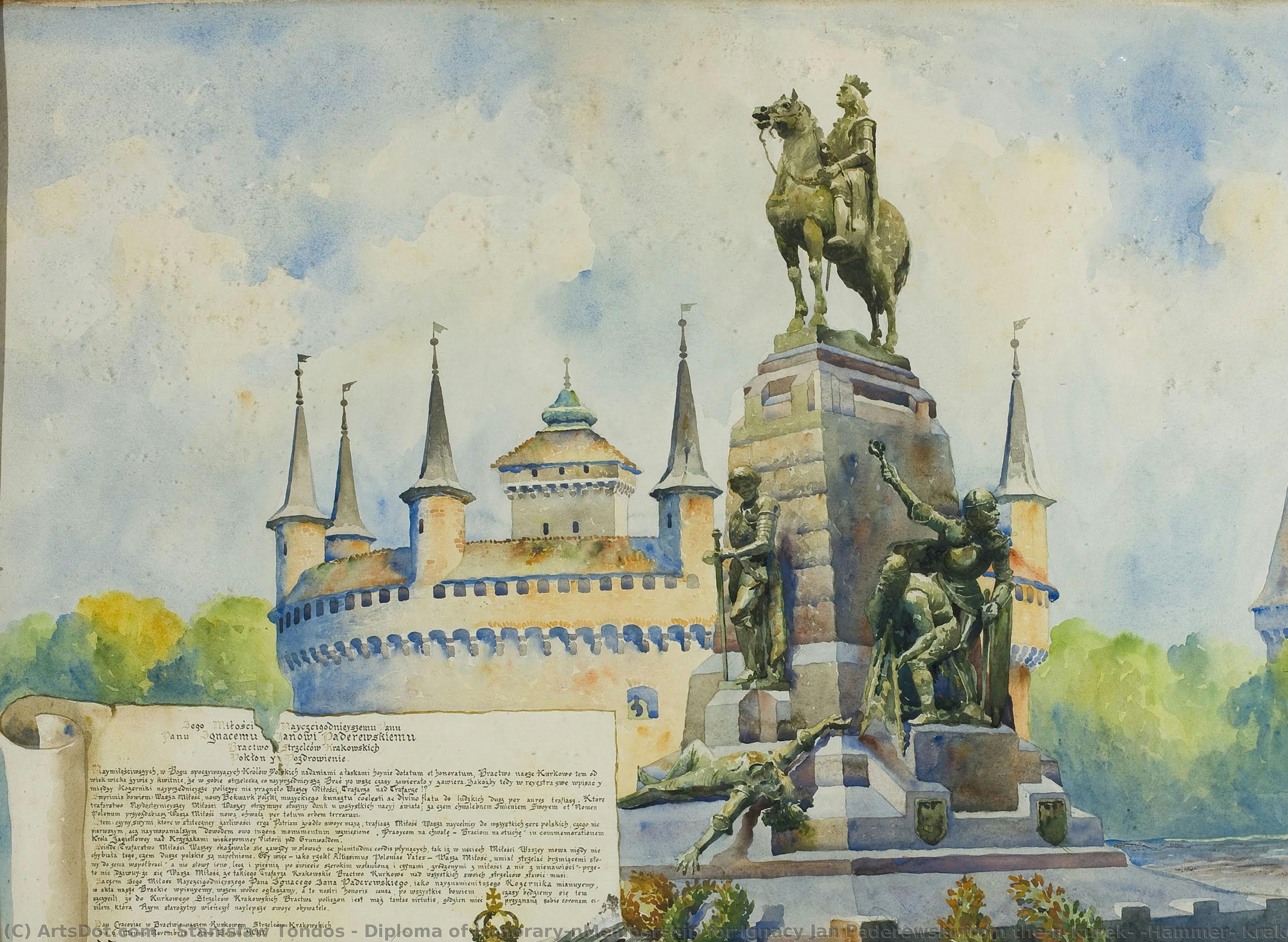
Diploma of Honorary\nMembership for Ignacy Jan Paderewski from the\n“Kurek” (Hammer) Krakow Riflemen Society


 Read More
Purchase a high-resolution, enhanced digital image, far superior to the online preview.
Each file is meticulously prepared by our in-house specialists using advanced tools and expert manual retouching. We ensure every image has exceptional clarity, precise color accuracy, and fine detail.
The final file is delivered via email within 72 hours, optimized for immediate use in professional, editorial, and print environments. This is the same quality trusted by top-tier design studios, publishers, and galleries.
Digital Image
Download a high-resolution file for personal display, printing, and creative projects. ( Buy Print Buy Hand Made Painting)
Included in Every Digital Image Order
Expert Digital Delivery, Guaranteed
When you choose ArtsDot.com, you're not just getting an image - you're receiving a professionally enhanced digital artwork, crafted with precision and backed by a satisfaction guarantee. Here's everything that comes with your order, automatically:

Fast Email Delivery
Your high-resolution digital image file will be emailed to you within 72 hours of ordering - ready for immediate use.

AI-Enhanced Digital File
Your artwork is professionally optimized using advanced AI tools and manual editing, ensuring maximum detail, clarity, and color accuracy.

Free Lifetime Re-Delivery
Accidentally deleted or lost your file? No worries - we'll resend it to you anytime, free of charge.

No Import Fees - Ever
Enjoy your artwork instantly with zero customs, duties, or delivery fees - digital downloads are always tax-free.

Color Accuracy Guarantee
We ensure your digital image reflects the original colors as closely as possible using professional tools and color management.

60-Day Satisfaction Guarantee
If you're not satisfied with your digital image, we'll revise it or refund 100% within 60 days - no questions asked.

100% Money-Back Guarantee
Not satisfied? Get a full refund within 60 days of receiving your digital file - no questions asked.

Bulk Order Discounts
Buy 3 images, save 10% - Buy 5, save 15% - Buy 10+, save 20%. Great for creative projects, galleries, and agencies.
A Testament to Patriotism: Stanisław Tondos’s Diploma of Honorary Membership
The watercolor painting “Diploma of Honorary Membership for Ignacy Jan Paderewski from the ‘Kurek’ (Hammer) Krakow Riflemen Society,” created by Stanisław Tondos in 1910, transcends mere artistic representation; it embodies a profound statement about Polish identity and aspiration during a pivotal moment in history. Commissioned to commemorate Ignacy Jan Paderewski's recognition as an honorary member of the “Kurek” Riflemen Society – a Krakow-based patriotic organization – Tondos’s artwork skillfully blends meticulous observation with symbolic resonance, cementing its place within Kraków’s artistic canon.Subject Matter and Composition
At its core lies the monumental Grunwald Monument, erected in 1905 to commemorate the Battle of Grunwald—a decisive victory for Poland against Teutonic Prussia that secured its independence centuries earlier. Dominating the foreground, the statue depicts Casimir IV Wielki astride a horse, symbolizing Polish resilience and regal authority. The monument’s grandeur is juxtaposed with the backdrop of Wawel Castle, Kraków's historic royal residence, subtly reinforcing the narrative of Poland’s enduring legacy. Tondos’s compositional choices prioritize clarity and perspective, guiding the viewer’s gaze towards the central figure while establishing a sense of spatial depth—a technique characteristic of 19th-century historical painting.Style and Technique: Watercolor's Delicate Embrace
Tondos’s masterful command of watercolor is evident in every brushstroke. Employing the wet-on-wet method, he achieved luminous washes that captured the atmospheric conditions of Krakow on that momentous day—likely overcast skies lending a muted palette to the scene. The artist skillfully layered pigments, creating textures that conveyed both the solidity of architectural elements like the castle walls and the fluidity of foliage surrounding the monument. Precise lines delineated key figures and architectural details, contrasting with softer washes used to depict expansive landscapes and conveying an overall impression of tranquility amidst patriotic fervor.Historical Context and Symbolism
The diploma itself serves as a tangible emblem of Paderewski’s contribution to Polish culture and politics. The Riflemen Society's selection of the Grunwald Monument motif speaks volumes about their reverence for Poland’s martial past and their optimism regarding its future—a sentiment powerfully articulated by Paderewski himself during the monument’s unveiling ceremony. Beyond commemorating a historical event, the artwork embodies broader themes of honor, gratitude, and artistic idealism. The scroll at the base of the composition underscores the importance of documentation and commemorates this significant occasion.Emotional Impact and Artistic Legacy
“Diploma of Honorary Membership…” is more than just a depiction; it’s an emotional conduit—a visual testament to Kraków's spirit during a time of national pride. Tondos’s artwork continues to inspire admiration for its understated elegance, technical precision, and profound symbolic depth. Its enduring appeal lies in its ability to transport viewers back to 1910 Krakow, capturing not only the architectural splendor but also the palpable feeling of hope and determination that characterized Poland's quest for recognition on the European stage.Related Artworks
Artist Biography
Stanisław Tondos: A Watercolorist of Kraków’s Soul
Born in the heart of Kraków, Poland, in 1854, Stanisław Tondos emerged as a pivotal figure in Polish art during the late 19th and early 20th centuries. His legacy isn't defined by grand, sweeping canvases but rather by an intimate, almost obsessive dedication to capturing the essence of his beloved city – Kraków – through the delicate medium of watercolor. Tondos’s work offers a unique window into a rapidly changing Poland, documenting its architectural heritage and reflecting the spirit of a nation grappling with modernization while fiercely preserving its past.
Early life details surrounding Tondos are somewhat scarce, yet his artistic training undoubtedly shaped his distinctive style. He began his formal studies at the Jan Matejko Academy of Fine Arts in Kraków, absorbing influences from masters like Jan Matejko and Władysław Łuszczkiewicz. Crucially, he supplemented this Polish foundation with further education in Vienna and Munich, broadening his exposure to European artistic trends. This international experience, combined with a deep-rooted love for his hometown, resulted in a style that was both distinctly Polish and remarkably cosmopolitan.
The Art of the Veduta
Tondos’s primary focus lay within the genre of *veduta*, an Italian term referring to landscape paintings depicting city views. However, Tondos didn't simply replicate what he saw; he imbued his watercolors with a profound sense of observation and memory. He meticulously rendered Kraków’s architectural details – the intricate facades of historic buildings, the bustling marketplaces, the serene beauty of Wawel Castle – capturing not just their appearance but also the atmosphere and light of each moment. His technique was characterized by layered washes, subtle gradations of color, and a remarkable ability to convey texture and depth with minimal brushstrokes.
A particularly significant work illustrating this approach is his diploma of honorary membership for Ignacy Jan Paderewski from the ‘Kurek’ (Hammer) Krakow Riflemen Society, dated 1910. This piece, now housed in the National Museum in Kraków, showcases Tondos's skill in watercolor painting and his ability to capture a specific historical moment with remarkable detail and emotional resonance. The composition itself—Paderewski alongside the Grunwald Monument—is not merely a portrait but a visual narrative of Polish patriotism and artistic achievement.
Documenting a Changing Poland
Tondos’s work served a vital role in documenting the transformations occurring within Poland during his lifetime. As Kraków underwent rapid modernization, he diligently recorded its architectural heritage before it was lost to demolition or alteration. His watercolors became invaluable visual records of buildings and landscapes that no longer exist today, offering posterity a tangible connection to the past. Furthermore, Tondos’s meticulous observations were instrumental in restoration efforts, providing architects and historians with accurate depictions of original structures.
Beyond Kraków, Tondos also painted scenes from Warsaw, Poznań, and Lviv, reflecting his broader interest in capturing the diverse landscapes and architectural styles of Poland. His travels to Venice, Vienna, Nuremberg, and Magdeburg further enriched his artistic vocabulary, introducing him to new techniques and perspectives.
Museum Collections & Legacy
Tondos’s paintings are now held in several prominent museums across Poland and beyond. The National Museum in Kraków boasts a substantial collection of his works, offering visitors a comprehensive overview of his career. The Muzeum w Warszawie (Warsaw Museum) also features a selection of his watercolors. His legacy extends beyond the confines of these institutions; reproductions of his paintings have been widely disseminated through postcards, contributing to their enduring popularity and recognition.
Stanisław Tondos died in 1917, leaving behind a rich body of work that continues to captivate art lovers today. His dedication to capturing the soul of Kraków through the medium of watercolor cemented his place as one of Poland’s most important landscape artists, and his meticulous documentation serves as a poignant reminder of a city's enduring beauty and historical significance.
Further Exploration
- ArtsDot.com: (Link to artist biography on ArtsDot.com)
- Wikimedia Commons: (Link to Wikimedia Commons page for Tondos)
- MutualArt.com: (Link to MutualArt Artist Profile)
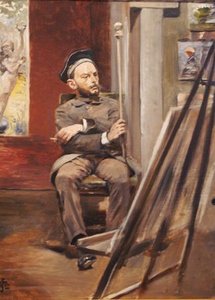
stanisław tondos
1854 - 1917 , Poland
Quick Facts
- Artistic Movement Or Style: Watercolor, Veduta
- Artists Or Movements Influenced By This Artist: ['Restoration efforts']
- Artists Who Influenced This Artist:
- Jan Matejko
- Władysław Łuszczkiewicz
- Date Of Birth: 1854-03-10
- Date Of Death: 1917-12-22
- Full Name: Stanisław Tondos
- Nationality: Polish
- Notable Artworks:
- Diploma Paderewski
- Pałac Goetza
- Plac Wolnica
- Place Of Birth: Kraków, Poland

