 Preview
 Send
Send Share
Share
 Details

 Download
 Similars
 X-Ray
X-Ray Diaporama
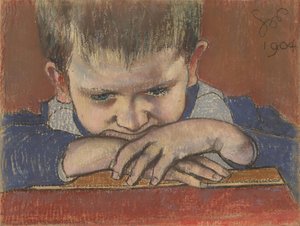
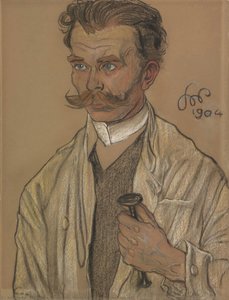
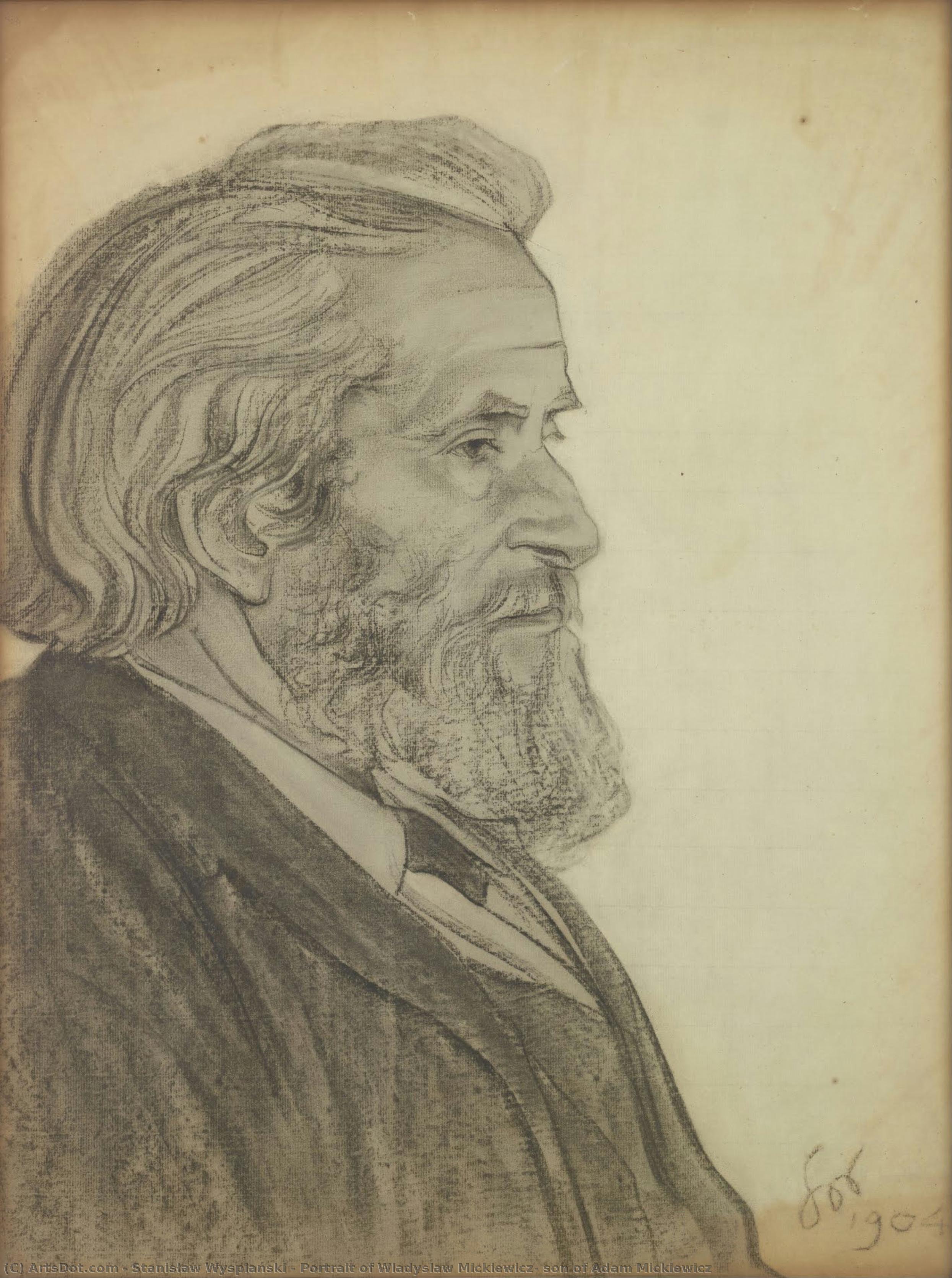
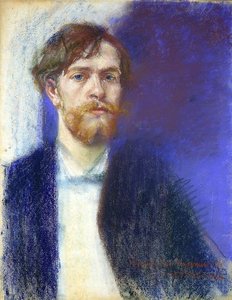
Portrait of Wladyslaw Mickiewicz, son of Adam Mickiewicz


 Read More
Giclée / Art Print
Museum-quality giclée or canvas print with fast production and flexible finish options. ( Buy Hand Made Painting Buy Image)




P118B $10

P118H $10

P118W $10

P438Z $10

P508JH $12

P508YH $12

P805H $10

P805Z $10

P919BZ $10

P919G $10

P919XJ $10

P959ZH $10

P968JZ $12

W106C $8

W218G $10

W218JH $8

W218Y $10

W307PJ $10

W316G $10

W316PJ $8

W316Y $10

W398PJ $8

W4111J $10

W500HY $15

W500JH $15

W692G $12

W849H $8

W940BG $15

W953PJ $8




Pick from our preset sizes that match the artwork's original proportions.

You may enter your own dimensions to fit a specific frame or space. If your selected size does not match the original image's proportions, we will either crop the artwork or extend the image with a mirrored or solid-fill edge. A digital mockup will be sent for your approval before production begins.
Please note that the on-screen preview does not reflect the actual cropping or extension. Only the mockup will accurately show the final composition.
While custom sizes are available, we recommend selecting a dimension from the predefined list to preserve the original proportions.
Worldwide Delivery () in 2 weeks instead of standard 4/5 weeks. (7 September)

Free Worldwide Express Shipping

High-Quality Linen Canvas

Full Shipping Insurance

Customs Tax Refund Guarantee

True Color Matching Guarantee

100-Day Return Policy (Defects Only)

100% Money-Back Guarantee

Bulk Discount Offer
 Glass option is only available in size under 110 CM

Portrait of Wladyslaw Mickiewicz, son of Adam Mickiewicz
Giclée / Art Print
Reproduction Size
-


Total Price
$ 63
A Gaze Through Time: The Intimacy of Wyspiański’s Portraiture
In the quiet, monochromatic depths of Stanisław Wyspiański’s Portrait of Wladyslaw Mickiewicz, we encounter more than just a mere likeness; we meet a soul captured in a moment of profound stillness. Created in 1904, this exquisite drawing serves as a window into the early 20th-century Polish spirit, rendered with the masterful precision that defined Wyspiański’s contribution to the Young Poland movement. The subject, Wladyslaw Mickiewicz—the son of the legendary poet Adam Mickiewicz—is presented not through the lens of grand historical heroism, but through a deeply personal and psychological intimacy. His gaze, steady and unblinking, pierces the veil of time, inviting the viewer into a silent dialogue that feels as immediate today as it did over a century ago.
The technical brilliance of this work lies in its delicate command of line and shadow. Eschewing the distractions of color, Wyspiański utilizes the stark contrast of black and white to sculpt the subject's features with remarkable anatomical accuracy. Every detail, from the textured grain of his beard and mustache to the thoughtful weight behind his eyes, is articulated with a rhythmic grace. The artist employs a meticulous approach to shading that lends a three-dimensional quality to the face, creating a sense of volume and presence that commands the space around it. This mastery of monochrome allows the viewer to focus entirely on the interplay of light and form, making the portrait an exercise in pure, unadultered observation.
Symbolism and the Weight of Legacy
Beyond its technical execution, the portrait carries a heavy, evocative symbolism rooted in the cultural landscape of Poland. As the son of one of Poland's greatest national poets, Wladyslaw Mickiewicz carries a lineage of intellectual and patriotic significance. Wyspiański, a master of Symbolism, subtly weaves this sense of gravity into the subject’s stern and contemplative expression. There is an unmistakable air of responsibility and introspection in the man's countenance, suggesting a life shaped by both personal identity and national heritage. The clean, uncluttered background serves a vital purpose here; by stripping away all environmental context, Wyspiański forces us to confront the psychological essence of the sitter, turning a simple portrait into a meditation on character and continuity.
For the discerning collector or interior designer, this piece offers a unique opportunity to introduce a sense of historical depth and intellectual rigor into a curated space. The artwork’s minimalist palette makes it an incredibly versatile choice for modern, classical, or even industrial interiors, where its monochromatic elegance can act as a sophisticated focal point. A high-quality reproduction of this drawing does not merely decorate a wall; it anchors a room with a sense of timelessness and quiet strength. It is a piece designed for those who appreciate art that speaks in whispers rather than shouts, offering a profound emotional resonance that lingers long after the first encounter.
Related Artworks
Artist Biography
The Soul of Young Poland: The Life and Vision of Stanisław Wyspiański
In the misty, historical heart of Kraków, a singular genius emerged to redefine the cultural landscape of a nation yearning for identity. Stanisław Wyspiański was not merely a painter; he was a polymath, a visionary whose creative spirit breathed life into the Young Poland movement. Born in 1869, his short but incandescent life was a whirlwind of artistic exploration that bridged the gap between the delicate aesthetics of Art Nouveau and the profound, often turbulent, depths of Polish Symbolism. To study Wyspiański is to witness a man attempting to capture the very essence of a soul—both individual and national.
His development as an artist was deeply rooted in the rich, academic traditions of his training, yet he possessed an innate rebellion against the rigid constraints of realism. His work began to pulse with a new kind of energy, one that drew heavily from the vibrant folk motifs of the Polish countryside and the intricate, organic lines characteristic of the Secessionist style. This fusion created a visual language that was uniquely his: a delicate balance of botanical precision and haunting, metaphorical weight. He saw the world not just as it appeared, but as it felt, imbuing every petal and every portrait with a sense of cosmic significance.
A Master of Light and Symbolism
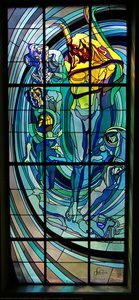
Wyspiański’s mastery extended far beyond the canvas, reaching into the very architecture of sacred spaces. He is perhaps most celebrated for his breathtaking stained glass windows, which transformed light into a medium of spiritual storytelling. In these works, color becomes a character itself, with deep blues and fiery ambers dancing through glass to evoke themes of martyrdom, rebirth, and national endurance. His ability to manipulate light allowed him to create immersive environments where the boundaries between the physical world and the symbolic realm began to dissolve.
Beyond his visual arts, his literary contributions were equally monumental. As a playwright and poet, he utilized the stage to weave complex tapestries of Polish history and myth. His most famous drama, The Wedding, stands as a cornerstone of Polish literature, a masterpiece that uses a single night of celebration to dissect the social and political anxieties of a nation under partition. Through his writing, he explored the tension between tradition and modernity, using symbolism to critique the inertia of the intelligentsia while celebrating the raw, unyielding spirit of the peasantry.
Legacy of a Visionary
The historical significance of Stanisław Wyspiański lies in his role as a cultural architect. He did not just create art; he helped construct a visual and literary identity for a people seeking sovereignty. His influence can be traced through several key achievements:
- Integration of Art Forms: He broke the barriers between fine arts, decorative arts, literature, and theater, creating a unified aesthetic experience.
- National Symbolism: He elevated Polish folk motifs to the level of high art, making them central to the modern national consciousness.
- Art Nouveau Innovation: His use of flowing, organic lines and expressive color palettes helped define the Polish iteration of the Art Nouveau movement.
- Enduring Dramatic Impact: His plays continue to be staged globally, serving as profound explorations of human psychology and political struggle.
Though his life was tragically cut short at the age of thirty-eight, the brilliance of his output remains undimmed. Wyspianski left behind a legacy that continues to haunt and inspire, a testament to the power of art to serve as both a mirror to society and a beacon for its future. His work remains an essential pilgrimage for anyone seeking to understand the profound intersection of beauty, tragedy, and national identity.
stanislaw wyspianski
1869 - 1907 , Poland
Quick Facts
- Artistic Movement Or Style: Polish Symbolism, Young Poland
- Date Of Birth: 1869
- Date Of Death: 1907
- Full Name: Stanisław Wyspiański
- Nationality: Polish
- Notable Artworks:
- Stained glass works
- The Wedding
- Place Of Birth: Kraków, Poland
Related Articles

White on Canvas: 10 Masterpieces & Timeless Elegance for Your Home Decor
Explore 10 iconic white paintings by Monet, Whistler & Rothko! Discover the stories behind these serene masterpieces and their impact on art history. Find museum-quality reproductions for your home decor at .

Dark Masterpieces: 10 Iconic Paintings Dominated by Black Tones |
Explore 10 iconic paintings dominated by black tones, from Rembrandt’s chiaroscuro to Goya's dark expressions. Discover the stories behind these masterpieces & find museum-quality art reproductions for your home at .

Monochrome Visions: Exploring the Aesthetic & Historical Significance of Black & White Photography
Explore the rich history & artistic power of black and white photography. From early techniques to iconic masters like Ansel Adams, discover why monochrome continues to captivate art lovers today. Expert insights for collectors.
Ivory Black Masters: 10 Paintings That Define Dramatic Art |
Delve into the power of 'Ivory Black' with 10 iconic paintings by masters like Rembrandt & Caravaggio. Explore dramatic chiaroscuro, gothic moods & timeless art history. Find museum-quality reproductions and elevate your home decor at
Mars Black Masterpieces: 10 Iconic Paintings & Timeless Art Decor Ideas
Delve into the power of 'Mars Black' with 10 iconic paintings by masters like Rembrandt & Caravaggio. Explore dramatic chiaroscuro, gothic art, and timeless beauty. Find museum-quality reproductions & elevate your home decor on .