 Preview
 Send
Send Share
Share
 Details

 Download
 Similars
 X-Ray
X-Ray Diaporama
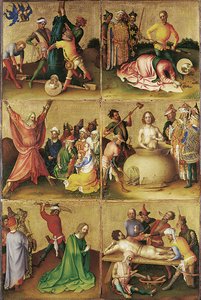
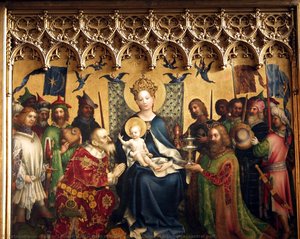
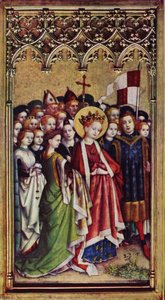
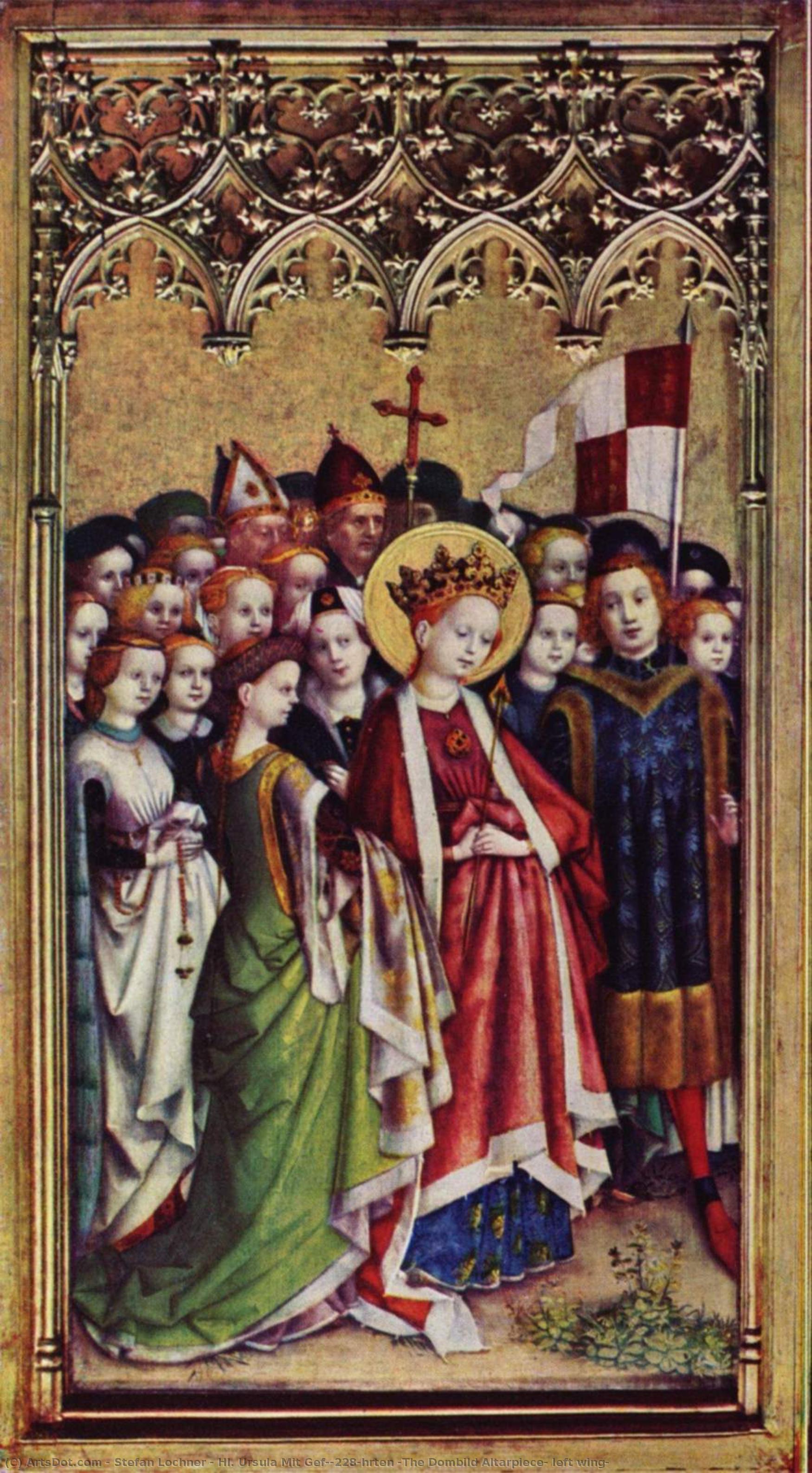
Hl. Ursula Mit Gefährten (The Dombild Altarpiece, left wing)


 Read More
Hand Made Oil Reproduction
Hand-painted oil on canvas in your size and frame, made to order by our artists. ( Buy Print Buy Image)




































Pick from our preset sizes that match the artwork's original proportions.

You may enter your own dimensions to fit a specific frame or space. If your selected size does not match the original image's proportions, we will either crop the artwork or extend the painting with additional hand-painted elements. A digital mockup will be sent for your approval before production begins.
Please note that the on-screen preview does not reflect the actual cropping or extension. Only the mockup will accurately show the final composition.
While custom sizes are available, we recommend selecting a dimension from the predefined list to preserve the original proportions.
After order, ArtsDot.com team will email client for instructions and provide a mockup preview
Worldwide Delivery () in 3/4 weeks instead of standard 5 weeks. (24 August). No compromise on quality.

Free Worldwide Express Shipping

High-Quality Linen Canvas

Full Shipping Insurance

Customs Tax Refund Guarantee

True Color Matching Guarantee

60-Day Return Policy (Defects Only)

100% Money-Back Guarantee

Bulk Discount Offer
 Glass option is only available in size under 110 CM

Hl. Ursula Mit Gefährten (The Dombild Altarpiece, left wing)
Reproduction Medium
Reproduction Size
-


Total Price
$ 263
Related Artworks


Artist Biography
The Luminous World of Stefan Lochner
Stefan Lochner, a name synonymous with the late Gothic and early Renaissance painting in Germany, remains an enigmatic figure despite his profound impact on the artistic landscape of the 15th century. Born around 1408 in Meersburg, near Lake Constance, his life is shrouded in relative obscurity, piecing together details from archival records and, most importantly, the exquisite beauty of his surviving works. Unlike many artists of his time who were firmly embedded within guild structures, Lochner appears to have operated largely outside these confines, serving a wealthy and aristocratic clientele – primarily in Cologne and the surrounding regions. This independence allowed him a unique freedom in stylistic development and subject matter, fostering an artistic voice that blended meticulous detail with a deeply spiritual sensibility. He died in 1451 in Cologne.Early Influences and Artistic Formation
Lochner’s formative years were likely spent absorbing the diverse artistic currents flowing through Southern Germany and Switzerland. The International Gothic style, characterized by elegant figures, rich ornamentation, and a focus on narrative detail, undoubtedly shaped his early work. However, he wasn't merely a follower of prevailing trends. Evidence suggests exposure to Flemish painting – particularly the works of Robert Campin and Jan van Eyck – which introduced him to the revolutionary technique of oil painting and a heightened realism in depicting textures and light. This fusion of Gothic grace with burgeoning Renaissance naturalism is one of the hallmarks of his distinctive style. His early commissions, though less well-documented, reveal a growing mastery of color and composition, hinting at the exceptional talent that would soon blossom. The influence of manuscript illumination, prevalent in the region, also played a role, contributing to the delicate precision and refined aesthetic found throughout his oeuvre.The Cologne Period: A Flourishing Career
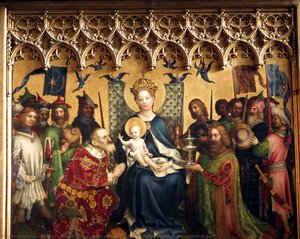
Cologne became the center of Lochner’s artistic activity from around 1437 until his death. Here, he received prestigious commissions from prominent citizens and members of the clergy, establishing himself as a highly sought-after painter. His most celebrated work, *The Last Judgment* (c. 1439), adorning the Gereonskapelle in Cologne Cathedral, stands as a testament to his artistic prowess. This monumental altarpiece is not simply a depiction of divine retribution; it’s a complex theological statement rendered with breathtaking detail and emotional depth. The figures are imbued with individual character, their expressions conveying a range of emotions from despair to hope. The vibrant colors, the intricate drapery, and the carefully constructed landscape all contribute to the painting's overwhelming power. Other significant Cologne works include the *Adoration of the Magi* (1440) and numerous devotional panels commissioned by wealthy patrons. These paintings showcase his ability to portray both grand narratives and intimate moments of religious devotion with equal skill.Style and Symbolism: A Synthesis of Worlds
Lochner’s style is characterized by a unique blend of Gothic elegance, Flemish realism, and an increasingly Renaissance-influenced sense of space and form. He was a master colorist, employing rich jewel tones and subtle gradations to create luminous effects. His figures are elongated and graceful, yet possess a tangible presence and psychological depth. He excelled in depicting fabrics, rendering the textures of silk, velvet, and brocade with astonishing accuracy. Beyond technical skill, Lochner’s paintings are rich in symbolism. The flowers depicted often carry specific religious meanings – lilies representing purity, roses symbolizing love and sacrifice. His landscapes, though seemingly idyllic, frequently contain hidden allegorical references. The use of gold leaf, a hallmark of International Gothic painting, continues in his work but is employed with greater restraint and sophistication, enhancing rather than overwhelming the overall composition. His compositions are carefully balanced, often employing symmetrical arrangements to emphasize the sacred nature of the subject matter.Legacy and Historical Significance
Stefan Lochner’s influence on German painting was profound. He bridged the gap between the late Gothic tradition and the emerging Renaissance style, paving the way for subsequent generations of artists. His emphasis on realism, emotional depth, and meticulous detail set a new standard for artistic excellence in Germany. While his workshop produced numerous copies and variations of his designs, none quite capture the originality and spiritual intensity of his own hand.- His work represents a pivotal moment in the transition from medieval to Renaissance art.
- He established a distinctive style that blended Gothic grace with Flemish realism.
- Lochner’s paintings continue to captivate viewers with their beauty, complexity, and profound spiritual message.
- His influence can be seen in the works of later German masters such as Hans Memling and Albrecht Dürer.
Quick Facts
- Artistic Movement Or Style: Late Gothic painting
- Date Of Birth: c. 1405
- Date Of Death: 1451
- Full Name: Stefan Lochner
- Nationality: German
- Notable Artworks:
- Adoration of the Magi
- Last Judgement
- Virgin and Child with Saints
- Place Of Birth: Meersburg, Germany