 Preview
 Send
Send Share
Share
 Details

 Download
 Similars
 X-Ray
X-Ray Diaporama
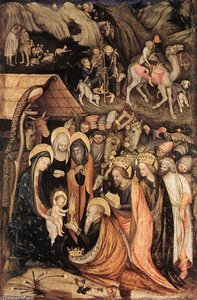
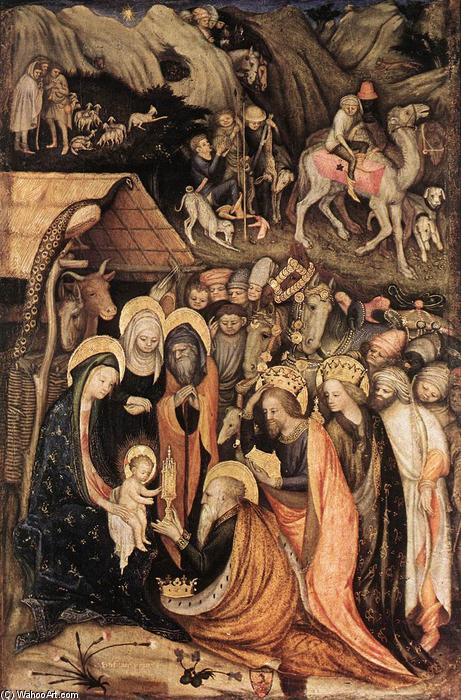
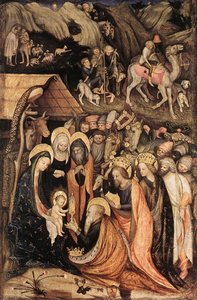
Adoration of the Magi
 1435
1435 72.0 x 47.0 cm
 Pinacoteca di Brera
 Read More
Giclée / Art Print
Museum-quality giclée or canvas print with fast production and flexible finish options. ( Buy Hand Made Painting Buy Image)




































Pick from our preset sizes that match the artwork's original proportions.

You may enter your own dimensions to fit a specific frame or space. If your selected size does not match the original image's proportions, we will either crop the artwork or extend the image with a mirrored or solid-fill edge. A digital mockup will be sent for your approval before production begins.
Please note that the on-screen preview does not reflect the actual cropping or extension. Only the mockup will accurately show the final composition.
While custom sizes are available, we recommend selecting a dimension from the predefined list to preserve the original proportions.
Worldwide Delivery () in 2 weeks instead of standard 4/5 weeks. (24 August)

Free Worldwide Express Shipping

High-Quality Linen Canvas

Full Shipping Insurance

Customs Tax Refund Guarantee

True Color Matching Guarantee

60-Day Return Policy (Defects Only)

100% Money-Back Guarantee

Bulk Discount Offer
 Glass option is only available in size under 110 CM

Adoration of the Magi
Giclée / Art Print
Reproduction Size
-


Total Price
$ 63
Collectible Description
Artistic Style and Influences
The Adoration of the Magi is characteristic of the Northern Renaissance art movement, which was known for its attention to detail and realistic portrayals of the human form and environment. The painting features a group of figures adoring a baby, who is likely to be Jesus Christ based on the religious context. The figures are dressed in elaborate clothing with intricate patterns and details, indicative of the opulence and wealth associated with the period's upper class.- The use of earth tones, with occasional splashes of blue and red, adds vibrancy to the scene.
- The background features a landscape that includes mountains, trees, and animals such as horses and birds, which adds depth and context to the setting.
- The figures in the foreground are engaged in various activities related to worship and adoration, including kneeling, presenting gifts, and looking towards the baby with reverence.
The Adoration of the Magi is a remarkable example of Renaissance art, and its beauty and significance can be appreciated by art lovers around the world. As a handmade oil painting reproduction, it can be enjoyed in the comfort of one's own home, serving as a reminder of the artistic genius of Stefano Da Zevio.
Related Artworks








Artist Biography
A Tapestry of French and Italian Traditions
In the vibrant landscape of the late fourteenth and early 15th centuries, few artists embodied the cross-pollination of European styles as gracefully as Stefano da Zevio. Born into a lineage of artistry as the son of the French painter Jean d'Arbois, Stefano carried within him a unique heritage that bridged the gap between Northern elegance and Italian innovation. His journey through the artistic hubs of Italy—from the workshops of illuminators in Pavia to the storied streets of Padua—prepared him for his ultimate settling in Verona, where he would leave an indelible mark on the city's visual identity. This movement across regions allowed him to absorb a diverse array of techniques, blending the meticulous precision of Northern traditions with the burgeoning light and grace of the Italian peninsula.The Luminous Splendor of the International Gothic
Stefano’s work is a breathtaking testament to the International Gothic style, a period defined by its courtly elegance and profound attention to detail. His canvases often shimmer with an opulence that captures the eye, utilizing rich blues and radiant gold to create scenes of divine importance. One cannot contemplate his mastery without reflecting on the Adoration of the Magi, a masterpiece housed in the Pinacoteca di Brera. In this work, the artist demonstrates an extraordinary ability to weave narrative through visual storytelling, capturing human emotion amidst a backdrop of intricate naturalism. His style was deeply shaped by contemporaries such as Michelino da Besozzo, whose influence can be seen in the delicate, flowing lines and the soft, ethereal quality of his Madonnas. Through the careful manipulation of tempera and an eye for the subtle gradations of light, Stefano transformed religious iconography into something profoundly intimate and visually arresting.An Enduring Artistic Legacy
The significance of Stefano da Zevio lies not only in the beauty of his individual panels but in his role as a bridge between eras. As an artist who flourished during a time of immense transition, he helped refine the aesthetic language that would eventually pave the way for the Renaissance. His contributions to the religious art of Verona and beyond remain vital components of the 15th-century canon, leaving behind a legacy of grace and light.- The seamless synthesis of French lineage with Italian grace.
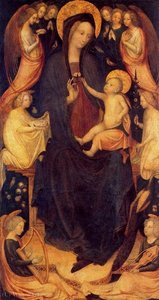
- The enduring beauty of his Madonna and Child compositions.
- A lasting influence on the development of Northern Italian painting.
stefano da zevio
1375 - 1451 , Italy
Quick Facts
- Artistic Movement Or Style: Early Netherlandish Painting
- Artists Or Movements Influenced By This Artist:
- Jan van Eyck
- Rogier van der Weyden
- Artists Who Influenced This Artist:
- Limbourg brothers
- Melchior Broederlam
- Date Of Birth: c. 1375
- Date Of Death: 1444
- Full Name: Robert Campin
- Nationality: Belgian
- Notable Artworks:
- Virgin and Child with a Firescreen
- Mérode Altarpiece
- Thief on the Cross
- Place Of Birth: Tournai, Belgium