 Preview
 Send
Send Share
Share
 Details

 Download
 Similars
 X-Ray
X-Ray Diaporama
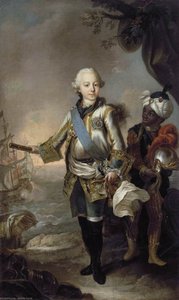
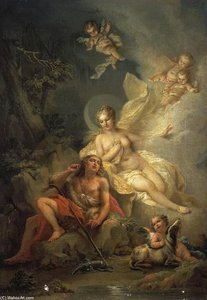
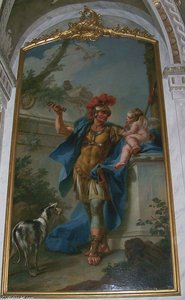
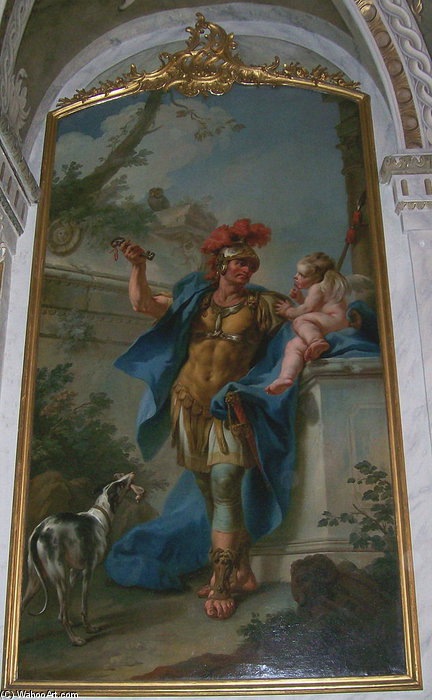
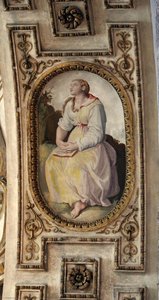
Allegorisches Gemälde Von Stefano Torelli Im Audienzsaal Des Lübecker Rathauses
 Read More
Hand Made Oil Reproduction
Hand-painted oil on canvas in your size and frame, made to order by our artists. ( Buy Print Buy Image)




































Pick from our preset sizes that match the artwork's original proportions.

You may enter your own dimensions to fit a specific frame or space. If your selected size does not match the original image's proportions, we will either crop the artwork or extend the painting with additional hand-painted elements. A digital mockup will be sent for your approval before production begins.
Please note that the on-screen preview does not reflect the actual cropping or extension. Only the mockup will accurately show the final composition.
While custom sizes are available, we recommend selecting a dimension from the predefined list to preserve the original proportions.
After order, ArtsDot.com team will email client for instructions and provide a mockup preview
Worldwide Delivery () in 3/4 weeks instead of standard 5 weeks. (22 August). No compromise on quality.

Free Worldwide Express Shipping

High-Quality Linen Canvas

Full Shipping Insurance

Customs Tax Refund Guarantee

True Color Matching Guarantee

60-Day Return Policy (Defects Only)

100% Money-Back Guarantee

Bulk Discount Offer
 Glass option is only available in size under 110 CM

Allegorisches Gemälde Von Stefano Torelli Im Audienzsaal Des Lübecker Rathauses
Reproduction Medium
Reproduction Size
-


Total Price
$ 263
Related Artworks








Artist Biography
The Grandeur of a Baroque Visionary
Stefano Torelli stands as a luminous figure in the tapestry of Italian Baroque painting, an artist whose brush bridged the cultural splendor of Bologna, Dresden, and St. Petersburg. Born in the vibrant artistic hub of Bologna on October 24, 1704, Torelli was destined for greatness through his very lineage. He began his formative journey under the watchful eye of his father, Felice Torelli, absorbing the foundational principles of composition and light from a man deeply embedded in the Italian tradition. This early apprenticeship was further enriched by his studies with Francesco Solimena, one of Rome’s most formidable Baroque masters. From Solimena, Torelli inherited a sophisticated command of dramatic chiaroscuro and a rhythmic approach to figure arrangement, elements that would later define his ability to animate large-scale decorative works with both grace and theatricality.
The trajectory of Torelli’s career was marked by an extraordinary mobility that saw him serving the most prestigious courts in Europe. In 1740, a pivotal moment arrived when Augustus III, King of Poland, extended an invitation to Dresden. This move transformed Torelli from a regional talent into an international decorator of immense significance. Within the magnificent Zwinger Palace complex, he undertook monumental commissions for altarpiements and ceiling frescoes that sought to capture the divine and the regal. Though much of this physical legacy was tragically lost to the fires of the Seven Years’ War, his presence in Dresden left an indelible mark on the city's artistic identity. He even found himself woven into the fabric of larger masterpieces, contributing meticulously rendered architectural views that were later integrated into the celebrated cityscapes of Canaletto.
A Legacy Across Borders and Eras
As the mid-18th century progressed, the allure of the Russian Empire beckoned, leading Torelli to a final, glorious chapter in St. Petersburg in 1762. Appointed by Empress Elizabeth to decorate the Imperial Palace, he brought the warmth and elegance of the Italian Baroque to the frost-touched grandeur of the North. His work within the throne room and various imperial halls reflected the opulent, burgeoning tastes of the Russian court, blending classical motifs with a sense of breathtaking scale. Perhaps his most enduring individual achievement from this period was his portrait of Empress Elizabeth herself—a work that captured not just her physical likeness, but a profound sense of regal dignity and nuanced character through masterful execution.
Beyond the monumental and the formal, Torelli possessed a remarkable versatility that allowed him to navigate different artistic registers. While he is celebrated for his religious devotion and courtly portraits, he also displayed a sharp, observational wit as a caricaturist. His ability to pivot from the solemnity of an altarpiece to the satirical bite of a print demonstrates a complete artist capable of capturing the full spectrum of human experience. His life, which concluded in St. Petersburg on January 22, 1780, remains a testament to the era of the traveling master—an artist whose vision was never confined by borders, but rather expanded to meet the grandeur of every throne he graced.
Stefano Torelli
1712 - 1784 , Italy
Quick Facts
- Artistic Movement Or Style: Baroque
- Artists Or Movements Influenced By This Artist: ['Canaletto']
- Artists Who Influenced This Artist: ['Francesco Solimena']
- Date Of Birth: October 24, 1704
- Date Of Death: January 22, 1780
- Full Name: Stefano Torelli
- Nationality: Italian
- Notable Artworks: ['Elisabeth Kusel']
- Place Of Birth: Bologna, Italy