 Preview
 Send
Send Share
Share
 Details

 Download
 Similars
 X-Ray
X-Ray Diaporama
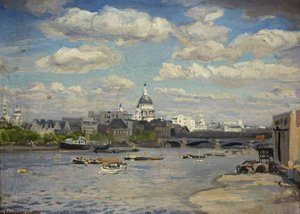
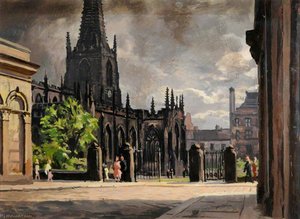
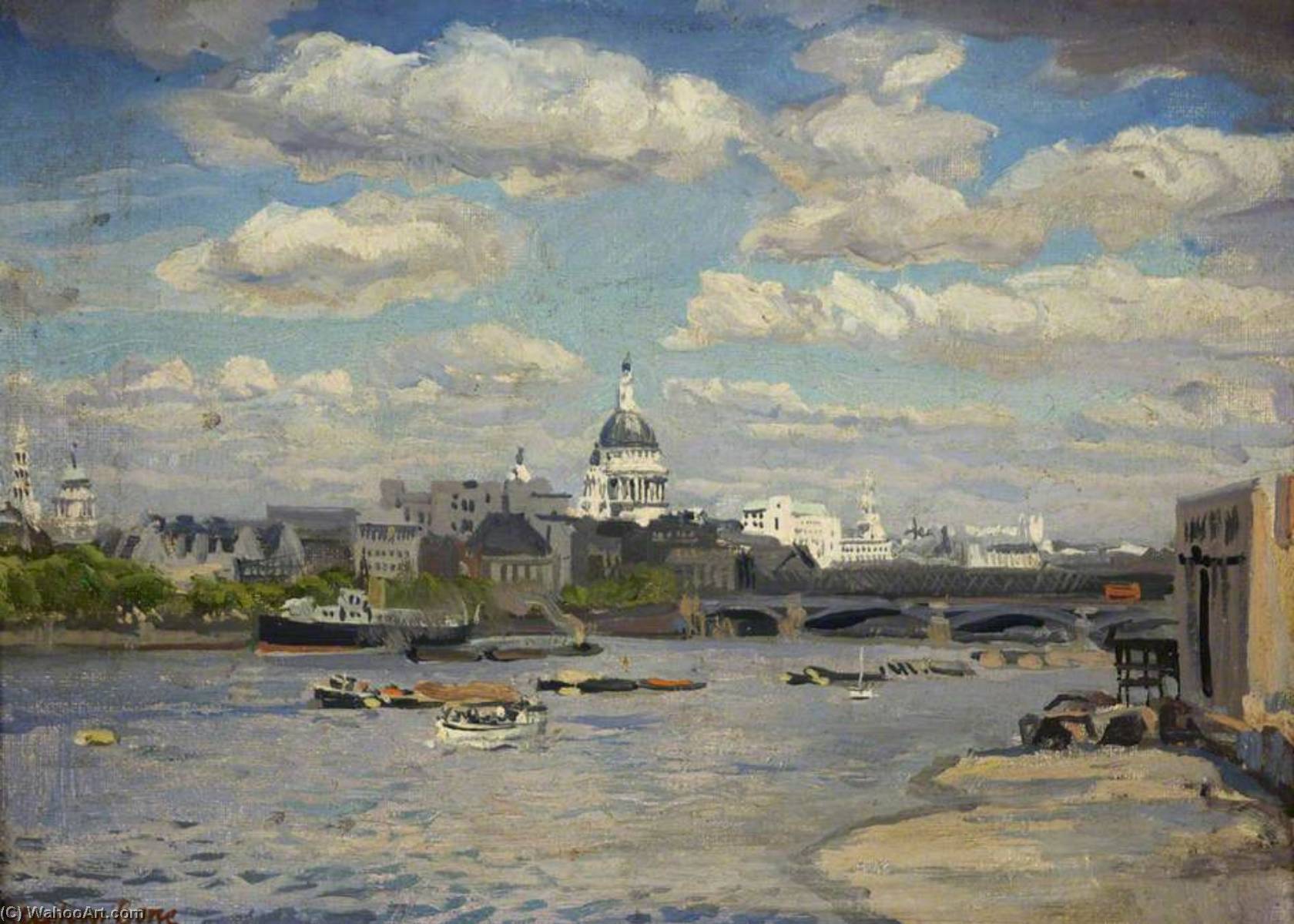
St Paul's and Blackfriars
 Oil On Canvas
- WallArt
- Impressionism
 1949
1949 24.0 x 35.0 cm
 Bristol Museum - Art Gallery
 Read More
Hand Made Oil Reproduction
Hand-painted oil on canvas in your size and frame, made to order by our artists. ( Buy Print Buy Image)




P118B $10

P118H $10

P118W $10

P438Z $10

P508JH $12

P508YH $12

P805H $10

P805Z $10

P919BZ $10

P919G $10

P919XJ $10

P959ZH $10

P968JZ $12

W106C $8

W218G $10

W218JH $8

W218Y $10

W307PJ $10

W316G $10

W316PJ $8

W316Y $10

W398PJ $8

W4111J $10

W500HY $15

W500JH $15

W692G $12

W849H $8

W940BG $15

W953PJ $8




Pick from our preset sizes that match the artwork's original proportions.

You may enter your own dimensions to fit a specific frame or space. If your selected size does not match the original image's proportions, we will either crop the artwork or extend the painting with additional hand-painted elements. A digital mockup will be sent for your approval before production begins.
Please note that the on-screen preview does not reflect the actual cropping or extension. Only the mockup will accurately show the final composition.
While custom sizes are available, we recommend selecting a dimension from the predefined list to preserve the original proportions.
After order, ArtsDot.com team will email client for instructions and provide a mockup preview
Worldwide Delivery () in 3/4 weeks instead of standard 5 weeks. (17 August). No compromise on quality.

Free Worldwide Express Shipping

High-Quality Linen Canvas

Full Shipping Insurance

Customs Tax Refund Guarantee

True Color Matching Guarantee

60-Day Return Policy (Defects Only)

100% Money-Back Guarantee

Bulk Discount Offer
 Glass option is only available in size under 110 CM

St Paul's and Blackfriars
Reproduction Medium
Reproduction Size
-


Total Price
$ 263
Artwork Description
A London Skyline Captured in Light: Stephen Bone's "St Paul's and Blackfriars"
Stephen Bone’s 1949 painting, “St Paul’s and Blackfriars,” isn’t merely a depiction of a London cityscape; it’s an immersive experience of the city’s atmosphere – a fleeting moment of tranquility captured amidst the bustling energy of the Thames. The canvas breathes with a cool, evocative palette dominated by blues and grays, punctuated by the warm glow of reflected sunlight and the hazy lavender of the sky. Bone, a master of capturing light and mood, eschews precise detail in favor of an impressionistic approach, prioritizing the *feeling* of London over its rigid geometry.
The composition is carefully orchestrated to draw the eye into the scene. The river, rendered with loose, broken brushstrokes, dominates the foreground, acting as a mirror reflecting the towering buildings and the shifting light above. St. Paul’s Cathedral, a monumental presence in the distance, anchors the view, while Blackfriars Bridge arches gracefully across the Thames, connecting the two halves of the composition. The inclusion of river traffic – small boats and barges – adds a sense of movement and life to the otherwise still scene.
The Painter’s Process: Impressionism and Oil on Canvas
Bone's technique is distinctly impressionistic, reflecting his early exposure to the Slade School of Fine Art but ultimately rejecting its academic constraints. He employs a layering method – thin washes of oil paint built up gradually to create luminous effects and subtle color transitions. This approach allows him to capture the ephemeral qualities of light and atmosphere with remarkable skill. The visible brushstrokes themselves contribute to the painting’s texture, giving it a tactile quality that invites the viewer to linger and examine its intricacies.
The choice of oil paint was crucial to Bone's style. Oil allowed for blending and layering in ways that other mediums couldn’t achieve, enabling him to build up complex color relationships and create the soft, hazy effects characteristic of his work. The canvas itself provides a grounding surface for these delicate layers, adding depth and richness to the overall image.
A Historical Context: War Artist and British Neo-Romanticism
Stephen Bone’s artistic journey is deeply intertwined with 20th-century British history. Born into an artistic family – his father was the renowned Sir Muirhead Bone, a celebrated war artist – he inherited a legacy of visual storytelling. Following his father's death during World War II, Bone took up the mantle and became a salaried artist for the War Artists’ Advisory Committee, documenting the realities of conflict with poignant honesty. This experience profoundly shaped his artistic sensibilities, imbuing his work with a sense of urgency and social awareness.
Beyond his wartime commissions, Bone was also a key figure in British Neo-Romanticism – a movement that celebrated the beauty and spirit of the English landscape. His paintings often depict scenes of rural England bathed in golden light, capturing the essence of the countryside with vibrant colors and expressive brushstrokes. “St Paul’s and Blackfriars” exemplifies this style, offering a romanticized yet deeply evocative portrayal of London's riverside setting.
Symbolism and Emotional Resonance
“St Paul’s and Blackfriars” transcends a simple landscape painting; it evokes a sense of nostalgia for a bygone era. The cathedral’s imposing presence symbolizes stability and enduring faith, while the river represents fluidity and change. The hazy atmosphere creates a mood of quiet contemplation, inviting the viewer to pause and reflect on the beauty and complexity of London. Bone's masterful use of light and color imbues the scene with an emotional resonance that lingers long after viewing.
This painting is more than just a record of a place; it’s a meditation on time, memory, and the enduring spirit of a city. It stands as a testament to Stephen Bone's artistic vision and his ability to capture the heart and soul of London in a single frame.
Related Artworks
Artist Biography
Stephen Bone: Life and Art
Early Life and Education
- Born: Chiswick, United Kingdom (1904)
- Died: 1958
- Stephen Bone was the son of renowned artist Sir Muirhead Bone and writer Gertrude Helena Dodd. This familial artistic background profoundly influenced his early development.
- He received his education at Bedales School before enrolling at the Slade School of Fine Art in 1922.
- However, he became disillusioned with the academic approach at the Slade and left in 1924 to pursue book illustration.
Early Career & Artistic Development
- Bone initially achieved success as a woodcut illustrator, creating works for his mother and other writers. He won the gold medal for wood engraving at the International Exhibition in Paris in 1925.
- In 1926, he exhibited jointly with Rodney Joseph Burn and Robin Guthrie at the Goupil Gallery, marking a significant step in his artistic recognition.
- He painted a mural for the Piccadilly Circus underground station in 1928, demonstrating his versatility and expanding artistic scope.
- Marriage to artist Mary Adshead in 1929 led to extensive travels across Britain and Europe. These journeys were crucial in developing his signature style of bright landscape painting, capturing scenes *en plein air* regardless of weather conditions.
The 1930s: Landscape Painting & Exhibitions
- During the 1930s, Bone exhibited widely at prestigious galleries including the Fine Art Society, Lefevre Gallery, and Redfern Gallery.
- In 1936, he presented a series of 41 paintings depicting British counties at the Ryman Gallery in Oxford, showcasing his dedication to capturing the essence of the British landscape.
- He also exhibited in Stockholm during 1936 and 1937, expanding his international exposure.
War Artist & WWII Contributions
- With the outbreak of World War II, Bone enlisted as an officer in the Civil Defence Camouflage Establishment.
- In 1943, he was appointed a full-time salaried artist by the War Artists' Advisory Committee, specializing in Admiralty subjects. This role had previously been held by his father, Muirhead Bone, but was taken up by Stephen following the death of their son Gavin.
- Significant WWII Works: He produced numerous paintings depicting coastal installations and naval craft, including scenes painted aboard submarines.
- Bone witnessed and documented the Normandy landings in 1944, painting scenes in Caen and Courseulles. He also recorded the assault on Walcheren Island in the Netherlands.
- He travelled to Norway in late 1944, documenting the wreck of the *Tirpitz* and recording captured naval bases, as well as mass graves of prisoners of war.
Post-War Career & Legacy
- After the war, Bone found his style somewhat out of fashion. Despite continuing to paint, he faced difficulties exhibiting his work.
- He transitioned into art criticism, writing for the *Manchester Guardian*, and contributed humorous pieces to the *Glasgow Herald*.
- Bone also worked in television and radio for the BBC and collaborated with his wife on children's books. They jointly organized a mural painting course at Dartington.
- In 1957, he was appointed Director of the Hornsey College of Art.
- Death: Stephen Bone died of cancer on September 15, 1958, at St Bartholomew's Hospital, London.
- Stephen Bone’s work provides a valuable visual record of mid-20th century Britain, encompassing both the tranquility of its landscapes and the harsh realities of wartime.
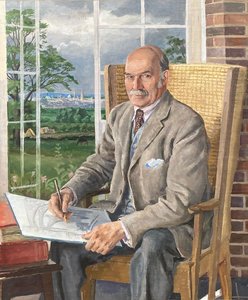
Stephen Bone
1904 - 1958 , United Kingdom
Quick Facts
- Birth Date: 1904
- Birth Place: Chiswick, United Kingdom
- Death Date: 1958
- Influenced: None, 'influenced by': 'Muirhead Bone', 'movement': ['Woodcut Illustration', 'Landscape Painting', 'War Art'], 'name': 'Stephen Bone', 'nationality': 'British', 'notable works': ['Two Aircraft Carriers', 'The Midnight Sun', 'Railway Men', 'Sunset on the Normandy Beaches',
Related Articles

Beyond the Horizon: 10 Landscape Masterpieces for Your Home Decor
Journey through 10 breathtaking landscape paintings by Monet, Van Gogh & more! Explore iconic artworks, artistic techniques & find inspiration for your home decor. Museum-quality reproductions at ArtsDot.com. Discover all masterpieces on ArtsDot.com
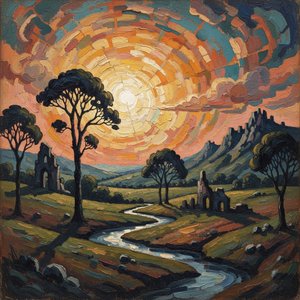
Stephen Bone: A Reassessment of Colour, Form & the British Neo-Romantic Landscape Tradition
Explore the vibrant world of Stephen Bone (1904-1958), a key figure in British Neo-Romanticism. Discover his captivating landscapes, impactful war art & unique artistic style. Learn about his life, influences & legacy.

Impressionist Landscapes: 10 Masterpieces for Your Home | ArtsDot
Journey through 10 iconic Impressionist landscapes by Monet, Renoir & Degas. Explore the history, techniques & emotions behind these masterpieces. Find museum-quality reproductions for your home at ArtsDot.com – where art comes to life! Discover all masterpieces on ArtsDot.com

Impressionistic Landscapes: 10 Masterpieces That Changed Art & Decor
Journey into the heart of Impressionism! Explore 10 masterpieces by Monet, Renoir & Degas that revolutionized landscape art. Discover their stories, techniques & find museum-quality reproductions to elevate your home decor on ArtsDot.com.

Romantic Landscapes: 10 Masterpieces for Your Home | ArtsDot
Journey through 10 Romantic landscape masterpieces by Friedrich, Turner & Cole. Explore emotional art, sublime nature scenes & iconic 19th-century paintings. Find museum-quality reproductions for your home at ArtsDot.com – discover the full collection online!