

 Preview
 Send
Send Share
Share
 Details

 Download
 Similars
 X-Ray
X-Ray Diaporama
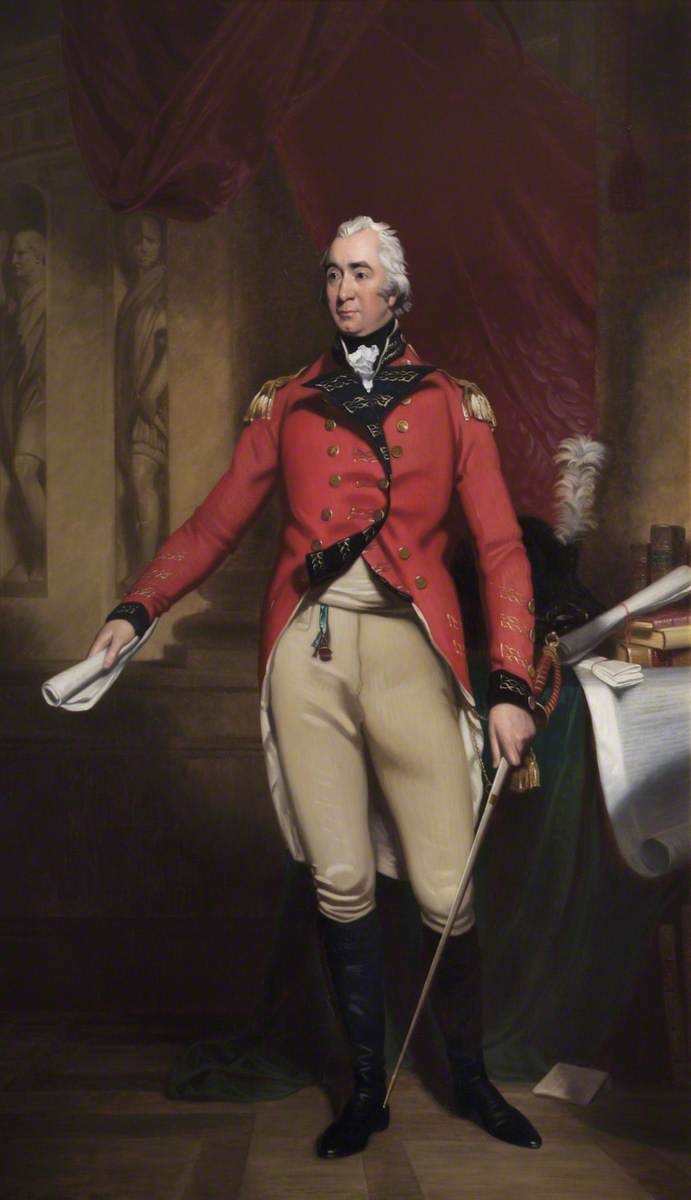
Francis (1754–1826), 2nd Earl of Moira, afterwards 1st Marquess of Hastings, KG (copy after Martin Archer Shee)
 Acrylic On Canvas
- WallArt
- Romanticism
 1884
1884 259.0 x 153.0 cm
 The Library And Museum of Freemasonry
 Read More
Purchase a high-resolution, enhanced digital image, far superior to the online preview.
Each file is meticulously prepared by our in-house specialists using advanced tools and expert manual retouching. We ensure every image has exceptional clarity, precise color accuracy, and fine detail.
The final file is delivered via email within 72 hours, optimized for immediate use in professional, editorial, and print environments. This is the same quality trusted by top-tier design studios, publishers, and galleries.
Digital Image
Download a high-resolution file for personal display, printing, and creative projects. ( Buy Print Buy Hand Made Painting)
Included in Every Digital Image Order
Expert Digital Delivery, Guaranteed
When you choose ArtsDot.com, you're not just getting an image - you're receiving a professionally enhanced digital artwork, crafted with precision and backed by a satisfaction guarantee. Here's everything that comes with your order, automatically:

Fast Email Delivery
Your high-resolution digital image file will be emailed to you within 72 hours of ordering - ready for immediate use.

AI-Enhanced Digital File
Your artwork is professionally optimized using advanced AI tools and manual editing, ensuring maximum detail, clarity, and color accuracy.

Free Lifetime Re-Delivery
Accidentally deleted or lost your file? No worries - we'll resend it to you anytime, free of charge.

No Import Fees - Ever
Enjoy your artwork instantly with zero customs, duties, or delivery fees - digital downloads are always tax-free.

Color Accuracy Guarantee
We ensure your digital image reflects the original colors as closely as possible using professional tools and color management.

60-Day Satisfaction Guarantee
If you're not satisfied with your digital image, we'll revise it or refund 100% within 60 days - no questions asked.

100% Money-Back Guarantee
Not satisfied? Get a full refund within 60 days of receiving your digital file - no questions asked.

Bulk Order Discounts
Buy 3 images, save 10% - Buy 5, save 15% - Buy 10+, save 20%. Great for creative projects, galleries, and agencies.
Collectible Description
A Portrait Steeped in Power and Dignity: Stephen Pearce’s Rendition of Francis Hastings
The painting “Francis (1754–1826), 2nd Earl of Moira, afterwards 1st Marquess of Hastings,” by Stephen Pearce, stands as a testament to the Victorian fascination with portraiture and its ability to encapsulate both outward appearance and inner character. Executed in 1884, this impressive canvas—measuring 259 x 153 cm—captures Francis Rawdon Hastings, a figure of considerable influence during his lifetime as Governor General of Bengal and Commander-in-Chief of the Forces in India, presenting him with an aura of authority and aristocratic grace. Pearce’s masterful depiction is itself a derivative work, meticulously crafted after Martin Archer Shee’s celebrated portrait of Hastings, ensuring adherence to a stylistic lineage that prioritized realism combined with subtle expressive qualities.The Shee Influence: Style and Technique
Pearce's artistic sensibilities were undeniably shaped by Shee’s pioneering approach to portraiture. Shee championed the “direct method,” favoring a single sitting where he would observe his subject intently before commencing the painting process. This technique allowed Shee to capture not merely physical likeness but also the sitter’s psychological state—a characteristic that Pearce skillfully adopted. The resulting image is rendered in oil paint on canvas, utilizing meticulous layering and blending techniques to achieve remarkable tonal gradation and textural detail. Shee's influence is particularly evident in the careful modeling of Hastings’s musculature and drapery, conveying a palpable sense of solidity and presence. Pearce expertly replicated this approach, prioritizing accuracy and nuance within his artistic execution.Historical Context: Hastings and Imperial Ambition
Francis Rawdon Hastings’s life was inextricably linked to the burgeoning British Empire during the mid-19th century. As Governor General of Bengal—a pivotal administrative role overseeing India’s wealthiest province—he spearheaded ambitious reforms aimed at bolstering British rule and promoting economic prosperity. His military prowess secured victories in Napoleonic Wars, cementing his reputation as a formidable commander and securing him the title of Marquess of Hastings. Pearce's portrait reflects this historical significance, portraying Hastings not merely as an aristocrat but as a statesman actively engaged in shaping the destiny of India—a nation undergoing rapid transformation under British dominion. The pose itself—standing confidently on a stage or platform—suggests deliberation and projection of power, mirroring Hastings’s role as a leader responsible for guiding his country through turbulent times.Symbolism: Dignity and Regal Bearing
Beyond mere representation, Pearce imbues the portrait with symbolic resonance. The scarlet coat worn by Hastings is a deliberate choice, signifying nobility and royal patronage—a visual shorthand for his elevated social status and connection to the British monarchy. Similarly, the sword held aloft embodies martial virtue and unwavering resolve—reflecting Hastings’s military accomplishments and conveying an image of steadfast determination. Furthermore, the careful positioning of Hastings within the frame contributes to a sense of grandeur and stability, reinforcing the impression of a man accustomed to commanding respect and upholding tradition. Pearce's artistic decisions underscore the importance of conveying not just what Hastings looked like but also what he represented—a symbol of imperial ambition and aristocratic dignity.Emotional Impact: Capturing Character Through Observation
Ultimately, Pearce’s portrait succeeds in capturing the essence of Francis Hastings’s character through astute observation and skillful technique. The gaze directed outwards conveys confidence and self-assurance, hinting at Hastings's unwavering conviction in his convictions and his commitment to upholding British ideals. The subtle expression on his face—a blend of seriousness and contemplation—suggests a mind wrestling with weighty responsibilities and striving for intellectual clarity. Pearce’s achievement lies in transforming a formal likeness into an emotionally resonant depiction—one that invites viewers to contemplate the complexities of human experience and appreciate the enduring power of portraiture to illuminate the inner life of its subject.Related Artworks

Artist Biography
Early Life and Artistic Foundations
Stephen Pearce, born in the heart of London on November 16, 1819, at King's Mews, Charing Cross, entered a world subtly interwoven with England’s regal fabric. As the sole child of Stephen Pearce, a clerk within the Department of the Master of Horse, and Ann Whittington, his upbringing was steeped in service to the Crown—a connection that would profoundly resonate throughout his artistic journey. This proximity instilled not merely decorum but access to subjects that defined much of his early career: the magnificent horses of the Royal Mews. Formal training commenced at Sass’s Academy in Charlotte Street, a respected institution for aspiring artists, followed by rigorous study at the prestigious Royal Academy Schools beginning in 1840. A pivotal moment arrived in 1841 when he became a pupil of Sir Martin Archer Shee, a prominent portraitist whose influence shaped Pearce's approach to capturing likeness and character. These formative years laid the groundwork for a career balancing meticulous technique with an evolving artistic sensibility.A Versatile Career: Portraiture, Equine Art, and Literary Circles
Pearce’s professional life unfolded across decades, marked by remarkable versatility. From 1842 to 1846, he served as an amanuensis—a secretary—to the celebrated novelist Charles Lever. This period offered unique immersion into literary circles, broadening his understanding of narrative and character development – skills that subtly informed the psychological depth of his portraiture. His initial artistic successes centered on paintings of favored horses within the Royal Mews, exhibited at the Royal Academy in 1839 and again in 1841, establishing him as a skilled animalier. A sojourn to Italy around 1849 proved transformative, refining his aesthetic sensibilities before he resumed regular contributions to Burlington House exhibitions upon his return to England. His style underwent noticeable evolution; early works displayed meticulous precision with pronounced shadowing, while later paintings embraced greater freedom and fluidity in technique. He wasn’t confined by genre, moving seamlessly between capturing the nobility of a prized stallion and the nuanced personality of a prominent Victorian gentleman.The Arctic Chronicles: A Defining Commission
It was through a unique confluence of artistic talent and historical circumstance that Pearce truly distinguished himself: his involvement in documenting the era’s fervent interest in Arctic exploration. Perhaps most notable is “The Arctic Council discussing a plan of search for Sir John Franklin” (1851), commissioned by Colonel John Barrow. This large-scale painting, depicting leading figures strategizing the rescue mission for the ill-fated explorer Sir John Franklin, captured the public’s imagination and served as a poignant reminder of the perils and heroism inherent in polar expeditions. The work is not merely a historical record but a carefully constructed drama, each figure rendered with individual character and contributing to the overall sense of anxious deliberation. Beyond this monumental work, Pearce became renowned for his equestrian portraits, particularly those of masters of foxhounds, harriers, and prominent horse owners like the Earl of Craven and members of families such as the Dukes of Bedford. “Coursing at Ashdown Park” (1869), a sprawling landscape featuring approximately sixty equestrian figures, stands as a testament to his skill in depicting both human subjects and their noble steeds within a dynamic setting. He also created numerous half-length portraits of Arctic explorers—Sir Robert McClure, Sir Leopold McClintock, Captain Penny—commissioned by Barrow and Lady Franklin, many residing today in the National Portrait Gallery.Legacy and Historical Significance
Pearce’s artistic vision was shaped by 19th-century British art's prevailing currents. His training under Sir Martin Archer Shee firmly placed him within the tradition of formal, academic portraiture that dominated the era. The enduring popularity of equestrian subjects reflected a broader cultural fascination with horses and horsemanship, particularly among the aristocracy and landed gentry. Simultaneously, his Arctic paintings demonstrated engagement with contemporary events—the scientific exploration of the polar regions—and tapped into the public’s intense interest in these daring expeditions. His ability to capture accurate likenesses, combined with sensitivity and precision in portraying human figures and animals, earned him respect within artistic circles. The National Portrait Gallery holds an impressive collection of forty-four portraits by Pearce, including two self-portraits, underscoring his substantial contribution to British portraiture.Final Years and Enduring Recognition
Stephen Pearce retired from active practice in 1888, having dedicated decades to his craft. He married Matilda Jane Cheswright in 1858, with whom he had five sons. In 1903, he published “Memories of the Past”, a collection of reproductions accompanied by biographical notes and technical insights—a testament to his reflective nature and desire to share his artistic process. He passed away on January 31, 1904, at Sussex Gardens, West London. His legacy endures through the substantial body of work he left behind, preserved in public collections like the National Portrait Gallery, offering a captivating glimpse into Victorian society and British art during his lifetime. The meticulous detail, historical significance, and evocative power of his paintings continue to resonate with audiences today, solidifying Stephen Pearce’s place as a noteworthy figure in 19th-century artistic history. His work provides invaluable insights into Victorian society, documenting the lives of prominent individuals and capturing the spirit of exploration that characterized the age—a chronicler of his time, translating social status, scientific endeavor, and personal narratives onto canvas.
Stephen Pearce
1819 - 1904 , United Kingdom
Quick Facts
- Artistic Movement Or Style: Victorian portraiture
- Artists Who Influenced This Artist: ['Sir Martin Archer Shee']
- Date Of Birth: 1819-11-16
- Date Of Death: 1904-01-31
- Full Name: Stephen Pearce
- Nationality: British
- Notable Artworks:
- The Arctic Council
- Coursing at Ashdown Park
- Alexander Stewart
- John Rae
- Place Of Birth: London, UK

