

 Preview
 Send
Send Share
Share
 Details

 Download
 Similars
 X-Ray
X-Ray Diaporama
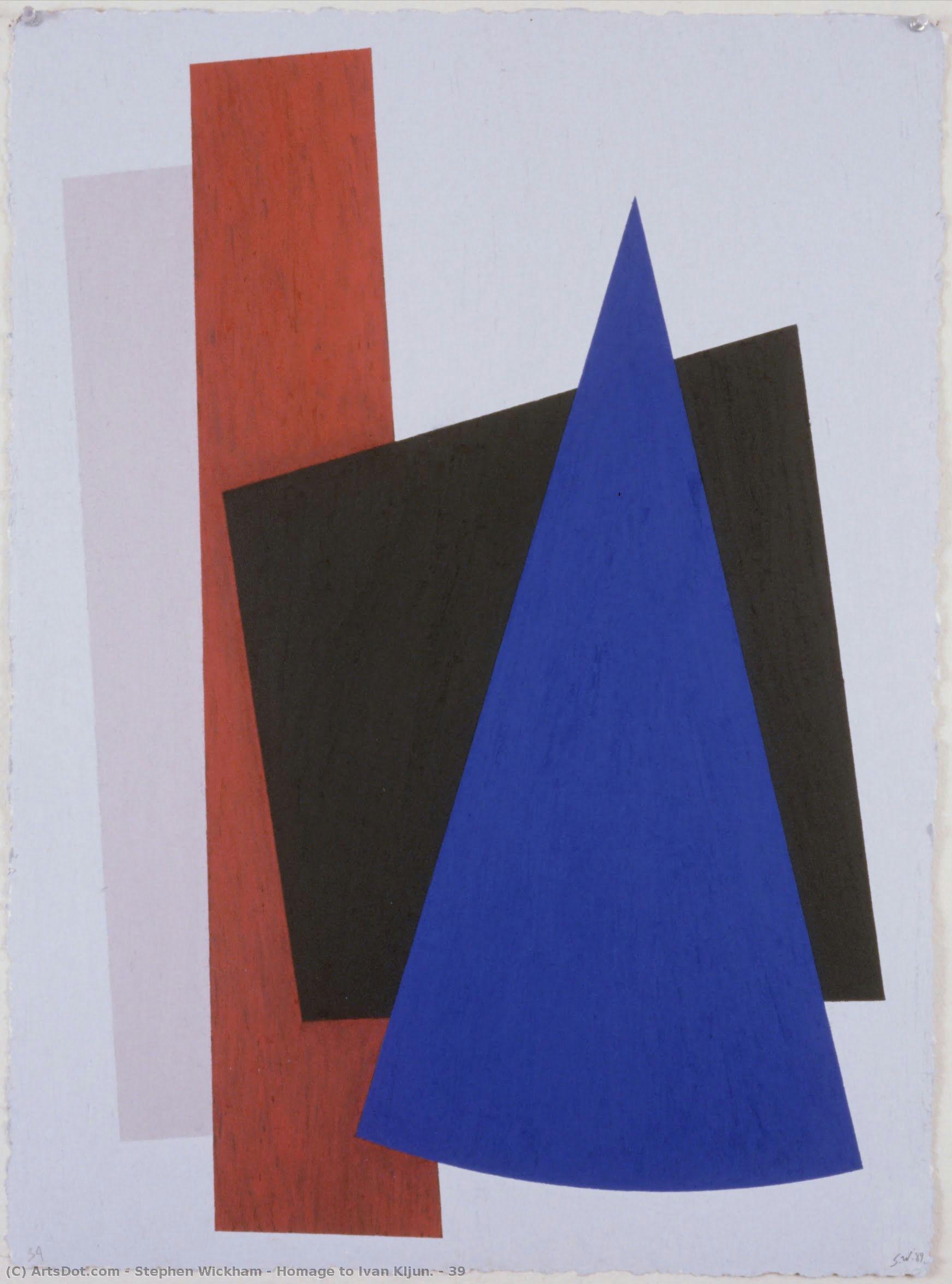
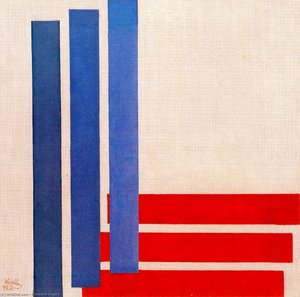
Homage to Ivan Kljun. # 39


 Read More
Purchase a high-resolution, enhanced digital image, far superior to the online preview.
Each file is meticulously prepared by our in-house specialists using advanced tools and expert manual retouching. We ensure every image has exceptional clarity, precise color accuracy, and fine detail.
The final file is delivered via email within 72 hours, optimized for immediate use in professional, editorial, and print environments. This is the same quality trusted by top-tier design studios, publishers, and galleries.
Digital Image
Download a high-resolution file for personal display, printing, and creative projects. ( Buy Print Buy Hand Made Painting)
Included in Every Digital Image Order
Expert Digital Delivery, Guaranteed
When you choose ArtsDot.com, you're not just getting an image - you're receiving a professionally enhanced digital artwork, crafted with precision and backed by a satisfaction guarantee. Here's everything that comes with your order, automatically:

Fast Email Delivery
Your high-resolution digital image file will be emailed to you within 72 hours of ordering - ready for immediate use.

AI-Enhanced Digital File
Your artwork is professionally optimized using advanced AI tools and manual editing, ensuring maximum detail, clarity, and color accuracy.

Free Lifetime Re-Delivery
Accidentally deleted or lost your file? No worries - we'll resend it to you anytime, free of charge.

No Import Fees - Ever
Enjoy your artwork instantly with zero customs, duties, or delivery fees - digital downloads are always tax-free.

Color Accuracy Guarantee
We ensure your digital image reflects the original colors as closely as possible using professional tools and color management.

60-Day Satisfaction Guarantee
If you're not satisfied with your digital image, we'll revise it or refund 100% within 60 days - no questions asked.

100% Money-Back Guarantee
Not satisfied? Get a full refund within 60 days of receiving your digital file - no questions asked.

Bulk Order Discounts
Buy 3 images, save 10% - Buy 5, save 15% - Buy 10+, save 20%. Great for creative projects, galleries, and agencies.
Collectible Description
A Symphony of Geometric Precision
In the vast landscape of contemporary abstraction, few works manage to capture the silent tension between form and void as effectively as Stephen Wickham’s Homage to Ivan Kljun. # 39. Created in 1989, this piece serves as a profound meditation on the legacy of geometric modernism, stripping away the unnecessary to reveal the raw, rhythmic power of shape. The composition is anchored by a striking triad of primary and deep tones: a bold red presence on the left, a contemplative blue toward the center, and a grounding black element on the right. These are not merely shapes placed upon a canvas; they are characters in a silent drama, interacting through proximity and contrast.
The visual narrative is further elevated by the inclusion of a central triangle, a sharp, architectural element that pierces the composition. This geometric protagonist acts as a fulcrum, balancing the weight of the larger color blocks and directing the viewer's eye through a carefully choreographed movement across the 77 x 57 cm surface. The interplay between the organic edges of the colors and the mathematical precision of the triangle creates a dynamic energy that feels both stable and perpetually in motion.
Technique and the Language of Abstraction
Wickham’s technique in this homage reflects a deep understanding of how color weight affects spatial perception. The application of pigment suggests a deliberate, controlled hand, where each boundary is defined to maximize the impact of the chromatic shifts. By utilizing a palette that leans into the foundational strength of red, blue, and black, the artist invokes the spirit of early 20th-century avant-garde movements, specifically referencing the structural clarity found in the works of Ivan Kljun. The painting does not rely on intricate textures or complex shading; instead, it finds its soul in the purity of its execution.
For the discerning collector or interior designer, this piece offers a sophisticated solution for modern environments. Its clean lines and impactful color blocking make it an ideal centerpiece for minimalist or mid-century modern interiors, where it can serve as a focal point that commands attention without overwhelming the surrounding decor. The artwork possesses a rare ability to anchor a room, providing a sense of structural integrity and intellectual depth to any curated space.
Emotional Resonance and Lasting Impact
Beyond its formal qualities, Homage to Ivan Kljun. # 39 evokes a profound emotional response rooted in the concept of balance. There is a certain serenity found in its order, yet the sharp angles and high-contrast colors prevent it from becoming static. It captures that fleeting moment of clarity where chaos resolves into structure. To gaze upon this work is to experience the tension between the known and the unknown, the heavy and the light.
Owning a reproduction of such a significant piece allows for the infusion of historical weight and artistic prestige into a private collection. It is an invitation to contemplate the enduring relevance of geometric abstraction—a reminder that even in an era of digital complexity, there is an irreplaceable beauty in the fundamental elements of color and shape. This painting remains a testament to the power of simplicity, offering a timeless aesthetic that continues to inspire awe and introspection.
Related Artworks
Artist Biography
The Crucible of New York: Francis Bacon and the 1950s
Francis Bacon’s journey into the heart of the 20th century was a collision of personal trauma, artistic obsession, and a profound engagement with the human condition. Born in Dublin in 1906, his early life was marked by familial tragedy – the sudden death of his father when he was just eleven years old profoundly shaped his worldview and fueled an enduring sense of melancholy. This initial wound became a recurring motif in his work, manifesting as a visceral exploration of fear, isolation, and the grotesque. The 1950s witnessed a pivotal shift in Bacon’s artistic trajectory, a period defined by intense experimentation, a deepening engagement with primal imagery, and a move towards a more explicitly expressive style. This decade wasn't simply a phase; it represented a fundamental re-evaluation of his approach to painting, driven by both internal struggles and the vibrant, often chaotic, energy of post-war New York.- South African Sojourn & Early Influences (1951-1952): A crucial period began with a return trip to South Africa in 1951 and again in 1952, prompted by his mother’s relocation. These visits ignited a fascination with the raw power of the natural world – the vastness of the African landscape, the movement of wild animals—a sensation he sought to capture on canvas. The stark contrasts between the ordered formality of European art and the untamed energy of the South African wilderness became a key source of inspiration. Crucially, Bacon’s encounter with ancient Egyptian art during this time solidified his belief in its unparalleled achievement, informing his understanding of form and composition.
- The Men in Suits & The Descent into Subjectivity (1953-1954): This period saw the emergence of the iconic “Men in Suits” series. These paintings, rendered in dark, claustrophobic interiors, are not portraits in the traditional sense but rather explorations of psychological states—anxiety, paranoia, and a disturbing sense of confinement. The subject matter, initially derived from a model at the Imperial Hotel, Henley-on-Thames, quickly evolved into a more generalized representation of human vulnerability and the anxieties of modern life. Bacon deliberately stripped away identifying details, transforming the figures into archetypes of existential dread.
- Nudes & The Influence of Muybridge (1953-1954): Simultaneously with the “Men in Suits,” Bacon began to confront the nude figure with a renewed intensity. These works—"Two Figures," and "Two Figures in the Grass"—were deeply indebted to Eadweard Muybridge’s pioneering photographs of human movement, *The Human Figure in Motion*. Bacon wasn't simply copying these images; he was manipulating them, twisting their poses into expressions of sexual tension, violence, and a disturbing sense of vulnerability. The influence of Muybridge provided a framework for understanding the dynamism of the body, but Bacon ultimately used it to explore darker, more unsettling themes.
The Turbulent Circle: Relationships and Artistic Community
Bacon’s life in the 1950s was characterized by intense personal relationships—both passionate and destructive—and a deep engagement with the vibrant artistic community of post-war New York. His early partnership with Eric Hall ended abruptly, marked by heartbreak and instability. He moved frequently between studios, relying on the generosity of friends like Peter Pollock and Paul Danquah, who provided temporary accommodation in Battersea. The most significant relationship of this decade was his intense, often obsessive, affair with Peter Lacy, a former fighter pilot. This connection, described as a “potent mixture of compulsion and destruction,” profoundly impacted Bacon’s work and personal life for years to come.- New York Connections & Patronage (1953-1957): Bacon's arrival in New York in 1953 marked a turning point, establishing him within the burgeoning Abstract Expressionist scene. He exhibited at Durlacher Brothers and the Galerie Rive Droite, gaining recognition from influential dealers like Sidney Janis and Peggy Guggenheim. His association with Robert and Lisa Sainsbury proved particularly crucial, providing consistent financial support and fostering a sense of stability amidst his turbulent personal life.
- Fellow Artists & Literary Circles (1954-1957): Bacon cultivated friendships with a diverse group of artists—including Mark Rothko, Willem de Kooning, Francis Kline, and Michael Andrews—as well as figures from the literary world such as Ann Fleming, Sonia Orwell, and Muriel Belcher. These connections provided intellectual stimulation and a sense of belonging within a rapidly evolving artistic landscape. The shared experiences and debates within these circles undoubtedly influenced Bacon’s own artistic development.
A Transformation in Technique & Style
By 1957, Bacon's painting underwent a dramatic transformation—a shift that became strikingly apparent at his exhibition at the Hanover Gallery in March of that year. This evolution wasn’t simply an accumulation of stylistic changes; it represented a fundamental re-evaluation of his approach to paint and composition. The six paintings presented were deeply rooted in Van Gogh’s *The Painter on the Road to Tarascon*, a work destroyed during World War II, which Bacon had deliberately avoided seeing in person.- Van Gogh's Influence & Accelerated Process (1957): The paintings created in response to Van Gogh’s masterpiece—including the six presented at the Hanover Gallery—were executed with a remarkable speed and urgency, driven by a desire to capture the essence of the original work. Bacon employed a looser, more expressive application of paint, characterized by coarse brushstrokes and a heightened sense of physicality. This shift reflected a willingness to abandon meticulous control in favor of conveying raw emotion and psychological intensity.
- The Legacy of Expressionism (1957 onwards): Bacon’s work continued to evolve throughout the 1960s, retaining the hallmarks of his distinctive style—the distorted figures, the claustrophobic interiors, and the pervasive sense of unease. However, he also incorporated elements of Surrealism and Pop Art, reflecting the broader cultural shifts of the era. His paintings remained profoundly unsettling, yet undeniably powerful, cementing his place as one of the most significant artists of the 20th century.
Historical Significance & Enduring Impact
Francis Bacon’s work in the 1950s is not merely a stylistic footnote; it represents a crucial moment in the development of modern art. His exploration of psychological trauma, his embrace of grotesque imagery, and his willingness to challenge conventional notions of representation profoundly influenced generations of artists. Bacon's paintings continue to resonate with viewers today, offering a visceral and unsettling reflection on the complexities of human existence—a testament to his enduring artistic vision and his profound understanding of the darker aspects of the human psyche. His legacy lies not only in the power of his individual works but also in his willingness to confront difficult subjects and push the boundaries of artistic expression.
stephen wickham
1950 - , Australia
Quick Facts
- Artistic Movement Or Style: Expressionism
- Artists Or Movements Influenced By This Artist: ['Abstract Expressionism']
- Artists Who Influenced This Artist:
- Eadweard Muybridge
- Van Gogh
- Date Of Birth: 1908
- Date Of Death: 1992
- Full Name: Francis Bacon
- Nationality: British
- Notable Artworks:
- Study of a Figure in a Landscape
- Man in Blue I-VII
- Two Figures
- Two Figures in the Grass
- Place Of Birth: Dublin, Ireland

