 Preview
 Send
Send Share
Share
 Details

 Download
 Similars
 X-Ray
X-Ray Diaporama
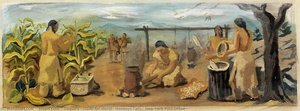
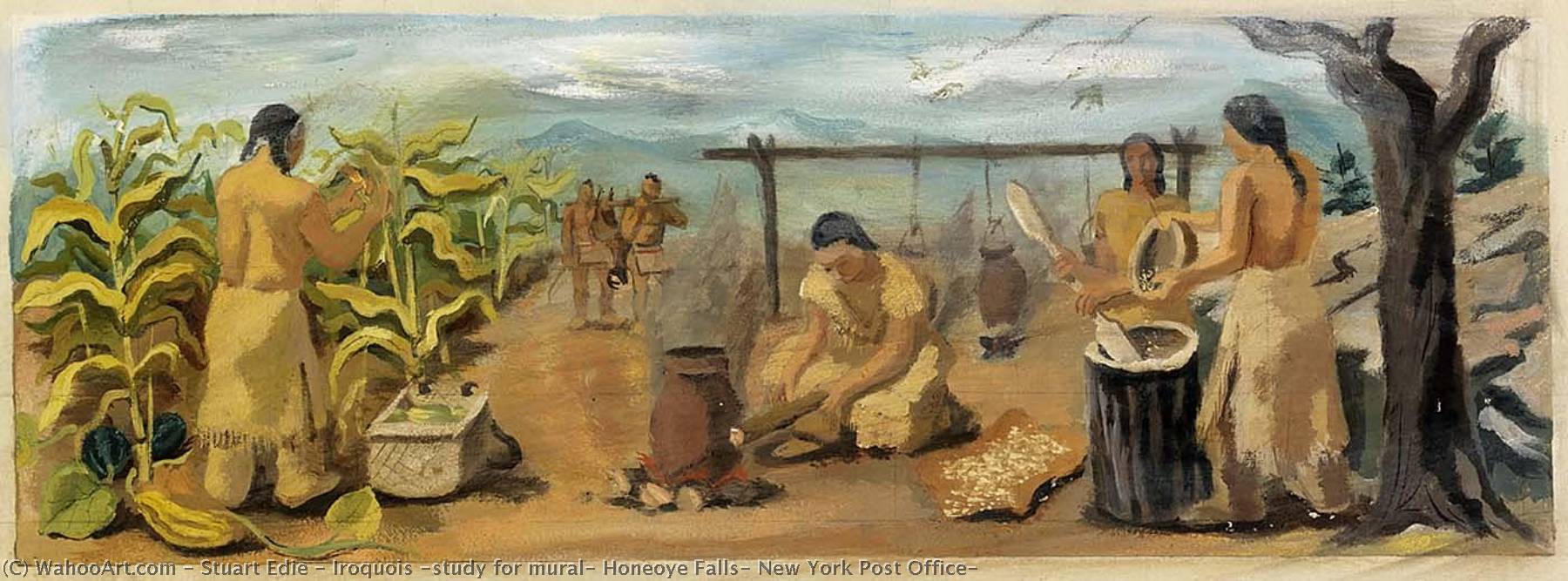
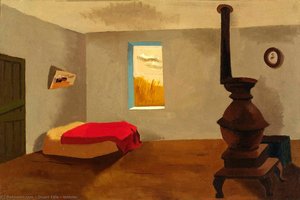
Iroquois (study for mural, Honeoye Falls, New York Post Office)
 1941
1941 37.0 x 76.0 cm
 Read More
Giclée / Art Print
Museum-quality giclée or canvas print with fast production and flexible finish options. ( Buy Hand Made Painting Buy Image)




































Pick from our preset sizes that match the artwork's original proportions.

You may enter your own dimensions to fit a specific frame or space. If your selected size does not match the original image's proportions, we will either crop the artwork or extend the image with a mirrored or solid-fill edge. A digital mockup will be sent for your approval before production begins.
Please note that the on-screen preview does not reflect the actual cropping or extension. Only the mockup will accurately show the final composition.
While custom sizes are available, we recommend selecting a dimension from the predefined list to preserve the original proportions.
Worldwide Delivery () in 2 weeks instead of standard 4/5 weeks. (25 August)

Free Worldwide Express Shipping

High-Quality Linen Canvas

Full Shipping Insurance

Customs Tax Refund Guarantee

True Color Matching Guarantee

60-Day Return Policy (Defects Only)

100% Money-Back Guarantee

Bulk Discount Offer
 Glass option is only available in size under 110 CM

Iroquois (study for mural, Honeoye Falls, New York Post Office)
Giclée / Art Print
Reproduction Size
-


Total Price
$ 63
Related Artworks








Artist Biography
The Soul of the Landscape: The Life and Vision of Stuart Edie
Stuart Carson Edie, born Stuart Davis Smith in 1908, was an artist who possessed the rare ability to bridge the gap between American modernism and a deeply felt British sensibility. Born in Dallas, Texas, his early years were shaped by the meticulous influence of his father, Thomas Stuart Smith, a Scottish physician whose passion for observation instilled in the young Edie a lifelong devotion to detail. This foundational precision was further refined during his studies at Yale University under the legendary George Bridgman. While Bridgman’s teachings focused on the rigors of anatomical drawing and the complexities of the human form, Edie would eventually translate this mastery of structure into the organic rhythms of the natural world, creating a style that balanced academic accuracy with an expressive, emotive color palette.
The trajectory of Edie's life changed irrevocably in 1930 when he moved to England. Settling in Dorset, he found himself immersed in the rugged, timeless beauty of the Jurassic Coast, a landscape that would become the primary protagonist in his artistic narrative. It was here that his work began to shed the purely structural focus of his training and embraced a more atmospheric, impressionistic approach. He did not seek to capture the overwhelming grandeur of sweeping vistas; instead, Ediente found profound meaning in the intimate and the quiet. His canvases became windows into the subtle moods of the English countryside, where light and shadow dance across familiar textures, inviting the viewer into a state of tranquil contemplation.
Mastery of Color and Form
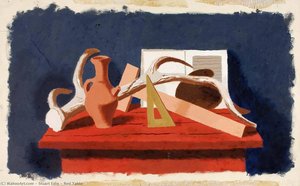
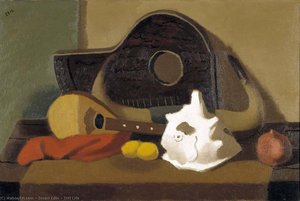
Edie’s technical prowess is perhaps most evident in his ability to manipulate medium and color to evoke depth and dimensionality. Whether working in the fluid transparency of watercolor or the rich, layered textures of oil on canvas, he utilized bold colors and geometric undertones to ground his compositions. In works such as Red Table (1939), one can observe how he employs a striking range of blues and reds to create a sense of physical presence within a simple setting. His technique often involved subtle tonal gradations and layered brushstrokes that allowed the atmosphere of a scene to breathe, making the air itself feel palpable on the canvas.
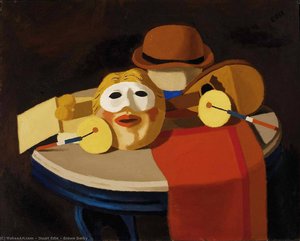
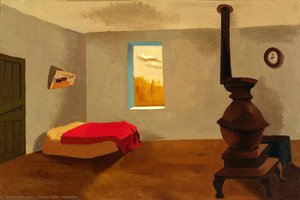
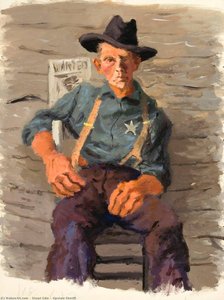
His repertoire was remarkably diverse, ranging from the quiet domesticity of Interior (1938)—a serene bedroom scene characterized by a warm, inviting red blanket—to more character-driven works like Brown Derby (1940). Even in his more graphic explorations, such as the gouache on paperboard piece Upstate Sheriff (1943), Edie maintained a signature clarity of line and a commitment to capturing the essence of his subjects. This ability to oscillate between the intimate interior and the expansive landscape allowed him to document both the human experience and the natural environment with equal fervor.
A Legacy of Preservation and Artistry
Beyond his individual canvases, Stuart Edie’s historical significance is inextricably linked to his devotion to cultural heritage. He was not merely an observer of the English landscape but a dedicated protector of it. His long-standing relationship with the National Trust saw him contributing significantly to their visual archive, donating numerous paintings that served to document and celebrate the beauty of England's historic properties. This commitment transformed his art from personal expression into a vital historical record.
Today, Edie’s work resides in some of the most prestigious institutions in the world, ensuring that his unique vision continues to resonate with new generations of art lovers. His legacy is defined by several key pillars:
- The Fusion of Traditions: Successfully blending American modernist techniques with a British impressionistic spirit.
- Atmospheric Realism: A mastery of capturing the "mood" of a landscape through precise color and light.
- Cultural Contribution: His role as a benefactor to the National Trust and his presence in collections like the Hirshhorn Museum and the Smithsonian American Art Museum.
- Intimate Perspective: The elevation of small, quiet moments and everyday scenes into profound works of fine art.
In the annals of 20th-century art, Stuart Edie remains a poignant figure—an artist who looked closely at the world not just to see it, but to feel its enduring, quiet strength.
stuart edie
1908 - 1974
Quick Facts
- Artistic Movement Or Style: Modernist Painting
- Artists Or Movements Influenced By This Artist: ['Jazz Age']
- Artists Who Influenced This Artist: ['Thomas Stuart Smith']
- Date Of Birth: 1908
- Date Of Death: 1974
- Full Name: Stuart Carson Edie
- Nationality: American
- Notable Artworks:
- Red Table
- Brown Derby
- Upstate Sheriff
- Place Of Birth: Texas