 Preview
 Send
Send Share
Share
 Details

 Download
 Similars
 X-Ray
X-Ray Diaporama
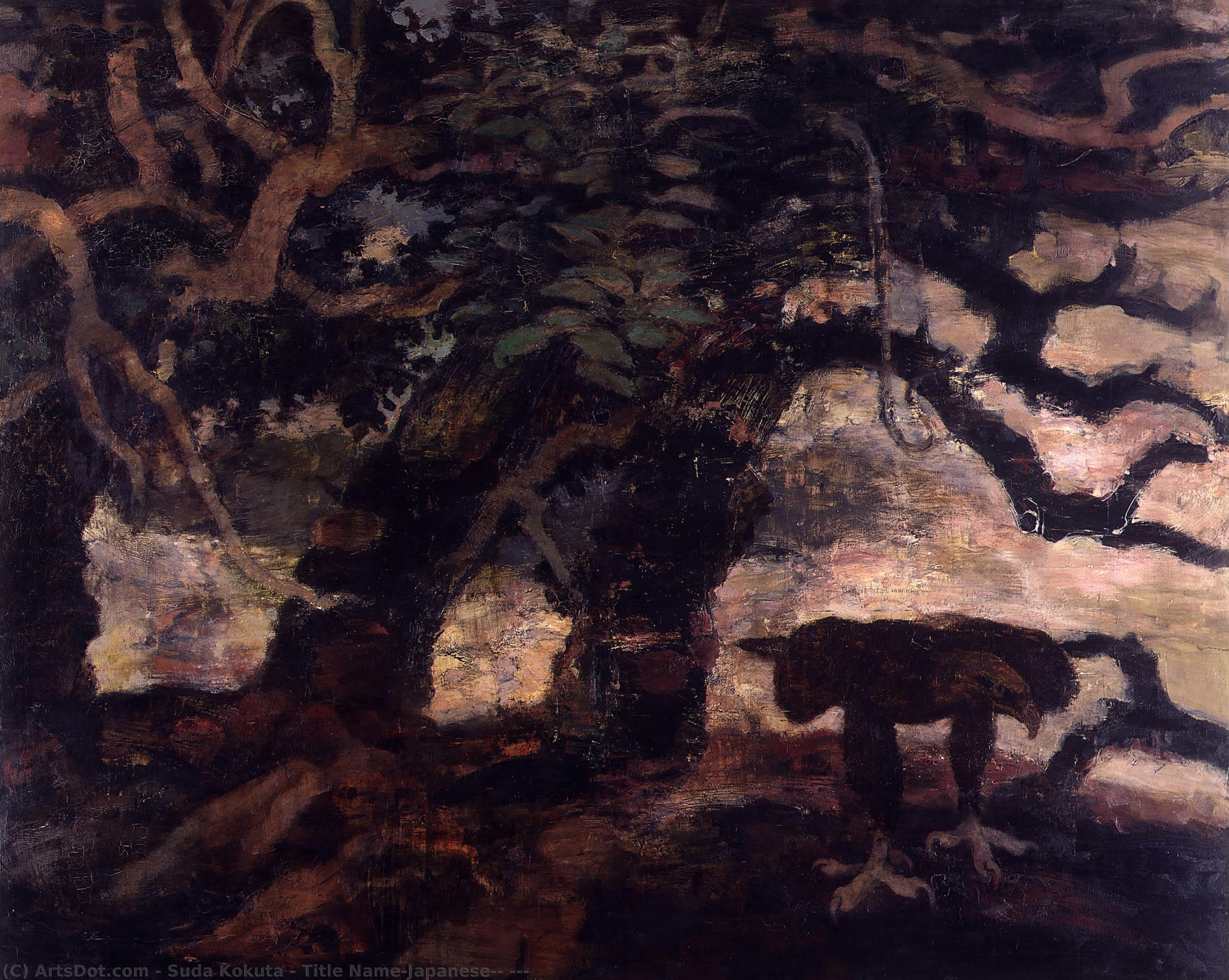
Title Name(Japanese): 歩む鷲
 162.0 x 131.0 cm
 Read More
Giclée / Art Print
Museum-quality giclée or canvas print with fast production and flexible finish options. ( Buy Hand Made Painting Buy Image)




































Pick from our preset sizes that match the artwork's original proportions.

You may enter your own dimensions to fit a specific frame or space. If your selected size does not match the original image's proportions, we will either crop the artwork or extend the image with a mirrored or solid-fill edge. A digital mockup will be sent for your approval before production begins.
Please note that the on-screen preview does not reflect the actual cropping or extension. Only the mockup will accurately show the final composition.
While custom sizes are available, we recommend selecting a dimension from the predefined list to preserve the original proportions.
Worldwide Delivery () in 2 weeks instead of standard 4/5 weeks. (25 August)

Free Worldwide Express Shipping

High-Quality Linen Canvas

Full Shipping Insurance

Customs Tax Refund Guarantee

True Color Matching Guarantee

60-Day Return Policy (Defects Only)

100% Money-Back Guarantee

Bulk Discount Offer
 Glass option is only available in size under 110 CM

Title Name(Japanese): 歩む鷲
Giclée / Art Print
Reproduction Size
-


Total Price
$ 63
Related Artworks








Artist Biography
Paul Cézanne: Bridging Worlds, Shaping Modernity
Born in Aix-en-Provence in 1839, Paul Cézanne’s life was a quiet revolution, a slow and deliberate transformation of artistic practice that would irrevocably alter the course of modern art. Initially trained as an engineer – a path his father encouraged – Cézanne’s true passion lay in capturing the essence of the natural world, not through mere representation but through a deeply felt understanding of form, color, and light. His journey wasn't one of dramatic pronouncements or rebellious gestures; rather, it was a painstaking process of observation, experimentation, and relentless self-critique, culminating in a body of work that served as a crucial bridge between the Impressionism of his predecessors and the burgeoning Cubism of the 20th century. Cézanne’s legacy rests not just on individual masterpieces but on the foundational principles he established – the emphasis on structure, the exploration of multiple viewpoints, and the elevation of color to an expressive element—that continue to resonate with artists today.
Early Influences and Artistic Development
Cézanne’s early artistic development was shaped by a confluence of influences. He initially studied at the École des Beaux-Arts in Paris, where he encountered the works of Gustave Courbet and Jean-François Millet, both artists known for their realistic depictions of rural life. However, Cézanne found himself increasingly dissatisfied with the academic conventions of the time, particularly the emphasis on idealized beauty and historical subject matter. He was deeply moved by the Impressionists – Monet, Renoir, and Pissarro—whose focus on capturing fleeting moments of light and color resonated with his own desire to depict the world as he perceived it. Yet, unlike the Impressionists, Cézanne wasn’t interested in simply recording visual sensations; he sought to distill the underlying structure of objects, to reveal their essential forms beneath the surface.
- The Influence of Japanese Prints: Cézanne's encounter with Japanese woodblock prints during his travels profoundly impacted his artistic vision. The flattened perspective, bold outlines, and simplified compositions of these prints encouraged him to break free from traditional Western conventions of linear perspective and spatial representation.
- Mont Sainte-Victoire: For decades, Cézanne returned repeatedly to the mountain Mont Sainte-Victoire, a towering landmark near Aix-en-Provence. These numerous depictions weren’t simply landscape studies; they were explorations of form, color, and light, as well as a meditation on the artist's relationship with nature.
A Revolutionary Approach to Painting
Cézanne’s artistic innovations stemmed from his rigorous approach to observation and his willingness to challenge established norms. He didn’t paint directly from life, but rather created multiple studies of a single subject, analyzing its form and structure with meticulous detail. His brushstrokes were often short, broken, and deliberately uneven, creating a sense of dynamism and movement within the composition. He employed a technique he called “alla prima,” painting directly onto the canvas without underdrawing, allowing for spontaneous expression and a vibrant interplay of color. Crucially, Cézanne rejected the illusionistic depth of traditional perspective, instead presenting multiple viewpoints simultaneously on a single plane, suggesting that reality is not fixed but rather an interpretation shaped by the observer’s position.
- Emphasis on Structure: Cézanne believed that all objects could be reduced to their geometric forms—cubes, cylinders, and cones—and he sought to represent these forms with uncompromising accuracy.
- Color as Form: He treated color not merely as a descriptive element but as an integral part of the composition, using it to define form and create spatial relationships.
Legacy and Influence
Cézanne’s impact on 20th-century art is immeasurable. His emphasis on structure and form paved the way for Cubism, while his exploration of multiple viewpoints foreshadowed Futurism and other abstract movements. Artists such as Picasso, Braque, Matisse, and Kandinsky were all deeply influenced by Cézanne's work, recognizing in it a radical departure from traditional representation. Beyond specific artistic movements, Cézanne’s insistence on seeing the world with fresh eyes—to analyze, to deconstruct, and to rebuild—remains a powerful testament to the transformative potential of art. His paintings continue to captivate viewers not only for their beauty but also for their profound insight into the nature of perception and representation.
Cézanne died in 1906, leaving behind a relatively small body of work, yet one that holds an unparalleled significance in the history of art. His quiet dedication to his craft, coupled with his revolutionary ideas, cemented his place as a pivotal figure in the transition from Impressionism to modernism—a bridge between worlds and a shaper of modernity itself.
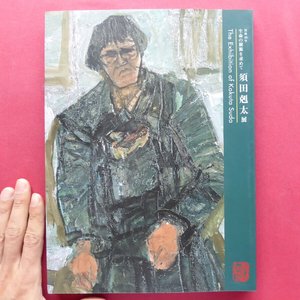
suda kokuta
1906 - 1990 , Japan
Quick Facts
- Artistic Movement Or Style: Post-Impressionism
- Artists Or Movements Influenced By This Artist:
- Cubism
- Impressionism
- Artists Who Influenced This Artist:
- Jean-Auguste–Dominique Ingres
- William-Adolphe Bouguereau
- Date Of Birth: 19 January 1839
- Date Of Death: 22 October 1906
- Full Name: Paul Cézanne
- Nationality: French
- Notable Artworks:
- The Card Players
- The Bathers
- Mont Sainte-Victoire
- Place Of Birth: Paris, France