

 Preview
 Send
Send Share
Share
 Details

 Download
 Similars
 X-Ray
X-Ray Diaporama
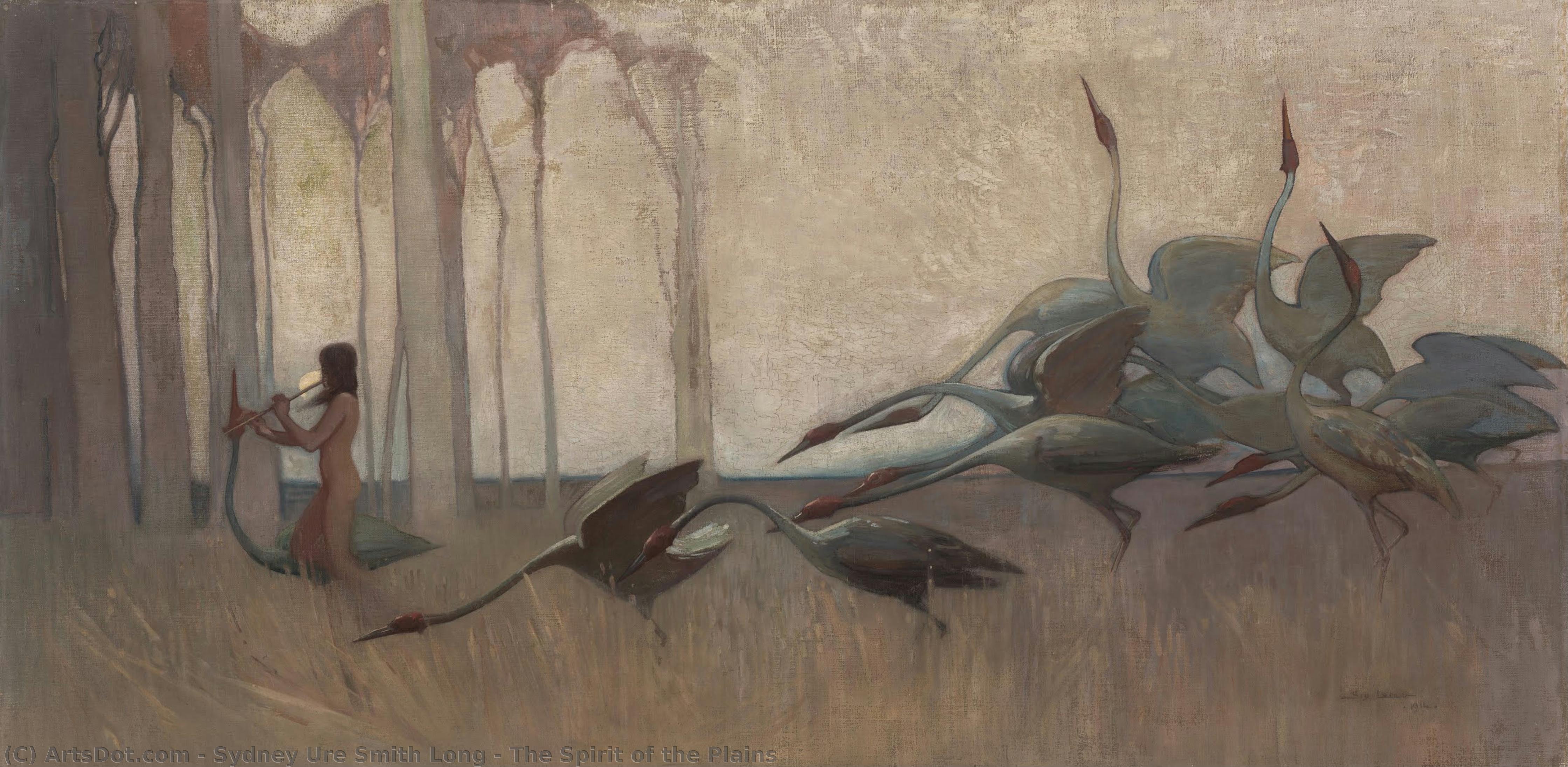
The Spirit of the Plains
 Oil On Canvas
- WallArt
- Impressionism
 1914
1914- 19th Century
 537.0 x 768.0 cm
 National Gallery of Australia
 Read More
Purchase a high-resolution, enhanced digital image, far superior to the online preview.
Each file is meticulously prepared by our in-house specialists using advanced tools and expert manual retouching. We ensure every image has exceptional clarity, precise color accuracy, and fine detail.
The final file is delivered via email within 72 hours, optimized for immediate use in professional, editorial, and print environments. This is the same quality trusted by top-tier design studios, publishers, and galleries.
Digital Image
Download a high-resolution file for personal display, printing, and creative projects. ( Buy Print Buy Hand Made Painting)
Included in Every Digital Image Order
Expert Digital Delivery, Guaranteed
When you choose ArtsDot.com, you're not just getting an image - you're receiving a professionally enhanced digital artwork, crafted with precision and backed by a satisfaction guarantee. Here's everything that comes with your order, automatically:

Fast Email Delivery
Your high-resolution digital image file will be emailed to you within 72 hours of ordering - ready for immediate use.

AI-Enhanced Digital File
Your artwork is professionally optimized using advanced AI tools and manual editing, ensuring maximum detail, clarity, and color accuracy.

Free Lifetime Re-Delivery
Accidentally deleted or lost your file? No worries - we'll resend it to you anytime, free of charge.

No Import Fees - Ever
Enjoy your artwork instantly with zero customs, duties, or delivery fees - digital downloads are always tax-free.

Color Accuracy Guarantee
We ensure your digital image reflects the original colors as closely as possible using professional tools and color management.

60-Day Satisfaction Guarantee
If you're not satisfied with your digital image, we'll revise it or refund 100% within 60 days - no questions asked.

100% Money-Back Guarantee
Not satisfied? Get a full refund within 60 days of receiving your digital file - no questions asked.

Bulk Order Discounts
Buy 3 images, save 10% - Buy 5, save 15% - Buy 10+, save 20%. Great for creative projects, galleries, and agencies.
A Nocturnal Symphony of Myth and Nature
In the quietude of a rising moon, The Spirit of the Plains unfolds as a breathtaking vision of Australian mythology, where the boundaries between the human form and the natural world dissolve into a rhythmic dance. The painting captures a moment of profound enchantment: a naked figure, silhouetted against the soft lunar glow, plays a flute-like instrument, guiding a synchronized flock of birds through the night sky. This ethereal melody seems to direct the very movement of the brolgas as they glide toward a cluster of sinuous gum trees. There is an undeniable sense of ancient magic at play here, an aura of mystery that envelops the viewer in a dreamscape where every brushstroke contributes to a larger, lyrical narrative of harmony and primordial connection.
The composition is a masterclass in atmospheric depth and tonal balance. Through a delicate application of oil on canvas, the artist employs a palette that celebrates the subtle transitions of twilight. The silhouette of the central figure provides a striking focal point, anchoring the movement of the birds and the twisting forms of the eucalyptus trees. While the foreground foliage possesses a soft, impressionistic quality, the background is stripped of unnecessary clutter, allowing the viewer to focus on the essential rhythm of the scene. This simplified approach—a characteristic of this later variation of his earlier work—enhances the painting's emotional resonance, stripping away the mundane to reveal the spiritual essence of the Australian landscape.
The Legacy of an Australian Visionary
To understand the depth of The Spirit of the Plains, one must look to the artistic journey of Sydney Ure Smith Long. Painted during his time in London, this work represents a sophisticated evolution of themes he had explored decades earlier. While Long gained recognition in Britain as a skilled printmaker capable of capturing the intricate details of flora and fauna, his heart remained deeply rooted in the Australian idyll. This painting serves as a bridge between his formal European training and his profound devotion to creating a specifically Australian mythology—one that utilizes the landscape not just as a setting, but as a living, breathing character imbued with spirit and song.
For the discerning collector or interior designer, this piece offers more than mere decoration; it provides a window into a lost era of romanticism. The painting’s ability to evoke both tranquility and a sense of the sublime makes it an extraordinary centerpiece for any curated space. Whether placed in a contemporary gallery setting or a classic study, its soft textures and evocative subject matter invite contemplation and conversation. A high-quality reproduction of this masterpiece allows the timeless beauty of Long's vision to inhabit modern homes, bringing with it the quiet power of the Australian plains and the enduring magic of the nocturnal wild.
Related Artworks

Artist Biography
James McNeill Whistler: A Pioneer of Harmony and Light
Born in Lowell, Massachusetts, in 1834, James McNeill Whistler’s journey to becoming a pivotal figure in late 19th-century art was anything but conventional. His early life, shaped by the contrasting influences of his pragmatic father, a merchant with deep roots in England, and his artistic mother, instilled within him a unique perspective – one that would ultimately redefine how artists approached their craft. Whistler’s childhood, marked by a sense of displacement and a yearning for belonging, profoundly impacted his aesthetic sensibilities, informing his later pursuit of “art for art’s sake,” a philosophy emphasizing the intrinsic beauty of form and color over narrative or moral instruction.
His formal artistic training began in California, where he studied at the California School of Design. Later, he sought further refinement in London and Paris, absorbing the techniques and ideas of Impressionism and Post-Impressionism. However, Whistler’s approach diverged significantly from these movements. He rejected the fleeting effects of light and atmosphere favored by many contemporaries, instead focusing on a more deliberate arrangement of tonal values – what he termed “harmonies” – to create visually compelling compositions. This pursuit led him to develop his signature style, often referred to as Tonalism, characterized by its subtle gradations of gray and black, punctuated by bursts of color.
Whistler’s most celebrated work, *Arrangement in Grey and Black No. 1* (commonly known as *Whistler's Mother*), created in 1871, encapsulates this aesthetic philosophy. Initially dismissed as a mere portrait, the painting has since become an enduring icon of American art, lauded for its quiet dignity and masterful use of light and shadow. Beyond this iconic image, Whistler produced a remarkable body of work encompassing nocturnes – atmospheric paintings depicting scenes at night – and prints that demonstrated his meticulous attention to detail and his innovative approach to printmaking. His fascination with music also profoundly influenced his artistic practice; he frequently described his paintings as “compositions” akin to musical scores, emphasizing the importance of balance, harmony, and rhythm.
The Rise of a Distinctive Style
Whistler’s artistic development was inextricably linked to the broader cultural context of late 19th-century Europe. The rise of industrialization and urbanization led to a growing interest in aesthetics and a desire to escape the constraints of academic art. Whistler, along with other avant-garde artists, embraced a new aesthetic sensibility that prioritized formal qualities over representational accuracy. He rejected the prevailing emphasis on narrative and moral themes, advocating for an art that was self-contained and independent of external concerns.
His association with figures like Oscar Wilde and Aubrey Beardsley further solidified his position at the forefront of artistic innovation. Whistler’s aesthetic theories were widely discussed in intellectual circles, contributing to a broader debate about the nature of art and its role in society. He actively sought recognition for his work, often engaging in public disputes with critics who failed to appreciate his vision. These controversies, while sometimes contentious, ultimately served to raise awareness of his artistic achievements and to challenge conventional notions of beauty.
Influence and Legacy
James McNeill Whistler’s influence on the art world was profound and far-reaching. He challenged traditional notions of painting, advocating for a more subjective and expressive approach. His emphasis on tonal harmony and formal composition paved the way for later movements such as Abstract Expressionism, demonstrating his enduring relevance to contemporary artists.
Beyond his artistic achievements, Whistler’s commitment to “art for art’s sake” continues to resonate today. His belief that art should be valued for its own intrinsic beauty, rather than for its ability to convey a specific message or moral lesson, remains a powerful and enduring ideal. *Whistler's Mother*, in particular, has become a symbol of artistic independence and the power of visual expression.
A Life Dedicated to Art
James McNeill Whistler spent much of his adult life in England, where he established himself as a respected artist and art critic. He was elected honorary member of the Royal Academy of Fine Arts in Munich in 1884 and became an officer of the Légion d’honneur in France in 1898. In 1907, he founded the International Society of Sculptors, Painters and Gravers, demonstrating his commitment to fostering artistic collaboration and innovation.
Whistler died in London in 1903 at the age of 69. His legacy as a pioneering artist and a champion of aesthetic independence continues to inspire artists and art lovers around the world. His work remains a testament to the power of visual expression and the enduring pursuit of beauty.
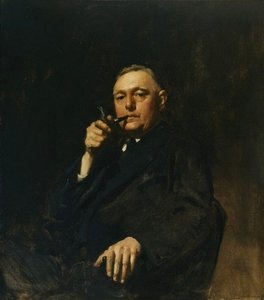
sydney ure smith long
1871 - 1955 , Australia
Quick Facts
- Artistic Movement Or Style: Tonalism, Impressionism
- Artists Or Movements Influenced By This Artist:
- Tonalism
- Impressionism
- Artists Who Influenced This Artist:
- Courbet
- Monet
- Manet
- Date Of Birth: July 10, 1834
- Date Of Death: July 17, 1903
- Full Name: James McNeill Whistler
- Nationality: American
- Notable Artworks:
- Arrangement in Grey and Black No. 1
- Whistler's Mother
- Nocturne in Black and Gold
- Place Of Birth: Lowell, Massachusetts

