

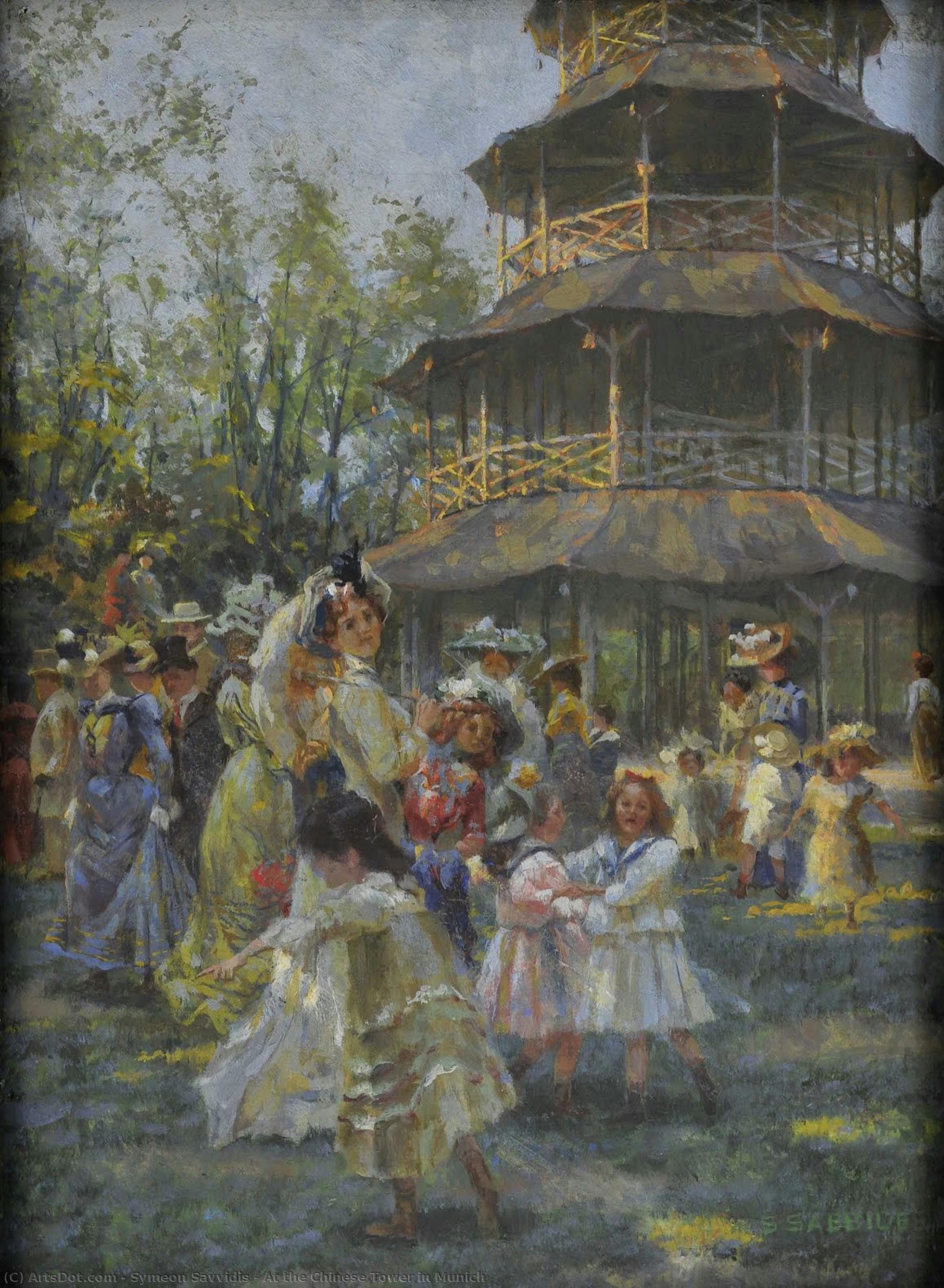
 Preview
 Send
Send Share
Share
 Details

 Download
 Similars
 X-Ray
X-Ray Diaporama
At the Chinese Tower in Munich
 1915
1915 33.0 x 24.0 cm
 National Gallery - Alexandros Soutsos Museum
 Read More
Purchase a high-resolution, enhanced digital image, far superior to the online preview.
Each file is meticulously prepared by our in-house specialists using advanced tools and expert manual retouching. We ensure every image has exceptional clarity, precise color accuracy, and fine detail.
The final file is delivered via email within 72 hours, optimized for immediate use in professional, editorial, and print environments. This is the same quality trusted by top-tier design studios, publishers, and galleries.
Digital Image
Download a high-resolution file for personal display, printing, and creative projects. ( Buy Print Buy Hand Made Painting)
Included in Every Digital Image Order
Expert Digital Delivery, Guaranteed
When you choose ArtsDot.com, you're not just getting an image - you're receiving a professionally enhanced digital artwork, crafted with precision and backed by a satisfaction guarantee. Here's everything that comes with your order, automatically:

Fast Email Delivery
Your high-resolution digital image file will be emailed to you within 72 hours of ordering - ready for immediate use.

AI-Enhanced Digital File
Your artwork is professionally optimized using advanced AI tools and manual editing, ensuring maximum detail, clarity, and color accuracy.

Free Lifetime Re-Delivery
Accidentally deleted or lost your file? No worries - we'll resend it to you anytime, free of charge.

No Import Fees - Ever
Enjoy your artwork instantly with zero customs, duties, or delivery fees - digital downloads are always tax-free.

Color Accuracy Guarantee
We ensure your digital image reflects the original colors as closely as possible using professional tools and color management.

60-Day Satisfaction Guarantee
If you're not satisfied with your digital image, we'll revise it or refund 100% within 60 days - no questions asked.

100% Money-Back Guarantee
Not satisfied? Get a full refund within 60 days of receiving your digital file - no questions asked.

Bulk Order Discounts
Buy 3 images, save 10% - Buy 5, save 15% - Buy 10+, save 20%. Great for creative projects, galleries, and agencies.
Related Artworks





Artist Biography
Georges Seurat: Bridging Science and Beauty
Georges Seurat, a name synonymous with the dawn of modern art, was more than just a painter; he was an explorer charting new territories in color, perception, and artistic expression. Born on December 2nd, 1859, in Paris, his life was tragically cut short at the age of 31, yet his legacy as the founder of Neo-Impressionism – a movement that revolutionized how artists approached light, color, and composition – remains profoundly influential. His journey wasn’t one of spontaneous inspiration but rather a deliberate synthesis of scientific theory, meticulous observation, and an almost obsessive pursuit of formal order. Seurat's early life was marked by a somewhat detached upbringing. Raised in a comfortable home with a financially secure father who had made his fortune speculating in property, he received a relatively conventional education. However, from a young age, he demonstrated a keen interest in art, initially studying drawing under Justin Lequien, a sculptor associated with the École des Beaux-Arts. This formal training provided him with foundational skills but it was his independent study and intellectual curiosity that truly shaped his artistic vision. He devoured books on color theory – notably those of Charles Blanc and O.N. Rood – meticulously analyzing how light interacts with surfaces and how colors influence each other. His fascination extended to the work of earlier masters like Delacroix, Holbein, and Ingres, absorbing their techniques while simultaneously seeking a new path for his own artistic expression. A pivotal moment in Seurat’s intellectual development came with the discovery of Humbert de Superville's *Essai sur les signes inconditionnels de l’art* (1827), an essay arguing that art should be based on scientific principles and objective observation. This book profoundly influenced his approach to painting, leading him to believe that art could be understood through a system of quantifiable relationships rather than purely emotional expression. He began experimenting with conté crayon – a wax-based drawing medium – which allowed him to work in monochrome studies with remarkable precision and detail, laying the groundwork for his later pointillist technique. This period of intense study and experimentation culminated in his decision to abandon traditional Impressionism’s focus on fleeting impressions and instead pursue a more structured and analytical approach to painting.The Birth of Pointillism
Seurat's most significant contribution to the art world was undoubtedly his development of pointillism, also known as divisionism. This technique involved applying tiny dots or strokes of pure color – meticulously placed side by side – to a canvas, rather than mixing colors on a palette. He theorized that the eye would optically blend these individual dots, creating a vibrant and luminous effect far more intense than could be achieved through traditional blending. This wasn’t simply a stylistic choice; it was rooted in scientific principles of color perception, particularly the work of Michel Eugène Chevreul, who demonstrated how complementary colors create visual excitement when placed adjacent to each other. Seurat's early works, such as *Bathers at Asnières* (1884), demonstrate this nascent technique. While still retaining elements of Impressionistic subject matter – a bustling Parisian beach scene – the painting already showcases his deliberate application of small dots of color, creating an almost shimmering surface. His masterpiece, *A Sunday Afternoon on the Island of La Grande Jatte—1884*, solidified his reputation and cemented his place as the leader of Neo-Impressionism. This monumental work, depicting Parisians enjoying a leisurely afternoon in a park, is a testament to Seurat’s meticulous planning and execution. Each individual dot was carefully chosen and placed, creating an astonishingly complex and vibrant image that captures both the energy of the scene and the subtle nuances of light and color.Influences and Artistic Evolution
Despite his pioneering techniques, Seurat's artistic development wasn’t entirely isolated. He drew inspiration from a diverse range of sources, including Japanese prints, which influenced his compositional arrangements and use of flat planes of color; the works of Gustave Courbet, whose emphasis on realism and social commentary resonated with Seurat’s desire to depict modern life; and even caricatures and popular posters, which he incorporated into his later paintings, injecting a sense of dynamism and stylistic flair. As he matured as an artist, his style shifted from the cool, detached precision of *A Sunday Afternoon on the Island of La Grande Jatte* towards a more expressive and stylized approach, reflecting a growing interest in decorative patterns and formal design.Legacy and Historical Significance
Georges Seurat’s tragically short life – he succumbed to diphtheria at the age of 31 – prevented him from fully realizing his artistic vision. However, his innovations had a profound and lasting impact on the course of modern art. Neo-Impressionism, spearheaded by Seurat and Paul Signac, challenged the conventions of Impressionism and paved the way for subsequent movements such as Fauvism and Cubism. His meticulous approach to color theory and composition influenced generations of artists, while *A Sunday Afternoon on the Island of La Grande Jatte* remains one of the most iconic images in art history – a testament to Seurat’s genius and his ability to bridge the gap between science and beauty. His legacy continues to inspire artists today, reminding us that true innovation often arises from a rigorous pursuit of knowledge and a willingness to challenge established norms.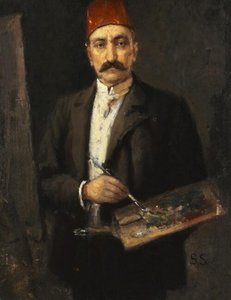
symeon savvidis
1859 - 1927 , Turkey
Quick Facts
- Artistic Movement Or Style: Neo-Impressionism, Pointillism
- Artists Or Movements Influenced By This Artist:
- Van Gogh
- Futurists
- Artists Who Influenced This Artist:
- Delacroix
- Holbein
- Date Of Birth: December 2, 1859
- Date Of Death: March 29, 1891
- Full Name: Georges Seurat
- Nationality: French
- Notable Artworks:
- A Sunday on La Grande Jatte
- Bathers at Asnières
- Place Of Birth: Paris, France

