

 Preview
 Send
Send Share
Share
 Details

 Download
 Similars
 X-Ray
X-Ray Diaporama
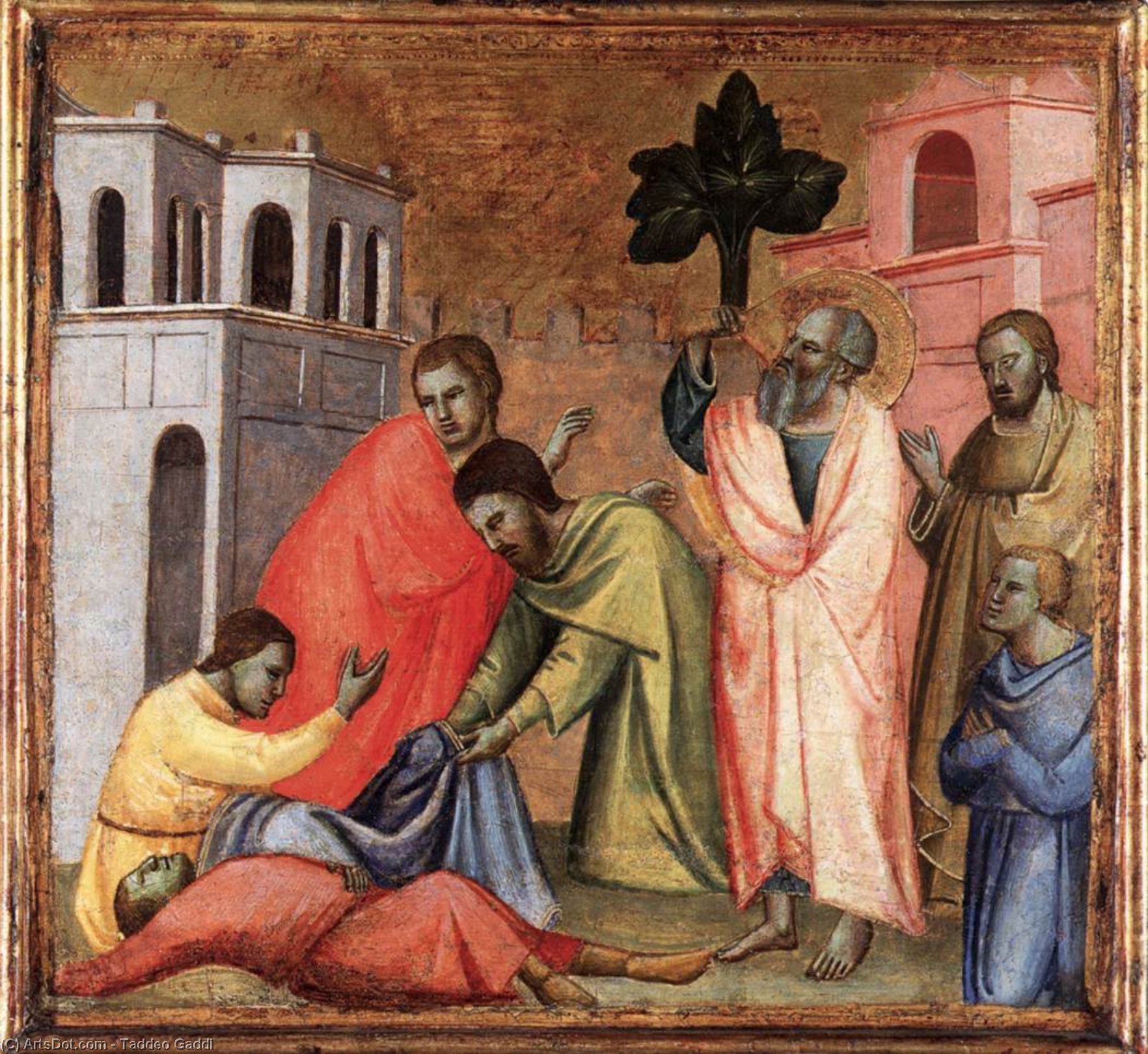
St John the Evangelist Drinking from the Poisoned Cup
 Tempera On Panel
- Gothic
 1348
1348- Late Medieval
 33.0 x 36.0 cm
 Collezione Vittorio Cini
 Read More
Purchase a high-resolution, enhanced digital image, far superior to the online preview.
Each file is meticulously prepared by our in-house specialists using advanced tools and expert manual retouching. We ensure every image has exceptional clarity, precise color accuracy, and fine detail.
The final file is delivered via email within 72 hours, optimized for immediate use in professional, editorial, and print environments. This is the same quality trusted by top-tier design studios, publishers, and galleries.
Digital Image
Download a high-resolution file for personal display, printing, and creative projects. ( Buy Print Buy Hand Made Painting)
Included in Every Digital Image Order
Expert Digital Delivery, Guaranteed
When you choose ArtsDot.com, you're not just getting an image - you're receiving a professionally enhanced digital artwork, crafted with precision and backed by a satisfaction guarantee. Here's everything that comes with your order, automatically:

Fast Email Delivery
Your high-resolution digital image file will be emailed to you within 72 hours of ordering - ready for immediate use.

AI-Enhanced Digital File
Your artwork is professionally optimized using advanced AI tools and manual editing, ensuring maximum detail, clarity, and color accuracy.

Free Lifetime Re-Delivery
Accidentally deleted or lost your file? No worries - we'll resend it to you anytime, free of charge.

No Import Fees - Ever
Enjoy your artwork instantly with zero customs, duties, or delivery fees - digital downloads are always tax-free.

Color Accuracy Guarantee
We ensure your digital image reflects the original colors as closely as possible using professional tools and color management.

60-Day Satisfaction Guarantee
If you're not satisfied with your digital image, we'll revise it or refund 100% within 60 days - no questions asked.

100% Money-Back Guarantee
Not satisfied? Get a full refund within 60 days of receiving your digital file - no questions asked.

Bulk Order Discounts
Buy 3 images, save 10% - Buy 5, save 15% - Buy 10+, save 20%. Great for creative projects, galleries, and agencies.
Collectible Description
A Divine Trial: The Resilience of St. John
In the quiet intensity of this 14th-century masterpiece, we find ourselves transported to a moment of profound spiritual testing. St. John the Evangelist Drinking from the Poisoned Cup is not merely a depiction of a biblical event; it is a visceral encounter with faith under duress. The scene captures the precise, breathless second where the sacred meets the profane. As St. and the figures surrounding him converge, the viewer is drawn into a narrative of survival and divine intervention. The composition orchestrates a complex dance of human emotion—from the suspicious gazes of onlookers to the solemnity of the act itself—creating a theatrical tension that has captivated observers for centuries.
The painting serves as a window into the late Gothic period, where the rigid hierarchies of Byzantine tradition began to soften into something more human and psychologically complex. Through the brushwork of Taddeo Gaddi, we witness a transition toward greater naturalism. The figures are not mere icons; they possess weight, presence, and a palpable sense of interaction. For the discerning collector or interior designer, this piece offers more than just historical value; it provides a focal point of profound narrative depth, making it an ideal centerpiece for spaces that demand a sense of history, gravity, and intellectual stimulation.
Mastery of Light and Narrative Composition
Technically, the work exemplifies the meticulous craftsmanship characteristic of the Florentine school. The artist employs a sophisticated approach to light and shadow to define the contours of the figures and the textures of their garments. There is a rhythmic quality to the arrangement of the crowd, where the placement of hands—some resting on hips in casual observation, others poised with the cup—guides the eye through the unfolding drama. This careful orchestration ensures that the viewer's gaze does not wander aimlessly but is instead led directly to the heart of the miracle: the intersection of the poisoned vessel and the saint's lips.
The color palette, while rooted in the earthier tones of the 1348 era, possesses a luminous quality that breathes life into the scene. The interplay between the muted backgrounds and the more vibrant highlights on the central figures creates a sense of depth that makes the small-scale 33 x 36 cm canvas feel expansive. This mastery of scale and detail allows for an intimate viewing experience, where every furrowed brow and subtle gesture tells a story of endurance. For those seeking to adorn a curated collection, this reproduction offers the rare opportunity to possess a fragment of the profound spiritual atmosphere that defined the dawn of the Renaissance.
Symbolism and the Eternal Echo of Faith
Beyond its historical significance, the painting is rich with symbolic resonance. The poisoned cup serves as a potent metaphor for the trials and tribulations faced by all believers, representing the triumph of spirit over physical harm. The surrounding figures act as a chorus, reflecting the various human responses to the miraculous—skepticism, awe, and quiet contemplation. This layering of meaning ensures that the artwork remains relevant across different eras, speaking to the universal human experience of facing adversity with courage.
Integrating such a piece into a modern or classical interior allows for a dialogue between the past and the present. It invites conversation and reflection, acting as a silent storyteller within a room. Whether placed in a study filled with leather-bound books or a contemporary gallery space, St. John the Evangelist Drinking from the Poisoned Cup commands respect through its sheer emotional honesty and its enduring legacy of artistic excellence.
Related Artworks


![Life Of St John The Evangelist - [03] - Ascension Of The Evangelist — Giotto Di Bondone, Proto-renaissance Painting](/media/artworks/images-thumb/ab/15/ab151a8ad105b1ef78444cd367849cb4.jpg)
Artist Biography
The Florentine Visionary: The Life and Legacy of Taddeo Gaddi
In the vibrant, burgeoning atmosphere of 14th-century Florence, a period defined by the transition from the medieval to the early Renaissance, Taddeo Gaddi emerged as a master of light, narrative, and architectural grandeur. As one of the most distinguished pupils of the legendary Giotto di Bondone, Gaddi did not merely inherit a style; he expanded the visual vocabulary of his era. His work serves as a vital bridge, carrying the monumental weight of Giottesque naturalism into a new realm of decorative complexity and luminous storytelling. To study Gaddi is to witness the evolution of Florentine painting, where the rigid hierarchies of the Byzantine tradition began to soften under the influence of human emotion and spatial depth.
The foundations of Gaddi's artistry were deeply rooted in the workshop of Giotto, where he learned the profound importance of chiaroscuro and the ability to render figures with a sense of physical presence. However, Gaddi possessed an innate inclination toward a more ornamental and detailed approach than his master. While Giotto focused on the raw, sculptural essence of humanity, Gaddi introduced a delicate elegance and a sophisticated use of light that could transform a flat surface into a window of divine radiance. This unique synthesis allowed him to excel in large-scale fresco cycles, where he demonstrated an unparalleled ability to organize complex theological narratives within architectural settings that felt both sacred and tangible.
Mastery of Narrative and the Sacred Light
Gaddi’s most enduring contributions to the history of art are found within his magnificent fresco cycles, most notably in the Baroncelli Chapel in Santa Croce, Florence. In these works, he achieved a breathtaking level of narrative continuity, guiding the viewer through the lives of saints with a rhythmic grace. His technique involved a meticulous layering of color and light, often utilizing gold accents and rich pigments to evoke the celestial atmosphere of the divine. One can observe his mastery in pieces such as the Scene from the Life of St. Francis, where the artist captures moments of profound spiritual intimacy. Through these depictions, Gaddi does not just tell a story; he creates an immersive environment where birds, landscapes, and human figures coexist in a state of holy equilibrium.
Beyond his religious devotion, Gaddi’s work is characterized by several defining artistic elements:
- Architectural Integration: He possessed a rare talent for painting architectural frameworks that seemed to extend the actual physical space of the chapel or church.
- Luminous Color Palettes: His use of vibrant blues, deep reds, and shimmering golds helped define the aesthetic splendor of the Florentine school.
- Narrative Detail: Unlike the more austere compositions of his predecessors, Gaddi enriched his scenes with intricate details—from the texture of a monk's habit to the delicate movement of nature.
- Evolution of Light: He pushed the boundaries of how light interacts with surfaces, creating a sense of atmosphere that foreshadowed the atmospheric perspective of later Renaissance masters.
Historical Significance and Artistic Heritage
The historical importance of Taddeo Gaddi lies in his role as a custodian and an innovator. He preserved the monumental dignity of the Giottesque tradition while simultaneously infusing it with the decorative richness that would characterize the late Gothic period. His influence stretched far beyond the walls of Florentine chapels, impacting the way subsequent generations of painters approached the concept of space and light. By blending the structural solidity of his training with a new, more lyrical sensibility, Gaddi helped prepare the artistic landscape for the full flowering of the Renaissance.
As we look back upon his oeuvre, we see an artist who was deeply attuned to the spiritual and civic pulse of his time. His ability to render the sacred through the lens of a growing naturalism ensured that his works remained not only objects of veneration but also masterpieces of technical achievement. Taddeo Gaddi remains a cornerstone of Italian art history, a painter whose brushstrokes captured the very moment when the medieval world began to look toward the light of a new, human-centered era.

taddeo gaddi
1290 - 1366 , Italy
Quick Facts
- Artistic Movement Or Style: Early Renaissance
- Artists Or Movements Influenced By This Artist:
- Giotto
- Proto-Renaissance
- Artists Who Influenced This Artist:
- Simone Martini
- Italo-Byzantine art
- Date Of Birth: c. 1290
- Date Of Death: 1348
- Full Name: Ambrogio Lorenzetti
- Nationality: Italian
- Notable Artworks:
- Allegory of Good Gov'
- Allegory of Bad Gov'
- Place Of Birth: Siena, Italy

