 Preview
 Send
Send Share
Share
 Details

 Download
 Similars
 X-Ray
X-Ray Diaporama
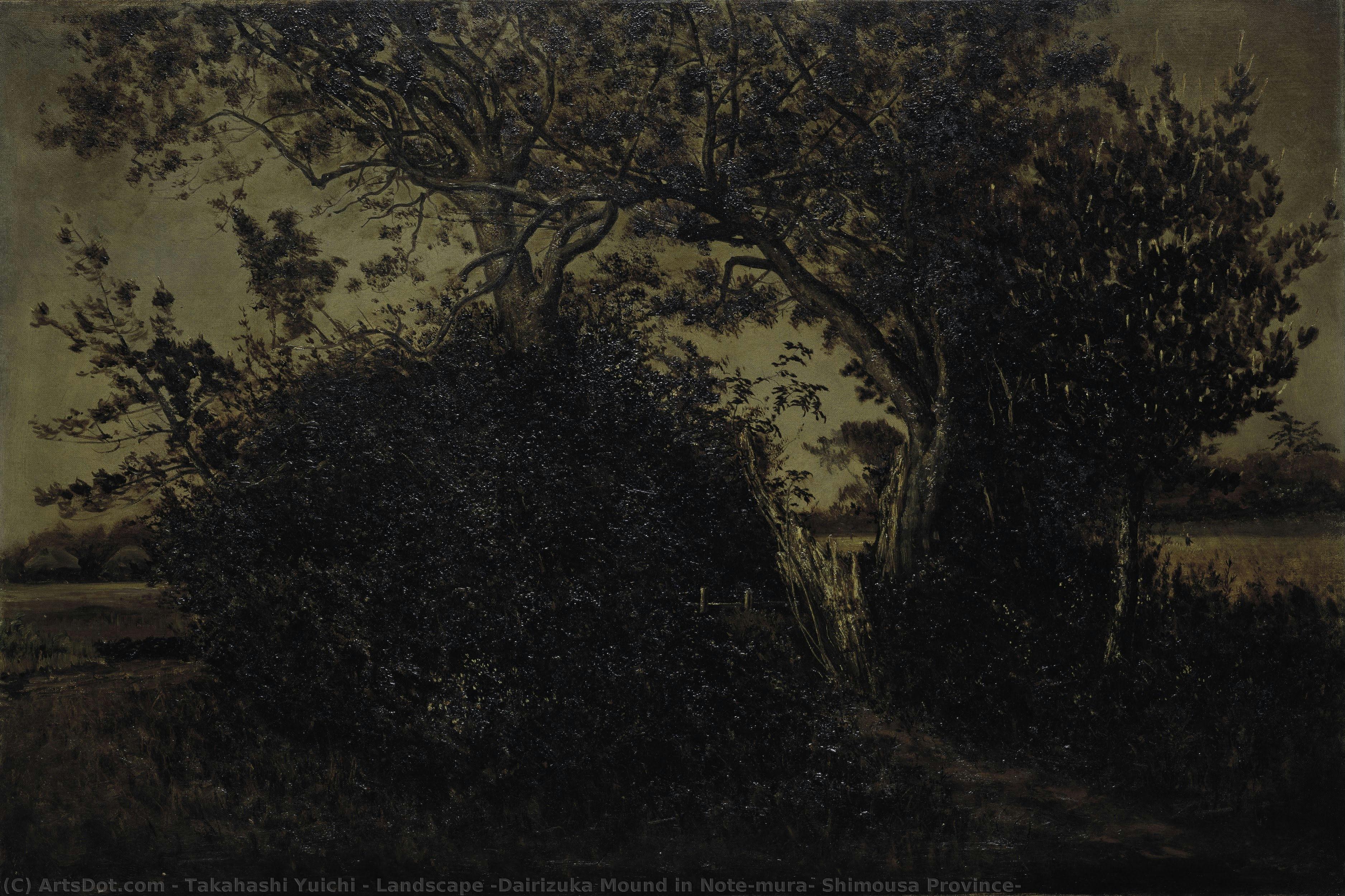
Landscape (Dairizuka Mound in Note-mura, Shimousa Province)

 Read More
Hand Made Oil Reproduction
Hand-painted oil on canvas in your size and frame, made to order by our artists. ( Buy Print Buy Image)




































Pick from our preset sizes that match the artwork's original proportions.

You may enter your own dimensions to fit a specific frame or space. If your selected size does not match the original image's proportions, we will either crop the artwork or extend the painting with additional hand-painted elements. A digital mockup will be sent for your approval before production begins.
Please note that the on-screen preview does not reflect the actual cropping or extension. Only the mockup will accurately show the final composition.
While custom sizes are available, we recommend selecting a dimension from the predefined list to preserve the original proportions.
After order, ArtsDot.com team will email client for instructions and provide a mockup preview
Worldwide Delivery () in 3/4 weeks instead of standard 5 weeks. (16 August). No compromise on quality.

Free Worldwide Express Shipping

High-Quality Linen Canvas

Full Shipping Insurance

Customs Tax Refund Guarantee

True Color Matching Guarantee

60-Day Return Policy (Defects Only)

100% Money-Back Guarantee

Bulk Discount Offer
 Glass option is only available in size under 110 CM

Landscape (Dairizuka Mound in Note-mura, Shimousa Province)
Reproduction Medium
Reproduction Size
-


Total Price
$ 263
Artwork Description
Related Artworks




Artist Biography
The Pioneer of Light and Shadow: The Life of Takahashi Yuichi
In the twilight of the Edo period and the dawn of a modernizing Japan, one man stood at the precipice of a profound cultural metamorphosis. Takahashi Yuichi (1828–1894) was not merely a painter; he was a visionary who dared to bridge the ancient traditions of the samurai class with the burgeoning realism of Western oil painting. Born into a prestigious lineage as a descendant of the Hotta clan, Yuichi’s early life was steeped in the disciplined aesthetics of the Kanō school. This foundation in meticulous brushwork and symbolic representation provided him with a technical rigor that would later serve as the bedrock for his revolutionary experiments with light, texture, and volume.
As Japan opened its borders during the Bakumatsu period, Yuichi became captivated by the arrival of European lithographs and Western artistic perspectives. This curiosity was not a rejection of his heritage but an expansion of it. While many of his contemporaries remained tethered to the flat, decorative elegance of traditional Japanese styles, Yuichi sought to capture the tangible essence of the physical world. His journey led him to the Bansho Shirabesho, where he studied under influential figures like Kawakami Togai and even received direct instruction from Westerners such as Charles Wirgament. This period of intense cross-cultural study allowed him to master the nuances of oil pigments, enabling him to translate the subtle gradations of shadow and the visceral textures of nature onto a canvas.
A Masterpiece of Realism: The Legacy of Salmon and Beauty
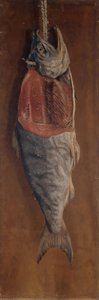
The true genius of Takahashi Yuichi lies in his ability to synthesize disparate worlds into a singular, cohesive language. His most iconic works serve as profound testaments to this synthesis. Consider his seminal still life, "Salmon" (Sake). In this breathtaking achievement, the artist moves beyond mere representation to capture the very soul of the subject. Through the masterful application of oil paint, he renders the glistening scales, the moist flesh, and the heavy, organic weight of the fish with a startling realism that was unprecedented in Japan. It is a work that demands the viewer acknowledge the physical presence of the object, marking a definitive departure from the more stylized depictions of the past.
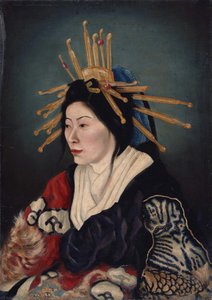
In his portraiture, such as the hauntingly beautiful "Beauty (Courtesan)", Yuichi demonstrates an equally profound command over human form and atmosphere. Here, the influence of his traditional training meets the Western pursuit of anatomical accuracy and chiaroscuro. He does not merely paint a figure; he creates a presence that breathes within the frame, utilizing light to sculpt the delicate features and rich fabrics of his subject. His work during this era was characterized by a sense of yōga—a new way of seeing that embraced the depth and dimensionality of the Western tradition while retaining a uniquely Japanese sensibility toward composition and grace.
Architect of a New Artistic Era
Beyond the canvas, Takahashi Yuichi’s historical significance is found in his tireless advocacy for the institutionalization of modern art. He understood that for Western-style painting to flourish in Japan, it required more than individual talent; it required infrastructure. To this end, he took on roles as an educator and a promoter, opening his own painting school, Tenkairo, and publishing influential art magazines like Gayu Sekichin. His ambitions were grand, encompassing the dream of establishing dedicated art museums to foster public appreciation for these new techniques.
His achievements reached the global stage when he presented works such as Fugaku Taizu at the World Expo in Vienna and showcased his oil paintings at the Paris World Expo. These international engagements were crucial in asserting that Japanese artists could participate in the global artistic dialogue on equal footing. Even as he was commissioned to paint the portrait of the Meiji Emperor, Yuichi remained a pioneer who refused to be confined by borders—be they geographical or stylistic. His life remains a powerful narrative of innovation, proving that true progress is found when we honor our roots while fearlessly embracing the unknown.
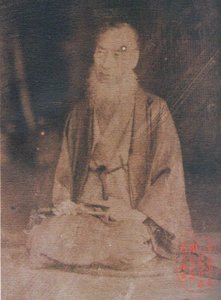
takahashi yuichi
1828 - 1894 , Japan
Quick Facts
- Artistic Movement Or Style: Yōga painting
- Artists Or Movements Influenced By This Artist: ['Shiba Kōkan']
- Artists Who Influenced This Artist: ['Kanō School']
- Date Of Birth: Tokyo, Japan (1828)
- Date Of Death: 1894
- Full Name: Takahashi Yuichi
- Nationality: Japanese
- Notable Artworks:
- Beauty (Courtesan)
- Salmon
- Place Of Birth: Tokyo