 Preview
 Send
Send Share
Share
 Details

 Download
 Similars
 X-Ray
X-Ray Diaporama
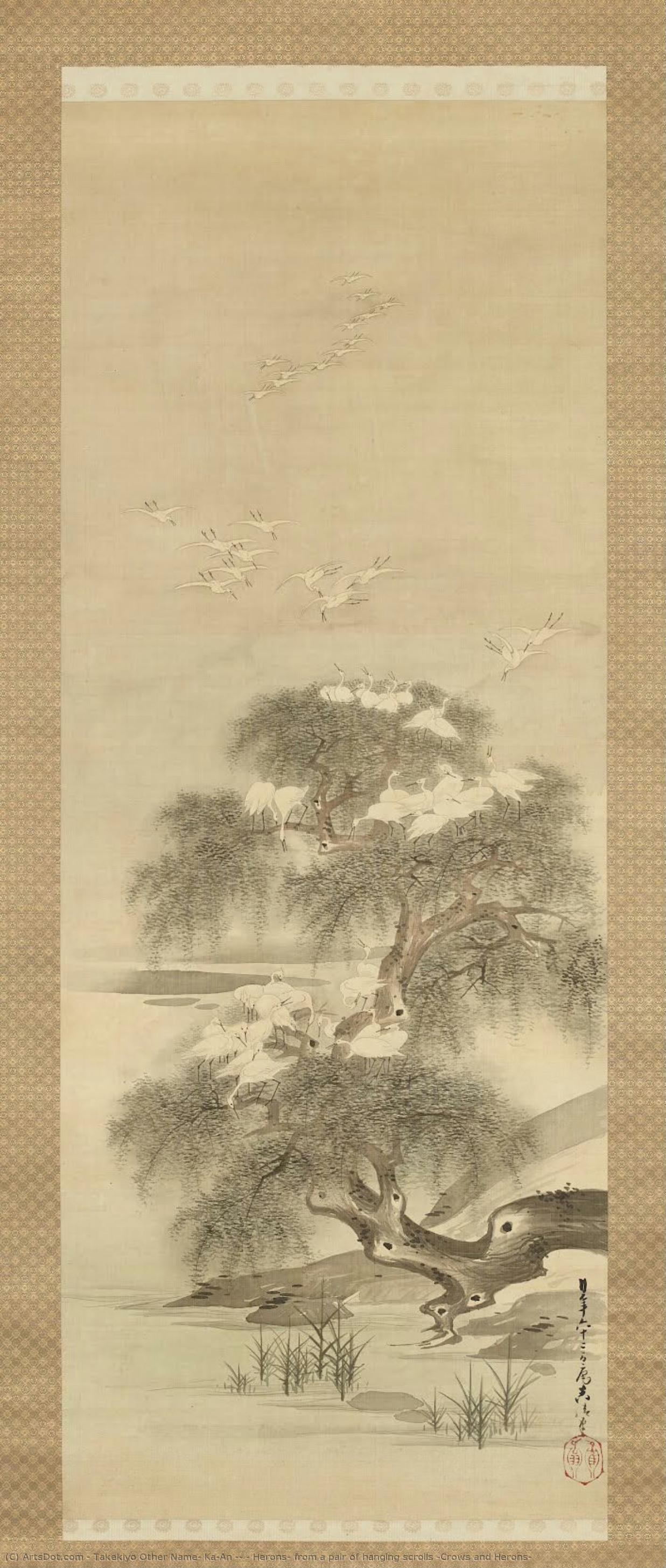
Herons, from a pair of hanging scrolls ‘Crows and Herons’
 1837
1837 129.0 x 49.0 cm
 Read More
Giclée / Art Print
Museum-quality giclée or canvas print with fast production and flexible finish options. ( Buy Hand Made Painting Buy Image)




































Pick from our preset sizes that match the artwork's original proportions.

You may enter your own dimensions to fit a specific frame or space. If your selected size does not match the original image's proportions, we will either crop the artwork or extend the image with a mirrored or solid-fill edge. A digital mockup will be sent for your approval before production begins.
Please note that the on-screen preview does not reflect the actual cropping or extension. Only the mockup will accurately show the final composition.
While custom sizes are available, we recommend selecting a dimension from the predefined list to preserve the original proportions.
Worldwide Delivery () in 2 weeks instead of standard 4/5 weeks. (27 August)

Free Worldwide Express Shipping

High-Quality Linen Canvas

Full Shipping Insurance

Customs Tax Refund Guarantee

True Color Matching Guarantee

60-Day Return Policy (Defects Only)

100% Money-Back Guarantee

Bulk Discount Offer
 Glass option is only available in size under 110 CM

Herons, from a pair of hanging scrolls ‘Crows and Herons’
Giclée / Art Print
Reproduction Size
-


Total Price
$ 63
Related Artworks


Artist Biography
Takekiyo (Kita Busei): A Pioneer of Nanga Landscape Painting
Takekiyo, also known as Kita Busei 喜多武清 (1776 – 1856), stands as a pivotal figure in the history of Japanese art, specifically within the vibrant tradition of Nanga—literally “southern painting”—which blended Buddhist aesthetics with landscape depictions. His artistic journey began under the tutelage of Tanibuncho (1763-1841), arguably the most influential artist of his era, who instilled in him a profound appreciation for capturing the essence of nature and conveying spiritual contemplation through visual representation. This formative influence would shape Takekiyo’s entire oeuvre, marking him as one of the foremost practitioners of this distinctive style.- Early Life & Training: Born in Kyoto during a period of significant cultural dynamism, Takekiyo's upbringing fostered an environment conducive to artistic exploration. Tanibuncho’s guidance wasn’t merely technical; it encompassed a philosophical understanding of Zen Buddhism—a cornerstone of Nanga—emphasizing observation and intuitive perception as pathways to enlightenment.
- Travels & Observation: Takekiyo embarked on extensive expeditions throughout western Japan, meticulously documenting landscapes and wildlife. These journeys weren’t simply scenic excursions; they were undertaken with a deliberate intention to immerse oneself in the natural world and translate its beauty into artistic expression. He diligently recorded his observations using watercolor and ink wash techniques—methods favored by Nanga artists for their ability to capture subtle nuances of light and atmosphere.
The Style of Kita Busei: Nanga Aesthetics Embodied
Takekiyo’s artistic style is undeniably rooted in the principles of Nanga. Unlike its northern counterpart, Ukiyo-e—which focused on idealized depictions of urban life and theatrical performances—Nanga prioritized conveying spiritual harmony through landscapes and animals. Takekiyo skillfully employed techniques such as *sumi-e* (ink wash painting) and *bokashi* (graduated shading), creating images that resonate with tranquility and evoke a meditative state. His compositions often feature solitary figures contemplating serene vistas, reflecting the Zen Buddhist ideal of emptying oneself of ego to achieve enlightenment.- Technique & Materials: Takekiyo’s mastery lay in his meticulous attention to detail and his masterful manipulation of ink wash pigments. He favored a restrained palette—primarily consisting of blacks, whites, and muted earth tones—allowing the textures of the paper and brushstrokes to dominate the visual experience. The subtle gradations of tone achieved through *bokashi* technique were particularly noteworthy, conveying depth and luminosity without resorting to vibrant colors.
- Notable Subjects: Takekiyo’s subjects predominantly revolved around natural elements—mountains, rivers, trees, and animals—particularly birds. These depictions weren't merely representations of the external world; they served as vehicles for conveying spiritual symbolism. Birds, in particular, were associated with freedom, purity, and transcendence—concepts central to Zen Buddhism.
Major Achievements & Legacy
Takekiyo’s contribution to Japanese art is undeniable. His woodblock prints and paintings established him as a leading exponent of Nanga landscape painting, influencing subsequent generations of artists. The British Museum holds one of his remarkable hanging scrolls “Crows and Herons,” showcasing his exceptional skill in capturing the essence of nature's beauty. Furthermore, Takekiyo’s work exemplifies the enduring power of art to inspire contemplation and foster a connection with the natural world—values that continue to resonate deeply within Japanese culture today.- Influence: Takekiyo’s artistic vision profoundly impacted his contemporaries and successors, shaping the trajectory of Nanga painting for decades to come. His meticulous observation and expressive technique served as a model for aspiring artists seeking to emulate his mastery.
Historical Significance
Takekiyo's work stands as a testament to Japan’s artistic heritage during the Edo period (1603-1868), a time characterized by social stability and cultural flourishing. His dedication to capturing the sublime beauty of nature—coupled with his spiritual engagement—reflects the broader ethos of Zen Buddhism, which permeated Japanese society at the time. As such, Takekiyo’s artistic legacy transcends mere aesthetic appreciation; it embodies a profound philosophical commitment to perceiving reality through mindful awareness.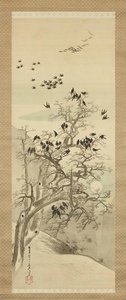
takekiyo other name: ka-an 可庵
1776 - 1856 , Japan
Quick Facts
- Artistic Movement Or Style: Nanga
- Artists Who Influenced This Artist: ['Tani Buncho']
- Date Of Death: 1856
- Full Name: takekiyo other name: ka-an 可庵
- Nationality: Japanese
- Notable Artworks:
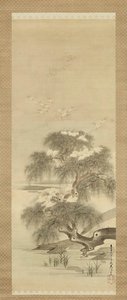
- Herons, from a pair of hanging scrolls ‘Crows and Herons’
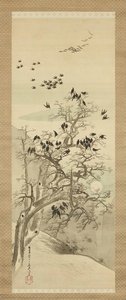
- Crows, from a pair of hanging scrolls ‘Crows and Herons’
- Place Of Birth: Japan