 Preview
 Send
Send Share
Share
 Details

 Download
 Similars
 X-Ray
X-Ray Diaporama
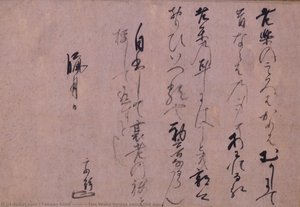
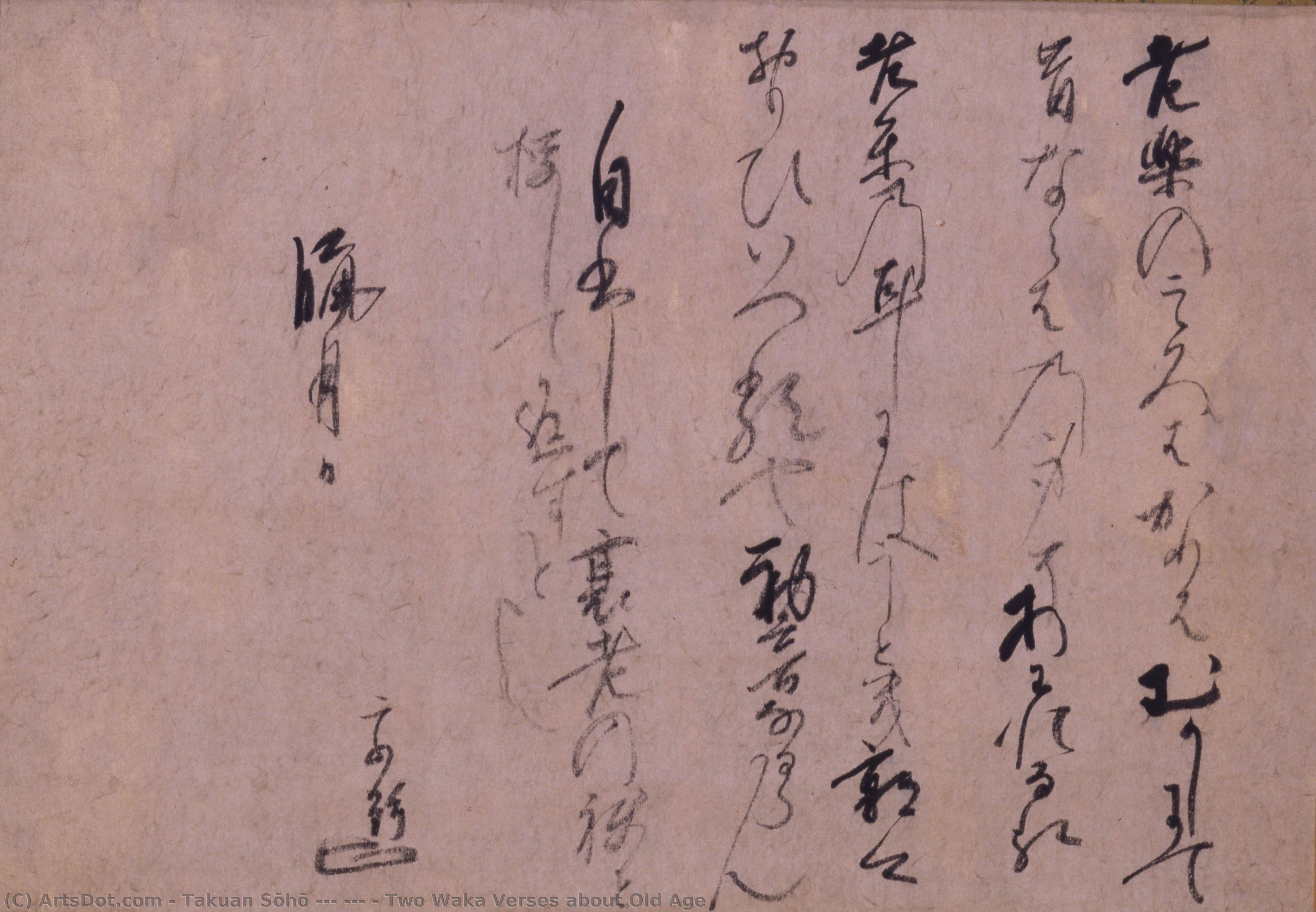
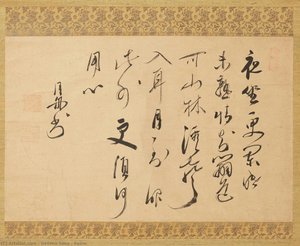
Two Waka Verses about Old Age
 42.0 x 29.0 cm
 Fukuoka Art Museum
 Read More
Hand Made Oil Reproduction
Hand-painted oil on canvas in your size and frame, made to order by our artists. ( Buy Print Buy Image)




































Pick from our preset sizes that match the artwork's original proportions.

You may enter your own dimensions to fit a specific frame or space. If your selected size does not match the original image's proportions, we will either crop the artwork or extend the painting with additional hand-painted elements. A digital mockup will be sent for your approval before production begins.
Please note that the on-screen preview does not reflect the actual cropping or extension. Only the mockup will accurately show the final composition.
While custom sizes are available, we recommend selecting a dimension from the predefined list to preserve the original proportions.
After order, ArtsDot.com team will email client for instructions and provide a mockup preview
Worldwide Delivery () in 3/4 weeks instead of standard 5 weeks. (23 August). No compromise on quality.

Free Worldwide Express Shipping

High-Quality Linen Canvas

Full Shipping Insurance

Customs Tax Refund Guarantee

True Color Matching Guarantee

60-Day Return Policy (Defects Only)

100% Money-Back Guarantee

Bulk Discount Offer
 Glass option is only available in size under 110 CM

Two Waka Verses about Old Age
Reproduction Medium
Reproduction Size
-


Total Price
$ 263
Artwork Description
Related Artworks







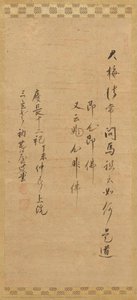
Artist Biography
A Life Woven in Ink and Silence: Exploring the World of Takuan Sōhō
Takuan Sōhō (1573-1645), a figure both revered and enigmatic within Japanese history, remains an artist whose legacy transcends simple categorization. More than just a calligrapher, poet, tea ceremony master, or even the popularly credited inventor of *takuan* pickled radish – a testament to his multifaceted nature – Sōhō was a pivotal Rinzai Zen Buddhist prelate who profoundly shaped the intersection of art, philosophy, and martial practice during the turbulent Sengoku and early Edo periods. His life, marked by both political intrigue and spiritual depth, offers a compelling window into the cultural landscape of 16th and 17th century Japan.
Born in Izushi, a small town within Tajima Province (present-day Hyōgo Prefecture), Sōhō’s early life was rooted in the realities of samurai society. His father, Akiba Tsunanori, was a retainer of the Yamana clan, a family whose fortunes would ultimately decline. This familial context instilled in him an awareness of power dynamics and the fragility of existence – themes that would later permeate his artistic output. Initially studying Jōdo Buddhism at age ten, Sōhō’s path shifted dramatically when he embraced the Rinzai school, a branch of Zen known for its emphasis on sudden enlightenment. This transition marked a profound departure from traditional Buddhist practices and laid the groundwork for his unique approach to integrating spiritual principles into everyday life.
The Art of the Brush: Calligraphy, Poetry, and Tea
Sōhō’s artistic talents were remarkably diverse. He was celebrated as a master calligrapher, producing works that reflected not only technical skill but also a deep understanding of Zen aesthetics – simplicity, emptiness, and the pursuit of direct experience. His calligraphy wasn't merely decorative; it was an embodiment of his philosophical beliefs, striving to capture the essence of things through concise strokes and carefully chosen characters. Beyond calligraphy, Sōhō excelled in poetry, crafting verses that explored themes of impermanence, detachment, and the interconnectedness of all beings. These poems, often imbued with a subtle sense of melancholy and wisdom, reveal a contemplative spirit deeply attuned to the rhythms of nature.
Furthermore, Sōhō was a respected practitioner of the tea ceremony ( *chanoyu*). He believed that the ritualistic preparation and enjoyment of tea offered a pathway to spiritual insight. The meticulous attention to detail, the quiet contemplation, and the shared experience fostered a sense of harmony and connection – values central to Zen Buddhism. His involvement in the tea ceremony wasn’t simply a social activity; it was an artistic practice designed to cultivate mindfulness and appreciate the beauty of the present moment.
The Sword and the Mind: A Fusion of Disciplines
Perhaps Sōhō's most enduring legacy lies in his unique synthesis of Zen philosophy and the art of swordsmanship. He recognized that both disciplines demanded a profound understanding of the mind – a state of stillness, clarity, and non-attachment. Drawing inspiration from the *Liuzi Tan Jing* (Platform Sūtra), he developed a method of training that emphasized “no-mind” (*mushin*) – a mental state free from distractions and preconceived notions. This concept was applied to swordsmanship, where the goal wasn’t brute force but rather an intuitive response to the opponent's movements.
This fusion culminated in his influential treatise, *Fudōchi Shimmyō Roku* (“Record of the Mental Sublimity of Immovable Wisdom”), which he penned for Yagyū Munenori, founder of the Edo Branch of the Yagyū Shinkage-ryū school. In this work, Sōhō used the metaphor of a sword to illustrate the principles of Zen – emphasizing the importance of cultivating a calm and focused mind, recognizing the illusory nature of ego, and embracing the present moment. The book’s impact extended far beyond the world of swordsmanship, influencing generations of martial artists and philosophers.
Exile and Legacy
Sōhō's life was not without its challenges. His outspokenness and unconventional methods often brought him into conflict with authority figures. In 1629, he was exiled to Kaminoyama in Yamagata Prefecture following a political scandal involving the alleged theft of imperial robes – an event that remains shrouded in mystery. Despite this exile, Sōhō continued to write, teach, and practice his art, demonstrating remarkable resilience and unwavering commitment to his principles.
Upon his death in 1645, Takuan Sōhō left behind a rich body of work – calligraphy, poetry, treatises, and the enduring influence of his unique philosophy. He remains a pivotal figure in Japanese cultural history, embodying the synthesis of art, spirituality, and martial practice. His life serves as a testament to the power of quiet contemplation, the pursuit of wisdom, and the transformative potential of embracing both the beauty and the challenges of existence.
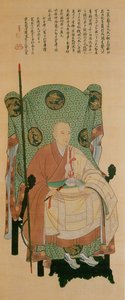
takuan sōhō (沢庵 宗彭)
1573 - 1645 , Japan
Quick Facts
- Artistic Movement Or Style: Rinzai Zen Buddhism
- Artists Or Movements Influenced By This Artist: ['Yagyū Munenori']
- Artists Who Influenced This Artist: ['Shunoku Sōen']
- Date Of Birth: December 24, 1573
- Date Of Death: January 27, 1645
- Full Name: Takuan Sōhō (沢庵 宗彭)
- Nationality: Japanese
- Notable Artworks:
- Takuan pickled radish
- Calligraphy
- Poetry
- Tea ceremony
- Place Of Birth: Izushi, Japan