 Preview
 Send
Send Share
Share
 Details

 Download
 Similars
 X-Ray
X-Ray Diaporama
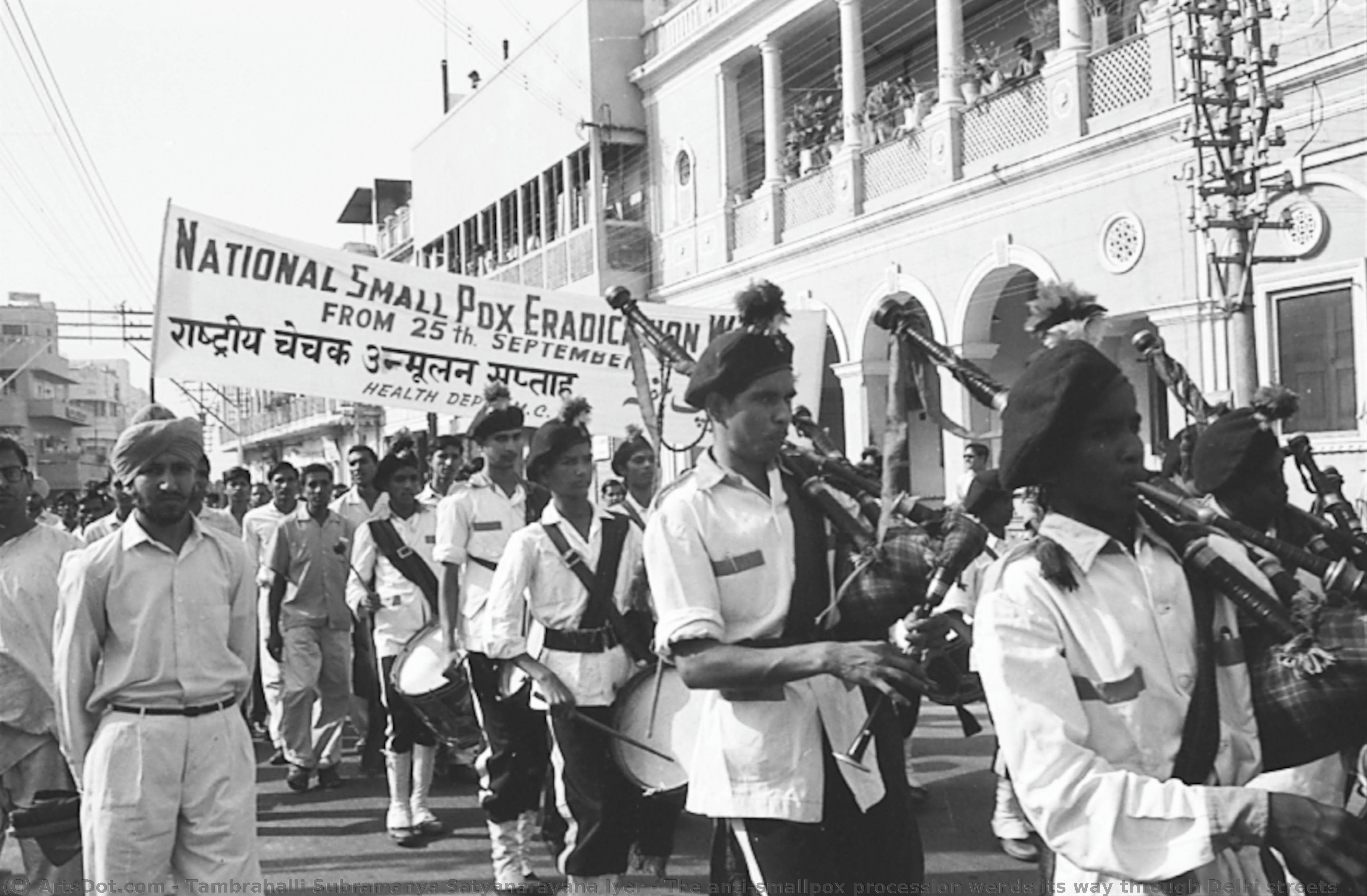
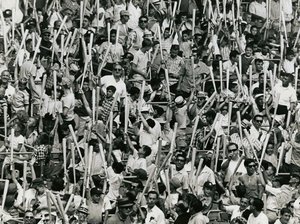
The anti-smallpox procession wends its way through Delhi streets


 Read More
Giclée / Art Print
Museum-quality giclée or canvas print with fast production and flexible finish options. ( Buy Hand Made Painting Buy Image)




































Pick from our preset sizes that match the artwork's original proportions.

You may enter your own dimensions to fit a specific frame or space. If your selected size does not match the original image's proportions, we will either crop the artwork or extend the image with a mirrored or solid-fill edge. A digital mockup will be sent for your approval before production begins.
Please note that the on-screen preview does not reflect the actual cropping or extension. Only the mockup will accurately show the final composition.
While custom sizes are available, we recommend selecting a dimension from the predefined list to preserve the original proportions.
Worldwide Delivery () in 2 weeks instead of standard 4/5 weeks. (24 August)

Free Worldwide Express Shipping

High-Quality Linen Canvas

Full Shipping Insurance

Customs Tax Refund Guarantee

True Color Matching Guarantee

60-Day Return Policy (Defects Only)

100% Money-Back Guarantee

Bulk Discount Offer
 Glass option is only available in size under 110 CM

The anti-smallpox procession wends its way through Delhi streets
Giclée / Art Print
Reproduction Size
-


Total Price
$ 63
Collectible Description
Related Artworks







Artist Biography
Early Life and the Genesis of a Visual Chronicler
Tambrahalli Subramanya Satyanarayana Iyer, known universally as T.S. Satyan, emerged as a pioneering figure in Indian photojournalism during a period when the profession itself was taking root in the nation. Born in 1923 in Mysore, India, into a large family of nineteen children, Satyan’s early life instilled within him a keen observational sensibility and an appreciation for the nuances of everyday existence. His initial foray into photography wasn't born from formal training but rather from a spark of curiosity nurtured by his English teacher, who recognized his potential and provided him with his first Kodak Box Brownie camera. This simple act unlocked a lifelong passion, culminating in a contest win with the Illustrated Weekly of India—a photograph capturing a child engaged with an abacus—and marking the nascent stages of a remarkable career. Satyan’s academic pursuits at Maharaja's College, Mysore University, were followed by diverse roles – radio newsreader, teacher, and even an engine inspector – yet photography remained a constant companion, evolving from a hobby into a dedicated pursuit.Forging a Path in Post-Independence India
The year 1948 proved pivotal as Satyan joined the Deccan Herald in Bangalore as its inaugural staff photographer. This marked his formal entry into the world of visual storytelling, coinciding with the burgeoning independence of India and a nation grappling with profound social and political change. He soon transitioned to the Illustrated Weekly of India in Bombay, but found the urban environment stifling, returning to Mysore before eventually relocating to New Delhi in 1957. It was from this central hub that Satyan embarked on decades of freelance assignments across the subcontinent, becoming a trusted chronicler of pivotal moments and personalities. His work wasn’t merely about capturing images; it was about documenting the spirit of a nation undergoing transformation. He embraced the role of an impartial observer, believing in the lens as a powerful tool for recording truth.Influences and Artistic Philosophy
Satyan's artistic development was subtly shaped by the giants of photography he admired. The concept of the “decisive moment,” championed by Henri Cartier-Bresson, resonated deeply with his approach—the ability to anticipate and capture fleeting instances that encapsulated a larger narrative. Similarly, Edward Steichen’s iconic *Family of Man* exhibition, celebrating human universality, influenced his focus on shared experiences and common humanity. However, Satyan wasn't simply an imitator; he forged his own distinct style rooted in empathy and a commitment to social issues. His photographs weren’t grand spectacles but intimate portrayals of life—the struggles of the marginalized, the hopes of the young, and the quiet dignity of ordinary people. He was particularly drawn to themes of child welfare, education, and medical advancement, using his lens to advocate for positive change.Documenting a Nation: Major Achievements and Collaborations
Throughout his illustrious career, Satyan’s photographs graced the pages of prestigious international publications like *Life*, *Time*, and *Newsweek*. He documented Acharya Vinoba Bhave's 1951 Bhoodan padayatra—a non-violent land gift movement—and the satyagraha against Portuguese rule in Goa, capturing the fervor and resilience of those fighting for independence. His assignments extended beyond political events to encompass cultural milestones like Pope Paul VI’s visit to India in 1964 and the aftermath of Sheikh Mujibur Rahman's assassination in Bangladesh in 1975. Crucially, Satyan forged strong working relationships with organizations like the World Health Organization (WHO) and UNICEF. His work for WHO focused on the monumental task of smallpox eradication and blindness awareness campaigns during the 1960s, while his collaboration with UNICEF culminated in a 1979 exhibition at the United Nations highlighting child welfare issues during the International Year of the Child. These collaborations underscored his commitment to using photography as a catalyst for global betterment.Legacy and Historical Significance
T.S. Satyan’s contribution extends beyond the sheer volume and quality of his photographic work. He was among the first Indian photojournalists to gain international recognition, paving the way for future generations. His memoir, *Alive and Clicking*, published in 2005 by Penguin Random House India, offers a compelling glimpse into his life, philosophy, and the challenges faced by early photojournalists in India. Satyan’s images are not merely historical records; they are powerful testaments to the human spirit—capturing moments of joy, sorrow, struggle, and resilience with unparalleled sensitivity and artistry. His photographs continue to resonate today, serving as a poignant reminder of India's journey through the 20th century and beyond, and solidifying his place as a true pioneer in the field of visual storytelling.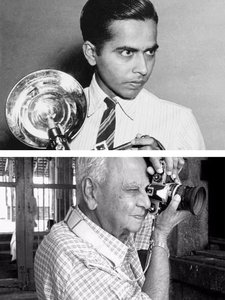
tambrahalli subramanya satyanarayana iyer
1923 - 2009 , India
Quick Facts
- Artistic Movement Or Style: Photojournalism
- Artists Who Influenced This Artist:
- Henri Cartier-Bresson
- Edward Steichen
- Date Of Birth: 1923
- Date Of Death: 2009
- Full Name: Tambrahalli Satyanarayana Iyer
- Nationality: Indian
- Notable Artworks:
- Smallpox campaign photos
- Eye-care program images
- Nursing program photos
- Place Of Birth: Mysuru, India