 Preview
 Send
Send Share
Share
 Details

 Download
 Similars
 X-Ray
X-Ray Diaporama
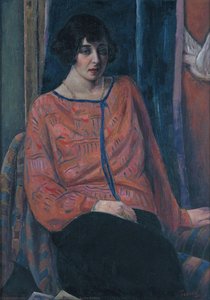
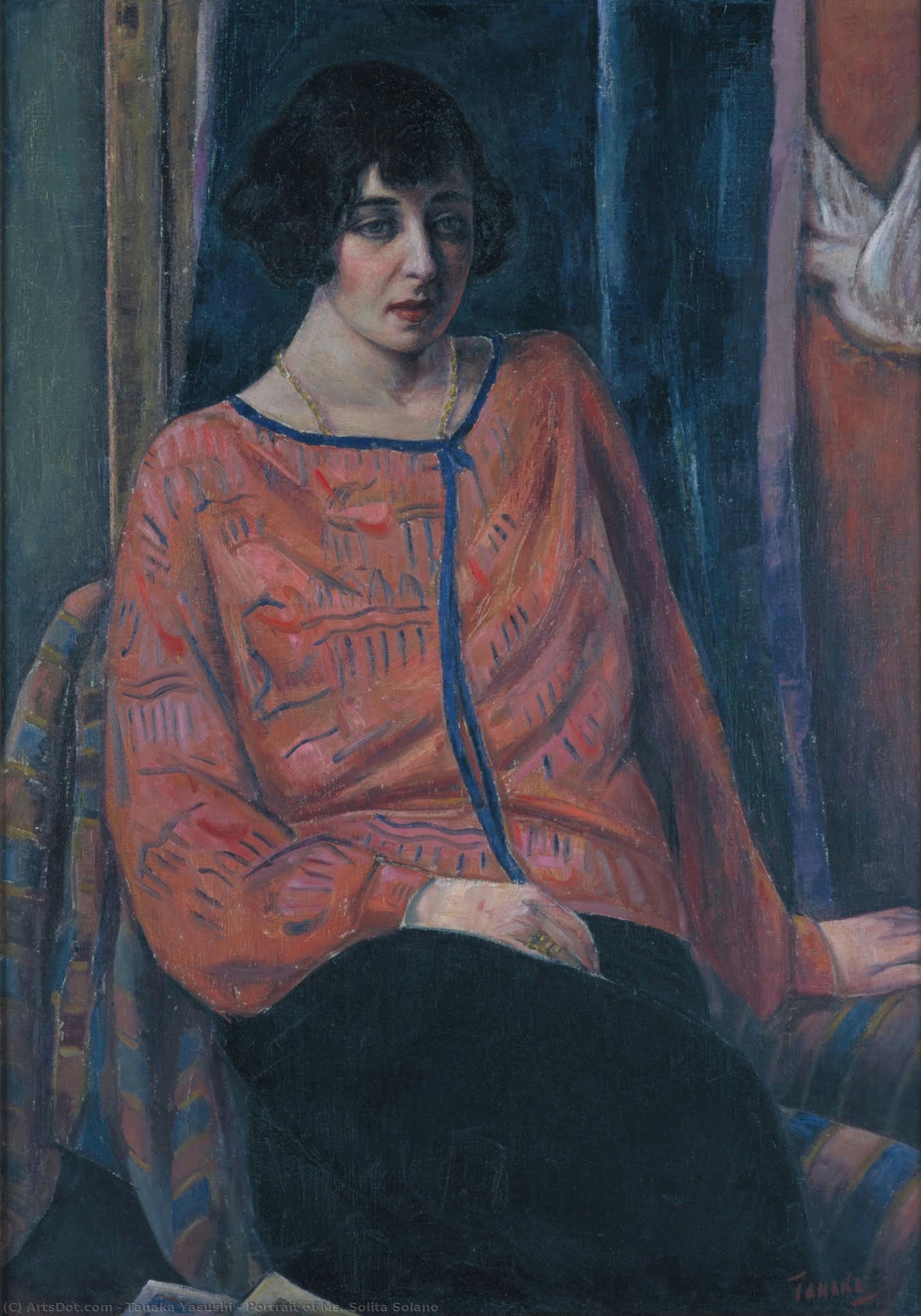
Portrait of Ms. Solita Solano
 1923
1923 103.0 x 73.0 cm
 Nagoya City Art Museum
 Read More
Giclée / Art Print
Museum-quality giclée or canvas print with fast production and flexible finish options. ( Buy Hand Made Painting Buy Image)




































Pick from our preset sizes that match the artwork's original proportions.

You may enter your own dimensions to fit a specific frame or space. If your selected size does not match the original image's proportions, we will either crop the artwork or extend the image with a mirrored or solid-fill edge. A digital mockup will be sent for your approval before production begins.
Please note that the on-screen preview does not reflect the actual cropping or extension. Only the mockup will accurately show the final composition.
While custom sizes are available, we recommend selecting a dimension from the predefined list to preserve the original proportions.
Worldwide Delivery () in 2 weeks instead of standard 4/5 weeks. (26 August)

Free Worldwide Express Shipping

High-Quality Linen Canvas

Full Shipping Insurance

Customs Tax Refund Guarantee

True Color Matching Guarantee

60-Day Return Policy (Defects Only)

100% Money-Back Guarantee

Bulk Discount Offer
 Glass option is only available in size under 110 CM

Portrait of Ms. Solita Solano
Giclée / Art Print
Reproduction Size
-


Total Price
$ 63
Collectible Description
Related Artworks







Artist Biography
Yasushi Tanaka: A Life in Art
Yasushi Tanaka (田中保; 13 May 1886 – 24 April 1941) was a Japanese-born artist and art teacher, best known for his evocative portraits of women and figurative works. His life story is one of cross-cultural exchange and artistic dedication, navigating the challenges of establishing an artistic identity between Japan, America, and Europe.
Early Life and Education
Tanaka’s early life was marked by hardship. Following the death of his father in 1902, his family faced financial ruin. He left home soon after completing primary education and bravely emigrated to Seattle, Washington, in 1904. There, he supported himself through various jobs – washing dishes and selling peanuts – while diligently studying English and pursuing self-taught painting lessons.
A pivotal moment came when Tanaka secured formal instruction under the Dutch painter Fokko Tadama, who became a crucial patron and mentor. This mentorship proved invaluable, shaping his artistic trajectory and connecting him with other Japanese artists in Seattle like Shimizu Toshi.
Artistic Development & Influences
Tanaka’s early work was exhibited locally, including a solo show at the Seattle Public Library in 1915 and participation in the Panama–Pacific International Exposition. However, his initial nude portraits faced considerable criticism. This experience prompted a move to Paris in 1920 with his wife, Louise Gebhard Cann, an American writer and art critic.
In Paris, Tanaka immersed himself in the European art scene, exhibiting at prestigious venues like the Société Nationale des Beaux-Arts, Salon d'Automne, and Salon des Tuileries. His style evolved under the influence of Western artistic traditions, particularly those emphasizing realism and figurative representation. He blended these influences with his Japanese sensibility, creating a unique aesthetic.
Major Achievements & Recognition
Tanaka achieved notable recognition during his time in Paris. One of his paintings was purchased by the French government, and several were acquired by members of the Japanese Imperial family – Prince Naruhiko Higashikuni and Prince Yasuhiko Asaka. He also sold a painting to the Musée du Luxembourg.
Despite facing challenges during World War II (remaining in Paris due to his American wife), Tanaka continued to work until his death in 1941. A retrospective of his work was held at the Marseille Gallery in Paris after the war, but his art remained largely unknown in Japan until 1976.
Themes and Style
Tanaka’s oeuvre primarily focuses on portraits, particularly those of women, and nude figures. His paintings are characterized by:
- Oil Painting Technique: He skillfully employed oil paints to achieve realistic textures and subtle gradations of light and shadow.
- Figurative Realism: A strong emphasis on accurate anatomical representation and lifelike portrayals.
- Western Influence: Evident in his compositional approaches and use of perspective, reflecting the European art traditions he studied.
- Subtle Sensuality: His nudes are often imbued with a quiet dignity and understated sensuality.
Historical Significance & Legacy
Yasushi Tanaka’s story represents a fascinating intersection of cultures and artistic movements. He navigated the complexities of being an artist caught between his Japanese heritage and Western influences, ultimately forging a distinctive style that blended both traditions.
While not widely known during his lifetime, Tanaka's work has gained increasing recognition in recent decades. His paintings are now held in prominent museums including:
- Yamagata Museum of Art
- Matsuoka Museum of Art
- Artizon Museum
His legacy lies in his ability to bridge artistic boundaries and create compelling works that reflect a unique personal vision. His papers are preserved at the Archives of American Art, offering further insight into his life and creative process.
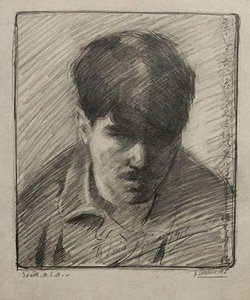
tanaka yasushi
1886 - 1941 , Japan
Quick Facts
- Birth Date: 1886
- Birth Place: Japan
- Death Date: 1941
- Influenced By: ['Fokko Tadama']
- Movement:
- Modern Japanese art
- Western Influenced
- Name: Yasushi Tanaka
- Nationality: Japanese
- Notable Works:
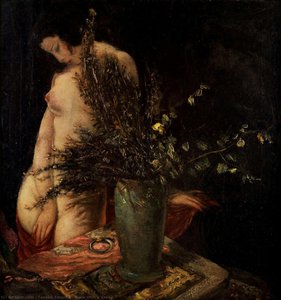
- Nude with a Vase
- Portrait of Ms. Solita Solano