

 Preview
 Send
Send Share
Share
 Details

 Download
 Similars
 X-Ray
X-Ray Diaporama
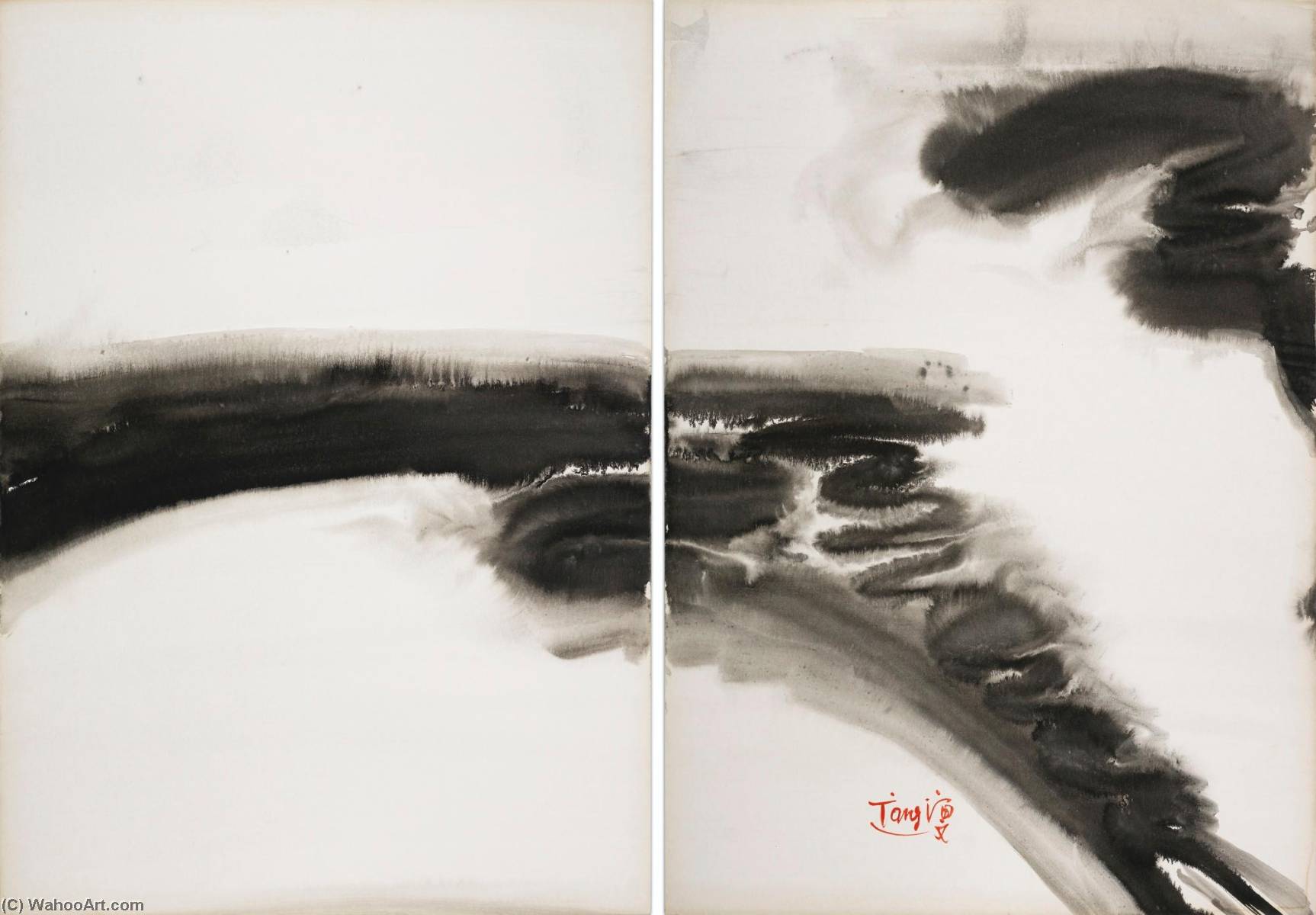
Sans titre (diptych)
 69.0 x 98.0 cm
 Read More
Purchase a high-resolution, enhanced digital image, far superior to the online preview.
Each file is meticulously prepared by our in-house specialists using advanced tools and expert manual retouching. We ensure every image has exceptional clarity, precise color accuracy, and fine detail.
The final file is delivered via email within 72 hours, optimized for immediate use in professional, editorial, and print environments. This is the same quality trusted by top-tier design studios, publishers, and galleries.
Digital Image
Download a high-resolution file for personal display, printing, and creative projects. ( Buy Print Buy Hand Made Painting)
Included in Every Digital Image Order
Expert Digital Delivery, Guaranteed
When you choose ArtsDot.com, you're not just getting an image - you're receiving a professionally enhanced digital artwork, crafted with precision and backed by a satisfaction guarantee. Here's everything that comes with your order, automatically:

Fast Email Delivery
Your high-resolution digital image file will be emailed to you within 72 hours of ordering - ready for immediate use.

AI-Enhanced Digital File
Your artwork is professionally optimized using advanced AI tools and manual editing, ensuring maximum detail, clarity, and color accuracy.

Free Lifetime Re-Delivery
Accidentally deleted or lost your file? No worries - we'll resend it to you anytime, free of charge.

No Import Fees - Ever
Enjoy your artwork instantly with zero customs, duties, or delivery fees - digital downloads are always tax-free.

Color Accuracy Guarantee
We ensure your digital image reflects the original colors as closely as possible using professional tools and color management.

60-Day Satisfaction Guarantee
If you're not satisfied with your digital image, we'll revise it or refund 100% within 60 days - no questions asked.

100% Money-Back Guarantee
Not satisfied? Get a full refund within 60 days of receiving your digital file - no questions asked.

Bulk Order Discounts
Buy 3 images, save 10% - Buy 5, save 15% - Buy 10+, save 20%. Great for creative projects, galleries, and agencies.
Related Artworks
![Abstract Composition [triptych] — Vaclav Vytlacil, Abstract Expressionism](/media/artworks/images-thumb/08/3c/083c0675045645fd42d4e6c6d63f1ced.jpg)
Artist Biography
A Life Between Worlds: The Artistic Journey of Tang Haiwen
Tang Haiwen (曾海文), born Zeng Tianfu in 1927 in the coastal city of Xiamen, China, embodies a fascinating intersection of Eastern tradition and Western modernism. His life was one of deliberate seeking—a quest for artistic liberation that led him from the calligraphy studios of his youth to the vibrant art scene of post-war Paris. Unlike many of his Chinese contemporaries who received formal academic training in Hangzhou, Tang’s path was largely self-directed, fueled by an innate sensitivity and a profound connection to Taoist philosophy instilled by his grandfather. This early influence would become a cornerstone of his unique artistic vision, shaping not only *what* he painted but *how* he approached the very act of creation. The outbreak of the Second Sino-Japanese War prompted a family relocation to Cholon, Saigon’s bustling Chinese quarter, where Tang continued his studies in calligraphy—a discipline that would remain central to his aesthetic throughout his career.From Medicine to Mastery: Finding His Voice in Paris
In 1948, at the age of twenty-one, Tang embarked on a journey to France, initially intending to pursue medical studies as per his father’s wishes. However, Paris quickly captivated him, and he soon abandoned his preordained path to dedicate himself fully to painting. He enrolled in classes at the Académie de la Grande Chaumière, but it was through independent exploration of museums and galleries—immersing himself in the works of Gauguin, Cézanne, and Matisse—that Tang truly began to forge his artistic identity. His early Parisian paintings reflect this period of assimilation, showcasing landscapes, interiors, portraits, and still lifes imbued with a distinctly Chinese sensibility. Yet, it was a growing fascination with Shitao, the iconoclastic 17th-century Chinese painter known for his unconventional techniques and spiritual depth, that proved pivotal. This encounter sparked a desire to break free from conventional constraints and embark on a uniquely personal artistic journey. Tang’s commitment to this path is powerfully articulated in a letter he wrote to his brother in 1958: “I have found my vocation in painting… Success, to be truly success, must be completely sincere.”The Fusion of East and West: A Unique Artistic Language
The early 1960s marked a transformative period for Tang Haiwen. He increasingly favored gouache, watercolors, and ink on paper—materials deeply rooted in Chinese artistic tradition. However, he didn’t simply replicate Eastern techniques; instead, he masterfully blended them with the lyrical abstraction of Western modernism. His work began to explore the interplay between form and emptiness, echoing Taoist principles of balance and harmony. This period also saw Tang embrace a nomadic spirit, traveling extensively throughout Canada and Morocco—experiences that further broadened his artistic horizons. He sought not merely to depict landscapes but to capture their *essence*, conveying a sense of atmosphere and emotion through delicate washes of color and fluid brushstrokes. His technique became increasingly refined, characterized by an extraordinary lightness of touch and a remarkable ability to evoke depth and space on the two-dimensional surface.Legacy and Recognition: A Growing Appreciation
Tang Haiwen continued to hone his artistic practice until his death in Paris in 1991. Throughout his career, he remained committed to exploring the expressive potential of ink and paper, creating a body of work that is both deeply personal and universally resonant. While he initially navigated a path distinct from other Chinese artists in Paris—avoiding formal academic structures and embracing a more intuitive approach—his contributions have gained increasing recognition in recent decades. Major retrospective exhibitions at institutions such as the Oceanographic Museum in Monaco, the Taipei Fine Arts Museum, and the Musée Guimet in Paris have highlighted the originality and significance of his work. Today, Tang Haiwen is celebrated as a pivotal figure in modern Chinese art, an artist who successfully bridged cultural divides and created a unique visual language that continues to inspire and captivate audiences worldwide. His paintings are not merely representations of nature or children; they are meditations on life, spirituality, and the enduring power of artistic expression.- Key Influences: Taoism, Chinese Calligraphy, Shitao, Henri Matisse, J.M.W. Turner.
- Major Themes: Nature, Childhood, Spirituality, Abstraction, Harmony and Balance.
- Notable Techniques: Ink Wash Painting, Gouache, Watercolor, Wet-on-Wet Technique, Delicate Brushwork.
Quick Facts
- Artistic Movement Or Style: Modern Chinese art
- Artists Who Influenced This Artist:
- Gauguin
- Cézanne
- Matisse
- Date Of Birth: 1927
- Date Of Death: 1991
- Full Name: Tang Haiwen
- Nationality: Chinese
- Notable Artworks:
- Our Children
- Sans titre (diptych)
- Place Of Birth: Xiamen, China

