

 Preview
 Send
Send Share
Share
 Details

 Download
 Similars
 X-Ray
X-Ray Diaporama
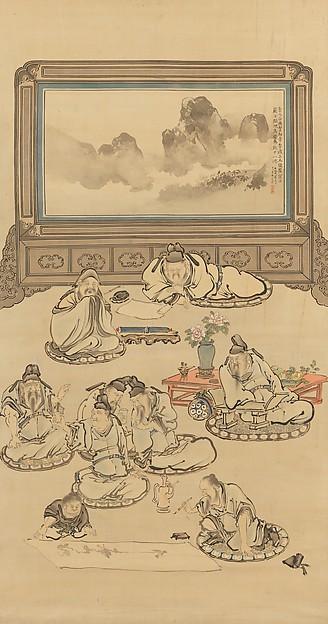
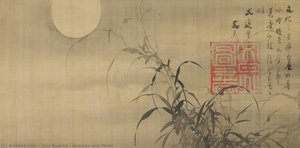
The Eight Immortals of the Wine Cup
 1828
1828 206.0 x 91.0 cm
 Read More
Purchase a high-resolution, enhanced digital image, far superior to the online preview.
Each file is meticulously prepared by our in-house specialists using advanced tools and expert manual retouching. We ensure every image has exceptional clarity, precise color accuracy, and fine detail.
The final file is delivered via email within 72 hours, optimized for immediate use in professional, editorial, and print environments. This is the same quality trusted by top-tier design studios, publishers, and galleries.
Digital Image
Download a high-resolution file for personal display, printing, and creative projects. ( Buy Print Buy Hand Made Painting)
Included in Every Digital Image Order
Expert Digital Delivery, Guaranteed
When you choose ArtsDot.com, you're not just getting an image - you're receiving a professionally enhanced digital artwork, crafted with precision and backed by a satisfaction guarantee. Here's everything that comes with your order, automatically:

Fast Email Delivery
Your high-resolution digital image file will be emailed to you within 72 hours of ordering - ready for immediate use.

AI-Enhanced Digital File
Your artwork is professionally optimized using advanced AI tools and manual editing, ensuring maximum detail, clarity, and color accuracy.

Free Lifetime Re-Delivery
Accidentally deleted or lost your file? No worries - we'll resend it to you anytime, free of charge.

No Import Fees - Ever
Enjoy your artwork instantly with zero customs, duties, or delivery fees - digital downloads are always tax-free.

Color Accuracy Guarantee
We ensure your digital image reflects the original colors as closely as possible using professional tools and color management.

60-Day Satisfaction Guarantee
If you're not satisfied with your digital image, we'll revise it or refund 100% within 60 days - no questions asked.

100% Money-Back Guarantee
Not satisfied? Get a full refund within 60 days of receiving your digital file - no questions asked.

Bulk Order Discounts
Buy 3 images, save 10% - Buy 5, save 15% - Buy 10+, save 20%. Great for creative projects, galleries, and agencies.
Related Artworks



Artist Biography
The Versatile Visionary: The Life and Legacy of Tani Bunchō
In the vibrant, shifting landscape of Edo-period Japan, few artists possessed the breadth of vision and stylistic dexterity of Tani Bunchō. Born in 1763 into a family of esteemed retainers for the Tayasu clan, Bunchō was destined for a life steeped in both scholarly tradition and samurai responsibility. As the son of the renowned poet Tani Rokkoku, his upbringing was an immersion in the refined aesthetics of the era, yet he would ultimately transcend the boundaries of his station to become a singular force in Japanese art history. He was not merely a painter; he was a bridge between worlds, weaving together the meticulous traditions of Japan with the expressive spirit of China and the emerging influences of the West.
Bunchō’s artistic journey began under the rigorous tutelage of Katō Bunrei, a master of the Kanō school. This foundational period instilled in him a profound command over classical Chinese painting techniques, characterized by disciplined brushwork and a deep respect for symbolic composition. However, the true genius of Bunchō lay in his refusal to be confined by a single lineage. While he mastered the formalized aesthetics of the Kanō tradition, he actively sought out the more fluid and expressive Hoku-ga (Northern School) style. His thirst for innovation led him to collaborate with masters like Kitayama Kangen, whose influence helped introduce elements of yōga—Western-inspired painting—into his repertoire. This rare ability to synthesize disparate styles allowed him to move seamlessly between idealized Chinese landscapes and the burgeoning realism of Japanese scenery.
A Synthesis of Styles and the Spirit of Innovation
The hallmark of Bunchō’s oeuvre is its extraordinary eclecticism. Unlike many of his contemporaries in the bunjin (literati) movement who adhered strictly to traditional Chinese motifs, Bunchō embraced a much wider spectrum of subject matter. He was equally adept at rendering the monumental and sacred presence of Mount Fuji as he was at capturing the delicate, ephemeral beauty of moonlight reflecting over river reeds. His work often functioned as a "true view," where the artist’s subjective experience of a landscape met a selective realism that felt both grounded and poetic. This duality—the ability to be both a scholar-poet and a keen observer of nature—defined his unique contribution to the Edo avant-garde.
His ascent to the pinnacle of the art world was significantly propelled by his prestigious patronage under Matsudaira Sadanobu, one of the most influential political figures of the Tokugawa Shogunate. This relationship provided Bunchō with more than just financial stability; it granted him the cultural capital and resources necessary for unprecedented experimentation. Under this aegis, he flourished as a prolific creator of landscapes, portraits, and calligraphy, often blending Nanga (literati) sensibilities with the ornamentalism found in the Maruyama-Shijō school. His paintings were not merely depictions of scenery but were profound meditations on the intersection of tradition and modernity.
Historical Significance and Enduring Influence
Tani Bunchō’s legacy is etched into the very fabric of Japanese art history as a pioneer of cultural exchange. By integrating Western perspectives with Eastern sensibilities, he helped prepare the Japanese artistic consciousness for the profound changes that would follow in the Meiji era. His work remains a testament to the power of intellectual curiosity and the beauty of stylistic hybridity. To look upon a Bunchō masterpiece is to witness a moment in time where the boundaries between different cultures and eras dissolved into a single, harmonious vision.
His enduring impact can be summarized through several key artistic contributions:
- Stylistic Integration: The seamless blending of Kanō school precision, Northern School expressiveness, and Western-influenced realism.
- Literati Innovation: Expanding the bunjin tradition beyond rigid Chinese imitation to include authentic Japanese landscapes and contemporary portraiture.
- Cultural Bridge-Building: Serving as a vital link between the classical traditions of the past and the emerging global influences of the late Edo period.
tani bunchō
1763 - 1841
Quick Facts
- Artistic Movement Or Style: Nanga Painting
- Artists Or Movements Influenced By This Artist: ['Okuhara Seiko']
- Artists Who Influenced This Artist:
- Katō Bunrei
- Kitayama Kangen
- Date Of Birth: October 15, 1763
- Date Of Death: January 6, 1841
- Full Name: Tani Bunchō
- Nationality: Japanese
- Notable Artworks:
- River Gorge with Waterfall
- Miscellaneous Paintings and Calligraphy for the Third Year of the Bunsei Era
- Place Of Birth: Japan

