 Preview
 Send
Send Share
Share
 Details

 Download
 Similars
 X-Ray
X-Ray Diaporama
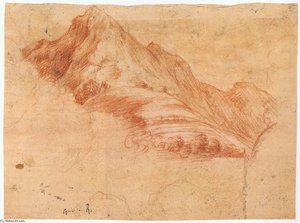
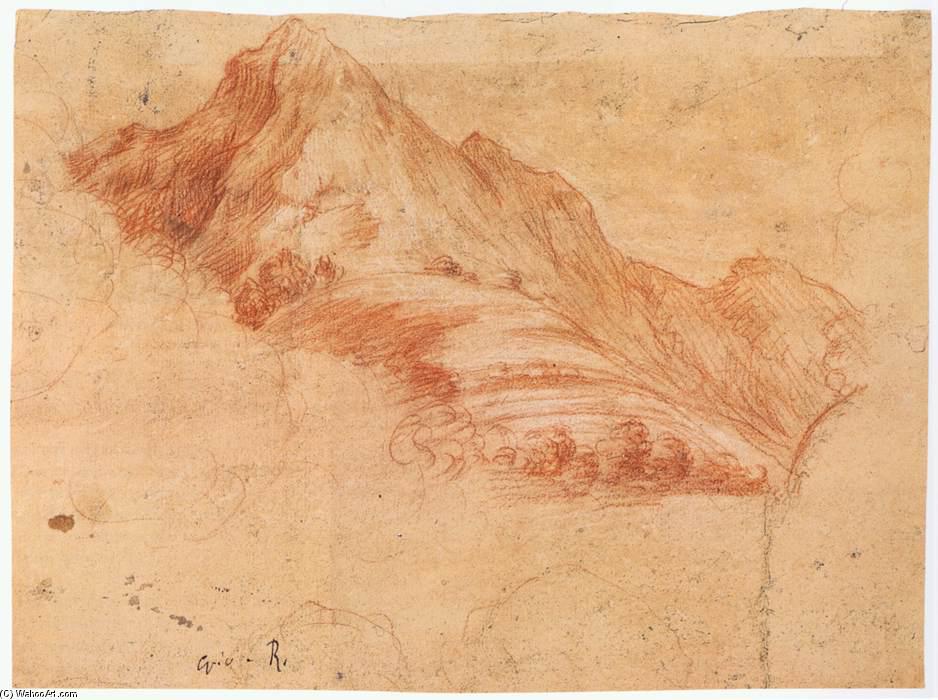
Landscape with Mountains
 Acrylic On Canvas
- WallArt
- Baroque
 235.0 x 325.0 cm
 Metropolitan Museum of Art
 Read More
Hand Made Oil Reproduction
Hand-painted oil on canvas in your size and frame, made to order by our artists. ( Buy Print Buy Image)




P118B $10

P118H $10

P118W $10

P438Z $10

P508JH $12

P508YH $12

P805H $10

P805Z $10

P919BZ $10

P919G $10

P919XJ $10

P959ZH $10

P968JZ $12

W106C $8

W218G $10

W218JH $8

W218Y $10

W307PJ $10

W316G $10

W316PJ $8

W316Y $10

W398PJ $8

W4111J $10

W500HY $15

W500JH $15

W692G $12

W849H $8

W940BG $15

W953PJ $8




Pick from our preset sizes that match the artwork's original proportions.

You may enter your own dimensions to fit a specific frame or space. If your selected size does not match the original image's proportions, we will either crop the artwork or extend the painting with additional hand-painted elements. A digital mockup will be sent for your approval before production begins.
Please note that the on-screen preview does not reflect the actual cropping or extension. Only the mockup will accurately show the final composition.
While custom sizes are available, we recommend selecting a dimension from the predefined list to preserve the original proportions.
After order, ArtsDot.com team will email client for instructions and provide a mockup preview
Worldwide Delivery () in 3/4 weeks instead of standard 5 weeks. (17 August). No compromise on quality.

Free Worldwide Express Shipping

High-Quality Linen Canvas

Full Shipping Insurance

Customs Tax Refund Guarantee

True Color Matching Guarantee

60-Day Return Policy (Defects Only)

100% Money-Back Guarantee

Bulk Discount Offer
 Glass option is only available in size under 110 CM

Landscape with Mountains
Reproduction Medium
Reproduction Size
-


Total Price
$ 263
Artwork Description
A Dramatic Vision of the Italian Landscape
“Landscape with Mountains,” a masterful work by Tanzio da Varallo, offers a captivating glimpse into the late Mannerist and early Baroque world of Lombardy. More than simply a depiction of a rural scene, it’s an immersive experience—a carefully constructed drama of light, shadow, and human presence that speaks to both the grandeur of nature and the complexities of the era in which it was created. The painting immediately draws the eye with its powerful chiaroscuro, a hallmark of Caravaggio's influence, where deep blacks and intense highlights sculpt forms and create an atmosphere of profound emotional intensity.
The composition centers around a rugged mountain range dominating the middle ground, rendered with remarkable realism—the weathered textures of stone, the subtle shifts in color suggesting distance and atmospheric perspective. Foreground figures, dressed in clothing characteristic of the 17th or 18th century, engage in various activities: some appear to be tending livestock, others are engaged in what might be a religious procession. These figures aren’t merely incidental; they ground the scene in a specific historical context and invite us to contemplate the relationship between humanity and its environment. The artist's attention to detail—the folds of fabric, the expressions on faces—adds layers of narrative depth, hinting at stories beyond the immediate visual field.
The Genius of Tanzio da Varallo
Tanzio da Varallo (c. 1580 – c. 1632/1633), born Antonio d’Enrico in Alagna Valsesia, was a pivotal figure in the artistic landscape of Lombardy. He emerged from a family steeped in artistic tradition and quickly absorbed the stylistic innovations of his time, particularly those championed by Caravaggio. However, Tanzio didn't simply mimic; he forged his own distinctive voice, characterized by an intense emotionalism and a masterful command of light and shadow. His work reflects a deep engagement with religious themes, as evidenced by his monumental frescoes at the Sacro Monte di Varallo, where he collaborated closely with Pier Francesco Mazzucchelli (“il Morazzone”).
Early in his career, Tanzio’s style leaned towards the dramatic tenebrism of Caravaggio, evident in works like “Landscape with Mountains.” However, as he matured, his palette became richer and more nuanced, incorporating elements of Mannerist elegance and a growing sense of naturalism. His ability to capture both the spiritual intensity of religious subjects and the tangible beauty of the Italian countryside cemented his reputation as one of the most important artists of his generation.
Symbolism and Historical Context
The “Landscape with Mountains” is deeply rooted in the cultural and religious context of 17th-century Italy. The depiction of figures engaged in pastoral activities—tending livestock, gathering wood—references a long tradition of representing rural life as a source of spiritual nourishment and moral virtue. The presence of what appears to be a religious procession suggests a connection between earthly labor and divine grace. Furthermore, the mountainous landscape itself carries symbolic weight, often associated with strength, endurance, and the sublime – qualities highly valued in Renaissance and Baroque art.
The painting’s date remains somewhat uncertain, but it likely dates to the mid-1620s, a period of intense artistic activity in Lombardy. It's believed that Tanzio was working on multiple commissions simultaneously, including those for the Sacro Monte and various private collections. The work reflects the broader trends of the era—a shift towards greater realism, emotional intensity, and dramatic composition – while retaining a distinctly regional character.
A Timeless Masterpiece
“Landscape with Mountains” is more than just a beautiful painting; it’s a powerful meditation on humanity's place in the natural world. Its masterful use of light and shadow, its carefully constructed composition, and its rich symbolic content combine to create an experience that is both visually stunning and emotionally resonant. Reproductions capture much of this impact, offering a window into the artistic genius of Tanzio da Varallo and inviting viewers to contemplate the enduring beauty and complexity of the Italian landscape.
Related Artworks
Artist Biography
The Shadow and the Light: The Visionary World of Tanzio da Varallo
Tanzio da Varallo, born Antonio d'Enrico, remains one of the most enigmatic and powerful voices of the Italian transition from late Mannerism to the burgeoning Baroque era. Emerging from the rugged landscapes of Alagna Valsesia, his art serves as a bridge between the stylized elegance of the sixteenth century and the raw, visceral emotionality that would define the seventeenth. His life was deeply rooted in an artistic lineage; born into a family of creators, he worked alongside his brothers, Melchiona and Giovanni, weaving a familial tapestry of Lombard creativity. This early immersion in the craft allowed him to absorb the complex aesthetic currents flowing through Milan and Rome, eventually forging a style that was as much about psychological tension as it was about visual splendor. The essence of Tanzio’s mastery lies in his profound engagement with tenebrism, a technique characterized by an intense, dramatic contrast between light and shadow. Heavily influenced by the revolutionary spirit of Caravaggio, Tanzio did not merely mimic this style but infused it with a unique, often morbid intensity. His canvases frequently feature a stark, theatrical chiaroscuro that pulls figures from the darkness into a sudden, piercing light, creating a sense of immediate, almost uncomfortable, presence. This mastery of shadow allowed him to explore themes of mortality, faith, and struggle with a gravity that resonated deeply within the religious fervor of his time.A Legacy Carved in Devotion and Drama
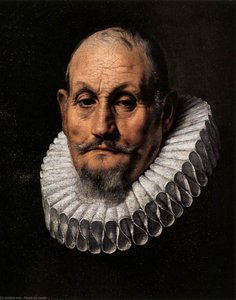
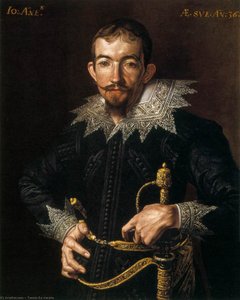
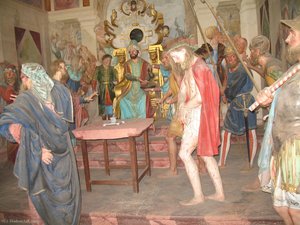
Much of Tanzio’s most significant work was born from the sacred landscapes of Northern Italy, particularly through his monumental contributions to the Sacro Monte at Varallo Sesia. Working alongside the esteemed Pier Francesco Mazzucchelli, known as il Morazzone, Tanzio helped transform these pilgrimage sites into immersive spiritual experiences. His ability to compose large-scale, crowded, and animated scenes—such as his breathtaking depictions of biblical catastrophes—demonstrates a command over narrative scale that few of his contemporaries could match. In works like the Battle of Sennacherib, one can witness the artist’s ability to orchestrate complex, scenographic dioramas where every figure contributes to a larger sense of divine or historical upheaval. Beyond the grand frescoes of the Sacri Monti, Tanzio’s individual masterpieces reveal a fascination with the human condition in its most vulnerable and violent states. His repertoire includes:- The Portrait of a Gentleman (1620): A stunning example of his ability to use realistic detail and tenebrism to capture the dignified yet somber essence of the Baroque subject.
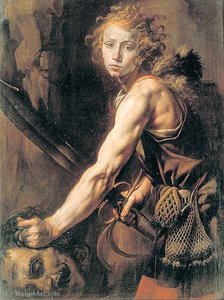
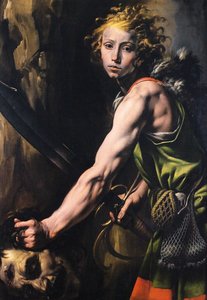
- David and Goliath: A work that exemplifies his penchant for gruesome, high-stakes drama, showcasing the physical tension and the visceral reality of the biblical struggle.
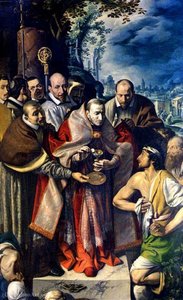
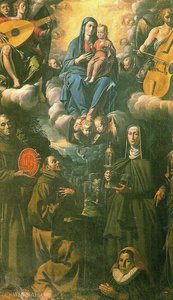
- Religious Iconography: From the poignant Charles Borromeo giving communion to the plague victims to his various depictions of the Madonna, his work consistently bridges the gap between the earthly suffering of the faithful and the divine light of grace.
Tanzio da Varallo
1580 - 1633 , Italy
Quick Facts
- Artistic Movement Or Style: Late Mannerist / Early Baroque; Tenebrism
- Artists Or Movements Influenced By This Artist: ['Sacro Monte Varallo']
- Artists Who Influenced This Artist:
- Caravaggio
- Giovanni Battista Crespi
- Giulio Cesare Procaccini
- Date Of Birth: ca. 1580
- Date Of Death: ca. 1632/1633
- Full Name: Antonio d'Enrico, called Tanzio da Varallo
- Nationality: Italian
- Notable Artworks:
- David and Goliath
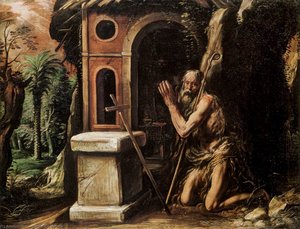
- St Onofrio
- Portrait of a Gentleman
- Place Of Birth: Riale d’Alagna, Italy
Related Articles
Leonardo da Vinci's Masterpieces: Explore 25 Iconic Artworks for Your Home | ArtsDot
Journey through Leonardo da Vinci's genius with our curated selection of 25 iconic artworks. Explore the stories behind Mona Lisa, The Last Supper & more Renaissance masterpieces. Find museum-quality art reproductions for your home at ArtsDot.com.

Beyond the Horizon: 10 Landscape Masterpieces for Your Home Decor
Journey through 10 breathtaking landscape paintings by Monet, Van Gogh & more! Explore iconic artworks, artistic techniques & find inspiration for your home decor. Museum-quality reproductions at ArtsDot.com. Discover all masterpieces on ArtsDot.com

Romantic Landscapes: 10 Masterpieces for Your Home | ArtsDot
Journey through 10 Romantic landscape masterpieces by Friedrich, Turner & Cole. Explore emotional art, sublime nature scenes & iconic 19th-century paintings. Find museum-quality reproductions for your home at ArtsDot.com – discover the full collection online!

Evocations of Place: A Historical Journey Through Landscape Art
Explore the rich history of landscape art with ArtsDot. Discover renowned artists, movements like Impressionism & Romanticism, and expert guidance for collecting timeless pieces. Find your perfect serene escape today!

Baroque Masterpieces: 10 Paintings That Defined an Era |
Journey through the drama & grandeur of Baroque art! Explore 10 masterpieces by Caravaggio, Rembrandt, Rubens & more. Discover stunning oil paintings, rich colors & timeless stories. Find museum-quality reproductions at .