 Preview
 Send
Send Share
Share
 Details

 Download
 Similars
 X-Ray
X-Ray Diaporama
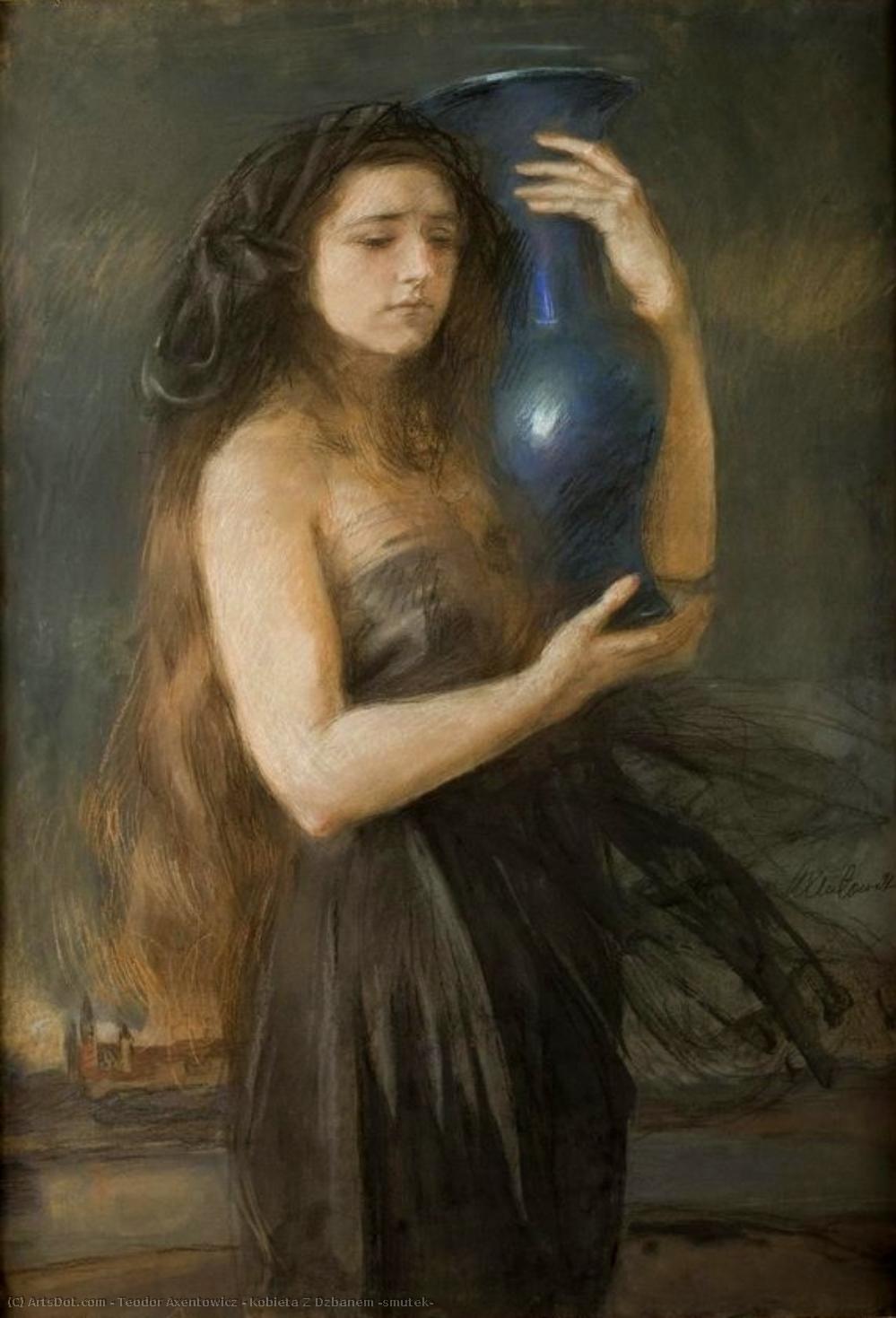
Kobieta Z Dzbanem (smutek)

 Read More
Giclée / Art Print
Museum-quality giclée or canvas print with fast production and flexible finish options. ( Buy Hand Made Painting Buy Image)




































Pick from our preset sizes that match the artwork's original proportions.

You may enter your own dimensions to fit a specific frame or space. If your selected size does not match the original image's proportions, we will either crop the artwork or extend the image with a mirrored or solid-fill edge. A digital mockup will be sent for your approval before production begins.
Please note that the on-screen preview does not reflect the actual cropping or extension. Only the mockup will accurately show the final composition.
While custom sizes are available, we recommend selecting a dimension from the predefined list to preserve the original proportions.
Worldwide Delivery () in 2 weeks instead of standard 4/5 weeks. (21 August)

Free Worldwide Express Shipping

High-Quality Linen Canvas

Full Shipping Insurance

Customs Tax Refund Guarantee

True Color Matching Guarantee

60-Day Return Policy (Defects Only)

100% Money-Back Guarantee

Bulk Discount Offer
 Glass option is only available in size under 110 CM

Kobieta Z Dzbanem (smutek)
Giclée / Art Print
Reproduction Size
-


Total Price
$ 63
Related Artworks
Artist Biography
Teodor Axentowicz: Life and Legacy
Early Life and Education
- Teodor Axentowicz was born on May 13, 1859, in Brașov (then part of Austria-Hungary, now Romania) to a family with Polish-Armenian ancestry.
- He received his initial artistic training at the Academy of Fine Arts in Munich between 1879 and 1882.
- Axentowicz continued his studies in Paris under Carolus-Duran until 1895, a period crucial for developing his style and technique.
Artistic Development and Influences
- During his time in Paris, Axentowicz worked as a copyist, reproducing works by masters like Titian and Botticelli for publications such as *Le Monde Illustré*. This honed his technical skills and deepened his understanding of art history.
- His early travels to London and Rome allowed him to establish himself as a portrait artist.
- He was influenced by the academic tradition, but also began to explore more modern approaches to painting, particularly in his depictions of folk life.
Collaboration on the Racławice Panorama
- In 1894, Axentowicz collaborated with Wojciech Kossak and Jan Styka on the *Racławice Panorama*, a monumental panoramic painting commemorating the Battle of Racławice during the Kościuszko Uprising.
- This project was a significant undertaking in Polish art history and showcased his ability to work on a large scale and contribute to national narratives.
Professor at Kraków Academy & Artistic Focus
- In 1895, Axentowicz moved to Kraków and became a professor at the local Academy of Fine Arts, a position he held until 1934.
- He founded an artistic conservatory for women in 1897, demonstrating his commitment to art education.
- Axentowicz is best known for his portraits and scenes depicting the life of the Hutsul people – a Ukrainian ethnic group inhabiting the Carpathian Mountains.
- His depictions of Hutsul culture are characterized by their sensitivity, realism, and vibrant color palettes. He captured their rituals, customs, and daily lives with remarkable detail.
Membership in Artistic Societies & Recognition
- He was a founding member of the *Sztuka* (Art) society, an important group within the Young Poland movement. Other members included Józef Chełmoński and Jan Stanisławski.
- Axentowicz became Rector of the Academy of Fine Arts in Kraków in 1910.
- He received numerous awards and accolades throughout his career, including gold medals at international exhibitions in Berlin, St. Louis, Munich, London, Venice, and Paris.
Later Life and Historical Significance
- Axentowicz continued to paint and exhibit his work until his death on August 26, 1938, in Kraków.
- His paintings are held in major public collections throughout Poland and private collections worldwide.
- He is remembered as a significant figure in Polish art history, particularly for his contributions to the depiction of folk culture and his role in shaping artistic education in Kraków. His work provides valuable insights into the lives and traditions of the Hutsul people during a period of cultural change.
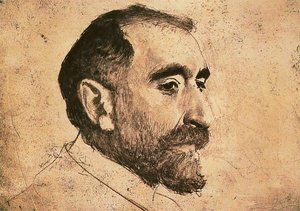
Teodor Axentowicz
1859 - 1938 , Romania
Quick Facts
- Birth Date: 1859-05-13
- Birth Place: Brașov, Romania
- Death Date: 1938-08-26
- Influenced By: Carolus-Duran
- Movement: Young Poland
- Name: Teodor Axentowicz
- Nationality: Polish-Armenian
- Notable Works:
- Racławice Panorama (collaboration)
- Scenes of Hutsul life
- Portraits