 Preview
 Send
Send Share
Share
 Details

 Download
 Similars
 X-Ray
X-Ray Diaporama
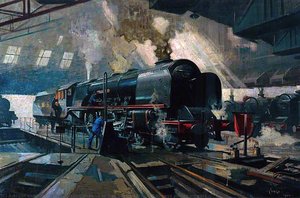
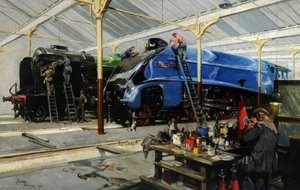
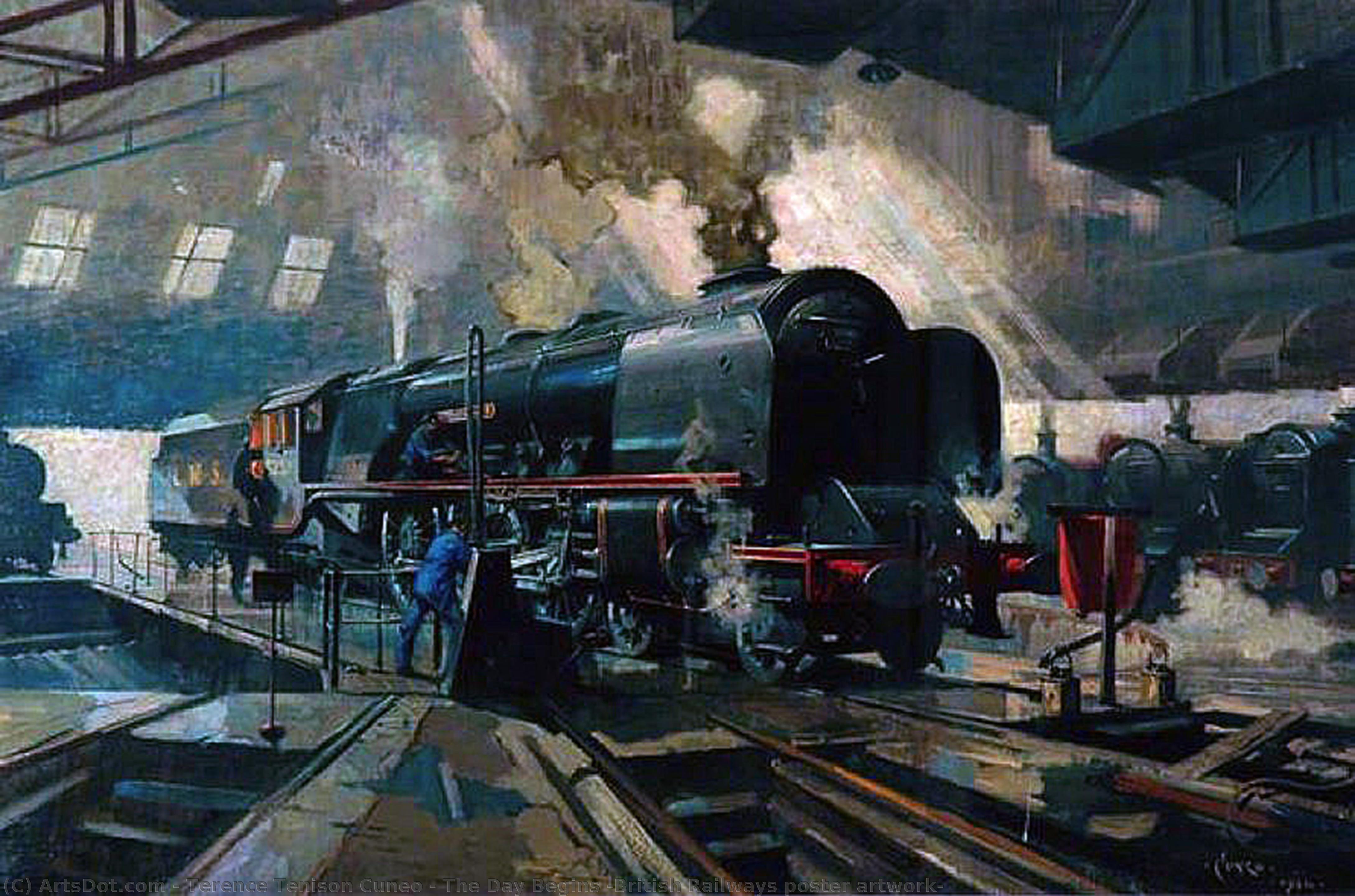
The Day Begins (British Railways poster artwork)
 1946
1946 89.0 x 127.0 cm
 Read More
Giclée / Art Print
Museum-quality giclée or canvas print with fast production and flexible finish options. ( Buy Hand Made Painting Buy Image)




































Pick from our preset sizes that match the artwork's original proportions.

You may enter your own dimensions to fit a specific frame or space. If your selected size does not match the original image's proportions, we will either crop the artwork or extend the image with a mirrored or solid-fill edge. A digital mockup will be sent for your approval before production begins.
Please note that the on-screen preview does not reflect the actual cropping or extension. Only the mockup will accurately show the final composition.
While custom sizes are available, we recommend selecting a dimension from the predefined list to preserve the original proportions.
Worldwide Delivery () in 2 weeks instead of standard 4/5 weeks. (25 August)

Free Worldwide Express Shipping

High-Quality Linen Canvas

Full Shipping Insurance

Customs Tax Refund Guarantee

True Color Matching Guarantee

60-Day Return Policy (Defects Only)

100% Money-Back Guarantee

Bulk Discount Offer
 Glass option is only available in size under 110 CM

The Day Begins (British Railways poster artwork)
Giclée / Art Print
Reproduction Size
-


Total Price
$ 63
Collectible Description
Introduction
The National Railway Museum in York, England, is a hidden gem for art enthusiasts. Among its extensive collection of railway-related artworks, one painting stands out: "The Day Begins" by Terence Tenison Cuneo. This article explores the significance and beauty of this masterpiece.Terence Tenison Cuneo
Terence Tenison Cuneo (1907-1996) was a renowned British artist known for his railway-themed paintings. He was the official war artist during World War II and later became a member of the Royal Society of Arts. His works are highly sought after by collectors worldwide, and "The Day Begins" is one of his most famous pieces.The Day Begins
"The Day Begins" (89 x 127 cm) is an oil on canvas painting that showcases the beauty and majesty of British Railways. The artwork depicts a steam locomotive pulling out of a station, with the sun rising in the background. The composition is expertly balanced, with the train's smoke and steam adding to the overall dynamism of the scene.Significance
"The Day Begins" is a testament to Cuneo's skill as an artist and his passion for railways. The painting captures the essence of British Railways during its heyday, showcasing the power and elegance of steam locomotives. It also highlights the importance of railways in everyday life, serving as a reminder of their historical significance.Conclusion
The National Railway Museum is home to many treasures, but "The Day Begins" by Terence Tenison Cuneo is undoubtedly one of its most significant and beautiful pieces. This painting showcases the artist's skill and passion for railways, serving as a reminder of their historical significance and beauty. Discover more about Terence Tenison Cuneo and his works on ArtsDot.com.Related Artworks








Artist Biography
The Industrial Brushstroke of Terence Tenison Cuneo
To gaze upon the canvases of Terence Tenison Cuneo is to witness a vibrant confluence of human endeavor and mechanical might. He was an English painter whose artistic vision seemed inextricably linked to the pulse of progress, finding his most profound subjects in the roaring heart of the railway, the disciplined charge of military formations, and the sheer drama of industrial life. Born in London in 1907, Cuneo’s early influences were steeped in a rich artistic lineage; he was the son of Cyrus Cincinato Cuneo and Nell Marion Tenison, both artists who had studied under the esteemed Whistler in Paris. This immersion in established artistic circles provided him with a foundational understanding of technique that would prove invaluable throughout his prolific career.
A Career Forged by Conflict and Industry
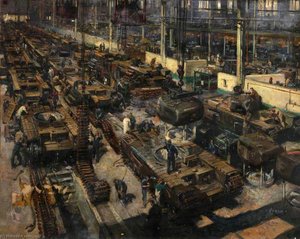
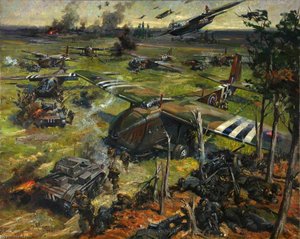
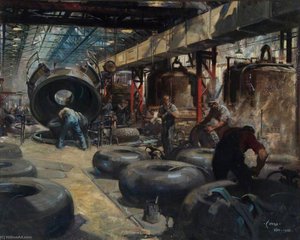
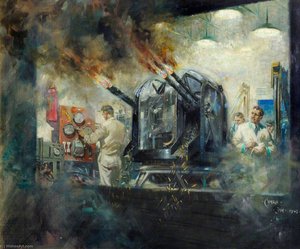
Cuneo’s formal training took him through institutions such as Sutton Valence School, Chelsea Polytechnic, and the Slade School of Art. Initially, his talents were channeled into illustration for magazines and periodicals, a demanding field that honed his observational skills to an exquisite point. However, it was in oils that his true passion began to bloom. The shadow of global conflict proved to be a crucible for his artistic development. During the Second World War, while serving as a sapper in the Royal Engineers, Cuneo did not abandon his brush entirely. He contributed illustrations for the war artists' advisory committee, capturing the raw reality of tank and aircraft factories. Furthermore, he was commissioned by the Foreign Office to create anti-Nazi drawings, an act of powerful visual resistance that culminated in an exhibition at the Palaquin Fine Arts Gallery in 1942.
The Majesty of Movement: Railways and Coronation
Following the war, Cuneo found a monumental focus for his considerable skill. He was commissioned to produce a series of works dedicated to illustrating railways, bridges, and locomotives—subjects that allowed him to merge technical accuracy with breathtaking dynamism. His mastery over depicting machinery in motion became legendary. Yet, perhaps the pinnacle of his public recognition arrived when he was appointed the official artist for the coronation of Queen Elizabeth II in 1953. This monumental commission thrust his name into global prominence, cementing his reputation as a chronicler of significant national moments.
A Versatility Beyond Steam and Steel
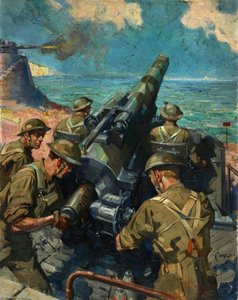
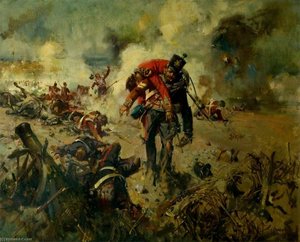
While the steam engine and the battlefield remain hallmarks of his oeuvre, to categorize Cuneo solely by these subjects would be to overlook the breadth of his genius. His artistic reach extended across a spectrum that included grand landscapes, evocative depictions of big game in Africa, and intimate portraiture—including likenesses of H.M. The Queen herself. He also embraced regimental commissions, capturing the tension of battle scenes alongside the quiet dignity of portraits. Cuneo’s work is not merely documentation; it is an interpretation. It breathes life into rivets, smoke, and muscle, allowing the viewer to feel the grit beneath the polished brass and hear the whistle blow across the painted expanse.
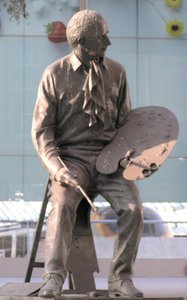
terence tenison cuneo
1907 - 1996
Quick Facts
- Artistic Movement Or Style: Realism/Illustration
- Date Of Birth: 1907
- Date Of Death: 1996
- Full Name: Terence Tenison Cuneo
- Nationality: English
- Notable Artworks: ['Coronation of Queen Elizabeth II']
- Place Of Birth: London, England