 Preview
 Send
Send Share
Share
 Details

 Download
 Similars
 X-Ray
X-Ray Diaporama
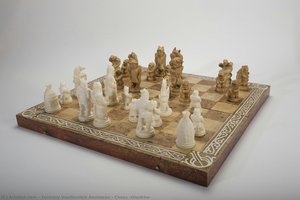
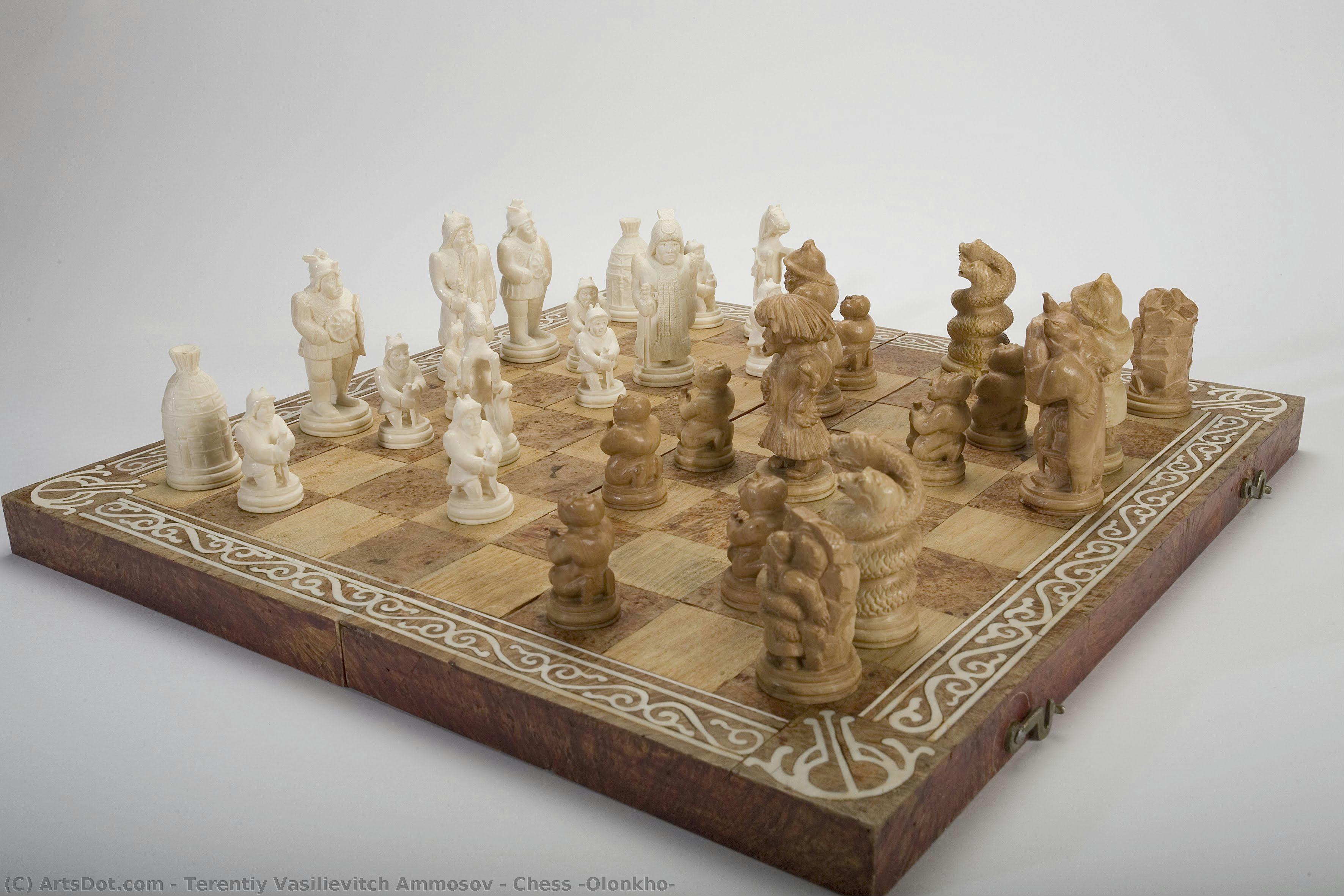
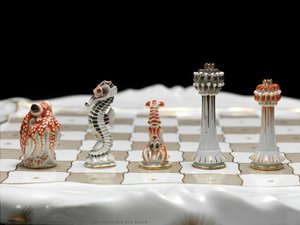
Chess «Olonkho»

 Read More
Giclée / Art Print
Museum-quality giclée or canvas print with fast production and flexible finish options. ( Buy Hand Made Painting Buy Image)




































Pick from our preset sizes that match the artwork's original proportions.

You may enter your own dimensions to fit a specific frame or space. If your selected size does not match the original image's proportions, we will either crop the artwork or extend the image with a mirrored or solid-fill edge. A digital mockup will be sent for your approval before production begins.
Please note that the on-screen preview does not reflect the actual cropping or extension. Only the mockup will accurately show the final composition.
While custom sizes are available, we recommend selecting a dimension from the predefined list to preserve the original proportions.
Worldwide Delivery () in 2 weeks instead of standard 4/5 weeks. (25 August)

Free Worldwide Express Shipping

High-Quality Linen Canvas

Full Shipping Insurance

Customs Tax Refund Guarantee

True Color Matching Guarantee

60-Day Return Policy (Defects Only)

100% Money-Back Guarantee

Bulk Discount Offer
 Glass option is only available in size under 110 CM

Chess «Olonkho»
Giclée / Art Print
Reproduction Size
-


Total Price
$ 63
Related Artworks





Artist Biography
Jackson Pollock: A Revolutionary of American Abstraction
Born in Cody, Wyoming, in 1912, Paul Jackson Pollock—the name he initially carried before adopting his father’s surname—emerged from a transient childhood marked by frequent relocations across the American West and Southwest. His family, rooted in Scotch-Irish heritage, navigated a series of moves, shaped by his father's work as a grain buyer and elevator manager. This itinerant upbringing instilled within him a sense of restlessness and a detachment from conventional roots, qualities that would profoundly influence his artistic approach. Early exposure to diverse landscapes and cultures—from the stark beauty of the plains to the burgeoning art scene of Los Angeles—laid the groundwork for an artist who sought to capture not just visual reality but also the underlying currents of experience.
Pollock’s formal artistic training was limited, yet his creative spirit found fertile ground at Manual Arts High School in Los Angeles. There, under the guidance of Frederick John de St. Vrain Schwankovsky, a painter and illustrator deeply involved with Theosophical Society, he began to explore abstract concepts and develop an interest in spirituality and symbolism. This early exposure to esoteric ideas would later inform his process, encouraging him to move beyond representational art and delve into the realm of pure feeling and gesture. The influence of European modernists like Wassily Kandinsky, whose emphasis on color and emotion resonated with Pollock’s burgeoning artistic sensibilities, further shaped his trajectory.
The Emergence of Action Painting
Pollock's distinctive style—often described as “drip painting” or “action painting”—crystallized in the late 1940s. Rejecting traditional easel and brush techniques, he began to experiment with pouring and dripping paint directly onto vast canvases laid flat on the floor. This revolutionary approach transformed the act of painting into a dynamic, almost performative process. Pollock wasn’t simply applying color; he was engaging in a physical struggle with the medium, channeling his emotions and impulses through movement and gesture. As he famously stated, “I don't believe in accidents.” Rather, he embraced chance as an integral part of the creative process, allowing the paint to flow and interact according to its own volition.
The technique involved using sticks, knives, and other tools to manipulate the paint—often mixing it with turpentine—and applying it to the canvas from multiple angles. This “all-over” approach meant that no single point of focus emerged; instead, the entire surface became a field of interwoven color and texture. Critics initially struggled to comprehend this radical departure from established artistic conventions, often dismissing Pollock’s work as chaotic or random. However, his unwavering commitment to his unique method ultimately paved the way for a new generation of abstract artists.
Key Works and Influences
Several works stand out as pivotal in establishing Pollock's reputation. “Blue Poles” (1952), a monumental canvas dominated by vibrant blue hues, became one of his most recognizable pieces and cemented his status as a leading figure in the Abstract Expressionist movement. "Mural" (1948) is another significant example, showcasing his expansive use of color and layered application techniques. His exploration of automatism—a technique rooted in Surrealism that sought to bypass conscious control—further fueled his creative process, allowing him to tap into a deeper level of intuition and spontaneity.
Pollock’s work was profoundly influenced by the burgeoning art scene in New York City during the 1940s and 50s. He engaged with fellow Abstract Expressionists like Lee Krasner, Mark Rothko, and Willem de Kooning, forming a close artistic community that challenged conventional notions of beauty and representation. The influence of European artists such as Piet Mondrian and Kazimir Malevich—whose geometric abstraction had profoundly impacted the development of modern art—is also evident in Pollock’s work, albeit filtered through his own unique sensibility.
Legacy and Historical Significance
Jackson Pollock's untimely death in 1956, following a car accident, tragically cut short a brilliant career. However, his legacy as one of the most influential artists of the 20th century remains secure. He fundamentally altered the course of American art by rejecting traditional representational techniques and embracing abstraction as a means of expressing inner experience. His “action painting” revolutionized the process of creation, emphasizing spontaneity, gesture, and the physical engagement of the artist with the medium.
Pollock’s work continues to fascinate and inspire artists today. His willingness to challenge conventions, his embrace of chance, and his profound exploration of human emotion have left an indelible mark on the history of art. He remains a potent symbol of artistic freedom and innovation—a testament to the transformative power of individual vision.
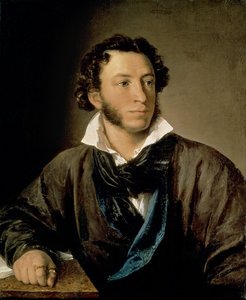
terentiy vasilievitch ammosov
1912 - 1988 , Russia
Quick Facts
- Artistic Movement Or Style: Abstract Expressionism, Action Painting
- Artists Or Movements Influenced By This Artist: ['Lee Krasner']
- Artists Who Influenced This Artist: ['Edward Gordon Craig']
- Date Of Birth: January 28, 1912
- Date Of Death: August 11, 1956
- Full Name: Paul Jackson Pollock
- Nationality: American
- Notable Artworks:
- Blue Poles
- Mural
- Convergence
- Place Of Birth: Cody, Wyoming, USA