 Preview
 Send
Send Share
Share
 Details

 Download
 Similars
 X-Ray
X-Ray Diaporama
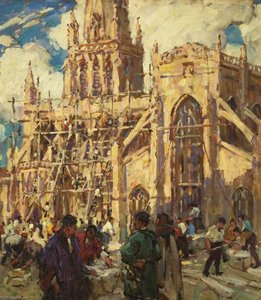
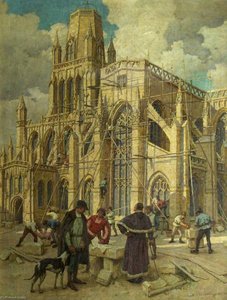
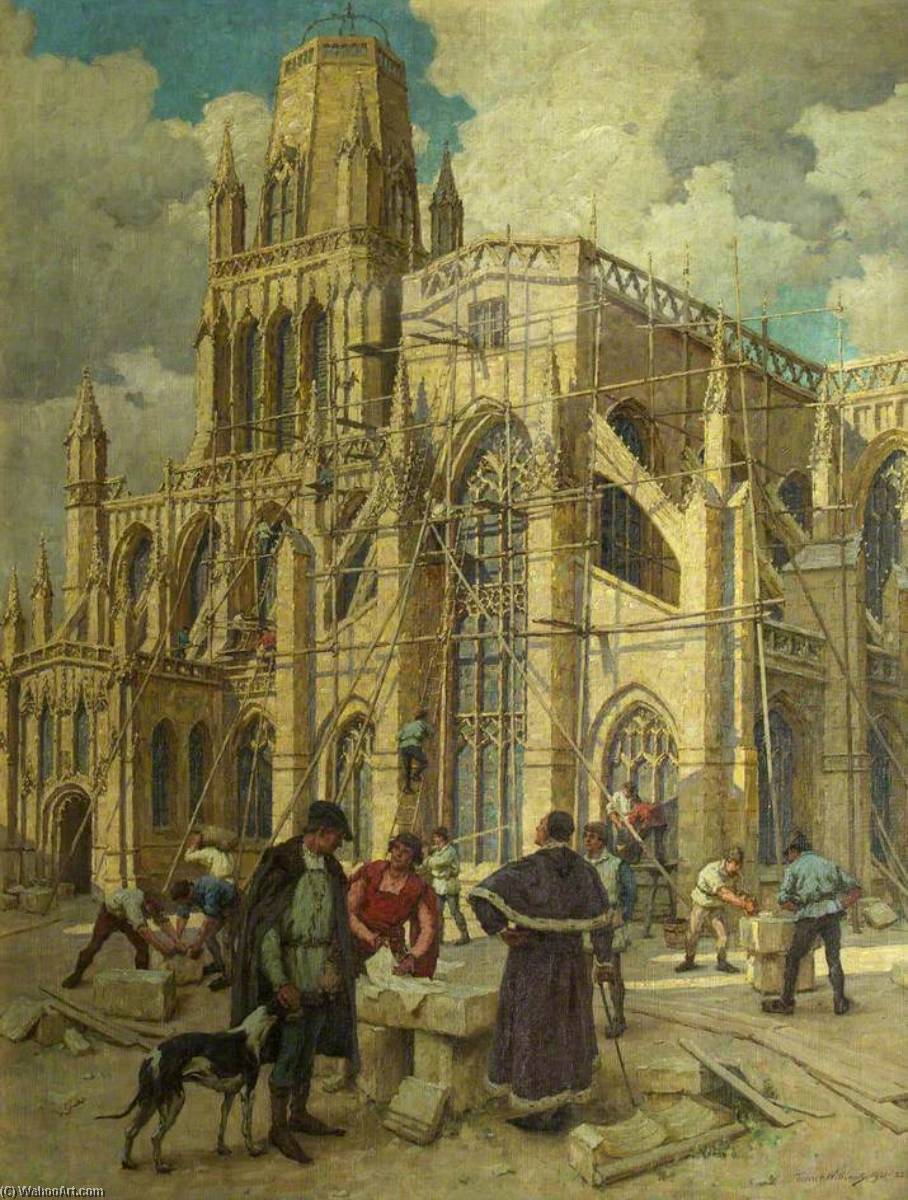
The Rebuilding of St Mary Redcliffe by William Canynges in 1452
 Oil
Oil- WallArt
- Romanticism
 1922
1922- Modern
 225.0 x 196.0 cm
 Bristol Museum - Art Gallery
 Read More
Hand Made Oil Reproduction
Hand-painted oil on canvas in your size and frame, made to order by our artists. ( Buy Print Buy Image)




P118B $10

P118H $10

P118W $10

P438Z $10

P508JH $12

P508YH $12

P805H $10

P805Z $10

P919BZ $10

P919G $10

P919XJ $10

P959ZH $10

P968JZ $12

W106C $8

W218G $10

W218JH $8

W218Y $10

W307PJ $10

W316G $10

W316PJ $8

W316Y $10

W398PJ $8

W4111J $10

W500HY $15

W500JH $15

W692G $12

W849H $8

W940BG $15

W953PJ $8




Pick from our preset sizes that match the artwork's original proportions.

You may enter your own dimensions to fit a specific frame or space. If your selected size does not match the original image's proportions, we will either crop the artwork or extend the painting with additional hand-painted elements. A digital mockup will be sent for your approval before production begins.
Please note that the on-screen preview does not reflect the actual cropping or extension. Only the mockup will accurately show the final composition.
While custom sizes are available, we recommend selecting a dimension from the predefined list to preserve the original proportions.
After order, ArtsDot.com team will email client for instructions and provide a mockup preview
Worldwide Delivery () in 3/4 weeks instead of standard 5 weeks. (30 August). No compromise on quality.

Free Worldwide Express Shipping

High-Quality Linen Canvas

Full Shipping Insurance

Customs Tax Refund Guarantee

True Color Matching Guarantee

60-Day Return Policy (Defects Only)

100% Money-Back Guarantee

Bulk Discount Offer
 Glass option is only available in size under 110 CM

The Rebuilding of St Mary Redcliffe by William Canynges in 1452
Reproduction Medium
Reproduction Size
-


Total Price
$ 263
A Vision of Devotion: The Rebuilding of St Mary Redcliffe
In this sweeping historical tableau, Terrick John Williams invites the viewer to step back through the corridors of time into the heart of 15th-century Bristol. The Rebuilding of St Mary Redly by William Canynges in 1452 is far more than a mere depiction of architectural progress; it is a profound meditation on community, faith, and the enduring legacy of human endeavor. The canvas breathes with the energy of a monumental undertaking, capturing the precise moment when stone, sweat, and spirit converge to raise a sanctuary that would define an era. Williams masterfully orchestrates a scene where the grandeur of the burgeoning clock tower and twin steeples serves as a backdrop to the intimate, rhythmic labors of the people below.
The composition is a triumph of narrative depth, blending the monumental with the mundane. As the eye wanders across the construction site, one encounters a tapestry of human life: men and women engaged in the arduous tasks of masonry and scaffolding, their figures small yet vital against the rising stone. The presence of a solitary dog in the foreground adds a touch of domestic realism, grounding the epic historical event in the lived experience of the period. This juxtaposition—the soaring, spiritual ambition of the church architecture set against the earthy, tactile reality of the workers—creates a powerful tension that draws the observer into the very pulse of the 1452 reconstruction project.
Mastery of Light and Historical Texture
Drawing upon his celebrated expertise in capturing the ephemeral qualities of light, Williams employs a technique that lends the scene an almost ethereal glow. Though the subject is grounded in historical fact, the execution possesses a Romantic luminosity that softens the edges of the heavy stone and illuminates the dust of the construction site. The artist utilizes a rich, layered approach to texture, allowing the viewer to almost feel the grit of the mortar and the weight of the timber beams. This skillful use of light does not merely illuminate the scene; it sanctifies it, casting a divine radiance over the industrious masses and suggesting that their labor is an act of worship in itself.
For the discerning collector or interior designer, this piece offers a sophisticated anchor for a room, providing both a conversation piece of immense historical weight and a window into a lost world. The scale of the work—a commanding 225 x 196 cm—allows its intricate details to unfold slowly, rewarding prolonged contemplation. Whether placed in a stately library, a grand hallway, or a curated gallery space, this reproduction serves as a testament to the timelessness of human aspiration. It is an evocative masterpiece that brings the dignity of history and the warmth of classical British painting into the modern home, offering an atmosphere of permanence, heritage, and profound inspiration.
Related Artworks
![Legend Of St Francis - [23] - St Francis Mourned By St Clare — Giotto Di Bondone, Gothic](/media/artworks/images-thumb/17/1c/171c284c41dc3ef8bca83e51c1e1e531.jpg)

Artist Biography
The Luminous Legacy of Terrick John Williams
Terrick John Williams (1860–1936) stands as a pivotal figure in British marine landscape painting, a master whose brush captured the ephemeral dance of light upon water with unparalleled sensitivity. Born in Liverpool on July 20, 1860, Williams was the son of a businessman involved in the diverse trades of perfumery and soap making. While his family envisioned a future for him within the steady world of commerce, the young artist possessed an unyielding devotion to the canvas. This determination led him away from the expected paths of industry toward a transformative journey through the great artistic hubs of Europe, a voyage that would ultimately define his aesthetic language and secure his place within the canon of British art history.
His formal education was as much a product of wanderlust as it was of rigorous discipline. In 1885, Williams embarked upon a period of intense study that saw him traversing the continent to absorb the diverse techniques of the era's masters. In Antwerp, he sought the guidance of Charles Verlat, and later, in the vibrant atmosphere of Paris, he immersed himself in the prestigious Académie Julian. Under the tutelage of luminaries such as Jean-Joseph Benjamin-Constant, William-Adolphe Bouguereau, and Tony Robert-Fleury, Williams honed a style that blended classical precision with an emerging Impressionistic fascination for atmospheric effects. These formative years instilled in him a lifelong dedication to capturing the transient beauty of the natural world—the way a sudden mist might soften a coastline or how the setting sun might ignite a canal.
Venetian Splendor and Cornish Echoes
The heart of Williams’s oeuvre lies in his ability to translate geographical landscapes into emotional experiences. He is perhaps most celebrated for his luminous renderings of Venice, where he drew profound inspiration from the Venetian School masters, including Claude Lorrain and Nicolas Punctual. His canvases of the Italian city are characterized by a vibrant, pulsating palette; he utilized rich yellows, oranges, and golds to mirror the sun-drenched facades and the shimmering reflections of the canals. Through the skillful application of glazing techniques, Williams achieved a remarkable depth of color, creating a sense of luminosity that seems to radiate from within the painting itself, inviting the viewer to feel the warmth of the Mediterranean light.
Yet, while Venice provided him with a stage for grand, sun-soaked vistas, the rugged coastlines of Cornwall offered a more intimate, rhythmic counterpart to his work. Settling in St. Ives in 1890, Williams became deeply entwied with the local landscape, alternating between this coastal sanctuary and his London residence. His Cornish scenes, such as the evocative Sunset Glow, St Ives, demonstrate a profound mastery of the quiet transitions of nature. In these works, the receding tide leaves behind mirror-like sheens on the sand, reflecting the dying embers of the day. This ability to capture the "rhythmic breathing" of the ocean allowed him to bridge the gap between the monumental and the intimate, making the landscape feel both epic and deeply personal.
Artistic Recognition and Enduring Significance
Throughout his prolific career, Williams earned significant acclaim on the international stage, proving that his vision resonated far beyond the shores of England. His technical prowess was formally recognized by the prestigious Paris Salon, where he was awarded a third-class medal in 1908 and a second-class medal in 1911. This period of success also saw him honored with a second-class medal in Barcelona, further cementing his reputation as a painter of international caliber. His work was not confined to European galleries; he also exhibited at the Carnegie Institute in Philadelphia, bringing his unique interpretation of light and maritime atmosphere to an American audience.
As a member of the Royal Academy, Williams contributed to the evolution of British landscape painting during a period of significant stylistic transition. His ability to weave together the historical weight of Romanticism with the fleeting, sensory focus of Impressionism allowed him to create works that felt both timeless and contemporary. Whether depicting the industrial grit of a coal mine in Mining or the architectural grandeur of a historical reconstruction like The Rebuilding of St Mary Redcliffe, his work remains a testament to the power of light as a narrative tool. Today, the legacy of Terrick John Williams lives on through his ability to freeze moments of profound stillness and beauty, offering a window into a world where the elements of earth, water, and sky converge in perfect, luminous harmony.
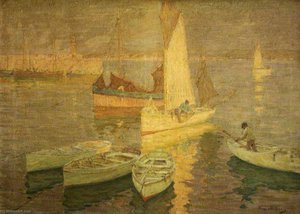
terrick john williams
1860 - 1936
Quick Facts
- Artistic Movement Or Style: Impressionist
- Artists Or Movements Influenced By This Artist: ['John Varley I']
- Artists Who Influenced This Artist: ['Charles Verlat']
- Date Of Birth: 1860-07-20
- Date Of Death: 1936-07-20
- Full Name: Terrick John Williams
- Nationality: British
- Notable Artworks: ['The Quayside, Concarneu']
- Place Of Birth: Liverpool, England
Related Articles

High Medieval Art: 10 Masterpieces That Shaped an Era | ArtsDot
Journey through High Medieval Art! Explore 10 iconic masterpieces – from Giotto's frescoes to stunning Gothic cathedrals. Discover the stories behind these timeless paintings, sculptures & illuminated manuscripts. Find museum-quality art reproductions at ArtsDot.com.

El Greco's Masterpieces: Explore 25 Iconic Paintings & Spiritual Visions | ArtsDot
Journey through El Greco's 25 most iconic paintings! Explore the spiritual depth & dramatic beauty of this Spanish Renaissance master. Discover art history, techniques & find museum-quality reproductions for your home at ArtsDot.com.
Illuminating Faith & Power: A Journey Through Medieval Art (c. 500 – c. 1500)
Explore the rich history of Medieval Art (c. 500 – c. 1500) with ArtsDot. Discover Byzantine mosaics, Gothic cathedrals & Renaissance masterpieces. Expert insights & museum-quality reproductions.

Giotto's Masterpieces: 25 Renaissance Artworks for Your Home | ArtsDot
Explore 25 breathtaking artworks by Giotto di Bondone, a Renaissance master. Discover the stories behind iconic frescoes & paintings like the Scrovegni Chapel cycle. Find museum-quality Giotto reproductions and elevate your home decor with ArtsDot.com.

Late Medieval Masterpieces: 10 Artworks That Defined an Era | ArtsDot
Journey through 10 defining Late Medieval masterpieces – from Giotto's frescoes to Jan van Eyck’s realism. Explore the stories, techniques & vibrant colors of Gothic art. Find museum-quality reproductions and elevate your home decor with ArtsDot.com! Discover all masterpieces on ArtsDot.com