 Preview
 Send
Send Share
Share
 Details

 Download
 Similars
 X-Ray
X-Ray Diaporama
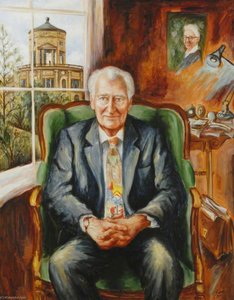
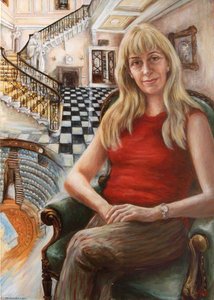
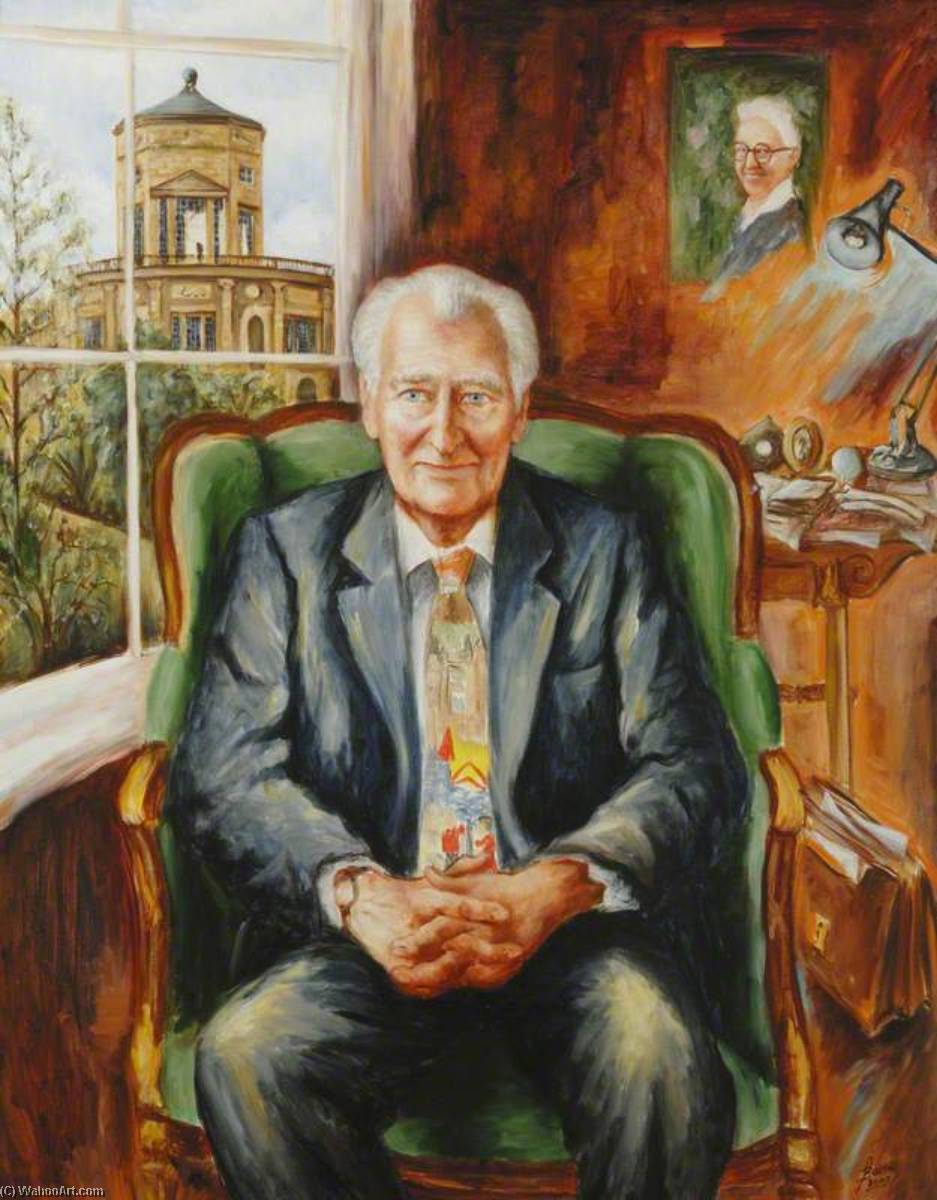
Professor Sir Richard Doll (1912–2005)
 2003
2003 104.0 x 83.0 cm
 Green Templeton College
 Read More
Giclée / Art Print
Museum-quality giclée or canvas print with fast production and flexible finish options. ( Buy Hand Made Painting Buy Image)




































Pick from our preset sizes that match the artwork's original proportions.

You may enter your own dimensions to fit a specific frame or space. If your selected size does not match the original image's proportions, we will either crop the artwork or extend the image with a mirrored or solid-fill edge. A digital mockup will be sent for your approval before production begins.
Please note that the on-screen preview does not reflect the actual cropping or extension. Only the mockup will accurately show the final composition.
While custom sizes are available, we recommend selecting a dimension from the predefined list to preserve the original proportions.
Worldwide Delivery () in 2 weeks instead of standard 4/5 weeks. (25 August)

Free Worldwide Express Shipping

High-Quality Linen Canvas

Full Shipping Insurance

Customs Tax Refund Guarantee

True Color Matching Guarantee

60-Day Return Policy (Defects Only)

100% Money-Back Guarantee

Bulk Discount Offer
 Glass option is only available in size under 110 CM

Professor Sir Richard Doll (1912–2005)
Giclée / Art Print
Reproduction Size
-


Total Price
$ 63
Related Artworks










Artist Biography
The Convergence of Vision and Inquiry
Tess Barnes stands as a singular figure in the contemporary art world, an artist whose practice is fundamentally rooted in a profound engagement with scientific inquiry. Born in Philadelphia in 1957, Barnes has cultivated a rare convergence of disciplines, yielding strikingly beautiful and intellectually stimulating artworks that bridge the gap between empirical observation and aesthetic wonder. Her journey did not begin within the confines of traditional academic rigor, but rather through an early, burgeoning fascination with the precision of anatomical illustration and the evocative, atmospheric power of Impressionistic landscapes. This foundational passion would eventually become the cornerstone of her distinctive style, informing an enduring commitment to exploring the intricate connections between visual perception and scientific understanding.
The evolution of Barnes’ technique is a testament to her ability to synthesize disparate influences into a cohesive visual language. While her formative years were shaped by the explorations of form and color found in the works of Cézanne and Matisse, it was her encounter with the mastery of Rembrandt that profoundly altered her approach to light and shadow. From the Dutch master, she inherited an appreciation for chiaroscuro—the dramatic use of tonal subtlety and psychological depth—which allows her to imbue her subjects with a sense of mystery and internal life. This pursuit of technical excellence led her to postgraduate studies at Yale University’s School of Fine Arts, where she honed her skills in oil painting and refined her ability to translate complex, often invisible, scientific concepts into tangible visual representations.
The Art of Scientific Portraiture
At the heart of Barnes' artistic vision is a series of meticulously rendered portraits that transcend mere photographic likeness. Her subjects—often iconic scientists, anatomical figures, or delicate scientific instruments—are treated with a reverence that honors both their historical significance and their physical form. Rather than striving for clinical accuracy, Barnes employs Impressionistic brushstrokes and nuanced color palettes to convey the emotional resonance and psychological state of her subjects. Her canvases pulsative with atmosphere, capturing fleeting moments of contemplation and hinting at the underlying narratives of discovery that define the scientific spirit.
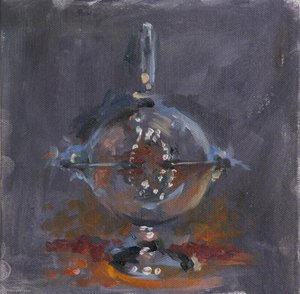
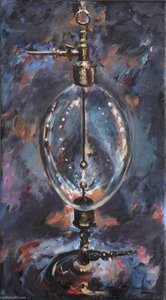
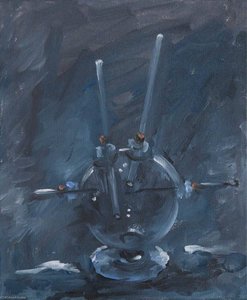
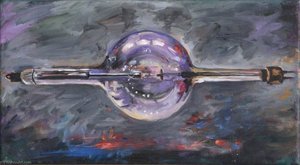
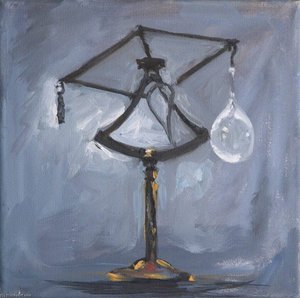
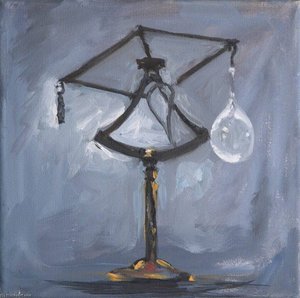
In her work, the boundary between the observer and the observed begins to dissolve. Through her lens, a piece such as Henry Cavendish’s Gas Balance becomes more than a depiction of an apparatus; it is a study in delicate beauty and scientific precision, utilizing haunting grey tones and a balanced composition to evoke the quiet intensity of experimental physics. Similarly, her depictions of historical instruments, such as Humphry Davy's Miners' Safety Lamp or the Coolidge Tube, serve as meditations on the tools that have shaped human knowledge. By applying a painterly texture to these objects, she invites the viewer to experience the tactile and emotional weight of scientific progress.
Legacy and Artistic Significance
The historical significance of Tess Barnes lies in her ability to illuminate scientific discoveries through the medium of fine art. She operates on the belief that art possesses a unique capacity to stimulate the imagination, making the abstract concepts of science accessible and deeply felt. Her work does not merely document history; it breathes life into the intellectual milestones of humanity, presenting them as part of a continuous, beautiful struggle for understanding.
Through her dedication to meticulous observation and her mastery of light, Barnes has created a body of work that serves as a bridge between two seemingly disparate worlds. Her legacy is found in the way she challenges the viewer to look closer—not just at the physical details of a portrait or an instrument, but at the profound human curiosity that drives every scientific breakthrough. In the hands of Tess Barnes, the laboratory and the studio become one, united by the shared pursuit of truth and beauty.
tess barnes
1957 -
Quick Facts
- Artistic Movement Or Style: Scientific Portraiture
- Artists Who Influenced This Artist:
- Gustav Klimt
- Henri Matisse
- Date Of Birth: 1957
- Full Name: Tess Barnes
- Nationality: British
- Notable Artworks:
- Henry Cavendish’s Gas Balance
- Faraday's Voltammeter 2
- Humphry Davy’s Miners’ Safety Lamp