 Preview
 Send
Send Share
Share
 Details

 Download
 Similars
 X-Ray
X-Ray Diaporama
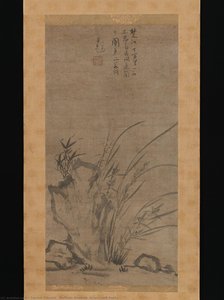
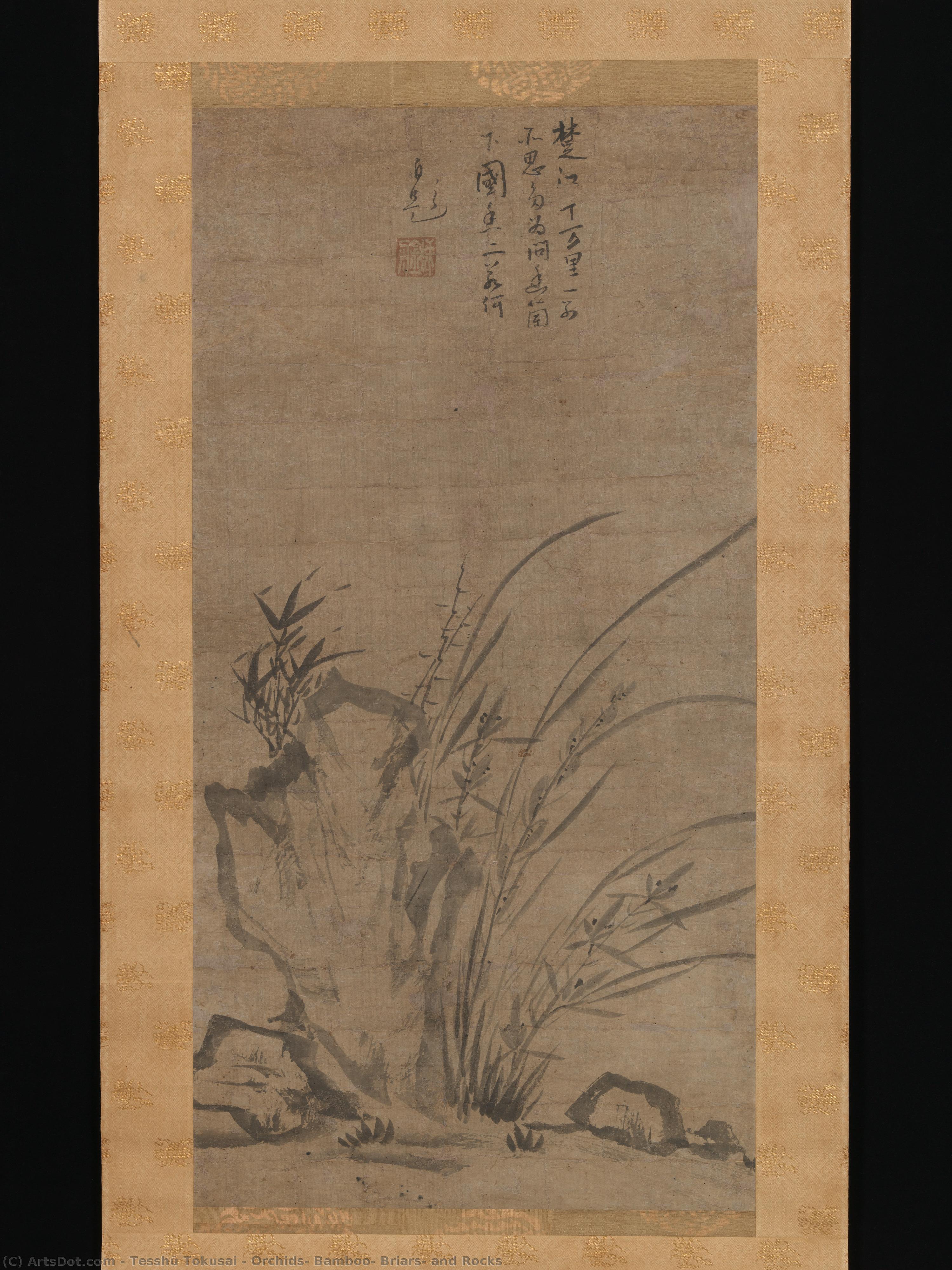
Orchids, Bamboo, Briars, and Rocks
 301
301 72.0cm x 37.0cm
 Read More
Hand Made Oil Reproduction
Hand-painted oil on canvas in your size and frame, made to order by our artists. ( Buy Print Buy Image)




































Pick from our preset sizes that match the artwork's original proportions.

You may enter your own dimensions to fit a specific frame or space. If your selected size does not match the original image's proportions, we will either crop the artwork or extend the painting with additional hand-painted elements. A digital mockup will be sent for your approval before production begins.
Please note that the on-screen preview does not reflect the actual cropping or extension. Only the mockup will accurately show the final composition.
While custom sizes are available, we recommend selecting a dimension from the predefined list to preserve the original proportions.
After order, ArtsDot.com team will email client for instructions and provide a mockup preview
Worldwide Delivery () in 3/4 weeks instead of standard 5 weeks. (22 August). No compromise on quality.

Free Worldwide Express Shipping

High-Quality Linen Canvas

Full Shipping Insurance

Customs Tax Refund Guarantee

True Color Matching Guarantee

60-Day Return Policy (Defects Only)

100% Money-Back Guarantee

Bulk Discount Offer
 Glass option is only available in size under 110 CM

Orchids, Bamboo, Briars, and Rocks
Reproduction Medium
Reproduction Size
-


Total Price
$ 263
Artwork Description
Related Artworks









Artist Biography
Tesshū Tokusai: The Silent Echoes of Zen Landscape Painting
Tesshū Tokusai (徳斎鉄洲), born around 1366 in Kyoto, Japan, stands as a singular figure within the annals of Japanese art history—a master of bokuseki calligraphy and arguably the most influential practitioner of Zen landscape painting during his era. Though relatively obscure compared to contemporaries like Sesshu Tosetsu or Kano Yoshitaka, Tokusai’s work possesses an arresting stillness and profound contemplation that continues to resonate with viewers today. His legacy resides not merely in quantity but in quality—a distillation of Buddhist principles into exquisitely rendered depictions of nature.Early Life and Training
Information regarding Tokusai's formative years remains fragmentary, largely gleaned from surviving records pertaining to his affiliation with the Hosokawa clan. He began his artistic journey under the tutelage of Sesshu Tosetsu, a renowned Zen monk and painter whose teachings profoundly shaped Tokusai’s aesthetic sensibilities. This mentorship instilled in him a deep appreciation for simplicity, asymmetry, and the subtle interplay between brushstrokes—characteristics that would define his distinctive style. The Hosokawa clan's patronage provided Tokusai with considerable resources, allowing him to pursue his artistic endeavors without constraint.The Style of Bokuseki: A Reflection of Zen Philosophy
Tokusai’s contribution to Japanese art is primarily recognized for his mastery of bokuseki (枯墨), a technique characterized by its deliberate omission of color—a radical departure from the opulent styles prevalent during the Muromachi period. This austere approach wasn't simply stylistic; it embodied the core tenets of Zen Buddhism – emptiness, impermanence, and the importance of perceiving reality directly without conceptual interference. Bokuseki artists sought to capture the essence of a scene through tonal variations achieved solely with black ink, emphasizing texture and form rather than visual embellishment. Tokusai’s landscapes exemplify this philosophy perfectly; they convey a sense of serene detachment and invite viewers into a meditative state.Iconic Landscapes: ‘Reeds and Geese’ – A Testament to Quiet Observation
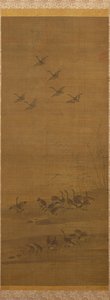
Among Tokusai's most celebrated works is undoubtedly “Reeds and Geese” (蘆竹風月), housed in the Tokugawa Art Museum in Nagoya. This painting, executed around 1406, exemplifies the zenith of Tokusai’s bokuseki style. The composition—a minimalist arrangement of reeds, bamboo stalks, and a distant moonlit sky—is deceptively simple yet imbued with an astonishing depth of feeling. Tokusai achieved this effect through meticulous attention to detail—the subtle gradations of ink tones conveying the contours of the landscape and capturing the ethereal glow of moonlight. The painting’s enduring appeal lies in its ability to evoke contemplation and convey a profound connection to the natural world, mirroring the Zen ideal of ‘wu wei,’ or effortless action.Influence and Legacy
Tokusai's influence extended far beyond his immediate contemporaries. His bokuseki technique served as a cornerstone for subsequent generations of landscape painters, establishing a precedent for prioritizing tonal harmony and textural subtlety. Artists who followed Tokusai embraced the principle of ‘ma’—negative space—to heighten the expressive power of their compositions. Furthermore, Tokusai's unwavering commitment to Zen philosophy solidified bokuseki as more than just an artistic style; it became a vehicle for spiritual contemplation. Today, “Reeds and Geese” remains a pilgrimage site for art historians and practitioners alike, symbolizing the enduring beauty and wisdom found in embracing simplicity and observing nature with mindful awareness. His work continues to inspire artists globally who seek to capture the essence of Zen aesthetics—a testament to Tokusai’s profound contribution to Japanese artistic heritage.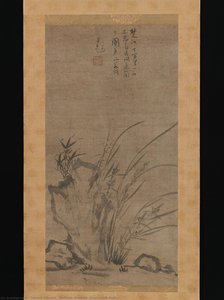
tesshū tokusai
Japan
Quick Facts
- Artistic Movement Or Style: Bokuseki Calligraphy & Zen Landscapes
- Artists Or Movements Influenced By This Artist: ['Zen']
- Artists Who Influenced This Artist: ['Chinese Art']
- Date Of Death: 1366
- Full Name: Tesshū Tokusai
- Nationality: Japanese
- Notable Artworks: ['Reeds and Geese']
- Place Of Birth: Japan