

 Preview
 Send
Send Share
Share
 Details

 Download
 Similars
 X-Ray
X-Ray Diaporama
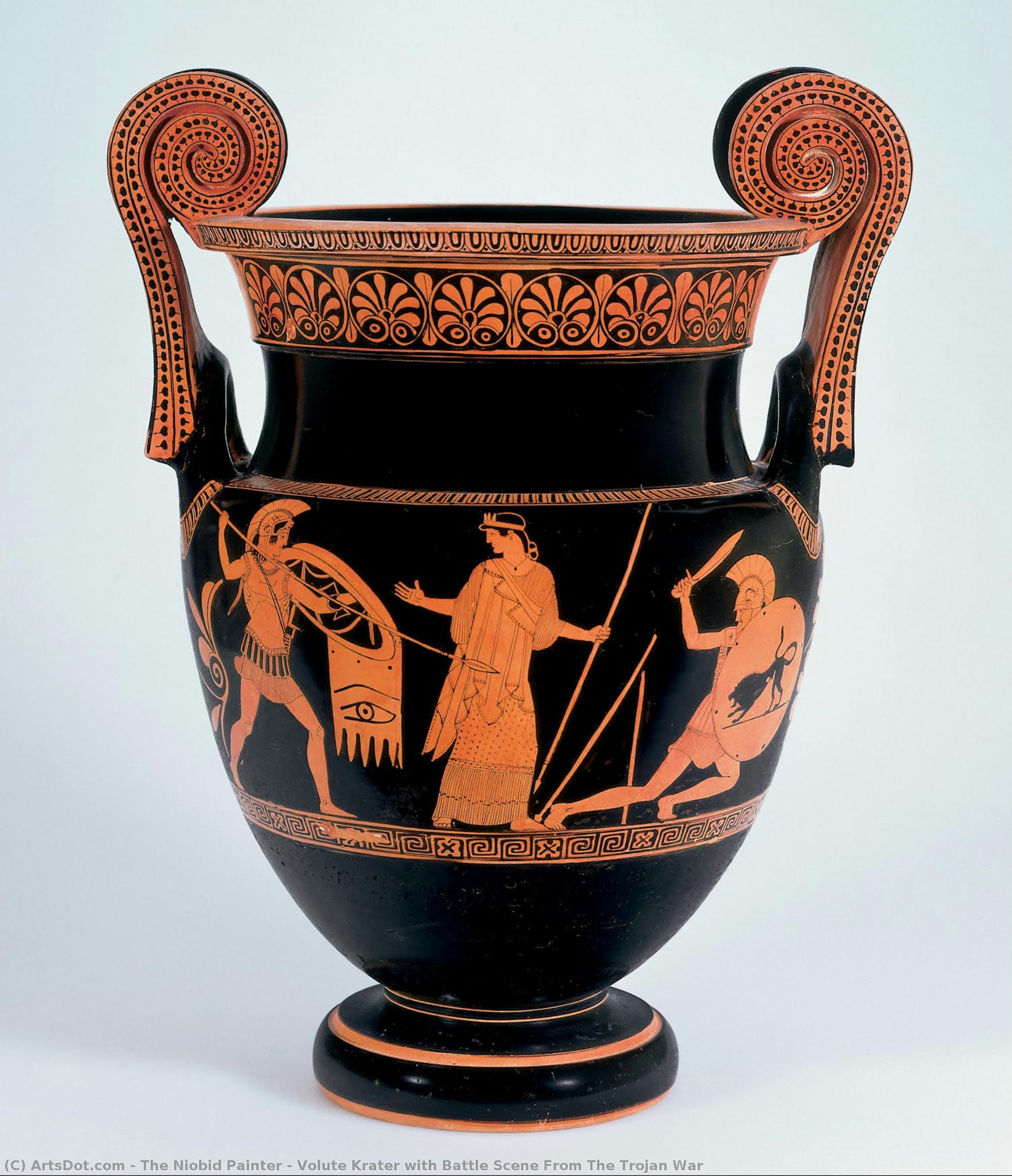
Volute Krater with Battle Scene From The Trojan War
 50.0 x 39.0 cm
 Read More
Purchase a high-resolution, enhanced digital image, far superior to the online preview.
Each file is meticulously prepared by our in-house specialists using advanced tools and expert manual retouching. We ensure every image has exceptional clarity, precise color accuracy, and fine detail.
The final file is delivered via email within 72 hours, optimized for immediate use in professional, editorial, and print environments. This is the same quality trusted by top-tier design studios, publishers, and galleries.
Digital Image
Download a high-resolution file for personal display, printing, and creative projects. ( Buy Print Buy Hand Made Painting)
Included in Every Digital Image Order
Expert Digital Delivery, Guaranteed
When you choose ArtsDot.com, you're not just getting an image - you're receiving a professionally enhanced digital artwork, crafted with precision and backed by a satisfaction guarantee. Here's everything that comes with your order, automatically:

Fast Email Delivery
Your high-resolution digital image file will be emailed to you within 72 hours of ordering - ready for immediate use.

AI-Enhanced Digital File
Your artwork is professionally optimized using advanced AI tools and manual editing, ensuring maximum detail, clarity, and color accuracy.

Free Lifetime Re-Delivery
Accidentally deleted or lost your file? No worries - we'll resend it to you anytime, free of charge.

No Import Fees - Ever
Enjoy your artwork instantly with zero customs, duties, or delivery fees - digital downloads are always tax-free.

Color Accuracy Guarantee
We ensure your digital image reflects the original colors as closely as possible using professional tools and color management.

60-Day Satisfaction Guarantee
If you're not satisfied with your digital image, we'll revise it or refund 100% within 60 days - no questions asked.

100% Money-Back Guarantee
Not satisfied? Get a full refund within 60 days of receiving your digital file - no questions asked.

Bulk Order Discounts
Buy 3 images, save 10% - Buy 5, save 15% - Buy 10+, save 20%. Great for creative projects, galleries, and agencies.
Collectible Description
Related Artworks








Artist Biography
The Enigmatic Brush of the Niobid Painter
The artist known as the Niobid Painter remains one of antiquity’s most compelling mysteries, a figure shrouded in time yet vividly present through the surviving fragments of his extraordinary work. Active primarily during the late Classical and early Hellenistic periods – roughly 340-320 BCE – he wasn't simply a painter; he was a storyteller who translated myth into breathtaking visual narratives. Unlike many celebrated Greek artists whose names are attached to specific styles, the Niobid Painter’s identity is unknown. We know him solely through his exceptional frescoes discovered in the House of the Tragic Poet at Pompeii, and from detailed descriptions by ancient writers like Pliny the Elder, who lauded his ability to capture emotion and movement with unparalleled skill. His work wasn't confined to a single medium; he was also celebrated for panel paintings, though sadly, none have survived intact. The frescoes in Pompeii, depicting scenes from the tragic tale of Niobe – Queen of Thebes whose children were slain by Apollo and Artemis as punishment for her boastful pride – are what cemented his legacy, offering a poignant glimpse into a master’s command of composition, color, and psychological depth.Early Influences and Artistic Development
Pinpointing the Niobid Painter's precise artistic lineage is challenging, but scholars generally agree that he emerged from the tradition of Athenian wall painting, inheriting a legacy steeped in realism and narrative clarity. The influence of Polygnotus, a renowned painter of the 5th century BCE known for his dramatic compositions and ethical themes, is often cited. However, the Niobid Painter moved beyond the somewhat static quality characteristic of earlier styles. He embraced a new dynamism, evident in the swirling chaos of the hunt scenes surrounding Niobe’s palace and the raw grief etched onto the faces of her mourning family. His work represents a pivotal transition, bridging the High Classical emphasis on idealized forms with the burgeoning emotionalism of the Hellenistic period. He wasn't merely copying existing conventions; he was innovating, experimenting with perspective – though not in a mathematically precise manner – and employing a sophisticated understanding of light and shadow to create depth and volume. The use of color, as evidenced by the remarkably preserved frescoes, was rich and varied, contributing significantly to the overall emotional impact of his scenes. It’s believed he also drew inspiration from vase painting, particularly red-figure pottery which flourished in Athens during this time, adapting its narrative techniques for a larger scale.The Niobe Cycle: A Masterpiece of Narrative
The frescoes at Pompeii are not simply decorative; they constitute a complex and emotionally charged visual epic. The cycle depicts the events leading up to, during, and following the slaughter of Niobe’s fourteen children – seven sons and seven daughters – by Apollo and Artemis. What sets the Niobid Painter apart is his ability to convey the unfolding tragedy with remarkable sensitivity and psychological nuance. He doesn't focus solely on the act of violence itself, but rather on the human cost, portraying the escalating tension within the royal family, the agonizing pain of loss, and the overwhelming despair that consumes Niobe herself. The composition is masterful, guiding the viewer’s eye through a series of interconnected scenes. The hunt scenes, initially appearing as idyllic depictions of youthful activity, foreshadow the impending doom, creating a sense of unease and dramatic irony. The depiction of Niobe clinging to her last surviving daughter, Laodamia, is particularly poignant, capturing the raw desperation of a mother facing unimaginable grief. Pliny specifically praised his ability to render weeping figures, and this skill is abundantly evident in the frescoes. The artist’s use of gesture, facial expression, and body language effectively communicates the emotional turmoil of each character, making the tragedy feel intensely personal and immediate.Technique and Materials: Reconstructing a Lost Art
Our understanding of the Niobid Painter's technique is largely based on analysis of the Pompeii frescoes and comparisons with other surviving examples of Greek wall painting. He employed a fresco technique, applying pigments to wet plaster – allowing the colors to become chemically bonded to the wall as it dried. The pigments themselves were derived from natural sources: minerals, earth, and organic materials.- Red ochre came from iron oxides.
- Yellow was obtained from limonite.
- Blue was a rare and expensive pigment sourced from Egyptian frit.
Historical Significance and Enduring Legacy
The Niobid Painter’s work represents a crucial moment in the development of Greek painting, marking a shift from the idealized forms of the High Classical period towards the more emotionally charged realism of the Hellenistic era. His frescoes at Pompeii provide invaluable insights into the artistic conventions and narrative techniques of the 4th century BCE. He influenced generations of artists, both in antiquity and beyond. Roman painters, particularly those working during the Imperial period, drew heavily on his style, adapting his compositions and themes for their own purposes. The rediscovery of Pompeii in the 18th century sparked a renewed interest in classical art, and the Niobid frescoes became iconic examples of Greek painting, inspiring artists like Jacques-Louis David and Jean-Auguste-Dominique Ingres. While his identity remains unknown, the Niobid Painter’s legacy endures through the power and beauty of his surviving work – a testament to the enduring human capacity for storytelling and emotional expression. His ability to capture the raw tragedy of Niobe's fate continues to resonate with audiences today, solidifying his place as one of antiquity’s most gifted and influential artists.
Quick Facts
- Artistic Movement Or Style: Ancient Greek vase painting
- Date Of Death: Living
- Full Name: Niobid Painter

