

 Preview
 Send
Send Share
Share
 Details

 Download
 Similars
 X-Ray
X-Ray Diaporama
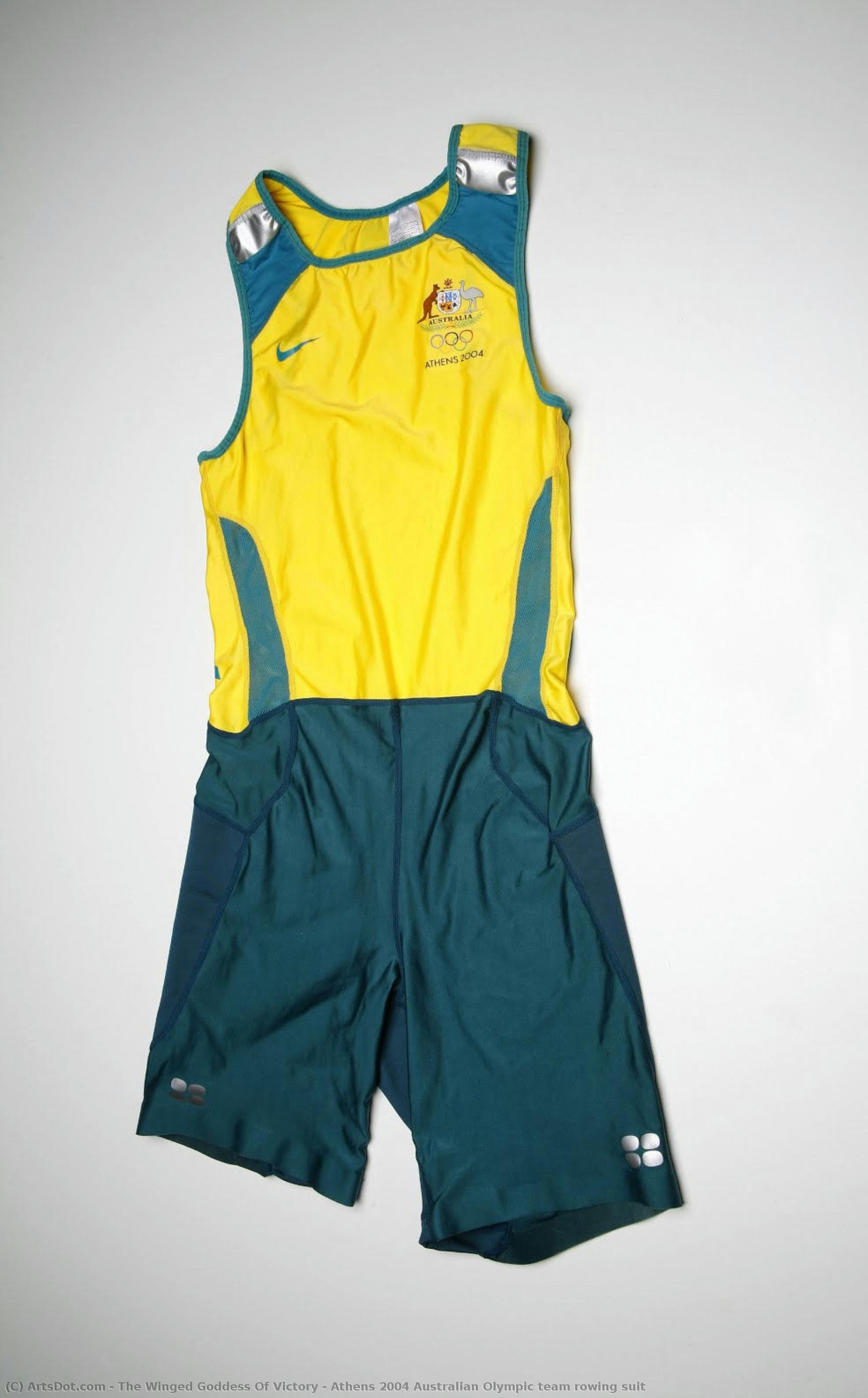
Athens 2004 Australian Olympic team rowing suit

 Read More
Purchase a high-resolution, enhanced digital image, far superior to the online preview.
Each file is meticulously prepared by our in-house specialists using advanced tools and expert manual retouching. We ensure every image has exceptional clarity, precise color accuracy, and fine detail.
The final file is delivered via email within 72 hours, optimized for immediate use in professional, editorial, and print environments. This is the same quality trusted by top-tier design studios, publishers, and galleries.
Digital Image
Download a high-resolution file for personal display, printing, and creative projects. ( Buy Print Buy Hand Made Painting)
Included in Every Digital Image Order
Expert Digital Delivery, Guaranteed
When you choose ArtsDot.com, you're not just getting an image - you're receiving a professionally enhanced digital artwork, crafted with precision and backed by a satisfaction guarantee. Here's everything that comes with your order, automatically:

Fast Email Delivery
Your high-resolution digital image file will be emailed to you within 72 hours of ordering - ready for immediate use.

AI-Enhanced Digital File
Your artwork is professionally optimized using advanced AI tools and manual editing, ensuring maximum detail, clarity, and color accuracy.

Free Lifetime Re-Delivery
Accidentally deleted or lost your file? No worries - we'll resend it to you anytime, free of charge.

No Import Fees - Ever
Enjoy your artwork instantly with zero customs, duties, or delivery fees - digital downloads are always tax-free.

Color Accuracy Guarantee
We ensure your digital image reflects the original colors as closely as possible using professional tools and color management.

60-Day Satisfaction Guarantee
If you're not satisfied with your digital image, we'll revise it or refund 100% within 60 days - no questions asked.

100% Money-Back Guarantee
Not satisfied? Get a full refund within 60 days of receiving your digital file - no questions asked.

Bulk Order Discounts
Buy 3 images, save 10% - Buy 5, save 15% - Buy 10+, save 20%. Great for creative projects, galleries, and agencies.
Related Artworks








Artist Biography
The Winged Goddess of Victory: Nike – A Legacy Forged in Myth and Marble
Nike, more commonly known as the winged goddess of victory, is a figure whose image has resonated through millennia, embodying triumph across countless fields—from athletic prowess to artistic creation, from military conquest to philosophical enlightenment. More than just a deity, she represents the culmination of effort, the sweet reward of struggle, and the enduring spirit of human ambition. This article delves into the fascinating origins, evolving iconography, and lasting impact of Nike, exploring her role in Greek mythology, her representation in sculpture, and her surprising resurgence in modern culture.
Her story begins not with a single, definitive narrative, but rather with a complex tapestry woven from disparate threads. Ancient sources offer conflicting accounts of her birth and parentage. The Theogony of Hesiod presents Nike as the daughter of Styx (the river of the underworld) and Pallas (a primordial goddess associated with wisdom). Conversely, Homeric hymns attribute her father to Ares, the god of war—a connection that underscores her association with both victory’s spoils and the inherent violence often intertwined with conquest. This ambiguity surrounding her origins contributes significantly to Nike's enduring mystique, allowing for multiple interpretations and a fluidity that has captivated artists and thinkers for centuries.
Nike’s prominence grew dramatically during the tumultuous Titanomachy—the epic war between the Olympian gods and their predecessors, the Titans. She is credited with being one of the first deities to pledge allegiance to Zeus, solidifying her position as a key figure in the new pantheon. At Athens, her role became inextricably linked with that of Athena, the city’s patron goddess. This fusion resulted in a fascinating paradox: Nike simultaneously represented both Athena's martial strength and her artistic patronage. The resulting ambiguity—whether she originated from Athena or existed independently—has fueled scholarly debate for centuries, adding another layer to her complex mythology.
The Sculpted Triumph: Nike at Samothrace
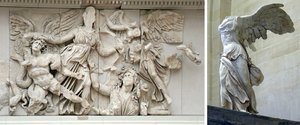
While Nike’s presence is depicted in various forms throughout Greek art – often as a wingless attribute of other deities like Athena – it is arguably the Winged Victory of Samothrace that cemented her iconic status. Discovered on the island of Samothrace in 1863, this monumental sculpture—a votive monument dedicated to the gods—is a breathtaking testament to Hellenistic artistry and engineering. Standing approximately 5.57 meters tall (including its base), the statue depicts Nike emerging from a ship’s prow, her drapery billowing dramatically as if caught in a fierce wind.
The sculpture's remarkable realism is particularly striking considering that her head and arms are missing. The artist skillfully employed techniques of contrapposto—a dynamic pose where weight is shifted to one leg—to convey movement and emotion. The way the fabric clings to her body, sculpted with incredible detail, suggests a powerful gust of wind, creating an illusion of dynamism and immediacy. The statue’s placement atop a ship's prow further emphasizes its association with victory—a symbol of triumph over adversity, often linked to naval battles and maritime expeditions.
Several scholars have proposed that the sculpture was intended to represent Nike celebrating a specific naval victory, possibly the Battle of Abydos in 334 BC, during Alexander the Great’s campaign in Egypt. However, the exact circumstances surrounding its commission remain shrouded in mystery. The statue's fragmented state and the lack of definitive inscriptions have fueled ongoing research and debate among art historians.
Beyond Samothrace: Nike in Art and Culture
The Winged Victory of Samothrace has profoundly influenced artists across centuries, inspiring countless reproductions and reinterpretations. Salvador Dalí’s 1977 painting “Nike, Victory Goddess of Samothrace, Appears in a Tree Bathed in Light” is perhaps the most famous example of this enduring fascination. Dalí's surrealist depiction transforms the classical goddess into a luminous figure emerging from a tree, symbolizing rebirth and renewal.
More recently, Nike’s image has been utilized to celebrate athletic achievement. The Australian Olympic rowing team’s uniforms in 2004 featured a stylized representation of the winged goddess, instantly associating the brand with victory and excellence. This strategic use of iconography demonstrates Nike's continued relevance as a symbol of success and aspiration.
Furthermore, Nike’s influence extends beyond the visual arts. The name “Nike” itself—the brand name of the renowned sportswear company—is derived from the Greek goddess, reflecting a deliberate connection to her legacy of triumph and athleticism. The brand's marketing campaigns consistently evoke images of victory, pushing boundaries and celebrating human potential.
A Timeless Symbol: Nike’s Enduring Significance
Nike, the winged goddess of victory, transcends mere mythological representation; she embodies a universal aspiration—the pursuit of excellence and the celebration of achievement. Her image continues to resonate with audiences worldwide, serving as a potent symbol of triumph, resilience, and the enduring human spirit. From the dramatic marble sculpture of Samothrace to modern athletic branding, Nike’s legacy is one of artistic inspiration, cultural significance, and an unwavering association with the sweet taste of victory.
Quick Facts
- Artistic Movement Or Style: Classical art style
- Artists Or Movements Influenced By This Artist: ['Classical Greek sculpture']
- Artists Who Influenced This Artist: ['']
- Date Of Birth: Olympia, Greece (unknown)
- Date Of Death: Living
- Full Name: Nike, the winged goddess of victory
- Nationality: Greek
- Notable Artworks:
- Athens Olympic rowing suit
- Winged Victory of Samothrace
- Place Of Birth: Olympia, Greece

