

 Preview
 Send
Send Share
Share
 Details

 Download
 Similars
 X-Ray
X-Ray Diaporama
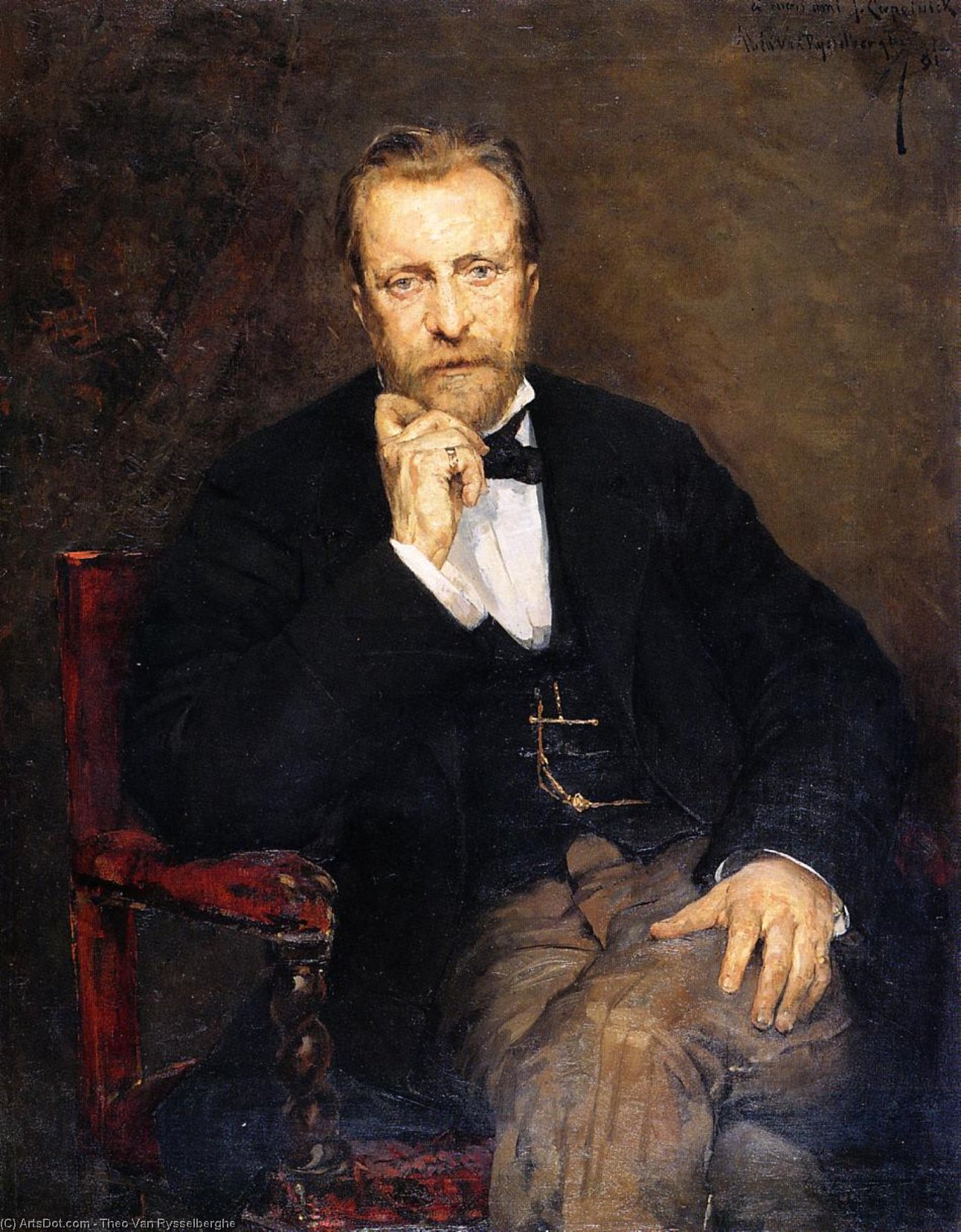
Portrait of Jean Cepeinick
 Acrylic On Canvas
- WallArt
- Neo-Impressionism
 1881
1881- 19th Century
 101.0 x 78.0 cm
 Museo delle Belle Arti di Gand
 Read More
Purchase a high-resolution, enhanced digital image, far superior to the online preview.
Each file is meticulously prepared by our in-house specialists using advanced tools and expert manual retouching. We ensure every image has exceptional clarity, precise color accuracy, and fine detail.
The final file is delivered via email within 72 hours, optimized for immediate use in professional, editorial, and print environments. This is the same quality trusted by top-tier design studios, publishers, and galleries.
Digital Image
Download a high-resolution file for personal display, printing, and creative projects. ( Buy Print Buy Hand Made Painting)
Included in Every Digital Image Order
Expert Digital Delivery, Guaranteed
When you choose ArtsDot.com, you're not just getting an image - you're receiving a professionally enhanced digital artwork, crafted with precision and backed by a satisfaction guarantee. Here's everything that comes with your order, automatically:

Fast Email Delivery
Your high-resolution digital image file will be emailed to you within 72 hours of ordering - ready for immediate use.

AI-Enhanced Digital File
Your artwork is professionally optimized using advanced AI tools and manual editing, ensuring maximum detail, clarity, and color accuracy.

Free Lifetime Re-Delivery
Accidentally deleted or lost your file? No worries - we'll resend it to you anytime, free of charge.

No Import Fees - Ever
Enjoy your artwork instantly with zero customs, duties, or delivery fees - digital downloads are always tax-free.

Color Accuracy Guarantee
We ensure your digital image reflects the original colors as closely as possible using professional tools and color management.

60-Day Satisfaction Guarantee
If you're not satisfied with your digital image, we'll revise it or refund 100% within 60 days - no questions asked.

100% Money-Back Guarantee
Not satisfied? Get a full refund within 60 days of receiving your digital file - no questions asked.

Bulk Order Discounts
Buy 3 images, save 10% - Buy 5, save 15% - Buy 10+, save 20%. Great for creative projects, galleries, and agencies.
Collectible Description
Portrait of Jean Cepeinick: A Window into Belgian Neo-Impressionism
Theo van Rysselberghe’s “Portrait of Jean Cepeinick,” painted in 1881, isn't merely a likeness; it’s a carefully constructed tableau of quiet confidence and introspective contemplation. Housed within the hallowed halls of the Musée des Beaux-Arts in Ghent, Belgium, this oil on canvas offers a captivating glimpse into the burgeoning world of Belgian neo-impressionism – a movement that sought to revolutionize painting through a radical departure from traditional academic styles.
The subject himself, Jean Cepeinick, is depicted seated with an air of dignified composure. He’s dressed in the formal attire characteristic of the era, his posture suggesting both self-assurance and a subtle reserve. His gaze, directed slightly off-center within the composition, invites the viewer into a private world of thought. Van Rysselberghe masterfully captures this duality – the outward appearance of formality juxtaposed with an underlying sense of inner life.
The Pointillist Technique: A Symphony of Color
What immediately draws the eye is the painting’s distinctive technique—pointillism, a method championed by Van Rysselberghe and his contemporaries. Rather than blending colors directly on the canvas, he meticulously applied tiny dots of pure color – crimson, ochre, cerulean blue, and emerald green – to create an optical illusion of blended hues. This painstaking process, reminiscent of a mosaic, results in a shimmering surface that seems to subtly shift with the changing light. The effect is remarkably vibrant and luminous, capturing the fleeting qualities of light and atmosphere with astonishing precision.
Van Rysselberghe’s adoption of pointillism wasn't simply a stylistic choice; it represented a profound exploration of color theory and perception. He was deeply influenced by the work of Eugène Louis Primitivi and Georges Seurat, both pioneers of this technique. However, Van Rysselberghe imbued his pointillist approach with a uniquely personal sensibility, creating a visual experience that is both intellectually stimulating and emotionally resonant.
A Belgian Context: Les XX and the Dawn of Modernity
“Portrait of Jean Cepeinick” was created during a period of immense artistic ferment in Belgium. The painting’s creation coincided with the formation of “Les XX,” a revolutionary group of artists who challenged the conservative norms of the art establishment. This collective, which included figures like James Ensor and Fernand Khnopff, sought to break free from academic traditions and embrace new approaches to representation. Van Rysselberghe's work exemplifies this spirit of innovation, reflecting the group’s commitment to experimentation and a rejection of established artistic conventions.
The painting can be understood within the broader context of late 19th-century Europe, a time of rapid social, political, and technological change. Neo-Impressionism emerged as a response to these transformations, reflecting a desire to capture the dynamism and complexity of modern life through a radically new visual language.
Symbolic Resonance: Introspection and Quiet Dignity
Beyond its technical brilliance, “Portrait of Jean Cepeinick” possesses a subtle yet powerful symbolic resonance. The subject’s contemplative gaze suggests an inner world rich in thought and emotion. The carefully chosen details – the formal attire, the restrained pose – speak to a sense of dignity and self-awareness. It's not a portrait intended for immediate gratification; rather, it invites prolonged observation and reflection.
Van Rysselberghe’s ability to convey such depth through a seemingly simple depiction is a testament to his artistic skill and sensitivity. “Portrait of Jean Cepeinick” remains a captivating work of art, offering a poignant glimpse into the heart of Belgian neo-impressionism and the complexities of human experience.
Related Artworks
Artist Biography
A Pioneer of Light: The Life and Art of Théo van Rysselberghe
Théophile “Théo” van Rysselberghe, born in Ghent, Belgium, in 1862, emerged as a pivotal figure bridging the gap between Impressionism and Neo-Impressionism. His journey wasn’t one of immediate stylistic conviction but rather an evolving exploration sparked by travel, intellectual exchange, and a relentless pursuit of capturing light's essence. Coming from a comfortably bourgeois French-speaking family, van Rysselberghe received his initial artistic training at the Academy of Ghent under Theo Canneel, followed by studies at the prestigious Académie Royale des Beaux-Arts in Brussels. These formative years instilled in him a foundation rooted in traditional realism, evident in early works like *Self-Portrait with Pipe* (1880), characterized by somber tones and meticulous detail—a reflection of the prevailing Belgian artistic climate. However, even within these early pieces, hints of a burgeoning sensitivity to light and color began to surface, foreshadowing his future trajectory. A pivotal work from this period, *Child in an Open Spot of the Forest* (1880), marked a subtle departure, hinting at the brighter palette and looser brushwork that would define his later style.Moroccan Impressions and the Birth of Les XX
A transformative chapter unfolded with van Rysselberghe’s voyages to Morocco between 1882 and 1888. These extended sojourns immersed him in a world of vibrant colors, intense sunlight, and exotic landscapes—a stark contrast to the subdued tones of his earlier work. Paintings like *Arabian Street Cobbler* (1882), *Arabian Boy* (1882), and *Resting Guard* (1883) demonstrate a growing fascination with capturing the effects of light on form, moving away from strict realism towards a more impressionistic sensibility. The Moroccan experience wasn’t merely about visual observation; it was an immersion into a different culture that broadened his artistic horizons and instilled a lifelong love for travel. Upon returning to Brussels, van Rysselberghe became a driving force in the Belgian art scene, co-founding the influential group *Les XX* (The Twenty) in 1883 alongside Octave Maus and Émile Verhaeren. This collective served as a platform for showcasing avant-garde art, introducing new movements like Impressionism and Symbolism to a Belgian audience largely unfamiliar with such innovations. *Arabian Phantasia* (1884), a large-scale exotic painting, became his most celebrated work from this period, demonstrating his mastery of light and composition.Embracing Neo-Impressionism: A Scientific Approach to Color
The true turning point in van Rysselberghe’s artistic development arrived with his encounter with Georges Seurat's *A Sunday on La Grande Jatte* at the eighth Impressionist exhibition in Paris in 1886. Initially skeptical of Seurat’s meticulous “pointillist” technique—the systematic application of tiny dots of pure color—van Rysselberghe gradually came to appreciate its scientific basis and potential for achieving luminous effects. He began experimenting with divisionism, the Neo-Impressionist method of separating colors into their constituent parts and allowing the viewer’s eye to blend them optically. This wasn't simply a technical shift; it represented a fundamental change in his approach to painting—a move towards a more analytical and objective representation of light and color. He forged close friendships with other Neo-Impressionist painters like Paul Signac, traveling with him along the French Riviera and exchanging ideas about technique and theory. Van Rysselberghe distinguished himself within the movement by applying pointillism not only to landscapes but also to portraiture, creating strikingly vibrant and psychologically insightful likenesses of his family and friends—works such as *Madame Charles Maus* (1890) are prime examples.Beyond Pointillism: A Lasting Legacy
While deeply committed to Neo-Impressionism for a significant period, van Rysselberghe eventually moved beyond its strict tenets in the late 1890s. He sought greater freedom in his brushwork and compositions, exploring new ways to express emotion and atmosphere. He continued to be a prolific artist, working in various media including furniture design, book illustration, and decorative arts. His influence extended far beyond Belgium, impacting artists like Piet Mondrian and Jan Toorop who were inspired by his innovative use of color and light. Van Rysselberghe’s legacy lies not only in his beautiful paintings but also in his role as a catalyst for artistic change—a champion of modernism who helped introduce new ideas and techniques to the Belgian art world. His works are now held in prominent museum collections worldwide, including the Musée du Luxembourg in Paris and the Museum voor Schone Kunsten in Ghent, ensuring that his contribution to the history of art continues to be celebrated and appreciated by generations to come. His dedication to exploring the interplay of light, color, and form cemented his place as a true pioneer of modern painting.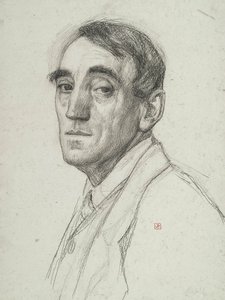
Theo van Rysselberghe
1862 - 1926 , Belgium
Quick Facts
- Artistic Movement Or Style: Neo-Impressionism
- Artists Or Movements Influenced By This Artist:
- Neo-Impressionism
- Piet Mondrian
- Jan Toorop
- Artists Who Influenced This Artist:
- Jean-François Portaels
- Georges Seurat
- Paul Signac
- Date Of Birth: November 23, 1862
- Date Of Death: December 13, 1926
- Full Name: Théo van Rysselberghe
- Nationality: Belgian
- Notable Artworks:
- Arabian Phantasia
- Spanish Woman
- Sevillan Woman
- Place Of Birth: Ghent, Belgium

