 Preview
 Send
Send Share
Share
 Details

 Download
 Similars
 X-Ray
X-Ray Diaporama
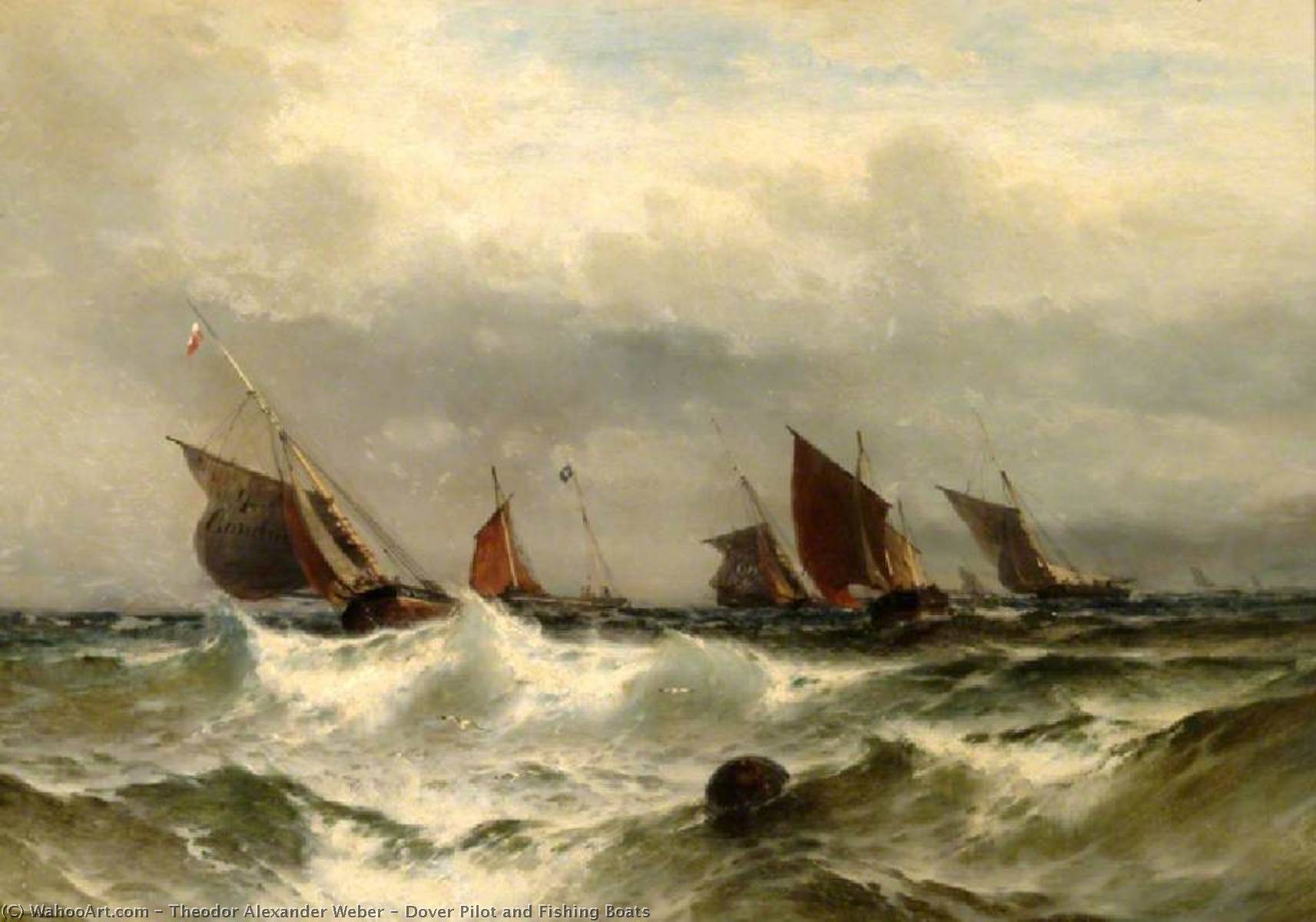
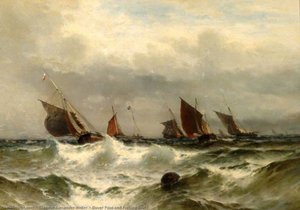
Dover Pilot and Fishing Boats
 1882
1882 60.0 x 91.0 cm
 Royal Holloway
 Read More
Giclée / Art Print
Museum-quality giclée or canvas print with fast production and flexible finish options. ( Buy Hand Made Painting Buy Image)




































Pick from our preset sizes that match the artwork's original proportions.

You may enter your own dimensions to fit a specific frame or space. If your selected size does not match the original image's proportions, we will either crop the artwork or extend the image with a mirrored or solid-fill edge. A digital mockup will be sent for your approval before production begins.
Please note that the on-screen preview does not reflect the actual cropping or extension. Only the mockup will accurately show the final composition.
While custom sizes are available, we recommend selecting a dimension from the predefined list to preserve the original proportions.
Worldwide Delivery () in 2 weeks instead of standard 4/5 weeks. (26 August)

Free Worldwide Express Shipping

High-Quality Linen Canvas

Full Shipping Insurance

Customs Tax Refund Guarantee

True Color Matching Guarantee

60-Day Return Policy (Defects Only)

100% Money-Back Guarantee

Bulk Discount Offer
 Glass option is only available in size under 110 CM

Dover Pilot and Fishing Boats
Giclée / Art Print
Reproduction Size
-


Total Price
$ 63
Collectible Description
Artistic Style and Technique
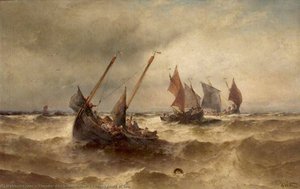
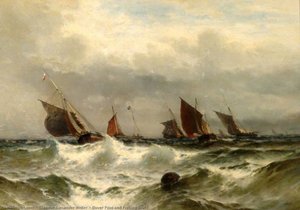
Weber's use of color and composition in Dover Pilot and Fishing Boats is remarkable, with the cloudy sky and serene water creating a sense of tranquility. The painting features at least six sailboats, each with unique characteristics, demonstrating the artist's attention to detail. This level of craftsmanship is a testament to Weber's skill as a painter. Key Features:- The painting's use of light and shadow creates a sense of depth and dimensionality
- The depiction of sailboats in various sizes and shapes adds visual interest
- The overall atmosphere of the piece is one of peacefulness and harmony
Artist and Museum Background
Theodor Alexander Weber was a talented artist, and his work can be found in various museums, including the Royal Holloway. This museum is part of the University of London and features an impressive collection of artworks from renowned artists. For more information on the museum and its collections, visit The Museum Royal Holloway. Other notable paintings can be found at https://ArtsDot.com, including works by Margaret Gere and Christiana Jane Herringham. These artists, like Weber, demonstrate exceptional skill and artistry in their respective pieces.The captivating "Dover Pilot and Fishing Boats" is a must-see for art enthusiasts, offering a glimpse into the world of 19th-century painting. With its stunning composition and beautiful depiction of sailboats, this piece is sure to leave a lasting impression. For those interested in purchasing handmade oil painting reproductions, visit https://ArtsDot.com to explore their collection of artworks, including Dover Pilot and Fishing Boats by Theodor Alexander Weber.
Related Artworks



Artist Biography
Theodore Alexander Weber: A Master of Kentish Light
Theodor Alexander Weber, a name perhaps less familiar than some of his contemporaries, nevertheless stands as a significant figure in 19th-century German landscape painting. Born in 1838 in the Rhineland region of Germany, Weber’s artistic journey was deeply intertwined with the evolving aesthetics of his time – a period marked by Romanticism's lingering influence and the nascent explorations of Impressionism. His work, particularly his evocative depictions of the Kentish coastlines of England, reveals a unique sensibility: a masterful blend of meticulous detail, atmospheric perspective, and an almost palpable sense of light and mood. Weber’s legacy lies not in grand, revolutionary gestures, but rather in the quiet beauty he captured with remarkable skill and sensitivity.
Weber's early life provided him with a rich artistic foundation. His mother, a former singer, instilled in him a deep appreciation for music and visual arts, while his father, a successful wine merchant, exposed him to the world of commerce and travel – experiences that would later inform his approach to landscape painting. He began his formal training at the Düsseldorf Kunstakademie, a renowned institution known for its emphasis on drawing and tonal modeling. This rigorous instruction shaped his technical abilities, teaching him to observe closely and translate what he saw onto canvas with precision. However, Weber’s artistic vision extended beyond mere imitation; he sought to capture not just the appearance of a scene but also the feeling it evoked – the dampness of the air, the shifting patterns of light, and the subtle nuances of color.
The Influence of Düsseldorf and Kent
The Düsseldorf school profoundly influenced Weber’s artistic development. The emphasis on drawing, tonal modeling, and atmospheric perspective—techniques honed through years of painstaking practice—became hallmarks of his style. Unlike some of his contemporaries who embraced brighter palettes and looser brushwork, Weber favored a more restrained approach, utilizing subtle gradations of tone to create a sense of depth and atmosphere. This meticulous attention to detail is particularly evident in his Kentish coast scenes, where he painstakingly rendered every pebble, blade of grass, and ripple of water.
Weber’s move to England in the 1870s marked a pivotal moment in his career. He spent several years residing in Kent, immersing himself in the region's dramatic coastline – a landscape that profoundly impacted his artistic sensibilities. The ever-changing light, the rugged cliffs, and the vast expanse of the sea provided him with an endless source of inspiration. Unlike many artists who sought to romanticize the English countryside, Weber presented a more realistic portrayal, capturing both its beauty and its inherent wildness. His paintings of Dover, Romney Marsh, and Sandwich are renowned for their atmospheric quality and their ability to transport the viewer to the heart of the Kentish landscape.
Technique and Style
Weber’s technique is characterized by a remarkable level of detail and precision. He employed a meticulous approach to drawing, carefully rendering every element of his compositions with painstaking accuracy. His brushwork is generally smooth and controlled, creating a sense of unity and coherence within each painting. However, he was not afraid to utilize subtle variations in tone and color to create a sense of depth and atmosphere. This is particularly evident in his depictions of light – the way it reflects off the water, illuminates the cliffs, and casts long shadows across the landscape.
A key element of Weber’s style is his masterful use of atmospheric perspective. He employed techniques such as color gradation and blurring to create a sense of distance, making distant objects appear paler and less distinct than those in the foreground. This technique not only adds realism to his paintings but also contributes to their overall mood – creating a feeling of vastness and solitude. His compositions are often carefully balanced, with a clear focal point that draws the viewer’s eye into the scene. He frequently employed horizontal lines to create a sense of stability and order, while also incorporating diagonal elements to add dynamism and movement.
Legacy and Significance
Theodor Alexander Weber's work is often overlooked in discussions of 19th-century landscape painting, yet it holds considerable artistic merit. His Kentish coast scenes are particularly noteworthy for their atmospheric quality, meticulous detail, and evocative sense of mood. He represents a bridge between the Romantic tradition and the emerging Impressionist movement, demonstrating a sensitivity to light and color that anticipates the innovations of later artists.
Weber’s influence extends beyond his individual paintings. His meticulous approach to drawing and tonal modeling influenced generations of landscape painters who followed him. His work serves as a reminder of the importance of observation, patience, and technical skill – qualities that are essential for any aspiring artist. Today, Weber's paintings can be found in museums and private collections around the world, testament to his enduring artistic legacy.
Further research into Weber’s life and work can be found at resources such as ArtsDot and Capitolium Art.
theodor alexander weber
1838 - 1907
Quick Facts
- Artistic Movement Or Style: Seascape art, Kentish Coast Art
- Artists Or Movements Influenced By This Artist: ['Romanticism']
- Artists Who Influenced This Artist: ['Caspar David Friedrich']
- Date Of Birth: 1838
- Date Of Death: 1907
- Full Name: Theodor Alexander Weber
- Nationality: German
- Notable Artworks:
- Dover Pilot and Fishing Boats
- The Baltic Coast
- Fishing Boats at Gravelines
- Place Of Birth: Klein-Zinden (near Königsberg)